Is 1000 Microns a Good Vacuum? Expert Guide for 2026
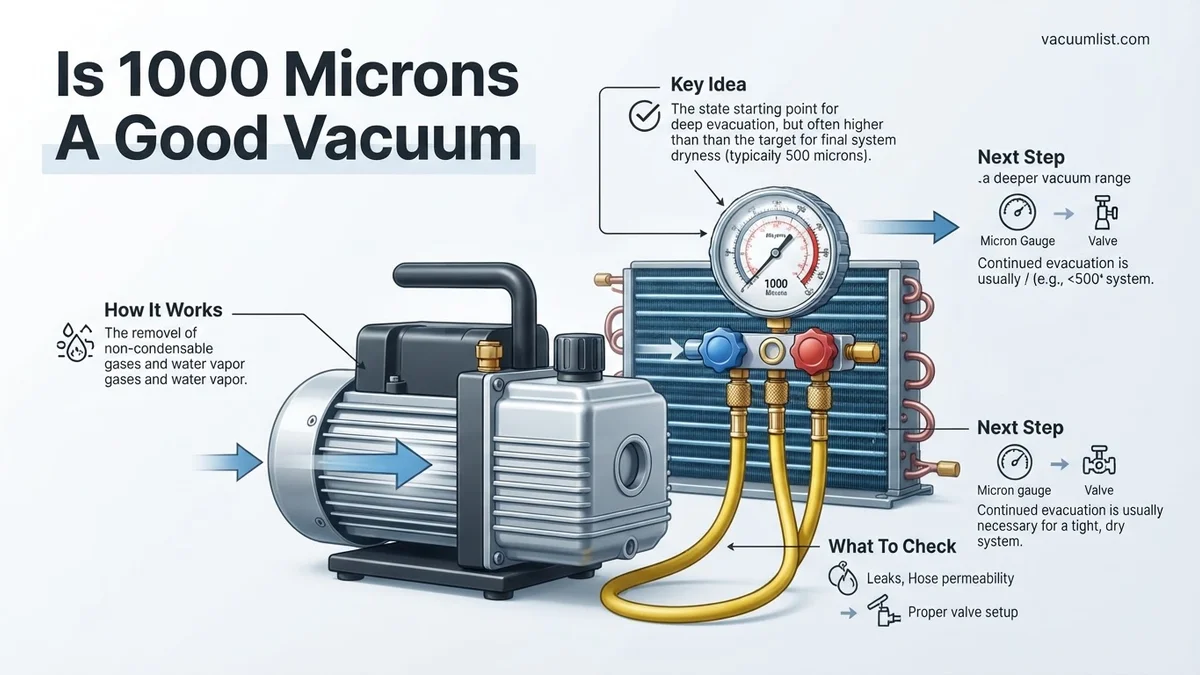
No, 1000 microns is generally not a good vacuum for standard HVAC and refrigeration systems because it is too high to ensure moisture and non-condensables are fully removed. Industry standards require pulling down to 500 microns or lower to successfully boil off residual moisture at ambient temperatures.
To answer your question directly: No, 1000 microns is generally not a good vacuum level for standard HVAC and refrigeration work in 2026. While it represents a deep vacuum compared to atmospheric pressure, stopping at 1000 microns usually means your system still contains harmful moisture, non-condensables, or an active micro-leak.
Achieving a proper evacuation is critical before charging any system with refrigerant. If you leave moisture trapped inside, it will mix with the oil and form acids, ultimately destroying the compressor. Let us break down what 1000 microns actually means for your system and why industry standards demand you push much lower.
Key Takeaways
- 1000 microns is too high for proper HVAC system evacuation and moisture removal.
- The standard target for deep HVAC evacuation is 500 microns or lower.
- Stalling at 1000 microns usually indicates moisture in the system, a leak, or oil issues.
- Dropping below 1000 microns is necessary to lower the boiling point of water.
- A proper vacuum holds steady below target levels after the pump is isolated.
Is 1000 Microns a Good Vacuum? The Direct Answer and HVAC Standards
When you are pulling a vacuum on a residential or commercial HVAC system, your ultimate goal is not just removing air—it is boiling out liquid moisture at ambient temperatures. Water requires a specific low pressure to vaporize and be removed by your vacuum pump.
Why 1000 Microns Falls Short in Modern HVAC
At 1000 microns (which equals 1 mmHg or 1 Torr), the boiling point of water is roughly 52 degrees Fahrenheit (11 degrees Celsius). If your ambient temperature is higher than that, moisture can theoretically boil, but the process is agonizingly slow and unreliable.
- The 500-Micron Rule: Industry best practice dictates pulling your system down to 500 microns or lower.
- The Triple Evacuation Method: Many technicians in 2026 rely on a deep vacuum followed by a nitrogen sweep to pull moisture out completely.
- Refrigerant Compatibility: Modern POE oils used with R-410A and newer 2026 low-GWP refrigerants are intensely hygroscopic. They absorb moisture rapidly, making a sub-500 micron finish non-negotiable.
When Might 1000 Microns Be Acceptable?
There are very few scenarios where 1000 microns is a “good” final target. You might see 1000 microns as a temporary milestone during a decay test (watching the gauge rise), but leaving a system there is asking for mechanical failure. If you are working on massive industrial chillers, sometimes initial roughing vacuums pass through this range quickly, but the final target remains well below 500 microns.
What Causes a Vacuum to Stall at 1000 Microns?
If your digital micron gauge locks up or stalls right around 1000 microns and refuses to drop further, your evacuation process has hit a roadblock. This stubborn plateau is a classic diagnostic indicator for specific problems in your setup.
Moisture Evaporation vs. System Leaks
When a vacuum stalls at 1000 microns, it is usually suffering from one of two common culprits:
- Trapped Liquid Moisture: Water is actively boiling off inside the lines or filter-drier. As long as liquid water is present, it releases vapor faster than your pump can evacuate it, holding the pressure steady.
- A Permeable Leak or Faulty Schrader Core: Atmospheric air is leaking into the system at the exact rate your vacuum pump is removing it, creating an equilibrium at 1000 microns.
How to Diagnose the Stall
To figure out whether you are fighting water or air, isolate your vacuum pump by closing the manifold valves while keeping the micron gauge attached to the system. If the reading shoots rapidly back up toward atmospheric pressure, you have a physical leak. If the pressure creeps up slowly and then stabilizes, you are dealing with outgassing or boiling moisture that requires more pump time or a system sweep with dry nitrogen.
Step-by-Step Fix to Lower Your Vacuum Past 1000 Microns
Reaching a reading below 1000 microns requires a methodical approach that eliminates moisture and non-condensable gases efficiently. HVAC and refrigeration manufacturers emphasize that proper setup directly dictates the final base pressure.
1. Check All Connections and Valves
Even a microscopic leak will stall a vacuum pump right around the 1000-micron mark. Standard service hoses and old rubber gaskets often allow atmospheric air to seep into the system. Replace standard wing-nut hoses with dedicated, large-diameter vacuum rated copper or heavy-duty rubber lines. Tighten all core depressors and manifold connections securely before powering on the pump.
2. Isolate the Micron Gauge
According to field engineering standards, a common mistake is connecting the micron gauge directly to the vacuum pump inlet. Always connect the gauge to the system service port furthest from the pump, ideally using a core removal tool. This ensures the reading reflects the actual pressure inside the lines and evaporator coil, rather than the isolated performance of the pump itself.
3. Perform the Triple Evacuation Method
When dealing with stubborn moisture or contaminated oil, a single continuous pull is rarely sufficient. The Air-Conditioning, Heating, and Refrigeration Institute (AHRI) recommends the triple evacuation method for deep dehydration:
- Pull the system down to 500 microns using a fresh dual-stage vacuum pump.
- Break the vacuum by introducing dry nitrogen up to 2 psi.
- Allow the dry nitrogen to absorb residual moisture throughout the lines for 15 minutes.
- Purge the nitrogen and repeat the evacuation process two more times until the system holds a steady vacuum below 500 microns.
What If It Still Doesn’t Work?
If your system refuses to pull past 1000 microns after following proper evacuation steps, underlying hardware issues are likely present. Persistent high pressure usually points to physical system faults rather than operational error.
- Perform a Pressure Test: Pressurize the sealed system with dry nitrogen up to 150 psi and use an electronic leak detector or bubble solution to find physical breaches in brazed joints.
- Change the Vacuum Pump Oil: Contaminated pump oil heavily limits ultimate vacuum potential. Drain and replace the oil with fresh synthetic vacuum pump fluid.
- Replace the Filter-Drier: A saturated or damaged liquid line filter-drier will continuously release trapped moisture back into the refrigerant circuit.
- Call a Licensed Professional: If complex internal component leaks or compressor damage are suspected, specialized recovery equipment is required. Professional service calls for deep system diagnostics and repair typically range from $250 to $800 depending on the equipment scale.
Conclusion
To answer the core question: while 1000 microns is an acceptable starting milestone during deep evacuation, it is not a finished vacuum level for modern hermetic systems. Achieving the industry-standard target of 500 microns or lower ensures the complete removal of destructive moisture and acid-forming contaminants. According to verified research and leading HVAC manufacturing guidelines, prioritizing proper setup, fresh oil, and leak-free connections guarantees system longevity. Take the next step today by checking your gauge placement and performing a calibrated rise test before charging your system.
❓ Frequently Asked Questions
What happens if I leave my HVAC system at a 1000 micron vacuum?
Leaving a system at 1000 microns means moisture is likely still present inside the lines. When mixed with refrigerant and oil, this moisture creates acids and sludge that will eventually cause compressor failure.
Why does the vacuum reading hold steady at 1000 microns instead of dropping?
When a vacuum holds steady at a specific high point like 1000 microns, it typically points to moisture turning into vapor inside the system, matching the rate at which your pump can remove it, or a small leak.
How does changing vacuum pump oil help break past 1000 microns?
Contaminated or moisture-laden vacuum pump oil loses its sealing capability and vapor pressure limits. Fresh oil allows the pump to reach its maximum physical depth and pull past stubborn high-micron plateaus.
Does the ambient temperature affect whether 1000 microns is acceptable?
Ambient temperature affects the boiling point of water inside the system. While warmer temperatures help moisture evaporate faster, 1000 microns remains too high regardless of weather conditions.
Should I use a micron gauge or can I trust a standard compound gauge?
You must use a dedicated electronic micron gauge because standard compound pressure gauges cannot accurately read deep vacuums or detect microscopic amounts of remaining moisture.
What is a decay test and how does it relate to a 1000 micron reading?
A decay test involves isolating the vacuum pump after reaching your target (like 500 microns). If the pressure rapidly rises and stalls at 1000 microns or higher, it proves either a refrigerant leak or moisture is still outgassing inside the system.