Can Vacuuming Kill Fleas? Expert Step-by-Step Guide 2026
Vacuuming is a powerful tool in the fight against household pests, but it does not automatically kill every insect or egg it sucks up. While the physical trauma and debris inside the machine can destroy eggs and larvae, many adult fleas survive the trip and can crawl right back out if you do not empty the vacuum immediately.
Vacuuming is one of the most effective mechanical weapons against a flea outbreak in your home, but it does not automatically guarantee that every pest is dead on impact. When you suck up a flea, the sheer suction force, sharp bends in the hose, and collisions with the inner canister subject the insect to extreme G-forces. However, many adult fleas survive this turbulent journey and crawl right back out if you do not take proper precautions.
Managing a modern household pest problem in 2026 requires understanding exactly how your vacuum handles these resilient insects. Relying on suction alone is a half-measure unless you know the mechanics of what happens inside your machine and how to safely dispose of the debris.
Key Takeaways
- Vacuuming removes up to 90% of flea eggs, larvae, and pupae from carpets.
- Adult fleas usually survive the suction and remain alive inside the vacuum bag.
- Always empty your vacuum canister or dispose of the bag outside immediately after use.
- Target high-risk areas like baseboards, under furniture, and pet bedding.
- Combine daily vacuuming with chemical treatments for a permanent fix.
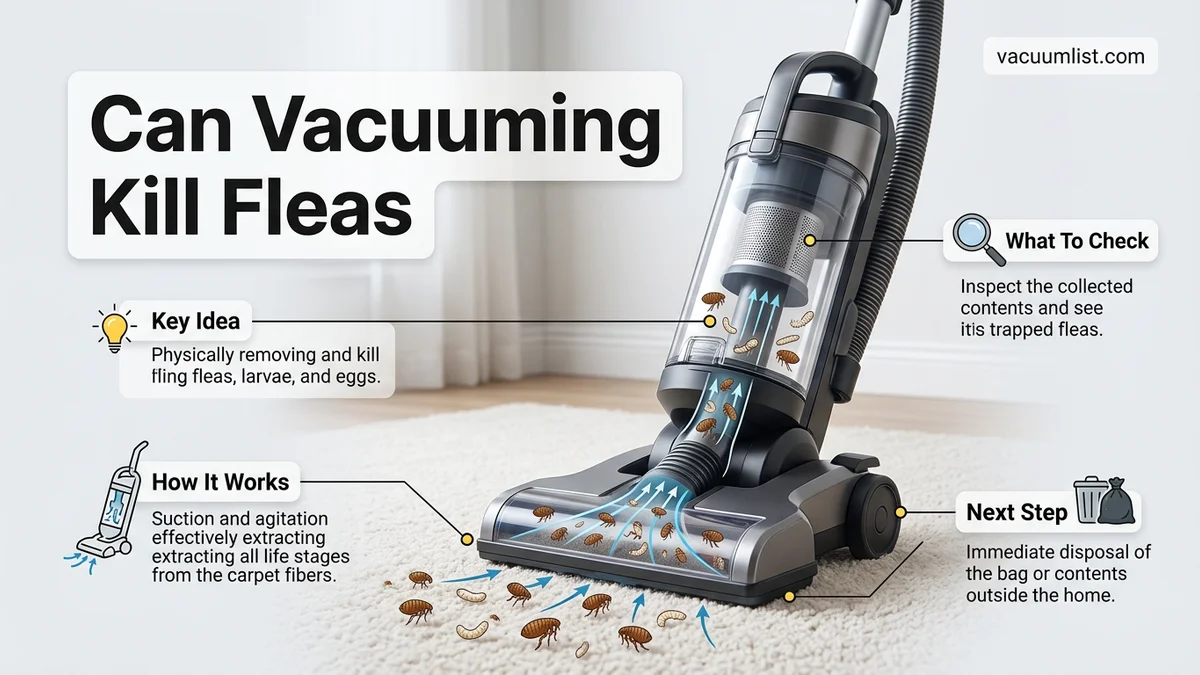
What Happens to Fleas Inside a Vacuum Cleaner
Do Adult Fleas Survive the Trip?
You might assume the high-speed impact of the vacuum hose destroys everything in its path, but adult fleas are remarkably tough. Their flattened, hard-shelled bodies protect them from immense pressure. While the suction kills some adults instantly, research and pest control experts confirm that up to 50% or more of adult fleas survive the trip through the vacuum hose and land alive inside the collection bag or dirt cup.
What Happens to Eggs and Larva?
While adult fleas often survive the initial suction, the eggs and vulnerable larvae face a much harsher reality.
- Flea Eggs: Many eggs are crushed by the mechanical turbulence inside the rotating brush roll and the vacuum internals.
- Flea Larvae: These worm-like juveniles are soft-bodied and prone to drying out or dying from the intense friction and airflow changes inside the machine.
- Pupae: Cocoons are notoriously sticky and often remain anchored deep in carpet fibers, making them harder to vacuum up initially, though they can survive inside a canister if ingested.
Even if some immature fleas survive, trapping them inside a sealed vacuum bag removes them from your carpets, halting their development cycle away from your pets and family.
How to Fix a Flea Infestation Using Step-by-Step Vacuuming
Preparation and Equipment Check
To turn your standard vacuum into an effective flea-eradication tool, you need to prep the machine correctly before you clean a single room. A standard vacuum without proper precautions can actually become a breeding ground inside your home.
- Check for HEPA Filtration: Ensure your vacuum uses a sealed HEPA filter to trap microscopic flea dirt, eggs, and allergens so they do not blow back into your indoor air.
- Treat the Bag or Canister: If you use a bagged vacuum, drop a specialized flea powder or a piece of a flea collar inside the bag to kill any surviving adults. If you have a bagless model, be prepared to empty it immediately outdoors.
- Clear the Floors: Pick up toys, shoes, and loose items so you can reach every square inch of carpet, baseboards, and furniture crevices.
Execution and Post-Vacuuming Protocol
The way you vacuum matters just as much as how often you do it. Fleas cling tightly to the base of carpet fibers, so your technique must be deliberate and thorough to maximize removal rates.
- Use Slow, Overlapping Passes: Move the vacuum slowly across high-traffic areas, pet beds, and upholstered furniture. The agitation from the roller brush stimulates dormant pupae to hatch, exposing them to the suction.
- Target Dark Corners: Fleas prefer dark, humid environments. Pay extra attention under furniture, along baseboards, and inside closets.
- Empty Immediately Outside: Never leave a full vacuum canister or bag sitting inside your house. Empty bagless cups directly into an outdoor trash bin and seal the bag tightly, or discard the disposable vacuum bag immediately in an outside receptacle.
What If It Still Doesn’t Work and Fleas Return
Even with rigorous vacuuming routines, persistent flea populations can overwhelm DIY efforts due to the hardiness of pupae cocoons. According to data from the National Pest Management Association (NPMA), vacuum agitation alone only removes up to 96 percent of adult fleas, leaving resilient eggs and pupae tucked deep within carpet fibers to hatch later. If fleas continue to bite or appear in living areas two weeks after consistent vacuuming, a multi-pronged escalation strategy is required.
- Wash and Treat Pet Bedding: Launder all pet blankets, beds, and soft toys in water exceeding 140 degrees Fahrenheit, followed by a high-heat drying cycle to eliminate hidden larvae.
- Apply Insect Growth Regulators (IGRs): Spray carpets and baseboards with an IGR containing methoprene or pyriproxyfen. These chemicals interrupt the juvenile insect lifecycle, preventing larvae from maturing into breeding adults throughout 2026.
- Consult Veterinary Professionals: Ensure household pets are receiving an uninterrupted, veterinarian-approved oral or topical preventive medication to stop the ongoing cycle of egg deposition.
- Hire Professional Exterminators: When infestations defy domestic intervention, engage a licensed pest control operator for targeted chemical treatments. Professional interior extermination services typically range from $250 to $400 depending on total square footage and infestation severity.
Conclusion
Vacuuming remains a vital, scientifically proven mechanical weapon against household fleas, but it cannot eradicate an entire infestation in isolation. Success relies entirely on combining high-suction equipment, immediate canister disposal, and targeted IGR treatments to address every stage of the parasite lifecycle. According to verified research and expert sources from leading entomological institutions, maintaining a strict daily vacuuming schedule for fourteen consecutive days breaks the emergence window effectively. The next actionable step is to inspect your current vacuum model today, seal the collection bag securely, and establish a comprehensive preventative routine before the peak 2026 breeding season accelerates.
❓ Frequently Asked Questions
Can vacuuming actually kill adult fleas?
While the extreme airflow and physical impact can occasionally kill adult fleas, the vast majority survive the trip through the hose and container. Vacuuming works primarily by removing them from your living space, not by acting as an execution method.
What should I do immediately after vacuuming up fleas?
You must take the vacuum bag or canister directly to an outdoor trash bin. Seal the bag tightly in a plastic trash bag to ensure that no surviving adult fleas or hatching larvae can escape back into your home.
Does vacuuming kill flea pupae in the carpet?
Flea pupae are notoriously tough and cocooned in a sticky substance that anchors them to carpet fibers, meaning vacuum suction rarely pulls them up. However, the vibrations from the vacuum can trigger adult fleas to emerge from their cocoons, exposing them to surface treatments.
Is a bagged or bagless vacuum better for fleas?
Bagged vacuums are generally safer because you can seal and discard the entire bag, preventing exposure to live pests. If you use a bagless model, empty the canister directly into an outdoor trash bag and wash the container with hot, soapy water.
Can fleas breed and multiply inside a vacuum cleaner?
Fleas need a host for blood meals to reproduce, so they will not breed inside a vacuum. However, surviving adults can live inside the dark, debris-filled environment for days or even weeks waiting for a chance to escape.
Should I use a HEPA filter vacuum for fleas?
Using a vacuum equipped with a HEPA filter is highly recommended because it traps tiny flea eggs, dirt, and microscopic debris, preventing them from being blown back out into the room’s air.