
Do Blackhead Vacuums Work in 2026? Expert Real Truth
Blackhead vacuums do not actually remove deep-seated blackheads, instead only pulling out surface oil while posing significant risks to your skin. Dermatologists warn that strong suction can rupture blood vessels and cause severe bruising without addressing the root cause of acne. Effective treatment relies on chemical exfoliants like salicylic acid rather than mechanical suction devices.
The short answer is no, blackhead vacuums do not actually work to clear deep-seated sebum plugs, and they frequently cause lasting skin damage like bruising and broken capillaries. Despite viral social media videos showing satisfying plugs flying into collection chambers, dermatologists in 2026 agree that these devices mostly just pull on surface skin tissue and stretch your pores.
If you have spent hours watching viral skincare clips and considering adding one of these gadgets to your bathroom counter, you need to understand the physiological reality first. Buying a suction tool might feel like a quick fix, but it trades temporary satisfaction for real risks to your skin barrier.
Key Takeaways
- Blackhead vacuums fail to extract deep sebum plugs.
- Suction tools frequently cause broken capillaries and bruising.
- Salicylic acid dissolves oil inside pores safely.
- Retinoids prevent dead skin cells from clogging pores.
- Dermatologist extractions are safer than at-home vacuums.
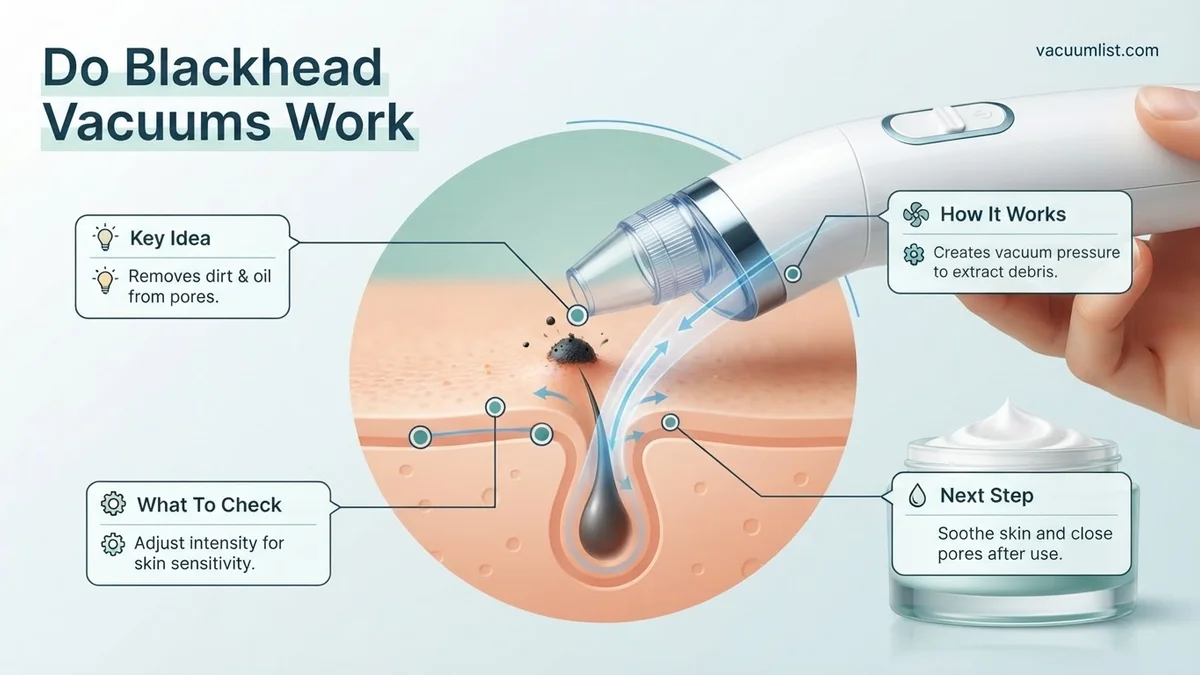
What Causes Blackheads and Why Suction Fails to Clear Them
Blackheads form deep inside your hair follicles when a mixture of excess sebum and dead skin cells becomes exposed to oxygen and oxidizes into a dark plug. Understanding this anatomical reality exposes why mechanical suction is fundamentally the wrong tool for the job.
The Physics of Sebum Anchors
A blackhead is not a loose particle sitting on the surface of your skin waiting to be sucked out. It is anchored securely within the follicular infundibulum, shaped like a wedge that is often wider at the bottom than the pore opening at the top. When you apply external suction to the skin:
- The device pulls on the surrounding skin tissue rather than the targeted plug.
- It can successfully remove the very top layer of oxidized surface debris, creating the illusion of deep cleaning.
- The actual plug remains tightly anchored because the cohesive bonds inside the pore are stronger than the safe pull limit of the vacuum.
- Increasing the suction intensity to overcome this resistance only leads to tissue trauma rather than successful extraction.
The Hidden Dangers of Skin Suction
Using a suction device on delicate facial skin carries immediate and cumulative risks that outweigh any temporary cosmetic benefit. Dermatologists frequently treat patients who experience severe side effects from these gadgets, especially around the thin skin of the nose.
- Broken capillaries: The negative pressure easily ruptures fragile superficial blood vessels, leaving permanent red or purple spider veins.
- Purpura and bruising: Strong suction breaks dermal blood vessels, resulting in circular hickey-like marks that can last for weeks.
- Inflammation: Tearing the delicate pore walls can push bacteria deeper into the dermis, turning a mild blackhead into a painful, inflammatory cystic breakout.
- Elastosis: Repeatedly stretching the skin over time breaks down collagen and elastin, permanently enlarging your pores.
How to Fix Blackheads Safely with Proven Dermatologist Methods
Clearing blackheads requires addressing the chemical composition of the plug and regulating cellular turnover inside the pore lining. Instead of relying on aggressive mechanical force, modern skincare relies on targeted active ingredients that dissolve the bond between dead skin cells and sebum.
Chemical Exfoliants That Dissolve Oil
The gold standard for treating blackheads involves ingredients that can penetrate inside the oil-filled pore to break down debris from the inside out. Unlike surface scrubs or vacuums, these formulations work at a microscopic level.
- Salicylic Acid (BHA): As a lipophilic acid, salicylic acid cuts through sebum to exfoliate the lining of the pore and prevent future clogs.
- Retinoids: Prescription tretinoin or over-the-counter retinol speeds up cellular turnover, preventing dead skin cells from sticking together inside the follicle.
- Azelaic Acid: This gentle alternative helps normalize keratinization and reduces the bacterial load associated with congested pores.
Professional Extraction Alternatives
If you need immediate clearance for a stubborn breakout or congested zone, professional intervention remains the safest route. Dermatologists and licensed estheticians use specialized metal loop extractors with precise, controlled lateral pressure rather than vertical pulling forces.
- Professional treatments like hydradermabrasion use gentle, controlled fluid vortexes combined with mild chemical acids to soften and lift debris safely.
- In-office chemical peels provide deep, uniform exfoliation without the trauma associated with DIY suction devices.
- Manual extractions performed by trained professionals minimize the risk of scarring, infection, and permanent vascular damage.
What If Your Blackheads Still Don’t Clear With Chemical Exfoliants
Stubborn sebaceous filaments and oxidized blackheads sometimes resist standard over-the-counter chemical exfoliants. According to recent 2026 dermatology insights, highly compacted sebum plugs require a targeted multi-step approach rather than aggressive mechanical suction. If gentle acids like BHA fail after six to eight weeks of consistent use, specialized trouble-shooting strategies are required.
Incorporate Double Cleansing with Oil-Based Cleansers
Lipid-soluble impurities often dissolve better in oils than in water-based washes. Massaging a non-comedogenic cleansing oil onto dry skin for sixty seconds breaks down hardened sebum. Research shows that oil massage helps loosen deeply rooted plugs before chemical treatments are applied.
Introduce Retinoids for Cellular Turnover
Over-the-counter adapalene or prescription-strength retinoids accelerate skin cell shedding. This prevents dead skin cells from mixing with sebum inside the pore lining. Dermatologists recommend starting a retinoid two nights a week to avoid excessive irritation while targeting chronic blackheads.
Step-by-Step Guide to Transitioning Away From Damaging Tools
Discarding a blackhead vacuum requires replacing immediate gratification with sustainable skincare habits. Safely transitioning away from suction devices prevents sudden skin panic while protecting fragile capillaries from further damage. Follow this structured protocol to rehabilitate suction-stressed skin throughout 2026.
- Audit your current tool collection: Immediately retire any high-pressure suction device or metal extraction loop to stop ongoing micro-tears and localized bruising.
- Soothe compromised barrier tissue: Apply a restorative moisturizer containing ceramides, panthenol, and niacinamide twice daily for fourteen days to repair broken capillaries and reduce redness.
- Establish a low-irritation active routine: Introduce a gentle 2 percent salicylic acid serum three evenings a week, ensuring the formula is fragrance-free to prevent secondary contact dermatitis.
- Schedule professional extractions if needed: Visit a licensed aesthetician for safe, manual extractions using sterile tools if deep congestion refuses to clear through topical care alone.
What If It Still Doesn’t Work?
Persistent blemishes that resist both suction-free methods and chemical interventions require clinical intervention. Expert dermatologists utilize advanced modalities to safely clear recalcitrant pores without risking permanent scarring. Consider these fallback steps if your complexion shows no improvement:
- Consult a board-certified dermatologist: Book an in-person evaluation to rule out deep-seated cystic conditions or microscopic follicular disorders that mimic standard blackheads.
- Inquire about professional chemical peels: Medical-grade salicylic or glycolic acid peels performed in a clinical setting provide deeper penetration than at-home alternatives. Professional peels typically range from $150 to $300 per session.
- Explore advanced laser and light therapies: Treatments like fractional lasers or specialized photodynamic therapy can permanently shrink overactive sebaceous glands. Clinical light therapies generally cost between $250 and $600 per treatment depending on geographic location and technology used.
- Discuss prescription oral medications: For severe sebum overproduction linked to hormonal factors, physicians may evaluate patients for targeted prescription therapies.
Conclusion
Blackhead vacuums remain a popular yet damaging gimmick that risks broken capillaries, bruising, and chronic inflammation for minimal temporary gain. According to verified research and expert dermatological sources, the most effective strategy relies on consistent chemical exfoliation with BHA and diligent barrier support. Ditch the suction device and prioritize skin health over quick fixes. Take your next step today by auditing your skincare shelf, eliminating mechanical extraction tools, and investing in a reliable, clinically proven salicylic acid treatment for 2026.
❓ Frequently Asked Questions
Why do blackhead vacuums fail to remove actual blackheads?
Blackheads are oxidized plugs of sebum and dead skin cells firmly anchored inside the pore lining. External suction lacks the directional force required to extract the plug intact, often snapping it or leaving the root behind.
What are the primary skin risks associated with pore vacuums?
The most common side effects include broken capillaries (spider veins), localized bruising, petechiae, skin irritation, and worsening inflammation if you have active acne breakouts or rosacea.
Can pore vacuums stretch out your facial pores permanently?
Yes, pulling forcefully on delicate facial skin stretches the pore walls over time, making pores appear larger and more prominent once the initial swelling subsides.
How do chemical exfoliants compare to mechanical suction?
Chemical exfoliants like BHA (salicylic acid) penetrate deep inside the oil gland to dissolve clogs at a cellular level. Mechanical vacuums only exert force on the surface without changing skin chemistry.
Who should completely avoid using a blackhead vacuum?
Anyone with sensitive skin, rosacea, thin skin, active inflammatory acne, or a predisposition to broken capillaries should avoid these devices entirely.
How long does it take to see results from chemical blackhead treatments?
Most over-the-counter salicylic acid treatments or retinoids require four to six weeks of consistent use to visibly reduce and clear stubborn blackheads.