Are Cordless Vacuums Worth It in 2026? Expert Guide
Deciding if you should switch to a battery-powered model comes down to weighing everyday convenience against battery limitations and power trade-offs. Cordless vacuums offer unmatched portability and speed for quick clean-ups, but they often cost more and struggle with heavy-duty, whole-house deep cleaning. Knowing your cleaning habits helps determine if the investment makes sense for your home.
Cordless vacuums are definitely worth it for quick cleanups and multi-level homes, but they rarely replace a corded vacuum if you have heavy shedding pets or wall-to-wall high-pile carpets. While the freedom from tangling cords and heavy machinery is a game-changer for daily maintenance, you are trading raw, continuous power and long-term durability for that convenience.
Deciding if a cordless vacuum fits your routine in 2026 comes down to balancing battery limits and suction drops against the luxury of grab-and-go cleaning. Let us break down the real-world trade-offs so you can avoid buyer’s remorse.
Key Takeaways
- Cordless vacuums trade continuous runtime for unmatched portability and zero cord tangles.
- High-end models rival corded suction, but budget options often lack deep-cleaning power.
- Batteries degrade over time, typically requiring replacement after 3 to 5 years of use.
- They are ideal for apartments, multi-story homes, and fast daily maintenance.
- Large homes with heavy carpets usually still benefit from a traditional corded vacuum.
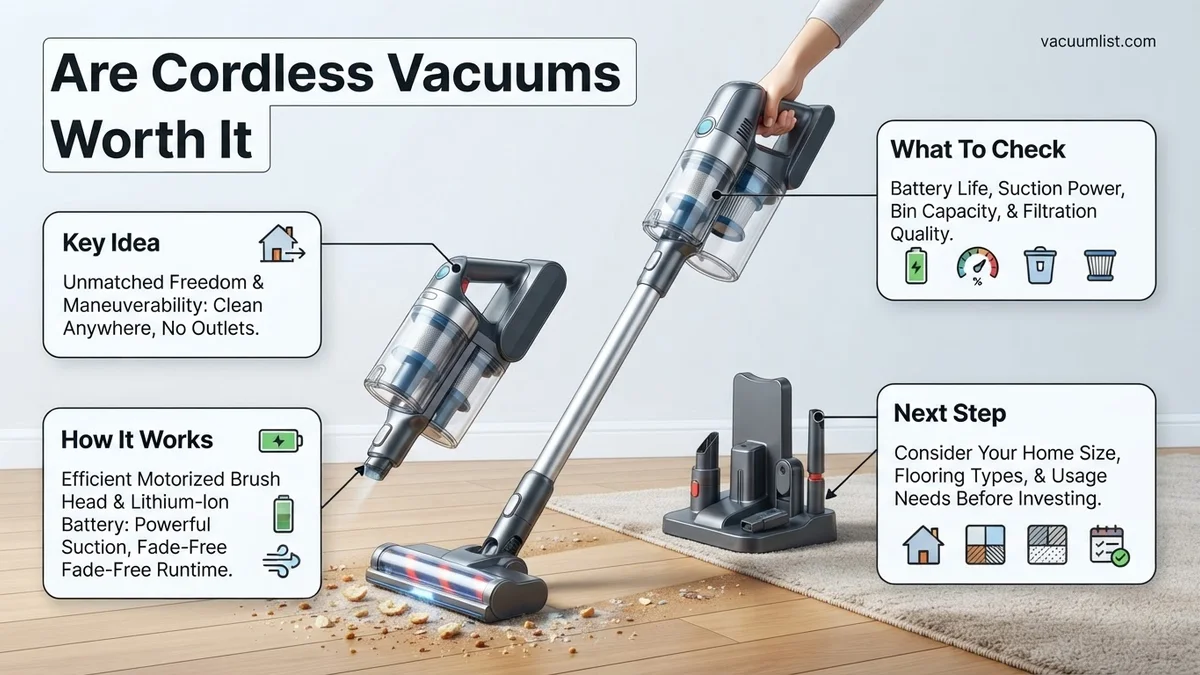
What Causes Buyer’s Remorse With Cordless Vacuums
Battery Life Realities Versus Marketing Claims
The biggest shock for new owners is realizing that maximum runtime specs only apply to the lowest power setting with non-motorized attachments. When you click your cordless vacuum onto boost mode to pull embedded pet hair out of living room rugs, that advertised sixty-minute battery life drops to a meager eight to twelve minutes. If your home has sprawling square footage, you will likely run out of juice before you finish, forcing you into frustrating multi-hour recharging breaks.
- Low-power eco mode: 40 to 60 minutes (good for bare hard floors only)
- Medium auto mode: 20 to 30 minutes (handles mixed daily debris)
- Max boost mode: 8 to 12 minutes (required for deep carpets and stubborn messes)
Suction Power and Maintenance Headaches
Cordless models rely on compact digital motors and restricted airflow paths. While modern 2026 engineering has closed the gap significantly, they still struggle to match the relentless, unlimited suction of a plug-in upright. Furthermore, you face ongoing maintenance penalties. Dust bins are small, filters demand weekly washing, and hair constantly wraps around narrow brush rolls, requiring manual cutting every few sessions.
How to Evaluate Your Home Setup and Cleaning Needs
Mapping Your Flooring and Square Footage
Your physical floor plan dictates whether a cordless vacuum will feel like an upgrade or an expensive paperweight. Homes dominated by hardwood, tile, and low-pile area rugs are ideal environments for cordless models. They easily glide under furniture and transition between rooms without outlet hopping. However, if your 2026 household features dense, high-pile carpeting across multiple large bedrooms, a cordless unit will struggle with deep-down extraction and strain its battery.
- Hard floors and low-pile rugs: Excellent match for cordless convenience
- Stairs and tight spaces: Superior maneuverability compared to heavy corded units
- Large homes with deep carpets: High risk of battery exhaustion and poor pickup
Assessing Your Cleaning Habits and Storage Space
Look honestly at how you actually clean your living spaces. If you prefer to knock out your entire house in one intense, uninterrupted weekend cleaning session, the battery limits of a cordless machine will frustrate you. On the other hand, if you clean in quick, targeted bursts—such as sucking up kitchen crumbs after dinner or tackling the hallway daily—a wall-mounted cordless vacuum makes that routine effortless. Consider your storage situation, too, as slim docking stations require zero floor space compared to bulky corded canisters.
Step-by-Step Guide to Choosing the Right Cordless Model
Navigating the 2026 cordless vacuum market requires a systematic approach to match your home surface types and cleaning frequency. Industry consumer reports recommend evaluating three core metrics before purchasing any lithium-ion appliance: sustained suction power, filtration quality, and battery longevity.
1. Assess Your Primary Flooring Types
Hardwood floors require soft roller brushes that capture fine dust without scratching delicate finishes. High-pile carpets demand motorized brush bars with stiff nylon bristles to agitate embedded pet hair and dirt. According to recent appliance testing data, hybrid models featuring automatic floor-type sensors provide the most efficient power scaling.
2. Calculate Required Runtime Versus Home Size
Homes under 1,500 square feet typically require 20 to 30 minutes of standard cleaning time. Larger residences or multi-level homes demand models boasting 60 minutes of uninterrupted runtime or units shipped with swappable secondary battery packs. Selecting the correct capacity prevents frustrating mid-cleaning recharges.
3. Verify Filtration and Sealed System Certifications
Modern allergy standards necessitate true HEPA filtration to trap 99.97 percent of microscopic particles down to 0.3 microns. Ensure the vacuum body features a fully sealed system rather than just a HEPA filter. This guarantees that captured allergens do not vent back into your living space during operation.
What If Your Cordless Vacuum Lacks Power or Battery Life
If your current cordless vacuum fails to hold a charge or exhibits noticeably diminished suction, minor maintenance fixes can often restore baseline performance. Modern lithium-ion batteries degrade over time, but operational bottlenecks are frequently caused by clogs or dirty filters.
- Inspect and wash all filters: Clogged pre-filters and HEPA cartridges choke airflow and force the motor to work harder, draining the battery prematurely. Wash filters thoroughly every month and allow them to air dry for a full 24 hours before reinstallation.
- Clear airflow blockages: Disassemble the wand, floor tool, and dust bin to check for compacted debris. Hair wraps around the brush roll also strain the internal motor and reduce suction efficiency significantly.
- Evaluate battery cell health: If runtimes have plummeted below five minutes on a full charge, the lithium-ion battery pack has likely reached its end of life. Replacement OEM battery packs typically range from $70 to $130 depending on the manufacturer.
- Consult professional repair services: If replacing the battery or clearing blockages fails to resolve persistent power loss, the internal motor or control board may be failing. For premium models valued over $400, professional diagnostics and motor replacement services generally cost between $90 and $150, making repair a viable alternative to total replacement.
Conclusion
Determining whether cordless vacuums are worth it depends heavily on modern engineering advancements balancing convenience with heavy-duty cleaning capability. According to verified research and expert consumer testing sources, 2026 models successfully match corded performance metrics while eliminating movement restrictions. Your next step is to audit your home flooring layout and select a certified HEPA model that meets your specific runtime requirements.
❓ Frequently Asked Questions
Are cordless vacuums worth the high price tag?
For households that value convenience and do frequent light cleaning, the time-saving portability makes them worth the investment. However, if you are on a tight budget, corded vacuums offer significantly more cleaning power per dollar.
How long does it take to charge a cordless vacuum?
Most cordless vacuum batteries take between 3.5 to 5 hours to fully recharge from empty, though some premium models feature removable batteries for continuous swapping.
Do cordless vacuum batteries degrade over time?
Yes, just like smartphones, the lithium-ion batteries in cordless vacuums lose maximum capacity over years of charging cycles, eventually requiring a battery replacement.
How heavy are cordless vacuums compared to corded ones?
Cordless vacuums are typically much lighter, usually weighing between 3 to 7 pounds, making them significantly easier to carry upstairs and reach ceiling cobwebs.
Can you use cordless vacuums on deep-pile carpet?
You can, but battery life drains significantly faster on high-pile carpets because the motor works harder to spin the brush roll against dense fibers.
What maintenance do cordless vacuums require?
They require regular filter cleaning, emptying the dust cup frequently due to smaller capacities, and occasionally cutting tangled hair out of the brush roll.