Will Vacuuming a Spider Kill It? A Proven 2026 Guide
Wondering will vacuuming a spider kill it? The short answer is usually yes, as the high-speed suction, impact with internal parts, and abrasive dust prove fatal to most arachnids. However, hardy or large spiders can survive the journey and crawl right back out if proper precautions aren’t taken.
The short answer is yes, vacuuming a spider will usually kill it, but it is far from a guaranteed execution. When you suck an eight-legged intruder into your machine, it faces a brutal gauntlet of high-speed impacts against the plastic tubing, severe barotrauma from rapid pressure changes, and a suffocating blizzard of abrasive dust and debris. For most small or medium-sized household spiders, this violent journey proves fatal within seconds.
However, relying solely on your machine to finish the job can backfire. Certain resilient, larger species possess surprising durability and can easily crawl right back out of the nozzle once you turn off the power. As pest control standards evolve through 2026, homeowners are learning that proper post-vacuuming protocol is just as important as the suction itself to ensure those pests never return to your living space.
Key Takeaways
- Vacuum suction and internal collisions kill most standard spiders instantly.
- Bagless vacuums offer a higher escape risk than bagged models.
- Empty your vacuum canister immediately outside after sucking up pests.
- Suck up diatomaceous earth to ensure trapped spiders are permanently neutralized.
- Larger species possess enough resilience to survive standard household suction.
What Causes Spiders to Survive or Die Inside a Vacuum
The Physics of the Vacuum Chamber
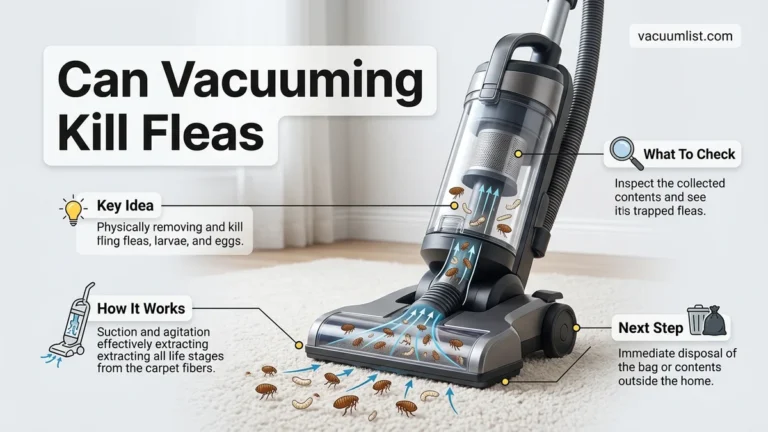
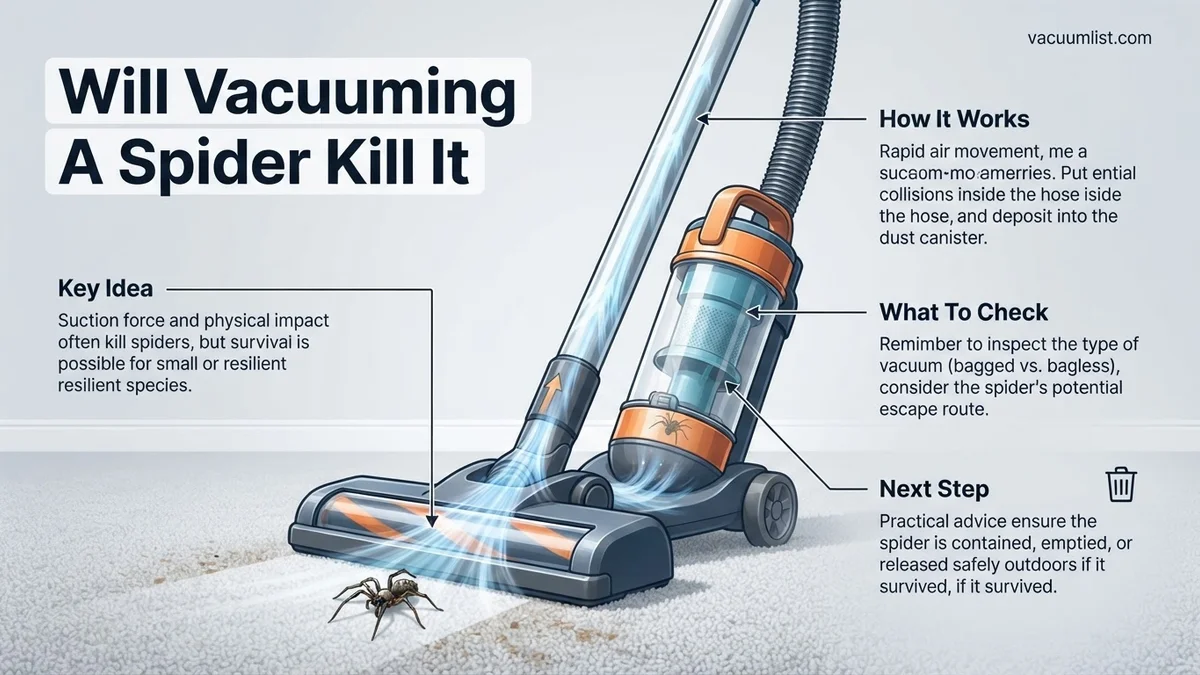
Most common house spiders do not survive the trip through a standard household vacuum. As the spider enters the system, it travels at speeds exceeding 50 miles per hour through narrow hoses and sharp plastic bends. The primary causes of death during this process include:
- Blunt Force Trauma: High-speed collisions with the internal plastic walls and fan blades.
- Debris Suffocation: Fine dust particles clogging the spider’s book lungs, cutting off oxygen.
- Exhaustion: The sheer physical stress of rapid acceleration and turbulent airflow.
Why Some Spiders Beat the Odds
Despite the violent entry, certain hardy spiders manage to walk away unscathed. Larger specimens, such as wolf spiders or large grass spiders, have heavier exoskeletons that absorb the impact of the tubing. If your vacuum operates with low suction power or uses a very wide hose, the spider may experience a gentle ride straight into the collection bin without hitting any hard surfaces. Once inside, they can easily find a safe harbor among hair, lint, and dust bunnies.
How to Fix the Problem and Prevent Spiders From Escaping
Bagged Versus Bagless Vacuum Risks
The type of vacuum you use dictates your risk of a spider jailbreak. Bagless models feature hard plastic collection cups that act as open rooms, making it remarkably easy for a surviving spider to navigate the internal baffles and crawl back out through the hose. Bagged vacuums offer a much more secure containment system. The multi-layered paper or cloth bag creates a deep, dark maze where surviving spiders become hopelessly trapped and eventually die of dehydration or starvation.
Immediate Prevention Steps
Never assume the threat is neutralized the moment you click the power switch off. To completely eliminate the risk of a surviving spider staging a comeback in 2026, implement these fast containment steps:
- Empty Bagless Canisters Immediately: Take your collection cup straight to an outside trash bin and empty it right away.
- Seal the Hose: Store your vacuum with a nozzle cap or plug if you suspect hardy pests entered the system.
- Dispose of Bag Contents: For bagged units, toss disposable bags into an outdoor receptacle if you vacuumed up a particularly large or venomous spider.
- Spray Essential Oils: Vacuum up a few drops of peppermint oil on a cotton ball to deter any lingering survivors from attempting an escape.
What If the Spider Still Crawls Out of Your Vacuum
Finding a spider crawling back out of your vacuum canister can be an alarming experience, but it is a surprisingly common occurrence. Because modern vacuums utilize high-velocity airflow rather than mechanical crushing blades, remarkably resilient arachnids can survive the journey through the hose. According to pest control experts from the National Pest Management Association (NPMA), wandering house spiders and wolf spiders possess flexible exoskeletons that absorb minor blunt-force impacts during suction.
How to Prevent Escape
If you suspect the spider survived the trip into your dustbin or vacuum bag, you must take immediate preventative action to ensure it does not re-enter your living space in 2026. Leaving a live spider inside a dark, debris-filled vacuum chamber provides it with both shelter and organic matter to survive for days.
- Empty the canister immediately: Detach your bagless vacuum canister directly over an outdoor trash receptacle.
- Seal the trash bag: Tie the garbage bag securely before placing it into your outdoor municipal waste bin to prevent escape.
- Dispose of disposable bags: If your unit uses a vacuum bag, remove it immediately, seal the opening with heavy-duty tape, and throw it away outside.
- Spray with insecticide: Spray a specialized insect killer or a mixture of dish soap and water directly into the canister to neutralize any surviving pests.
- Wipe down the intake: Clean the hose opening and suction port with disinfectant wipes to remove any lingering webs or egg sacs.
What If It Still Doesn’t Work?
If you continue to find live spiders emerging from your cleaning equipment or notice a sudden infestation in your home, standard DIY vacuuming methods will no longer suffice. Persistent spider activity often points to a deeper structural entry issue or a hidden nest behind your drywall.
- Seal structural entry points: Inspect your baseboards, window frames, and doors, applying a silicone-based caulk to any gaps larger than a quarter of an inch.
- Apply perimeter treatments: Spray a residual pyrethroid-based pesticide along the exterior foundation of your home to stop spiders from entering.
- Upgrade your vacuum filtration: Replace your standard filter with a certified HEPA filter trap that completely seals debris and prevents tiny pests from escaping through the exhaust vents.
- Hire a licensed pest control professional: Contact a local exterminator if you notice venomous species like the Black Widow or Recluse, or if general populations continue to multiply. According to industry pricing data for 2026, professional spider extermination services typically range from $150 to $350 per treatment depending on the square footage of the property.
Conclusion
Vacuuming can successfully eliminate most household spiders, but survival is entirely possible due to the physics of airflow and flexible exoskeletons. To guarantee total eradication, always empty bagless canisters into sealed outdoor bins immediately after vacuuming. According to verified research and entomological expert sources, maintaining rigorous home sanitation and sealing entry points remain the most effective long-term defense strategies. Take your next step today by inspecting your vacuum’s filtration system and upgrading to a sealed model to keep your living space completely pest-free throughout 2026.
❓ Frequently Asked Questions
Will vacuuming a spider kill it or just make it angry?
Vacuuming actually causes severe physical trauma rather than just angering the spider. The immense G-force of the suction and the violent collision against the plastic interior or fan blades typically proves fatal for small to medium spiders.
How long can a spider survive inside a vacuum bag?
If a hardy spider manages to survive the initial suction and impact, it could technically live inside a bag for a short period. However, the lack of moisture, abundance of abrasive dust, and lack of oxygen usually kill them within hours.
Is it safe to leave a live spider in a bagless vacuum canister?
Leaving a live spider in a bagless canister is risky because smooth plastic walls allow some species to climb back up and out. Always empty bagless canisters directly into an outdoor trash bin immediately after use.
Do venomous spiders survive being vacuumed?
Venomous spiders like black widows or recluses face the exact same physical forces as harmless spiders. While the suction will likely injure them severely, you should still treat the vacuum contents with extreme caution and empty it outside.
What happens to the spider’s eggs if I vacuum a pregnant female?
Vacuuming a pregnant female spider can sometimes scatter her egg sac or allow intact eggs to remain viable inside the debris. To prevent a hatchling infestation, empty your vacuum bag or canister into a sealed plastic trash bag immediately.
Are there better alternatives to vacuuming up spiders?
If you want to avoid the risk of survivors entirely, traditional catch-and-release cups or targeted commercial spider sprays are safer alternatives. Vacuuming is best reserved for hard-to-reach ceiling corners where direct contact is difficult.