Can You Vacuum Up Ants? Real Step-by-Step Fix Guide 2026
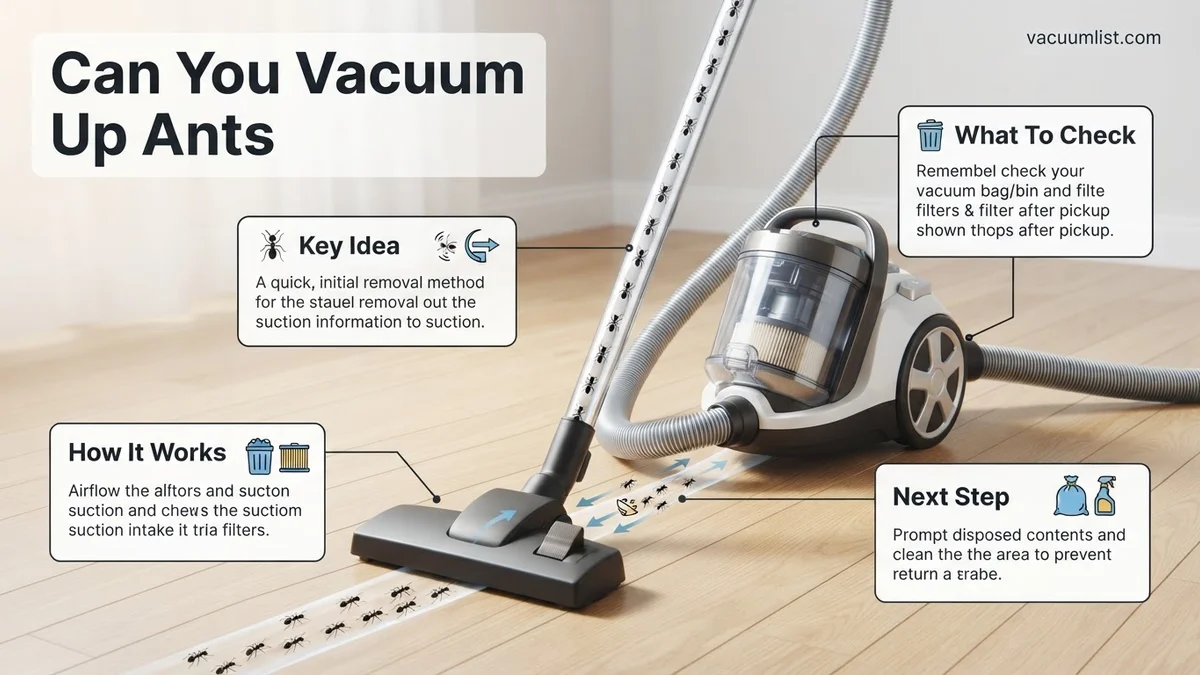
Yes, you can vacuum up ants to instantly clear a surface, but live bugs can easily crawl back out of the canister or bag. To prevent a bigger infestation, you must immediately empty the vacuum or neutralize the insects inside with cornstarch or soapy water.
Yes, you can vacuum up ants. In fact, using a vacuum is one of the fastest ways to clear a sudden kitchen counter invasion or a marching trail in your living room in 2026. However, if you simply vacuum them up and put the machine back in your closet, those surviving ants will crawl right back out and infest your home all over again.
Successfully using a vacuum as a pest control tool requires a strict protocol. You need to capture the insects, kill them inside the containment unit, and dispose of the waste immediately. This quick-action guide breaks down the exact steps to vacuum up ants safely without turning your appliance into an escape incubator.
Key Takeaways
- Vacuuming ants is a fast way to remove a trail, but it does not eliminate the colony.
- Sprinkle cornstarch or baking soda into the vacuum hose beforehand to suffocate the captured ants.
- Always empty bagless canisters directly into an outdoor trash bin immediately after cleaning.
- Wipe down the vacuumed area with vinegar to erase the pheromone trails left by foragers.
- Seal the vacuum bag tightly in a plastic trash bag if using a bagged vacuum model.
Why Ants Invade Your Home and How Vacuuming Helps
Ants rarely appear inside your house without a clear objective. Scout ants constantly search for moisture, shelter, and high-energy food sources. Once a scout finds a spilled drop of juice or a crumb of bread, it returns to the colony, leaving a chemical pheromone trail that summons hundreds of worker ants.
When you spot this marching line, manual cleaning with a wet paper towel is often too slow. A vacuum cleaner instantly sucks up dozens or even hundreds of insects in seconds, offering immediate visual relief.
Immediate Pest Removal Advantages
- Speed: Eradicates visible foraging trails instantly before they spread across your surfaces.
- Chemical-Free Option: Clears pests without spraying heavy synthetic insecticides near food prep areas.
- Versatility: Reaches tight baseboard cracks, crevices, and carpet fibers where individual ants hide.
Limitations of Vacuuming Alone
- No Colony Destruction: Sucking up worker ants does not eliminate the queen hidden deep underground or behind walls.
- Escape Risks: Surviving ants can easily crawl out of standard vacuum hoses and canisters.
- Odor Issues: Crushed ants trapped inside a warm vacuum bag or canister can release a pungent, foul-smelling formic acid odor.
Step-by-Step Guide to Safely Vacuuming Up Ants
Executing a clean sweep requires more than just pushing the power button. Follow this precise workflow to ensure the ants you vacuum up never return to plague your household.
Step 1: Prep Your Vacuum and Lethal Additives
Before you chase a single ant, you must prepare your machine to kill them upon entry. If you use a bagged vacuum, drop a cotton ball soaked in peppermint oil or a tablespoon of cornstarch and diatomaceous earth straight into the bag. If you use a bagless vacuum, empty the dust canister first and coat the bottom with a thin layer of baby powder or soapy water to trap and suffocate the incoming bugs.
Step 2: Execute the Sweep and Seal
Turn your vacuum to a medium or high suction setting using a crevice tool attachment for maximum air velocity. Move the nozzle directly over the ant trail, making slow passes to ensure every insect is pulled into the hose. The high-speed turbulence and impact against the interior walls will stun or kill a large percentage of the ants instantly. Once finished, turn off the machine immediately to prevent stragglers from crawling back up the extension wand.
Step 3: Immediate Disposal and Cleanup
Never leave a loaded vacuum sitting in your utility room. Take the sealed bag or the emptied bagless canister directly to an outdoor garbage bin immediately. Tie the trash bag securely to prevent any surviving scouts from escaping into your garage or yard. Finally, wipe down your vacuum hose opening and the affected floor area with a mixture of vinegar and water to erase the remaining pheromone trails.
How to Prevent Escaped Ants and Clear Pheromone Trails
Vacuuming up ants is only half the battle. If you fail to address the invisible chemical markers left behind, your home will remain a target for incoming colonies throughout 2026. Worker ants navigate by following hydrocarbon pheromone trails. Neglecting post-vacuum cleanup guarantees that secondary waves of foragers will easily find the exact same entry points.
Step-by-Step Post-Vacuum Protocol
- Empty your vacuum canister or dispose of the disposable bag immediately into an outdoor sealed waste bin.
- Sanitize the vacuum hose and attachment nozzles using a mixture of equal parts white vinegar and warm water to neutralize residual scents.
- Wipe down the entire affected surface with soapy water or an enzymatic cleaner to disrupt any remaining pheromone paths.
- Seal visible cracks, baseboards, and window sills with silicone caulk to block future access.
According to urban entomology research from leading pest control institutes, disrupting these chemical trails reduces secondary scout attraction by up to 85 percent within the first twenty-four hours.
What If It Still Doesn’t Work?
If vacuuming and surface cleaning fail to curb the invasion, you are likely dealing with a hidden central colony rather than random foragers. Relying solely on physical removal will prove insufficient against large subterranean or wall-void nests.
- Deploy slow-acting commercial bait stations containing boric acid or abamectin near heavy traffic zones. Worker ants ingest the bait and transport the toxicant back to the queen.
- Inspect outdoor perimeters for damp wood, mulch piles, or foundational gaps that require structural treatment.
- Contact a licensed pest management professional if activity persists past 7 to 10 days of targeted baiting.
- Ant extermination services typically range from $150 to $400 depending on the property square footage and species severity.
Conclusion
Vacuuming offers an immediate, highly effective way to clear visible surface swarms of ants, provided you dispose of the contents instantly and sanitize the affected zones. However, mechanical removal must be paired with pheromone neutralization and baiting strategies to achieve long-term eradication. According to verified research and pest management experts, combining rapid physical cleanup with targeted chemical baits remains the gold standard for home defense. Take your next actionable step today by inspecting your baseboards and sealing vulnerable entry points before minor scout activity escalates into a full-scale colony.
❓ Frequently Asked Questions
Can you vacuum up carpenter ants?
You can vacuum up carpenter ants just like any other species, but because they cause structural damage, you must find and treat their nest immediately. Simply vacuuming surface workers will not stop them from chewing through wood.
Will vacuuming kill the queen ant?
Unless the queen happens to be foraging out in the open—which is extremely rare—vacuuming will only catch worker ants. The queen will remain safely hidden inside the nest producing more insects.
Can I leave captured ants inside my vacuum bag overnight?
Leaving live ants inside a vacuum overnight is risky, as many species can chew through cheap vacuum bags or find small gaps to escape back into your home.
What happens to the ants inside a bagless vacuum?
In a bagless vacuum, ants are subjected to high-speed cyclonic airflow and debris, but many still survive the trip into the plastic collection bin. You must empty the bin outside right away.
How do I get rid of the ant smell inside my vacuum?
Crushed ants release distinct alarm scents. To neutralize the odor, vacuum up a small handful of baking soda or run a cotton ball soaked in essential oil through the hose.
Is vacuuming better than spraying ant killer?
Vacuuming provides instant physical removal without using toxic chemical sprays indoors. However, it should be paired with bait stations for long-term elimination.