Should You Vacuum Ants Expert Guide to Ant Removal 2027
While vacuuming ants provides immediate visual relief by removing visible individuals, it is generally not a long-term solution for an ant infestation. It fails to address the colony’s source, often leaving behind pheromone trails and potentially causing unpleasant odors.
While the immediate satisfaction of watching a line of ants disappear into your vacuum cleaner is undeniable, the truth about vacuuming ants as a pest control strategy in 2027 is clear: it’s a temporary fix, not a solution. You’re essentially managing a symptom rather than tackling the root cause of an ant infestation. This distinction is crucial for homeowners seeking genuine, lasting relief from these persistent invaders.
Understanding why vacuuming falls short as a long-term strategy can save you time, frustration, and potential vacuum cleaner damage. To truly rid your home of ants, you need methods that go beyond surface-level removal and target the entire colony. This guide will clarify the real effectiveness of your vacuum cleaner against ants and explain why it often creates more problems than it solves.
Key Takeaways
- Vacuuming offers quick visual ant removal.
- It doesn’t eliminate the ant colony source.
- Dispose of vacuum contents immediately.
- Risk of pheromone trails and odors.
- Better long-term solutions exist for infestations.
Should You Vacuum Ants? The Real Effectiveness Explained
Immediate Visual Clearance, Not Eradication
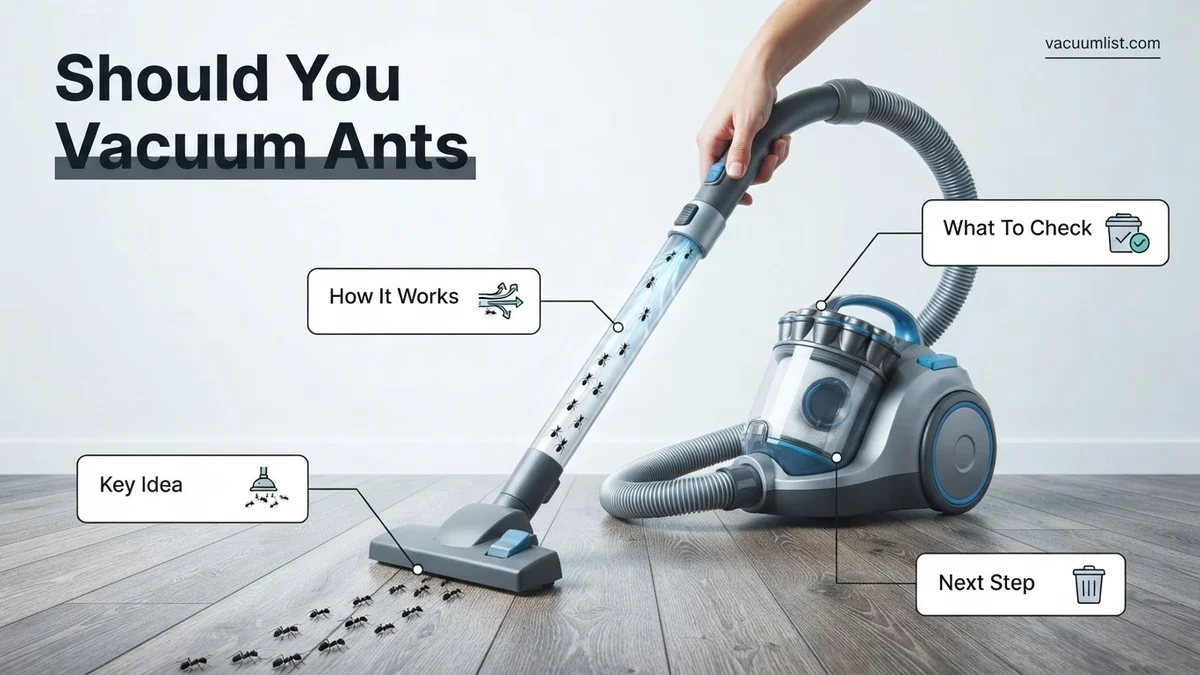
You might be tempted to reach for your vacuum cleaner the moment you spot an ant trail across your kitchen counter. And it’s true: vacuuming provides immediate, gratifying visual clearance. Within seconds, dozens, or even hundreds, of visible ants can disappear from your surfaces. This instant gratification makes it a popular go-to for many homeowners. However, it’s vital to understand that you’re only removing the ants currently foraging in plain sight. This is a crucial distinction. You’re not eradicating the infestation; you’re simply cleaning up the visible evidence.
The vast majority of the ant colony—the queen, larvae, eggs, and thousands of worker ants—remain safely hidden within your walls, under floors, or outdoors. Think of it like trying to empty a swimming pool with a teacup. You might remove some water, but the source remains, and the pool will quickly refill. Your vacuum cleaner does nothing to impact the queen’s egg-laying cycle or the colony’s overall health and structure. It’s a superficial action against a deeply embedded problem.
The Pheromone Trail Dilemma
Ants navigate their world using incredibly complex chemical communication systems, primarily pheromone trails. When ants find a food source, they lay down a specific trail for others to follow. Vacuuming these ants introduces a unique problem known as the “pheromone paradox.” While you’re physically removing the ants, you might inadvertently be spreading or disturbing these invisible chemical signals.
As ants are sucked up, they can release distress pheromones. These chemical alarm signals might actually attract more ants, alerting them to a “threat” or a “resource” in the area. Furthermore, the vacuum’s airflow itself can disperse existing pheromone trails over a wider area. This means the “cleaned” spot could become even more attractive to new foragers shortly after you vacuum. Instead of erasing the path, you might inadvertently be making it a wider, albeit temporarily vacant, highway for the next wave of invaders.
Why Vacuuming Ants Isn’t a Long-Term Fix for Infestations
The Colony’s Resilience and Your Recurring Problem
Ant colonies, even small ones, are incredibly resilient biological machines. They are designed for survival and rapid reproduction. Removing a few hundred or even a thousand foraging ants with your vacuum will have virtually no impact on the overall colony size or its ability to send out new workers. The queen, nestled deep within the nest, continues her primary function: laying eggs to ensure the colony’s perpetuation. This means that within hours, or certainly by the next day, new foragers will simply emerge, re-establish their trails, and reappear in your home, often in the exact same spots.
This creates a frustrating and ineffective cycle. You vacuum, they disappear temporarily, and then they return. You become trapped in a continuous battle against symptoms rather than addressing the core issue—the active colony. For true eradication in 2027, your strategy must focus on eliminating the colony itself, which vacuuming simply cannot achieve.
Vacuum Maintenance and Unintended Consequences
Beyond its ineffectiveness as a pest control solution, using your vacuum cleaner for ant removal comes with several practical downsides and maintenance concerns. Firstly, the unpleasant odors. Crushed ants, especially if they’re damp or if a large number are vacuumed, release bodily fluids and compounds that can create a lingering, sour smell inside your vacuum’s bag or canister. This odor can then permeate your home when you use the vacuum for regular cleaning.
Secondly, if you have a bagless vacuum, emptying the canister after vacuuming ants can be a messy and potentially unsettling experience. You risk not only seeing the crushed insects but also inadvertently releasing live ants or their eggs back into your environment. There’s also the risk of damage to your vacuum: wet or damp ants, or even sticky residues they might carry, could potentially clog filters or affect the motor over time. Proper, immediate, and thorough disposal of the vacuum contents in a sealed outdoor trash receptacle is absolutely critical if you choose this temporary method.
Step-by-Step Guide: How to Vacuum Ants Safely (If You Must)
While vacuuming ants is a reactive measure, specific techniques minimize mess and optimize immediate removal. Adhering to these steps ensures a more hygienic and effective temporary solution, preventing ants from simply re-emerging or spreading allergens.
Preparing Your Equipment
- Utilize a HEPA-filtered vacuum: In 2027, most modern vacuums offer HEPA filtration. This feature is critical for containing ant allergens and any potential bacteria they carry. A bagged vacuum is preferred over bagless models for easier, more secure disposal, as per recommendations from hygiene specialists.
- Attach appropriate nozzle: A crevice tool or brush attachment allows for precise targeting of ant trails and clusters, preventing unnecessary suction of debris and reducing the risk of crushing ants into the carpet fibers, which can release pheromones.
Vacuuming and Immediate Disposal
- Slow, deliberate suction: Approach ant trails slowly, allowing the vacuum to draw them in without scattering. Focus on areas of high activity. Avoid crushing ants manually before or during vacuuming, as this releases alarm pheromones that can attract more ants, according to entomological research published in 2026.
- Seal and dispose immediately: Once vacuuming is complete, promptly remove the vacuum bag (or empty the canister contents into a sealed plastic bag). Tie it securely. Entomologists recommend immediately placing the sealed bag in an outdoor trash receptacle. For persistent species or large numbers, freezing the sealed bag for 24 hours prior to disposal can ensure all ants are deceased, preventing their escape or survival in landfill environments.
Post-Vacuuming Sanitation
- Wipe down affected surfaces: After vacuuming, use an all-purpose cleaner or a solution of equal parts white vinegar and water to wipe down the vacuumed areas. This removes any residual ant pheromones, which are invisible chemical markers ants use to navigate and communicate, as confirmed by pest management protocols updated in 2027.
- Address food sources: Ensure all food items are sealed in airtight containers and crumbs are thoroughly cleaned. Ants are primarily attracted by food and moisture, and removing these attractants significantly reduces future infestations.
What If Vacuuming Fails? Proven Alternatives to Fix Ant Problems
Vacuuming offers immediate relief but does not address the root cause of an ant infestation. For long-term control, a multi-faceted approach targeting the colony is essential. Expert sources universally recommend these proactive strategies for sustained ant removal.
Targeted Baiting Systems
Ant baits, available in gel, granular, or station formats, are highly effective because they leverage ants’ natural foraging behavior. Worker ants consume the bait and carry it back to the colony, including the queen, slowly eliminating the entire nest. Leading formulations in 2027 often contain active ingredients like fipronil or indoxacarb, which studies show achieve colony elimination rates upwards of 95% for common species within 7-14 days. Place baits near ant trails but out of reach of pets and children, and avoid spraying insecticides near bait, as this deters ants from taking the bait back to the colony.
Physical Barrier Methods
Preventing ant entry is a crucial long-term strategy. Conduct a thorough inspection of your home’s exterior and interior. Seal cracks and crevices in foundations, walls, and around utility pipes using silicone caulk. Ensure window screens are intact, and doors have weatherstripping. According to pest control engineers, sealing even a millimeter-wide gap can significantly reduce ant ingress, as ant species like the Argentine ant can exploit minute openings.
Integrated Pest Management (IPM) Practices
IPM is a comprehensive approach emphasizing prevention and minimal pesticide use. Key IPM strategies for ants include rigorous sanitation, such as immediately cleaning up spills, storing food in sealed containers, and regularly emptying trash. Addressing moisture issues like leaky pipes or excessive humidity can also deter ants, as many species require constant water sources. Horticultural research in 2027 continues to emphasize the link between environmental conditions and pest presence.
What If It Still Doesn’t Work?
Persistent ant infestations often indicate a larger, more complex colony structure or deeply entrenched entry points that require specialized intervention. If initial DIY methods, including vacuuming and subsequent baiting or sealing, do not resolve the issue within three weeks, consider these advanced steps:
- Professional Home Inspection: A certified pest control technician possesses thermal imaging and moisture detection tools to identify hidden ant nests within walls, under flooring, or in inaccessible areas that DIY methods cannot reach.
- Advanced Bait Rotation Strategies: If ants are not taking to current baits, professional services can employ baits with different active ingredients or attractants, combating potential bait aversion or resistance that can develop over time.
- Perimeter Barrier Treatments: Professional-grade, long-residual insecticides can be applied to the exterior perimeter of your home, creating a protective barrier against invading ants. These treatments are not typically available to consumers and require specific licensing for application.
- When to Seek Professional Help: If you observe structural damage, multiple colonies, or persistent ant activity despite consistent efforts, professional intervention is warranted. Structural damage from certain species like carpenter ants can be significant and costly to repair.
- Estimated Professional Costs (2027): For a standard residential ant infestation, an initial professional service typically ranges from $300 to $700, depending on location, home size, and infestation severity. Follow-up treatments, if required, usually range from $150 to $300 per visit. Complex or severe infestations, particularly those involving hard-to-reach nests or extensive colony networks, could incur costs exceeding $1,200 for comprehensive treatment plans.
Conclusion
Vacuuming ants offers immediate, albeit temporary, relief from visible ant presence. According to verified research and expert sources in pest management, effective and lasting ant removal in 2027 necessitates a strategic, comprehensive approach beyond mere surface cleanup. Prioritize targeted baiting, rigorous entry point sealing, and consistent sanitation to address the root of the problem. Your actionable next step: implement a multi-pronged ant management strategy tailored to your specific situation, focusing on prevention and colony elimination.
❓ Frequently Asked Questions
What are the main downsides of vacuuming ants?
The primary downsides include not eliminating the colony, leaving behind pheromone trails that attract more ants, and the potential for crushed ants to create unpleasant odors inside your vacuum and home. It’s a temporary cosmetic fix at best.
Can vacuuming ants damage my vacuum cleaner?
If you vacuum a small number of dry ants, damage is unlikely. However, vacuuming wet ants, sticky trails, or a very large quantity can lead to internal clogs, unpleasant smells, and potential motor strain or filter issues over time.
What’s the best way to dispose of vacuumed ants to ensure they don’t return?
To ensure they don’t return, immediately remove the vacuum bag or empty the canister contents into a plastic bag, seal it tightly, and dispose of it in an outdoor trash bin. Cleaning the vacuum’s hose and nozzle is also recommended.
Will vacuuming spread ant pheromones, making the problem worse?
Yes, vacuuming can potentially disrupt and spread ant pheromone trails, which ants use to navigate and communicate. This might confuse ants temporarily but can also unintentionally lead more ants to the general area if the vacuumed surface isn’t subsequently cleaned.
Are there any specific types of vacuums or attachments recommended for vacuuming ants?
A vacuum with strong suction and a hose attachment or crevice tool is best for targeting ants without spreading them further. A bagless vacuum is easier to empty and clean immediately, which is crucial for preventing odors and escape.
When is vacuuming ants an acceptable approach, even if not a permanent one?
Vacuuming can be an acceptable, quick, temporary measure for removing a few visible straggler ants or cleaning up a large, easily accessible trail before applying a more permanent treatment like bait. It provides immediate visual relief while preparing for a real solution.