Should You Vacuum or Dust First? Expert 2026 Guide
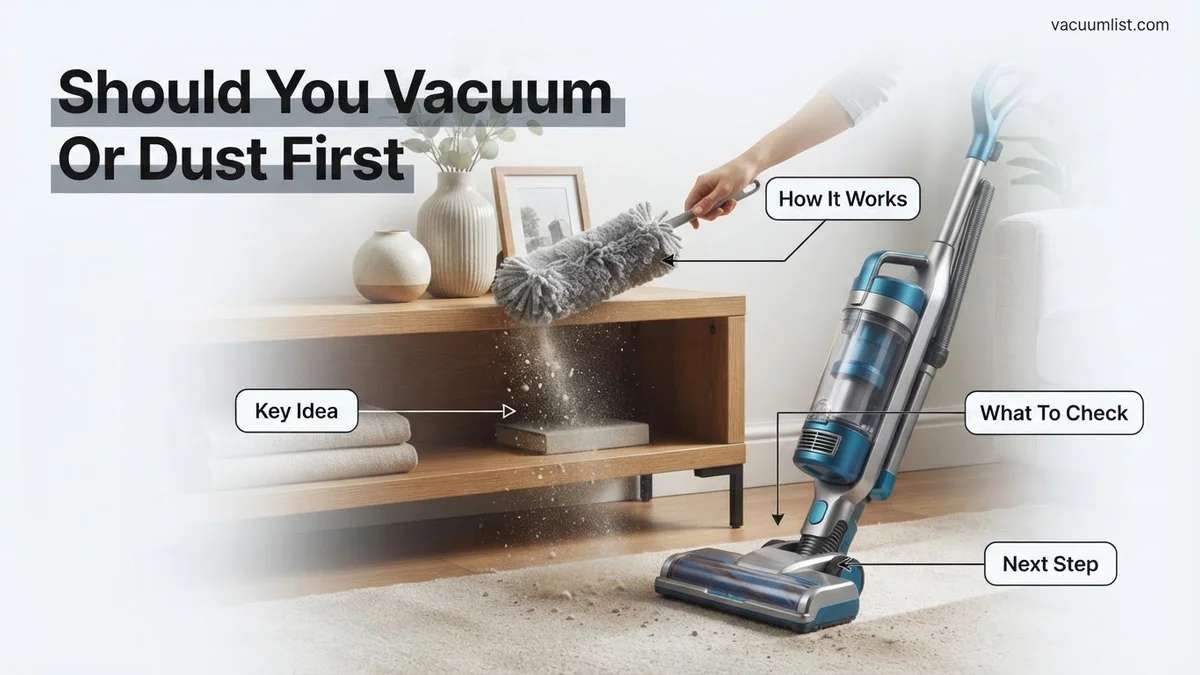
You should always dust first and vacuum second. Gravity causes dust and debris from high surfaces to fall onto the floor, meaning vacuuming beforehand leaves you with a dirty floor all over again.
You should always dust before you vacuum. Cleaning experts and air quality specialists agree that tackling dust first is the only way to prevent undoing your own hard work. If you vacuum first and dust second, airborne particles dislodged from your shelves and tables will simply settle right back onto your freshly cleaned floors.
Following the correct sequence transforms your cleaning routine from an endless cycle into an efficient system. By understanding how particulate matter behaves in your indoor environment, you will save time, reduce allergens, and keep your home cleaner for longer throughout 2026.
Key Takeaways
- Always dust from the top of the room down before touching the floors.
- Vacuuming second captures all the fallen particles that were dislodged during dusting.
- Use a vacuum equipped with a HEPA filter to trap micro-dust effectively.
- Damp dusting prevents micro-particles from floating back into the air.
- Following a top-to-bottom strategy prevents double-work and saves cleaning time.
Why You Must Dust First and Vacuum Second
The Physics of Falling Dust
Gravity dictates everything that happens during a cleaning session. When you wipe down a bookshelf, entertainment center, or mantelpiece, microscopic debris is forced into the air. According to indoor air quality studies, these disturbed particles can remain suspended for up to 45 minutes before settling. If your floors are already vacuumed, that falling cloud of dust immediately contaminates your carpets and hard floors. By dusting first, you give those airborne particles ample time to drift downward so your vacuum can capture them in a single pass.
Protecting Your Floors and Air Quality
Vacuuming acts as a final cleanup mechanism for your entire room. Modern vacuums equipped with HEPA filtration are designed to suck up heavy debris alongside the finer dust that has dropped from upper surfaces. If you reverse the order, you force yourself to mop or vacuum twice. Furthermore, leaving settled dust on the floor while you walk around during your dusting routine causes you to grind those abrasive particles deeper into carpet fibers, leading to premature wear and tear.
Step-by-Step Room Cleaning Strategy for Best Results
The Top-to-Bottom Rule
A professional cleaning strategy relies on a strict top-to-bottom hierarchy. Never clean haphazardly if you want an efficient workflow. Gravity is your constant companion, meaning everything you dislodge will fall downward. Organizing your cleaning zones ensures that no surface gets contaminated twice.
- Ceilings and Light Fixtures: Start by clearing cobwebs from corners and wiping down ceiling fan blades.
- High Surfaces: Move to the tops of tall bookcases, window frames, and upper molding.
- Mid-Level Furniture: Wipe down tables, countertops, desks, and windowsills.
- Floors: Finish by vacuuming carpets and sweeping or mopping hard floors.
Managing High-Friction Zones
Pay special attention to areas that generate heavy foot traffic or collect static electricity, such as television screens and electronics. These zones attract dust rapidly. When wiping down electronics during your mid-level cleaning phase, use a microfiber cloth to trap particles rather than a feather duster that merely flings them into the air. Once all surfaces throughout the room are pristine, plug in your vacuum cleaner and draw up every last speck of debris that has settled below.
How to Choose and Use a HEPA Vacuum to Trap Dust
Selecting the right vacuum is critical when cleaning to ensure you do not redistribute fine particles back into the air. According to the United States Environmental Protection Agency (EPA), true High-Efficiency Particulate Air (HEPA) filters capture a minimum of 99.97 percent of dust, pollen, mold, bacteria, and any airborne particles with a size of 0.3 microns. Standard vacuums without proper filtration often exhaust microscopic debris right back into your living space, rendering your prior dusting efforts completely useless.
Key Features to Look For in 2026 Models
Modern 2026 cleaning technology emphasizes sealed-system designs rather than just filter quality. A sealed system ensures that all air drawn into the machine passes through the HEPA filter instead of escaping through cracks in the canister. Look for certified sealed HEPA vacuums from reputable manufacturers.
Step-by-Step Vacuuming Technique
- Attach a soft brush tool to capture surface dust along baseboards and molding before using the main floor head.
- Move the vacuum head slowly across carpets and rugs. Allow the suction and motorized brush roll adequate time to lift embedded dirt. Plan for at least two passes over high-traffic areas.
- Switch to bare-floor settings on hardwood or tile to avoid scattering debris with high-speed agitator brushes.
- Empty or replace the vacuum bag or bin outdoors immediately after finishing to prevent trapped dust from escaping back indoors.
What to Do If Dust Keeps Settling Immediately
If you notice a fresh layer of dust settling within hours of completing your cleaning routine, the issue extends beyond your vacuuming order. Persistent dust usually points to environmental factors, HVAC complications, or poor filtration within your home heating and cooling system. Addressing the root cause requires a systematic troubleshooting approach.
Troubleshooting Persistent Dust
- Inspect your HVAC air filter. If it has not been replaced in the last 90 days, swap it out immediately. Upgrade to a MERV 11 or MERV 13 rating for superior particle capture.
- Check window and door seals for gaps that allow outdoor particulate matter to blow directly inside your living spaces.
- Evaluate your home humidity levels. Indoor humidity dropping below 30 percent causes fine dust to remain airborne longer, while levels above 50 percent can promote dust mite proliferation.
- Inspect your home ductwork for leaks or heavy buildup. If air ducts have not been cleaned in the last three to five years, professional intervention may be required. Professional HVAC duct cleaning typically ranges from $300 to $500 depending on home square footage.
Conclusion
Deciding whether to vacuum or dust first ultimately determines the efficiency of your entire cleaning routine. Dusting top-down first and following with a sealed HEPA vacuum ensures that fallen debris is permanently removed rather than redistributed into the air. According to verified research and expert indoor air quality sources, combining this top-down cleaning methodology with advanced air filtration drastically reduces indoor allergens. For your next cleaning day, start by wiping your surfaces high up before bringing out your vacuum cleaner.
❓ Frequently Asked Questions
Why is dusting first and vacuuming second the golden rule of cleaning?
The primary reason is gravity. When you clean shelves, tables, and ceiling fans, micro-particles dislodge and fall directly onto the floor. Vacuuming afterward ensures these fallen allergens and dust bunnies are completely removed.
Does cleaning in the wrong order actually create more work?
Yes, vacuuming first means that as soon as you dust high surfaces, the debris settles onto your freshly cleaned carpets or bare floors. This forces you to sweep or vacuum a second time, wasting both time and effort.
What tools should I use to trap dust effectively instead of spreading it?
Microfiber cloths and mitts are ideal because they trap dust using static electricity rather than just pushing it into the air. Feather dusters tend to scatter particles around the room instead of capturing them.
How does a HEPA filter impact the dusting and vacuuming process?
Standard vacuum filters often exhaust microscopic dust back into the room air, where it eventually resettles. A certified HEPA filter traps 99.97% of tiny particles, ensuring they stay locked inside the vacuum bag or canister.
Should I use furniture polish or water when dusting?
Damp dusting using a slightly moistened microfiber cloth or a specialized spray catches particles immediately. Dry dusting often launches fine dust back into the air, making it harder to capture.
What is the complete top-to-bottom room cleaning sequence?
Start at the highest point by cleaning ceiling fans and light fixtures, move down to shelves and tabletops, wipe down baseboards and electronics, and finish by thoroughly vacuuming the floors.