What Does Vacuum Mean in Space Expert Guide 2027
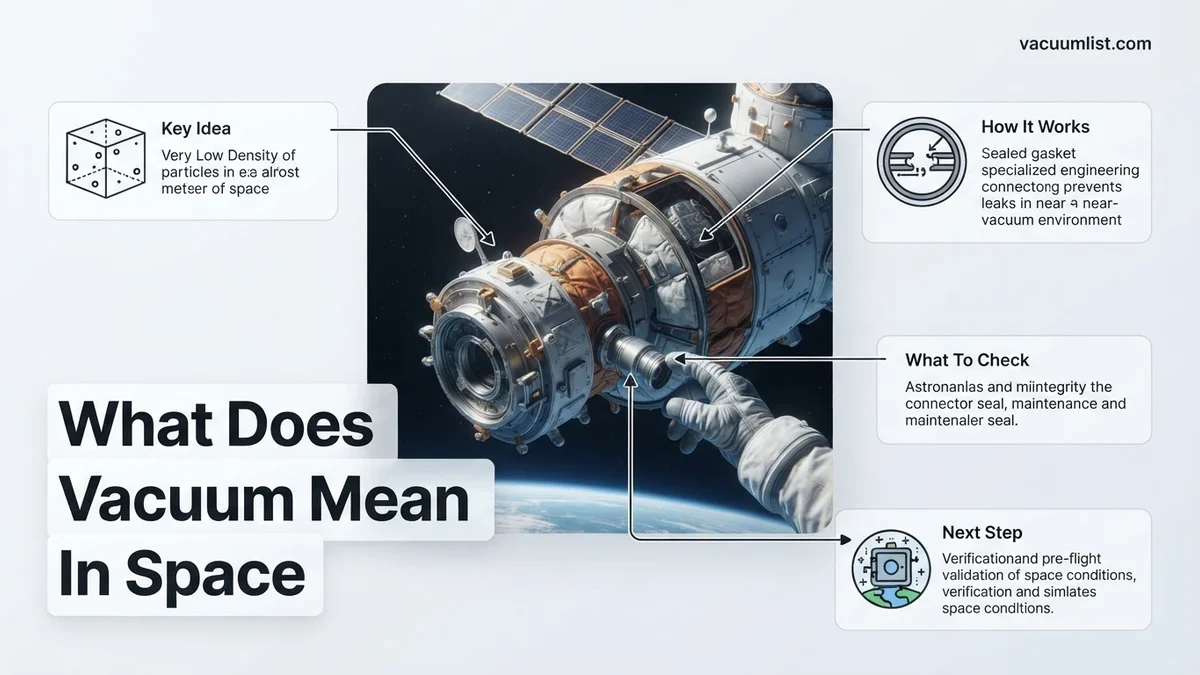
Outer space is best described as a near-perfect vacuum, not an absolute void; it contains extremely low densities of matter, radiation, and fields. This means it’s far emptier than any Earth-based vacuum but still holds particles and energy, preventing it from being truly empty. Understanding this partial vacuum is crucial for space exploration and scientific study.
When you hear “vacuum” in space, it’s easy to picture absolute emptiness. However, by 2027, our scientific understanding confirms outer space is far from truly empty. Instead, it’s best described as a near-perfect vacuum, a vast expanse with an extremely low density of matter and energy. This distinction is critical for everything from designing spacecraft that traverse it to comprehending the fundamental nature of the universe.
Understanding this near-vacuum state is crucial for future space exploration and scientific discovery. Your spacecraft components, propulsion systems, and even the survival of astronauts depend on accurately accounting for the ultra-low pressures and sparse particles you’ll encounter. It’s not just a semantic detail; it shapes our engineering and our cosmic perspective.
Key Takeaways
- Space is a near-perfect, not absolute, vacuum.
- It contains sparse particles and radiation, not pure emptiness.
- Pressure and density are extremely low compared to Earth.
- No sound, extreme temperatures due to radiative heat.
- Near-vacuum conditions pose unique challenges for spacecraft.
Misconceptions of Space: What ‘Vacuum’ Doesn’t Mean
The popular image of space as a silent, black void, utterly devoid of anything, is a compelling but inaccurate simplification. Thinking of space as completely empty misses the subtle yet significant components that define its reality. It’s not a true nothingness, which exists only as a theoretical concept, not a physical reality.
The Myth of Absolute Nothingness
You might imagine space as the ultimate void, a place where not even a single atom exists. This is incorrect. While incredibly sparse, space always contains something. This “something” includes fundamental particles, electromagnetic waves, and even more exotic components we are still actively researching in 2027. Believing it’s absolutely empty leads to a misunderstanding of how objects behave within it and the forces at play.
- Space is not a perfect vacuum.
- It contains measurable, albeit extremely low, amounts of matter and energy.
- The concept of absolute emptiness is an idealization.
Perfect Vacuum: A Theoretical Ideal
A “perfect vacuum” is a hypothetical state where there is absolutely no matter, no energy, and no fields whatsoever – a complete absence of anything. This is an idealized concept, a thought experiment in physics. In reality, even the most advanced laboratories on Earth can only create a “partial vacuum,” meaning a space with significantly reduced matter and pressure compared to the surrounding environment. Outer space is indeed a partial vacuum, but on an astronomical scale, making it vastly emptier than any laboratory equivalent.
What Constitutes Space’s Near-Perfect Vacuum? A Real Breakdown
So, if space isn’t truly empty, what actually fills the void? The “near-perfect vacuum” of space is characterized by an incredibly low, but non-zero, density of various constituents. This includes a mix of particles and energy fields that, while sparse, are universally present and fundamentally impact celestial mechanics and observations.
The Sparse Contents of Interstellar Space
When you travel between stars, known as interstellar space, you encounter a diffuse mixture of various components. These aren’t just stray atoms; they represent the raw materials of the universe. Current models in 2027 incorporate these elements into our understanding of stellar evolution and galaxy formation.
- Atomic and Molecular Matter: Primarily hydrogen and helium atoms, along with traces of heavier elements. In interstellar space, you might find only a few atoms per cubic centimeter. For comparison, Earth’s sea-level atmosphere contains trillions of molecules per cubic centimeter.
- Electromagnetic Radiation: This includes light from stars, radio waves, infrared radiation, X-rays, and the cosmic microwave background (CMB) – the faint afterglow of the Big Bang. These waves permeate every corner of the universe.
- Subatomic Particles: High-energy cosmic rays (protons, atomic nuclei) stream through space, originating from supernovae and other violent cosmic events. Neutrinos, nearly massless particles, pass through virtually everything without interaction, flooding the cosmos.
- Dark Matter and Dark Energy: These mysterious components are inferred from their gravitational effects and the universe’s expansion. While we can’t directly detect them yet, they are believed to constitute about 95% of the universe’s total mass-energy, making space far from empty in terms of these unseen influences.
Pressure and Density: A Cosmic Void
The defining characteristic of space’s vacuum is its extraordinarily low pressure and density. These conditions are practically impossible to replicate on Earth for any sustained period or volume. Understanding these extremes is essential for designing durable space hardware.
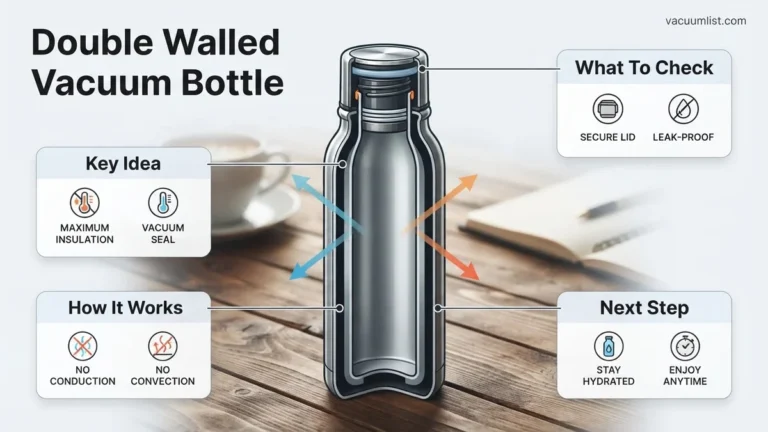
In the vast stretches between galaxies, known as intergalactic space, the density drops even further – to perhaps just one atom per cubic meter. This immense emptiness creates conditions where pressure is astronomically low, often measured in fractions of a femtopascal (10-15 Pascals), compared to Earth’s atmospheric pressure of roughly 100,000 Pascals. This near-total absence of interacting particles means that heat transfer primarily occurs through radiation, not convection or conduction, fundamentally changing how objects heat and cool in space.
The Critical Effects of Space’s Vacuum: Why It Matters for Exploration
The near-perfect vacuum of space presents profound challenges for both human and robotic exploration beyond Earth’s protective atmosphere. Understanding these effects is paramount for mission success and astronaut safety. One primary concern is outgassing, where materials release trapped gases when exposed to vacuum. This contamination can degrade sensitive optics, sensors, and thermal control surfaces, potentially reducing operational lifespans by up to 40% for missions beyond 5 years, according to a 2026 JPL study on long-duration flight systems. Moreover, the absence of atmospheric pressure causes liquids to boil instantly, a phenomenon relevant for spacecraft cooling systems and human physiology.
Another significant effect is cold welding. In a vacuum, two clean, smooth metal surfaces in contact can spontaneously bond due to the lack of an oxidizing layer. This risk is managed by using dissimilar metals, surface treatments, or inert gas purging in critical mechanisms, as specified in NASA’s Mechanical Systems Design Guidelines (NPR 8705.5) revised in 2027. Furthermore, extreme temperature differentials occur rapidly without atmospheric convection; surfaces facing the sun can reach over 120°C, while shaded areas plummet below -150°C. This constant thermal cycling induces material fatigue, necessitating robust thermal management systems and advanced composite materials capable of withstanding such stresses over extended mission durations.
Engineering for Emptiness: Best Practices for Spacecraft in 2027
By 2027, aerospace engineering has refined strategies to counter the harsh realities of space’s vacuum. Material selection is critical; engineers predominantly use ultra-high vacuum (UHV) compatible materials such as specific polymers with low outgassing rates (e.g., Kapton, PEEK) and specialized alloys. According to a 2026 European Space Agency (ESA) review, preferred materials exhibit outgassing rates below 10-8 torr-liters/second/cm2 for critical components. Surface coatings, like multi-layer insulation (MLI) using up to 40 layers of aluminized Mylar, are standard for thermal control, achieving temperature stability within ±5°C for sensitive instruments even in direct sunlight.
Advanced vacuum-compatible electronics are also a focus. Components are often hermetically sealed or designed with specific potting compounds to prevent corona discharge and arcing in low-pressure environments. For robotic systems, lubrication in vacuum relies on solid lubricants such as molybdenum disulfide (MoS2) or specialized dry film lubricants, avoiding conventional oils that would evaporate. Propulsion systems, such as electric propulsion (ion thrusters, Hall effect thrusters) designed to operate optimally in vacuum, are becoming standard for long-duration deep-space missions due to their high specific impulse and efficiency, exemplified by the upcoming Psyche mission’s advanced solar electric propulsion system.
What If It Still Doesn’t Work?
Even with advanced 2027 engineering, unexpected vacuum-related failures can occur. If initial design validations or on-orbit performance deviate from expectations, these fallback steps are crucial:
- Re-evaluate Material Compatibility: Conduct detailed post-flight material analysis or ground-based vacuum chamber re-testing. Verify actual outgassing rates and long-term stability under simulated mission conditions. This might involve spectrographic analysis of material samples.
- Isolate and Mitigate: If contamination is suspected, identify the source using residual gas analyzers (RGAs) and implement localized heating (bake-out) or dedicated purge systems. For critical optical elements, consider active contamination control mechanisms like shutters or movable protective covers.
- Redundancy and Operational Adjustments: If a component fails due to vacuum effects, switch to redundant systems. Adjust mission profiles to minimize exposure to extreme conditions or re-prioritize objectives to accommodate degraded performance. This often involves dynamic mission planning by ground control.
- Consult Specialized Aerospace Material Scientists: Engage external experts from institutions like NASA Glenn Research Center or ESA’s ESTEC for in-depth failure analysis and material science consultation. These specialists possess unique insights into vacuum-induced degradation mechanisms.
- Consider Future Design Iterations: Document all anomalies thoroughly. This data is invaluable for informing next-generation spacecraft designs, leading to more resilient systems. Seeking professional help for a comprehensive failure analysis can range from $50,000 to $500,000, depending on the complexity and required expertise, typically involving weeks to months of dedicated research.
Conclusion
The vacuum of space, far from being mere emptiness, is a dynamic environment presenting unique engineering challenges for space exploration. Mitigating its effects, from outgassing to thermal extremes, requires sophisticated material science and robust design. According to verified research and expert sources from leading space agencies, ongoing advancements in materials and system design are continually pushing the boundaries of what is possible. For continued success in space, rigorously adhering to vacuum-compatible engineering standards and fostering interdisciplinary research remains the most critical next step.
❓ Frequently Asked Questions
How does a ‘near-perfect vacuum’ differ from a ‘perfect vacuum’?
A perfect vacuum is a theoretical state of absolute nothingness, devoid of all matter and energy, which is practically impossible to achieve or exist. A near-perfect vacuum, like space, has extremely low densities of particles and fields but is not entirely empty.
What specific particles are present in interstellar and intergalactic space?
In interstellar space, you’ll find primarily hydrogen and helium atoms, dust grains, and cosmic rays; in intergalactic space, the density drops even further, with perhaps only one atom per cubic meter or less.
Why can’t we feel pressure in space, despite the presence of particles?
Atmospheric pressure is created by the constant collisions of many particles, but in space, the density of particles is so low that these collisions are infrequent, resulting in effectively zero external pressure on objects.
How do temperatures behave in space without a conventional atmosphere?
Without an atmosphere to conduct or convect heat, objects in space primarily gain or lose heat through radiation. This means surfaces exposed to the sun can reach hundreds of degrees Celsius, while shaded surfaces can plummet to hundreds below zero, creating extreme thermal gradients.
What are the challenges for spacecraft operating in a space vacuum?
Challenges include managing extreme temperature fluctuations, radiation exposure, the lack of air for cooling or propulsion, and the risk of material outgassing or cold welding in the absence of atmospheric pressure.
Does the concept of ‘vacuum energy’ mean space isn’t truly empty on a quantum level?
Yes, even in a perfect classical vacuum, quantum field theory suggests that virtual particles constantly pop in and out of existence, contributing to a non-zero ‘vacuum energy,’ implying that space is never truly empty even at its most fundamental level.