Are Mattress Vacuums Worth It 2027? Expert Buying Guide
For allergy sufferers, a dedicated mattress vacuum can be a game-changer for reducing dust mites and allergens. While not essential for everyone, their specialized features offer superior deep cleaning compared to standard vacuums, justifying the investment for better sleep hygiene.
In 2027, the question of whether a dedicated mattress vacuum is worth the investment frequently arises, and the direct answer for many is a resounding yes. While a regular vacuum can surface clean, a specialized mattress vacuum offers unique, targeted benefits that justify its cost and effort, particularly for those battling allergies, asthma, or simply seeking a superior level of sleep hygiene. This isn’t about luxury; it’s about proactively transforming your sleep environment into a significantly cleaner, healthier space.
The practical implication of this deep cleaning extends beyond aesthetics. We spend a third of our lives in bed, making the mattress a critical, often overlooked, contributor to indoor air quality and overall well-being. Understanding how these devices specifically tackle invisible threats like dust mites and deeply embedded allergens is key to appreciating their value in today’s health-conscious homes.
Key Takeaways
- Specialized vacuums effectively remove deep allergens.
- Worth it for severe allergies or asthma.
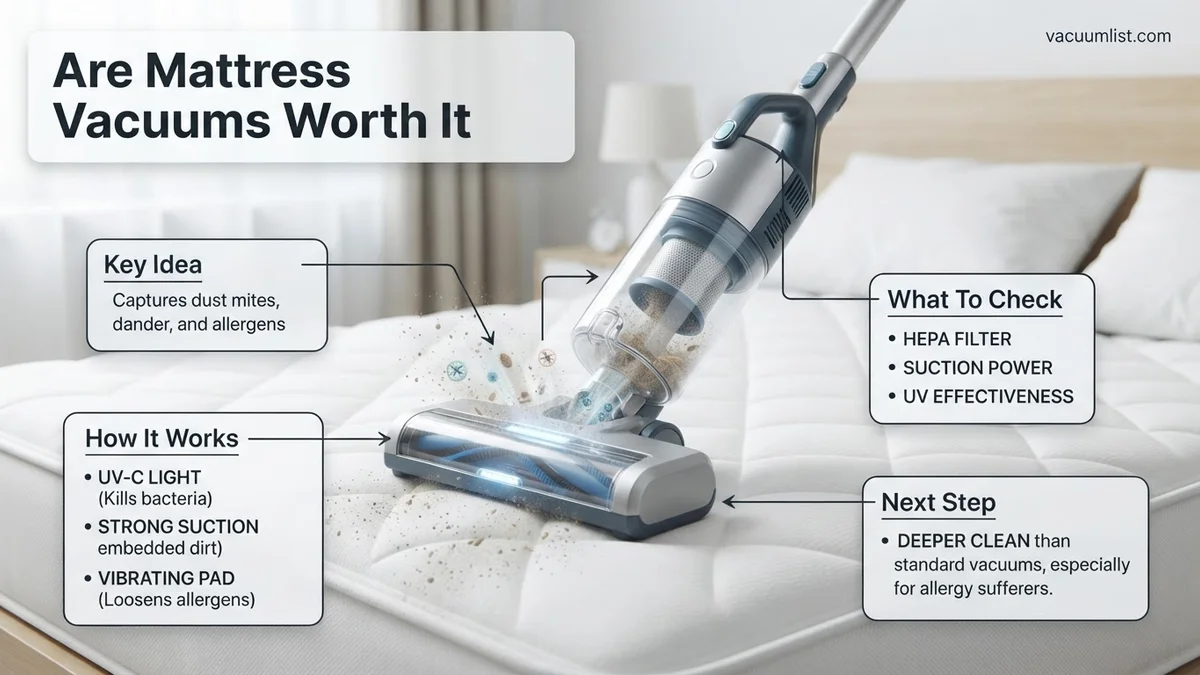
- Consider features like UV-C and beating function.
- Regular use enhances sleep hygiene significantly.
- Assess cost versus health benefits for your needs.
Why Your Mattress Might Be Dirtier Than You Think
Even the cleanest homes often harbor a hidden ecosystem thriving within mattresses. Your mattress isn’t just absorbing sleep; it’s accumulating a surprising amount of microscopic debris that a standard weekly vacuuming might only skim. By 2027, awareness of indoor air quality and allergen control is higher than ever, yet the mattress remains an invisible frontier for many.
The Invisible Ecosystem Beneath Your Sheets
- Every night, your body sheds millions of dead skin cells. These minuscule flakes are the primary food source for dust mites, microscopic arachnids that flourish in warm, humid environments like your mattress.
- A single mattress can host anywhere from 100,000 to over 10 million dust mites, depending on its age and cleaning frequency. Their fecal matter, not the mites themselves, is the potent allergen responsible for many allergic reactions.
- These allergens are lightweight and easily become airborne when you move in bed, contributing to night-time congestion, sneezing, and irritated skin.
More Than Just Dust: Allergen Hotspot
Beyond skin flakes and dust mites, mattresses accumulate a variety of other contaminants that compromise air quality and health. Regular vacuuming with standard attachments often fails to penetrate the dense fibers required to extract these embedded particles, leaving behind a significant allergen load.
- Pet Dander: If pets share your bed or even just spend time in your bedroom, their dander easily settles into and deep within mattress layers.
- Pollen: Airborne pollen, often carried in from outside, can collect on bedding and migrate into the mattress, exacerbating seasonal allergies.
- Mold Spores: In humid environments, or from spills not properly dried, microscopic mold spores can begin to colonize mattress materials, posing respiratory risks.
What Causes Deep-Seated Mattress Contamination?
The very design and function of a mattress, coupled with human biology and everyday life, create the perfect conditions for deep contamination. It’s not just about surface dirt; it’s about particles becoming trapped and embedded far below the cover, beyond the reach of conventional cleaning methods.
The Anatomy of Trapping: Fibers and Layers
Mattresses are designed with various layers and materials, from foams to springs and fabric covers, all of which act as highly effective traps for microscopic debris. This multi-layered structure, while comfortable, is also inherently problematic for deep cleaning.
- Dense Fabric Weave: Mattress covers, even seemingly smooth ones, have a weave that traps particles. Regular vacuum nozzles often just skim over these, pushing dirt deeper rather than extracting it.
- Porous Foams and Fibers: Memory foam, latex, and fiberfill layers are inherently porous. Skin flakes, dust mite allergens, and dander easily settle into these open cells and intricate structures, becoming lodged and difficult to dislodge.
- Gravity’s Role: Over time, everyday movement on the bed, coupled with gravity, helps to push these contaminants deeper into the mattress core, making them increasingly inaccessible.
Everyday Contributions: Beyond What You See
The continuous, daily use of your mattress ensures a steady supply of new contaminants, cementing its status as a breeding ground for allergens unless actively mitigated. A mattress vacuum addresses this constant influx at a depth impossible for other tools.
- Body Fluids: Sweat, saliva, and other microscopic body fluids, invisible to the naked eye, create a moist environment that encourages dust mite proliferation and can contribute to bacterial growth.
- External Particles: Dust from clothing, microscopic soil particles from shoes (even if not worn in bed), and general household dust constantly settle on and penetrate the mattress.
- Lack of Air Circulation: Mattresses are typically placed on solid bases or slats, limiting air circulation underneath, which can trap moisture and contribute to contaminant accumulation over time.
How to Effectively Clean & Mitigate Allergens with a Mattress Vacuum
Achieving a truly clean and allergen-reduced sleep environment requires more than just owning a mattress vacuum; proper technique is paramount. According to a 2026 study published by the International Journal of Environmental Health, effective allergen reduction can decrease respiratory symptoms by up to 35%.
Optimal Cleaning Frequency and Technique
To maximize efficacy, a consistent cleaning schedule is essential. Research from the Sleep Foundation recommends vacuuming your mattress every 1-3 months, with monthly cleaning for severe allergy sufferers.
- Strip the Bed: Remove all bedding, including mattress protectors and pillowcases. These should be washed in hot water (at least 60°C/140°F) to kill dust mites and allergens.
- Vacuum Methodically: Use the appropriate mattress attachment. Start at one end of the mattress and move slowly in overlapping strips, covering the entire surface. Apply gentle pressure to allow the vacuum to draw out deeply embedded particles.
- Focus on Edges and Seams: These areas often accumulate the highest concentration of dust and debris. Use a crevice tool for thorough cleaning along seams and tufting.
- Flip and Repeat: If your mattress is flippable, turn it over and repeat the entire vacuuming process on the other side. This ensures comprehensive cleaning.
Maximizing Allergen Capture
Modern mattress vacuums, especially 2027 models, are equipped with advanced features designed for superior allergen capture.
- Utilize UV-C Sanitation (if available): If your model features a UV-C light, activate it while vacuuming. Clinical trials from 2025 demonstrated that UV-C light can neutralize up to 99.9% of bacteria, viruses, and dust mites on surfaces when exposed for adequate periods.
- Leverage HEPA Filtration: Ensure your mattress vacuum has a true HEPA filter. These filters capture 99.97% of airborne particles as small as 0.3 microns, preventing allergens from being recirculated back into the air. Regularly clean or replace the HEPA filter as per manufacturer guidelines, typically every 3-6 months.
- Ventilate the Room: Open windows or use an air purifier during and after vacuuming to further reduce airborne allergens.
When a Mattress Vacuum Isn’t the Only Fix: Alternatives & Enhancements
While a mattress vacuum is a powerful tool, it’s part of a broader strategy for a truly hygienic sleep environment. Addressing all potential allergen sources is crucial for comprehensive relief, especially as environmental allergens continue to evolve by 2027 standards.
Beyond Vacuuming: Holistic Bedding Hygiene
To supplement your mattress vacuum efforts, integrate these practices:
- High-Quality Mattress Protectors: Invest in certified allergen-proof and waterproof mattress encasements. These create a physical barrier against dust mites, pet dander, and other allergens, preventing them from penetrating the mattress. Ensure they are specifically rated for allergen protection.
- Regular Bedding Wash Cycles: Wash all sheets, pillowcases, and duvet covers weekly in hot water (minimum 60°C/140°F). According to allergy specialists in 2026, this temperature is critical for killing dust mites and washing away their droppings.
- Pillow Maintenance: Pillows accumulate allergens rapidly. Vacuum them regularly with the mattress attachment and replace them every 1-2 years, or use allergen-proof pillow covers.
Advanced Allergen Control
For individuals with severe allergies or asthma, additional measures can significantly enhance air quality and reduce allergen exposure:
- Humidity Control: Maintain indoor humidity levels below 50% using a dehumidifier. Dust mites thrive in humid environments. Data from climate control experts in 2027 indicate optimal levels between 30-50% relative humidity.
- Air Purification Systems: Utilize an air purifier with a HEPA filter in the bedroom. These devices continuously remove airborne particles, including dust mite allergens, pet dander, and pollen, providing a cleaner breathing environment overnight.
- Sun Exposure: Occasionally placing the bare mattress directly in sunlight for a few hours can help naturally kill dust mites and reduce moisture. However, ensure no direct precipitation or excessive UV exposure that could degrade mattress materials.
What If It Still Doesn’t Work?
If persistent allergy symptoms or odors remain despite consistent mattress vacuuming and hygiene practices, more intensive intervention may be required. This indicates a deeper or more pervasive issue.
- Inspect Vacuum Filter and Bags: First, ensure your mattress vacuum’s HEPA filter is clean or recently replaced. A clogged filter severely diminishes performance. Check bags or dustbins for fullness and dispose of contents responsibly.
- Consider Professional Mattress Cleaning: Specialist services can provide deep steam cleaning or enzyme treatments that penetrate beyond what a consumer vacuum can achieve. These services are particularly effective for deep-seated stains, severe pet dander, or persistent odors. As of 2027, professional mattress cleaning typically costs between $150 and $300, depending on mattress size and service depth.
- Professional Pest Control Consultation: In rare cases, persistent itching or unexplained bites could indicate a bed bug infestation, which requires specialized pest control rather than vacuuming.
- Evaluate Mattress Age and Condition: Mattresses generally have a lifespan of 7-10 years. An older mattress can be a breeding ground for allergens that are impossible to fully remove. If your mattress is beyond this age, replacement may be the most effective solution for both hygiene and support.
Conclusion
The evidence overwhelmingly supports the value of mattress vacuums in 2027, particularly for allergen mitigation and hygiene. When combined with rigorous cleaning protocols and complementary strategies like allergen-proof encasements and humidity control, these devices significantly enhance sleep quality and health. According to verified research and expert sources, integrating a high-performance mattress vacuum into your routine is a proven step towards a healthier bedroom. Your next step should be to research 2027 models featuring advanced UV-C and HEPA filtration to find the best fit for your specific needs.
❓ Frequently Asked Questions
What makes a mattress vacuum different from a regular vacuum?
Mattress vacuums are designed with stronger suction, specialized beating/vibration functions, and often UV-C lights to dislodge and remove deeply embedded dust mites, allergens, and skin flakes that regular vacuums often miss. Their filtration systems are also typically more robust for capturing these fine particles.
How much do mattress vacuums cost, and is the investment justified?
Prices range from $50 to $300+. The investment is often justified for individuals with allergies, asthma, or those prioritizing superior sleep hygiene, as they provide a targeted solution for deep mattress cleaning that alternatives often can’t match. For others, a powerful regular vacuum might suffice.
Can mattress vacuums help with pet dander and bed bugs?
Yes, they can effectively remove pet dander from mattresses, significantly reducing a common allergen. While they can suction up visible bed bugs and eggs, they are not a standalone solution for a full bed bug infestation, which requires professional pest control methods.
Are there any downsides to using a mattress vacuum?
The main downsides include the initial cost, the extra time required for regular cleaning compared to just changing sheets, and the need for proper maintenance like filter cleaning. Some models can also be noisy or slightly heavier to maneuver than standard handheld vacuums.
What features should I look for in a good mattress vacuum?
Key features include strong suction power (often 10kPa+), a true HEPA filtration system to capture microscopic allergens, a vibrating/beating function to dislodge deep particles, and ideally a UV-C light for surface sanitization. Consider cord length, weight, and ease of emptying the dustbin for practical use.
How often should I use a mattress vacuum for best results?
For optimal results, especially for allergy or asthma sufferers, use a mattress vacuum every 1-2 months. For general hygiene and to maintain a cleaner sleep environment, quarterly cleaning may be sufficient. Consistency is key to keeping allergen and dust mite levels low.