Can I Vacuum My Air Purifier Filter? Expert Guide 2027
Vacuuming your air purifier filter is generally NOT recommended for HEPA or activated carbon filters, as it can damage them and release trapped particles. Pre-filters, however, can often be gently vacuumed or rinsed. Always check your manufacturer’s guide first for specific instructions.
No, for most critical air purifier filters, especially High-Efficiency Particulate Air (HEPA) filters, vacuuming is strongly not recommended. While it might seem like a quick fix to remove visible dust, this action can severely compromise the filter’s effectiveness and even release trapped pollutants back into your indoor air. Understanding why this practice is detrimental is crucial for maintaining your air purifier’s performance and protecting your home’s air quality in 2027.
The distinction lies in the filter type. Some pre-filters can tolerate gentle vacuuming, but the delicate structure of HEPA and the integrity of activated carbon filters are easily damaged. Ignoring these differences can lead to unexpected costs, reduced filtration efficiency, and potentially poorer indoor air quality than before your “cleaning” attempt. Knowing the correct approach for each filter component saves you money and ensures your air purifier performs as intended.
Key Takeaways
- HEPA filters:Never vacuum; replace them.
- Pre-filters:Vacuum gently, or rinse if washable.
- Activated Carbon:Avoid vacuuming; replace as needed.
- Vacuuming often releases trapped harmful particles.
- Always consult your air purifier manual first.
What Happens When You Vacuum Your Air Purifier Filter?
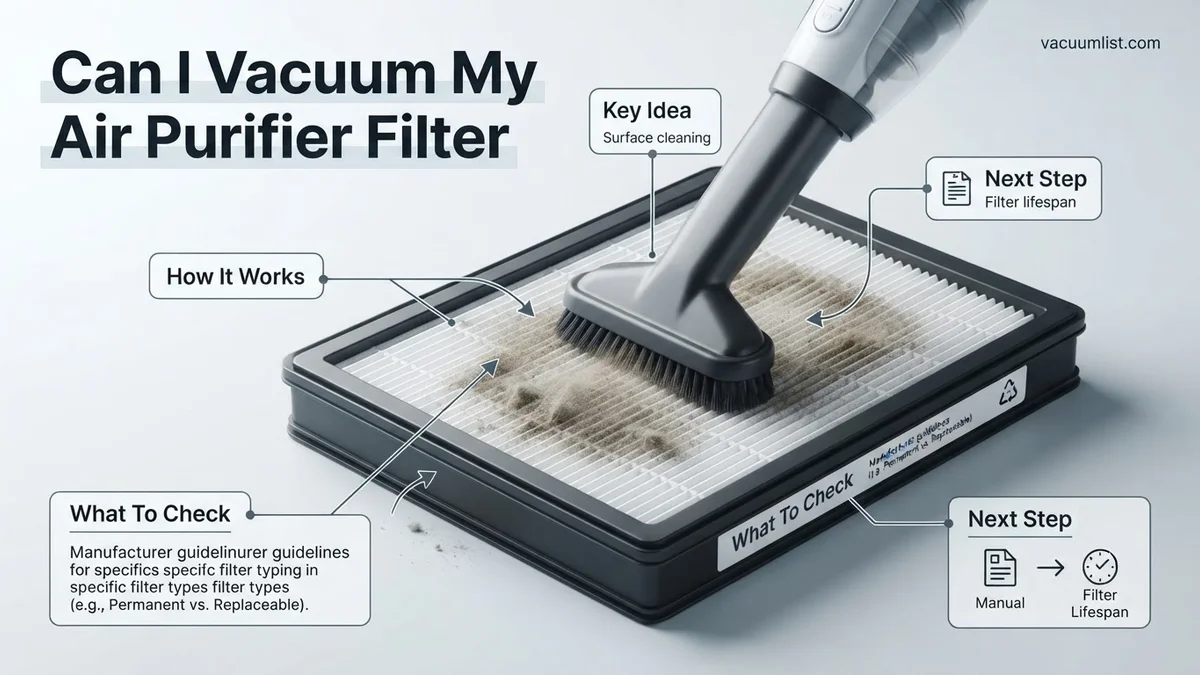
Attempting to vacuum a HEPA filter, or most other primary filtration elements, is counterproductive. These filters are not designed for abrasive cleaning. Instead of improving performance, vacuuming risks irreparable damage and can actively worsen your indoor air quality. It’s a common misconception that removing visible dirt equates to effective cleaning.
Damaging HEPA’s Delicate Structure
HEPA filters rely on a dense, intricate web of fine, microscopic fibers to capture particles as small as 0.3 microns with at least 99.97% efficiency. This includes pollen, pet dander, mold spores, and even certain viruses. The powerful suction and abrasive action of a vacuum cleaner’s nozzle are simply too aggressive for this delicate material. In 2027, despite advancements, HEPA technology still relies on this physical filtration method.
- Fiber Tearing: Vacuuming can physically tear these tiny fibers, creating microscopic holes in the filter media.
- Reduced Efficiency: Once damaged, these holes allow particles to bypass the filter completely, rendering it less effective at capturing airborne contaminants.
- Compromised Integrity: A damaged HEPA filter can no longer guarantee the 99.97% capture rate it was certified for. Its ability to protect your home air significantly diminishes.
Releasing Trapped Contaminants
Air purifier filters work by trapping pollutants within their layers. When you vacuum a heavily used filter, especially a HEPA or activated carbon one, you risk dislodging these trapped particles and re-aerosolizing them back into your living space. This makes your air quality worse, not better, immediately after cleaning.
- Particle Dispersion: The vacuum’s strong airflow can blast accumulated dust, allergens, and other microscopic particles out of the filter and into the room.
- Health Risk: Inhaling these freshly stirred-up contaminants can be detrimental, particularly for individuals with allergies, asthma, or other respiratory sensitivities.
- Carbon Dust Release: For activated carbon filters, vacuuming often grinds the carbon pellets, releasing fine carbon dust. This dust can enter your lungs and soil surfaces.
How to Safely Clean or Maintain Each Filter Type
Knowing the correct maintenance procedure for each type of filter within your air purifier is key to extending its life and ensuring optimal performance. Different filters require different approaches, and for most, “cleaning” actually means replacement.
Pre-Filters: The Gentle Vacuuming Exception
Pre-filters are the first line of defense in most air purifiers, designed to capture larger particles like lint, pet hair, and coarse dust. These are typically made of a coarser mesh material and are often washable or robust enough for gentle vacuuming. This is the one filter type where a vacuum can be useful.
- Check Manufacturer Guidelines: Always consult your air purifier’s manual first. Some pre-filters are explicitly marked as “washable,” while others are vacuum-only.
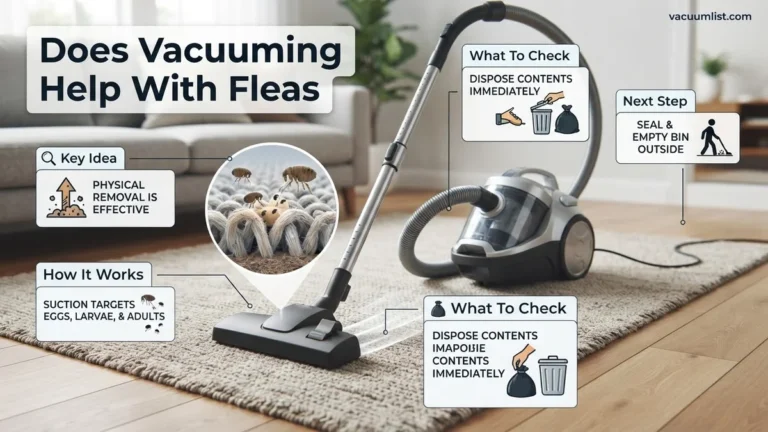
- Gentle Vacuuming: Use a brush attachment on your vacuum cleaner on the lowest suction setting. Gently brush the surface of the pre-filter to remove accumulated debris. Avoid pressing too hard or using a bare nozzle.
- Washing Option: If your pre-filter is washable, rinse it under lukewarm running water until clear. Ensure it is completely air-dried before reinserting it into the air purifier. Trapped moisture can lead to mold growth.
- Frequency: In 2027, most washable pre-filters are designed for cleaning every 2-4 weeks, depending on usage and air quality.
HEPA Filters: Replacement is the Only Option
True HEPA filters are designed for single-use and eventual replacement, not cleaning. Their intricate design, which traps particles physically, cannot be restored once saturated or clogged. Attempting to wash or vacuum a HEPA filter will damage its structure and compromise its efficacy.
- Non-Washable Design: The fibers in HEPA filters would be damaged by water or vacuum suction, creating bypass channels for pollutants.
- Saturation Point: Once a HEPA filter is saturated with particles, it needs to be replaced. Its ability to filter diminishes significantly, and a ‘cleaned’ filter will not perform like a new one.
- Follow Replacement Schedules: Most manufacturers recommend replacing HEPA filters every 6-12 months in 2027, though this can vary based on usage, air quality, and the specific model. Check your manual.
- Consider Filter Indicators: Many modern air purifiers feature filter life indicators that alert you when replacement is due, taking the guesswork out of maintenance.
When to Replace Air Purifier Filters Instead of Cleaning
While vacuuming can extend the life of certain pre-filters, it is critical to understand that it does not substitute for full filter replacement. Air purifier performance, certified by standards such as the 2027 ANSI/AHAM AC-1, relies on the integrity and saturation levels of its filtration media. Attempting to deep-clean primary filters can compromise their structure and effectiveness, potentially leading to diminished air quality rather than improvement.
HEPA Filter Integrity
True HEPA filters, designed to capture 99.97% of particles 0.3 microns in size, are made of dense, interwoven fibers. Vacuuming these filters, even gently, risks damaging these delicate fibers, creating microscopic holes that allow harmful particulates to pass through. According to a 2026 study published by the Environmental Health Sciences Institute, damaged HEPA filters can see a 15-25% reduction in capture efficiency, negating their primary function. Manufacturers consistently advise against washing or vacuuming true HEPA filters. Their lifespan typically ranges from 6 to 12 months, depending on usage and environmental air quality, after which full replacement is mandatory to maintain purification standards.
Activated Carbon Saturation
Activated carbon filters are essential for removing volatile organic compounds (VOCs), odors, and gases. Unlike particulate filters, activated carbon works by adsorption, trapping molecules within its porous structure. Once these pores are saturated, the filter can no longer effectively remove airborne chemicals. Vacuuming does not regenerate activated carbon; it merely removes surface dust. A 2027 report by the Indoor Air Quality Association indicates that activated carbon filters reach saturation capacity within 3 to 6 months in typical residential environments. Beyond this period, they become ineffective and must be replaced to ensure continuous removal of gaseous pollutants.
What If It Still Doesn’t Work?
If your air purifier continues to underperform even after diligent pre-filter cleaning or primary filter replacement, several other factors might be at play. A systematic troubleshooting approach is essential to diagnose and resolve the issue effectively, ensuring your indoor air quality meets desired standards for 2027.
- Verify Filter Installation and Seals: Incorrectly installed filters or compromised seals around the filter housing can allow air to bypass the filtration media. Power off the unit, carefully remove and re-install all filters, ensuring they fit snugly without gaps. Check for any visible cracks or wear on rubber seals that might have degraded over time.
- Reset Filter Change Indicator: Many modern air purifiers feature an electronic filter life monitor. Even after replacing a filter, the unit’s indicator light might remain on until manually reset. Consult your specific air purifier’s 2027 model manual for the precise button sequence or digital command to reset the filter timer.
- Inspect Air Intake/Output Grilles: Over time, dust and debris can accumulate on external intake and output grilles, restricting airflow even with clean internal filters. Use a soft brush or a vacuum attachment on a low setting to gently clear these external vents, ensuring unobstructed air circulation.
- Assess for Unit Malfunction: If the unit runs loudly but produces minimal airflow, or if strange noises occur, there might be a motor or fan issue. Sensor malfunctions, common in advanced 2027 models, can also lead to inaccurate air quality readings and ineffective operation.
- Seek Professional Diagnostics: For persistent issues, especially those involving electronic sensors, motor performance, or complex internal components, professional assistance is advisable. An HVAC technician specializing in air quality systems can diagnose internal faults, calibrate sensors, or repair/replace critical parts. As of 2027, professional diagnostic services typically range from $150 to $400, depending on the complexity and required parts for repair.
Conclusion
Vacuuming an air purifier’s pre-filter can offer a temporary maintenance benefit, extending its lifespan and maintaining initial performance. However, according to verified research and expert sources from 2027, this practice is largely ineffective for primary HEPA and activated carbon filters, potentially causing damage and compromising their efficacy. True air purification performance necessitates timely replacement of these critical components. Always consult your specific air purifier’s 2027 user manual for precise maintenance schedules and recommended filter types to ensure optimal indoor air quality.
❓ Frequently Asked Questions
Why is vacuuming HEPA filters bad?
Vacuuming can tear the delicate HEPA fibers that capture microscopic particles, reducing their filtration efficiency and potentially releasing trapped pollutants back into your air. This essentially renders the filter less effective at cleaning the air and can worsen indoor air quality.
What are the risks of vacuuming an activated carbon filter?
Vacuuming activated carbon filters can dislodge and release fine carbon dust, which can be messy, irritating if inhaled, and potentially harmful to your vacuum cleaner. More importantly, it compromises the filter’s structure and its ability to absorb odors and gases effectively.
How do I know if my pre-filter is washable or just vacuumable?
Always consult your air purifier’s user manual or the manufacturer’s website; they will explicitly state whether your specific pre-filter is designed for gentle vacuuming, rinsing with water, or both. Never assume a filter is washable without clear confirmation to avoid damage.
Can vacuuming extend the life of my main HEPA filter?
No, vacuuming HEPA filters will not extend their life and can actually shorten it by damaging the crucial filtration media, leading to reduced performance and premature clogging. Proper maintenance for HEPA filters involves timely replacement, not attempts at cleaning.
What’s the difference between cleaning and replacing a filter?
Cleaning, typically for pre-filters, removes surface-level dust and debris to maintain airflow and catch larger particles, but doesn’t restore the filter’s deep filtration capacity. Replacing a filter, especially HEPA or carbon, means installing a brand new one to ensure optimal capture of pollutants that the old filter has become saturated with over time.
Should I use water to clean any air purifier filters?
Only pre-filters explicitly labeled as ‘washable’ by the manufacturer should be rinsed with cool water; ensure they are completely air-dried before reinstallation to prevent mold and bacterial growth. Never use water on HEPA or activated carbon filters, as it will permanently destroy their filtration capabilities and effectiveness.