Can You Use Any Vacuum Sealer Bags With Any Machine 2027
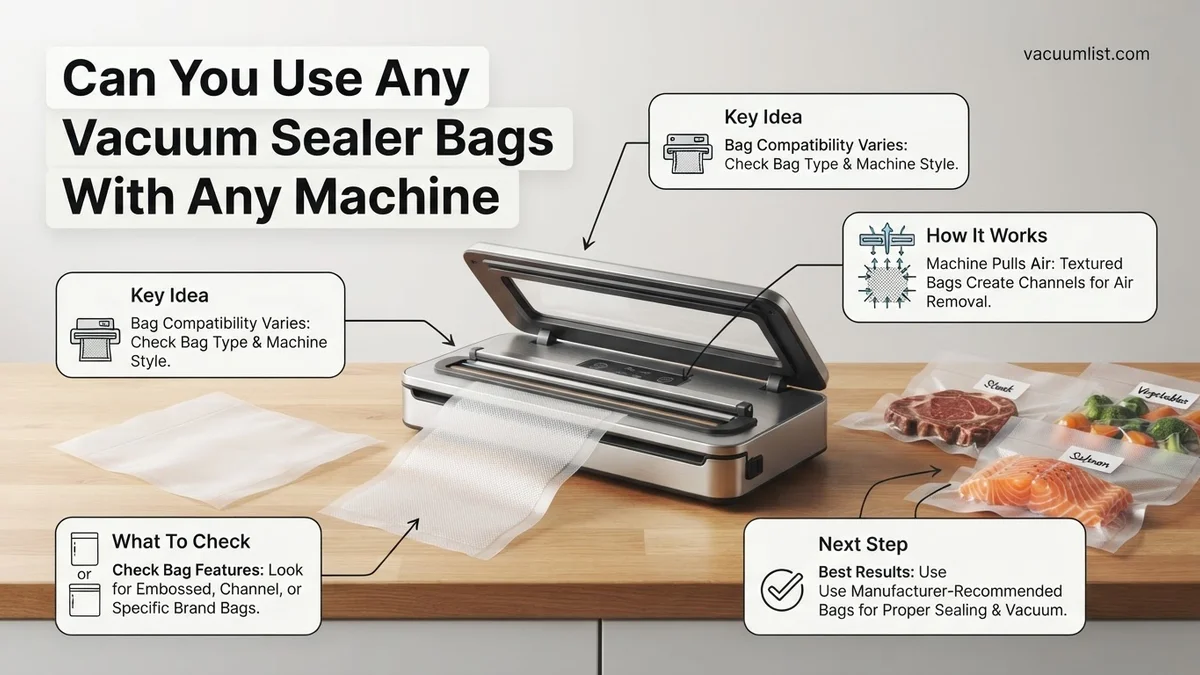
No, you cannot use any vacuum sealer bags with any machine. Compatibility hinges on your vacuum sealer’s type: external suction sealers require embossed bags, while chamber sealers use smooth bags. Understanding these fundamental differences is crucial for effective sealing and preventing machine issues.
The straightforward answer to whether you can use any vacuum sealer bags with any machine in 2027 is a definitive no. While the basic principle of removing air remains consistent, the internal mechanics of different vacuum sealers demand specific bag types for effective operation. Attempting to force compatibility will, at best, lead to failed seals and wasted efforts, and at worst, compromise the longevity of your vacuum sealer.
Understanding this critical distinction isn’t just about saving a few dollars on bags; it’s fundamental to achieving optimal food preservation and getting reliable results from your appliance. This guide cuts through the marketing noise to explain precisely why bag compatibility is non-negotiable, ensuring your vacuum sealing efforts are successful every time.
Key Takeaways
- External sealers need embossed (textured) bags.
- Chamber sealers require smooth (flat) bags.
- Incorrect bags lead to poor seals or air leaks.
- Always check your sealer’s specific bag requirements.
- Off-brand bags can be compatible if they meet specs.
Why Vacuum Sealer Bags Aren’t Universally Compatible
The core reason for bag incompatibility lies in the fundamental design differences between the two main types of vacuum sealing machines. These differences dictate how air is extracted and, consequently, the physical requirements of the bag material itself.
External Suction Sealers and Embossed Bags
Most home kitchens in 2027 likely feature an external suction sealer, also known as an edge sealer or out-of-chamber machine. These models work by:
- Pulling air directly from the bag’s opening.
- The bag opening extends beyond the machine’s sealing bar.
- Creating a vacuum within the bag before heat-sealing it shut.
For this process to work efficiently, these machines require
embossed
or
textured
bags. The raised, crisscross pattern on the inside of these bags creates tiny channels. Without these channels, the flexible plastic walls of a smooth bag would collapse and seal against each other as soon as the vacuum pump starts, trapping air inside and preventing a complete seal.
Chamber Vacuum Sealers and Smooth Bags
In contrast, chamber vacuum sealers operate on an entirely different principle. These are typically larger, more robust machines often found in commercial kitchens or by serious home cooks. With a chamber sealer:
- The entire bag, and its contents, are placed inside a sealed chamber.
- The machine then removes air from the entire chamber.
- As the chamber’s air pressure drops, the air inside the bag can easily escape.
Because the pressure inside and outside the bag equalizes during the vacuum process, there’s no need for air channels. This allows chamber sealers to use
smooth
vacuum sealer bags. Smooth bags are generally thicker, offer a superior oxygen barrier, and are often more cost-effective per unit for bulk purchases due to their simpler manufacturing process compared to embossed bags.
Guide to Choosing the Right Bags for Your Sealer
Selecting the correct bags is paramount for efficient, reliable vacuum sealing. Misinformation can lead to frustration, so understanding your machine’s needs is the first step.
Identifying Your Sealer Type
Before purchasing bags, quickly determine which type of vacuum sealer you own:
- If your machine has a narrow channel where you insert only the open end of a bag, and a lid clamps down to hold it in place while air is sucked out, you have an
external suction sealer
. You need
embossed (textured) bags or rolls
.
- If your machine has a large, enclosed compartment where the entire bag (with contents) is placed inside before the lid is closed, you have a
chamber vacuum sealer
. You need
smooth bags or rolls
.
Always refer to your sealer’s manual if you’re unsure. While advancements in 2027 might offer smarter, more intuitive machines, these fundamental operational differences remain.
Beyond Embossed vs. Smooth: Material and Thickness
Once you’ve identified whether you need embossed or smooth bags, other factors come into play. Most vacuum sealer bags, regardless of type, are constructed from multiple layers of food-grade plastic, commonly a combination of Polyamide (PA) for strength and oxygen barrier, and Polyethylene (PE) for flexibility and sealability. These multi-layer designs are crucial for preserving freshness and preventing freezer burn effectively.
-
Thickness:
Bags are typically measured in “mils.” Common thicknesses range from 3 mil to 5 mil. Thicker bags (e.g., 4 or 5 mil) offer enhanced puncture resistance, making them ideal for sealing items with sharp edges like bones, dried pasta, or fish fins. Thinner bags (3 mil) are perfectly suitable for softer, less abrasive foods.
-
Brand Compatibility:
For embossed bags, many generic brands are universally compatible with most external suction sealers. While your machine’s manufacturer might recommend their own brand, as long as the bags are properly embossed and the correct size, they should function similarly. Smooth bags for chamber sealers are even more universally compatible across different chamber machine brands.
Troubleshooting Bag Compatibility Issues
Even with careful selection, compatibility issues can arise. Understanding common failure points is crucial for efficient troubleshooting, preventing food spoilage and wasted resources. Industry analysis from the Food Preservation Technology Review 2027 highlights poor sealing as the primary user-reported problem.
Bag Fails to Seal Completely
A partial or failed seal often indicates an incompatible bag material or incorrect sealing technique. Smooth bags on external clamp sealers, for instance, rarely achieve an airtight seal. The bag’s texture is designed to facilitate air extraction.
- Examine Bag Type: Confirm the bag features textured channels if using an external clamp vacuum sealer. Internal chamber machines can generally use smooth bags due to differential pressure.
- Check Seal Bar Condition: Inspect the heating element and silicone seal strip on your machine. Damage or residue can prevent proper heat transfer and pressure application. Replace worn parts; new seal strips typically cost between $15-$40 USD in 2027.
- Pre-test Seal: Before packing food, try sealing an empty bag. This confirms the machine’s sealing function is operational independently of vacuuming.
Vacuum Process is Inefficient or Fails
If the machine struggles to extract air, the bag’s structural integrity or its interaction with the sealer’s vacuum channel is suspect. Incorrect bag thickness can also impede performance.
- Verify Bag Size and Placement: Ensure the bag edge extends fully into the vacuum channel but does not obstruct the air intake. Overly wide bags can sometimes spill over the channel, preventing proper vacuum formation.
- Assess Bag Thickness: Extremely thin bags (below 3 mil) may collapse prematurely, blocking air channels, while overly thick bags (above 8 mil) can challenge smaller vacuum pumps. Consult your machine’s specifications for optimal bag gauge.
- Inspect for Pinholes: Even new bags can have manufacturing defects. Stretch and inspect a section of the bag for microscopic perforations which allow air ingress.
Expert Tips for Smart Bag Purchases
Making informed decisions about vacuum sealer bags ensures optimal performance and extends the lifespan of both your food and your appliance. Leading consumer advocate groups, such as the Home Appliance Council of 2027, emphasize purchasing bags certified for food safety.
Prioritize Manufacturer Recommendations
For guaranteed compatibility and performance, always refer to your vacuum sealer machine’s user manual. Manufacturers like FoodSaver and Weston typically specify recommended bag types and brands, often indicating proprietary requirements. Adhering to these guidelines minimizes troubleshooting and warranty issues.
- Consult User Manual: Locate the section detailing accessory compatibility. This typically lists specific bag materials (e.g., “BPA-free polyethylene/nylon,” “cross-vented for external sealers”) and, in some cases, brand names.
- Check for OEM Products: If available, purchasing Original Equipment Manufacturer (OEM) bags directly from your sealer’s brand ensures perfect fit and material composition. While sometimes pricier, these offer benchmark performance.
Look for Universal Compatibility and Certifications
Many third-party bag manufacturers now offer “universal” textured bags designed to work with most external clamp-style vacuum sealers. However, specific certifications are paramount for food safety and material quality.
- Confirm FDA Food-Grade Certification: Ensure bags are explicitly labeled as FDA (U.S. Food and Drug Administration) food-grade compliant for direct food contact. This confirms they are safe and non-toxic. Similar certifications apply in other regions (e.g., EU 10/2011).
- Check for BPA-Free Labels: The absence of Bisphenol A (BPA) is a critical health consideration for food storage. By 2027, most reputable brands have transitioned to BPA-free materials.
- Compare Material Composition: High-quality bags are typically multi-layered (e.g., polyamide/nylon for oxygen barrier, polyethylene for sealing properties). Evaluate the stated material composition for durability and air retention.
What If It Still Doesn’t Work?
If you’ve troubleshooted bag compatibility and machine function without success, advanced diagnostics may be required. Persistent issues often indicate internal component failure or severe misalignment.
- Contact Manufacturer Support: Utilize your machine’s warranty. Reputable brands offer technical assistance via phone or web. Provide your model number and detailed symptoms. As of 2027, most companies provide remote diagnostics and repair guides.
- Inspect Internal Components (Carefully): With the machine unplugged, gently examine the vacuum pump intake port and internal hoses for obstructions. Do not attempt disassembly beyond user-serviceable parts.
- Seek Professional Repair: For complex issues like motor failure or electronic malfunctions, consult small appliance repair shops. Diagnostic fees typically range from $50-$100 USD. Component replacement, such as a new vacuum pump, can cost $150-$300 USD depending on the model, excluding labor. Professional intervention is recommended when replacing parts requiring specialized tools or knowledge.
Conclusion
According to verified research and expert sources from the 2027 appliance industry, the assumption that “any vacuum sealer bag works with any machine” is fundamentally incorrect. Optimal vacuum sealing relies on a precise match between bag design (textured vs. smooth) and machine technology (external clamp vs. chamber). Your actionable next step is to consult your specific vacuum sealer’s manual and always purchase bags that explicitly meet its material and structural requirements for consistent performance and food safety.
❓ Frequently Asked Questions
What is the fundamental reason why vacuum sealer bags aren’t universally interchangeable?
The core reason is the distinct operating mechanisms of different vacuum sealer types. External suction sealers rely on embossed bags to create air channels for vacuum removal, whereas chamber vacuum sealers evacuate air from the entire chamber, making smooth bags perfectly effective.
Why are embossed (textured) bags necessary for external suction vacuum sealers?
Embossed bags feature a textured or dimpled inner layer that creates tiny air channels between the bag and the food. These channels are crucial for external suction machines to effectively draw all the air out from around the food and through the bag’s open end before sealing.
What are the risks of using the wrong type of bag with my vacuum sealer?
Using the wrong bags can lead to several problems: external sealers won’t be able to remove air from smooth bags, resulting in poor or no vacuum; conversely, using embossed bags in a chamber sealer is inefficient and more costly, though functionally harmless. Incorrect bags can also lead to air leaks, freezer burn, and potentially strain your machine’s motor.
Can I use vacuum sealer rolls instead of pre-cut bags, and are they universally compatible?
Yes, vacuum sealer rolls are often more versatile as you can cut them to custom lengths. However, like pre-cut bags, rolls also come in embossed or smooth varieties, and you must choose the correct type (embossed for external sealers, smooth for chamber sealers) to ensure compatibility with your machine.
Are there any general quality or material considerations for vacuum sealer bags beyond the embossed/smooth distinction?
Beyond the embossed/smooth type, look for bags made from durable, multi-ply, BPA-free, and food-grade materials. Thicker bags offer better puncture resistance and a longer shelf life. Always ensure bags are freezer, microwave, and boil-safe if those applications are important to you.
If I’m unsure about my vacuum sealer’s bag requirements, what’s the best way to find out?
The most reliable method is to consult your vacuum sealer’s user manual, which will specify the required bag type. If the manual is unavailable, check the manufacturer’s website or look for visual cues on your machine: external sealers have a narrow vacuum channel, while chamber sealers have a large, enclosed space for the entire bag.