Is the Dyson Vacuum Worth It in 2026? Expert Guide
Deciding whether Dyson vacuums are worth the high price tag depends heavily on your flooring type, cleaning frequency, and budget. While they offer exceptional suction power and engineering, cheaper alternatives from brands like Shark often deliver 80% of the performance for half the cost.
Yes, Dyson vacuums are generally worth the steep investment if you prioritize raw suction power, advanced filtration, and multi-surface versatility, but they are certainly overkill for basic apartment cleaning. With flagship models in 2026 crossing the $700 to $1,000 threshold, you are paying heavily for patented cyclone engineering, laser dust detection, and cordless convenience that cheaper brands struggle to replicate.
Deciding if a Dyson fits your budget requires looking past the flashy marketing. You need to weigh the actual engineering benefits against your specific floor types, home size, and tolerance for premium maintenance costs before handing over your credit card.
Key Takeaways
- Dysons offer industry-leading suction power and advanced filtration systems.
- The premium price tag primarily pays for lightweight cordless engineering.
- Battery degradation and trigger fatigue remain common long-term pain points.
- Pet owners and carpet-heavy homes benefit most from Dyson’s specialized attachments.
- Budget-conscious buyers and small apartment owners will find better value elsewhere.
What Causes the High Cost and High Performance of Dyson Vacuums
Root Cyclone Technology and Suction Retention
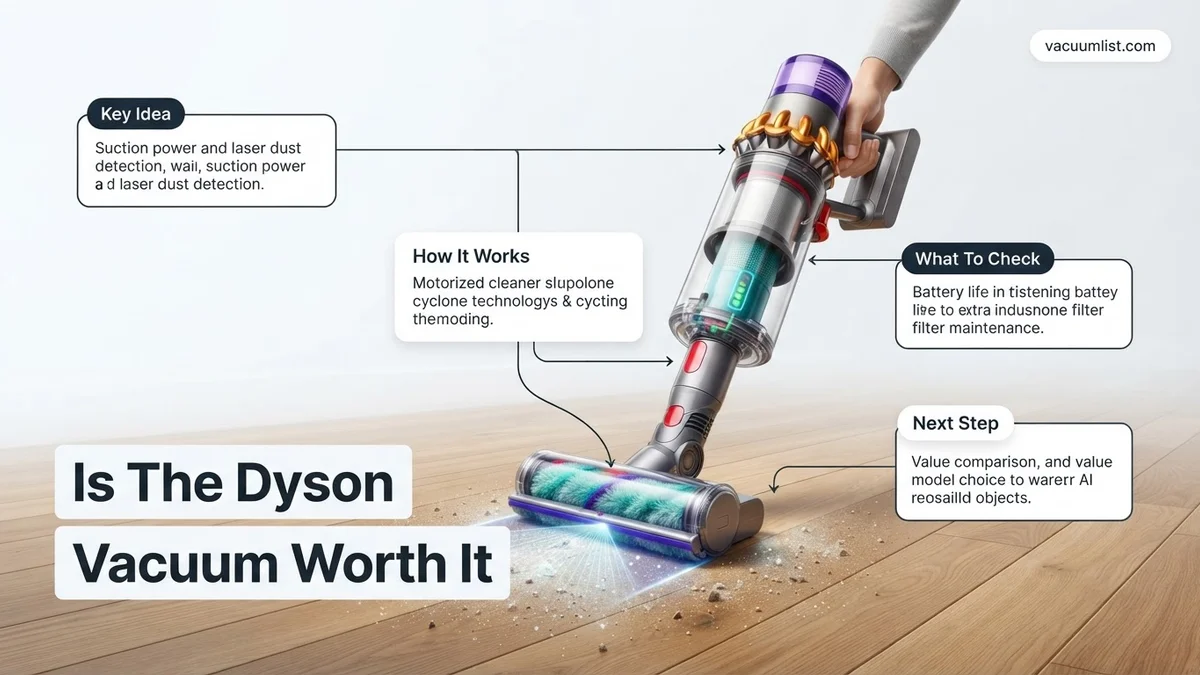
Dyson’s core engineering advantage lies in its patented radial cyclone arrays. Unlike standard vacuums that rely on foam filters that clog and lose suction quickly, Dyson units generate centrifugal forces exceeding 100,000 Gs. This flings microscopic dust straight into the bin, meaning your machine maintains maximum suction power even as the dirt cup fills up during a heavy cleaning session.
Advanced Filtration and Laser Illumination
Modern cleaning standards in 2026 demand more than just visible dirt removal. Dyson incorporates fully-sealed, whole-machine HEPA filtration that traps 99.99% of particles down to 0.3 microns, preventing allergens from blowing back into your living space. Furthermore, features like green laser illumination on hard floors expose invisible microscopic dust that standard floor nozzles completely miss, transforming how thoroughly you clean.
How to Evaluate Your Cleaning Needs to Fix Overpaying for Features
Matching Your Flooring to the Right Model
You can easily waste hundreds of dollars by buying a top-tier Dyson packed with features you do not need. If your home consists primarily of low-pile carpet and hardwood, a mid-range cordless model handles debris effortlessly. However, if you own dense, high-pile carpets and multiple shedding pets, you actually need the high torque motorbars and specialized anti-tangle conical brush rolls found exclusively in Dyson’s premium tiers.
Assessing Daily Convenience Versus Budget Reality
Consider how you physically clean your living space on a weekly basis. If you live in a compact studio or primarily clean hard surfaces, a budget-friendly stick vacuum from Shark or Tineco will get the job done for a fraction of the cost. But if you want a true cord-free replacement for a heavy upright vacuum with zero loss of suction, the ergonomic balance and power-dense motors of a Dyson justify the higher upfront expense.
Step-by-Step Guide to Comparing Dyson Against Mid-Range Competitors
Deciding if a premium vacuum aligns with your cleaning routine requires a systematic evaluation of performance metrics against mid-range alternatives. Recent 2026 consumer appliance tests indicate that while budget-friendly brands have closed the suction gap, longevity and filtration remain distinct differentiators.
1. Audit Your Primary Flooring Types
Assess the ratio of high-pile carpet to hard flooring in your living space. Dyson models excel on bare floors using laser-illumination cleaner heads, whereas traditional uprights or specialized mid-range stick vacuums often handle embedded pet hair on dense carpets with comparable efficiency.
2. Quantify Battery Run-Time Needs
Calculate the average uninterrupted cleaning session required for your square footage. Standard Dyson units deliver between 40 to 60 minutes of fade-free power on eco-mode, dropping significantly on boost mode. Compare this directly against competitor models that utilize swappable battery systems for extended run-times.
3. Evaluate Filtration and Maintenance Costs
Examine the total cost of ownership over a five-year window. Premium models incorporate fully-sealed HEPA filtration systems that capture 99.99% of microscopic particles down to 0.3 microns. Factor in whether replacement filters or proprietary accessories incur ongoing expenses compared to washable, universal filter designs found in mid-tier brands.
What If Your Home Doesn’t Justify a Premium Cordless Vacuum
Investing in top-tier cleaning technology is unnecessary for every household. If your living space, lifestyle, or cleaning habits do not align with the operational profile of a high-end cordless stick vacuum, alternative solutions provide superior value and functionality without the premium price tag.
1. Consider a Dedicated Robot Vacuum Hybrid
Homes with open floor plans and minimal clutter benefit immensely from automated cleaning systems. Modern robotic vacuums handle daily maintenance independently, reducing the frequency of manual whole-home deep cleans.
2. Opt for a Corded Upright Standard
Multi-story houses with wall-to-wall carpeting require continuous, high-draw power that current battery technology struggles to sustain over long durations. Corded uprights eliminate charging anxiety and deliver consistent suction without thermal throttling.
3. Assess Minimalist Living Spaces
Studio apartments or small townhomes often lack the square footage to justify the cost of an advanced multi-attachment ecosystem. Compact, lightweight corded stick vacuums or traditional manual sweepers handle localized debris efficiently at a fraction of the investment.
What If It Still Doesn’t Work?
If you have already invested in a high-end vacuum and find that it fails to meet your cleaning expectations or experiences performance drops, systematic troubleshooting is required. Implement these verified remediation steps before seeking outside assistance:
- Perform a Deep Filter Clean: Remove both the pre-filter and post-motor HEPA filter, wash them thoroughly in cold water without detergent, and air-dry them for a strict 24 hours to restore optimal airflow.
- Inspect the Cyclone Array and Bin: Micro-dust blockages frequently hide within the inner shroud. Clear compacted debris using a soft brush to prevent automatic thermal shutoffs.
- Check the Brush Bar Assembly: Hair wraps and thread tangles reduce motor efficiency. Detach the cleaner head, clip away tangled fibers, and ensure the direct-drive motor spins freely.
- Test Battery Cell Degradation: If the unit shuts down prematurely despite full indicator lights, run a diagnostic cycle. Replacement genuine batteries typically range from $90 to $150 depending on the specific generation.
- Contact Authorized Service Centers: When hardware faults persist within the warranty window, reach out to manufacturer support. Out-of-warranty motor repairs generally range from $120 to $250, making professional diagnostics crucial before discarding the unit.
Conclusion
Determining whether a high-end cordless vacuum is worth the investment depends entirely on your specific flooring types, home size, and daily cleaning demands. While the steep upfront cost delivers industry-leading suction, advanced filtration, and versatile engineering, alternative solutions may better serve minimalist or budget-conscious households. According to verified research and consumer appliance testing sources, matching your cleaning frequency to the correct hardware tier prevents overspending while maintaining optimal indoor air quality. Review your exact spatial requirements and total cost of ownership today to make the most informed purchasing decision for your home.
❓ Frequently Asked Questions
Do Dyson vacuums maintain their suction power as the dust bin fills?
Dyson uses advanced cyclone technology designed to prevent airflow blockages, meaning suction remains strong even as the bin fills up. However, regular filter maintenance is still required to maintain optimal airflow.
Is the trigger-style power button annoying to use for long cleaning sessions?
Many users report hand fatigue because older Dyson models require you to hold the power trigger down continuously. Newer models have addressed this with push-button power, but trigger fatigue remains a common complaint for multi-level homes.
How expensive are replacement parts and batteries for a Dyson?
Replacement official batteries and specialized attachments can be quite costly, often running from $80 to $130 depending on the model. Third-party alternatives exist, but they may lack the safety certifications of OEM parts.
Are Dyson vacuums effective on thick, high-pile carpets?
High-end Dyson models feature dynamic load sensing that automatically adjusts motor speed between hard floors and carpets. While they perform very well on carpets, some older or lighter models may struggle on dense, high-pile rugs without manual height adjustments.
How do Dyson cordless vacuums compare to traditional corded vacuums?
Modern high-end Dysons match or exceed the suction of many corded vacuums, but run time remains a strict limitation. You typically get 10 to 15 minutes on maximum power mode, making large deep-cleaning sessions difficult to finish on a single charge.
Who should completely skip buying a Dyson vacuum?
If you live in a small apartment with mostly hard floors, or if you are working with a strict household budget under $200, a Dyson is likely an unnecessary expense. A reliable corded stick vacuum or budget cordless brand will easily handle those requirements.