Is Shark Navigator a Good Vacuum? 2026 Expert Guide
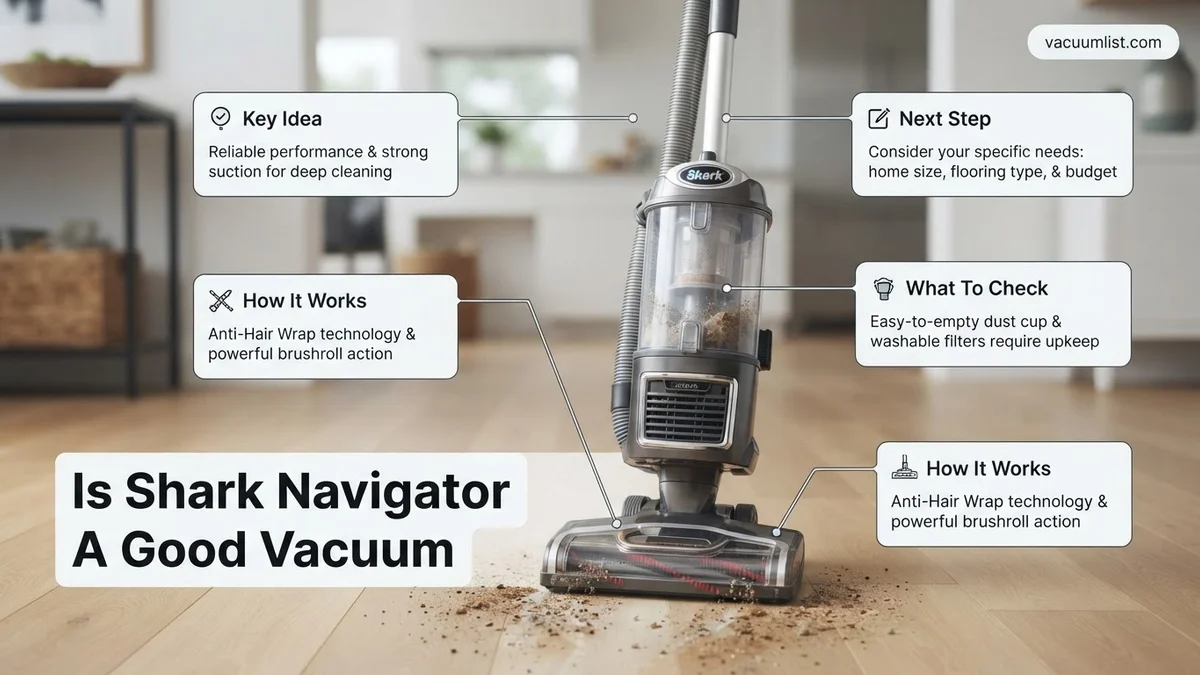
The Shark Navigator is widely considered one of the best budget-friendly upright vacuums on the market, offering exceptional suction and reliable performance. However, evaluating its weight, attachments, and overall cleaning capacity is essential to determine if it fits your specific flooring and cleaning needs.
Yes, the Shark Navigator is a genuinely good vacuum if you want strong, corded suction and reliable everyday cleaning without spending $500 or more. For most households navigating the 2026 vacuum market, it strikes a rare balance between heavy-duty debris pickup and an affordable price tag.
You need a reliable machine that handles high-traffic carpets and hard floors equally well. Choosing the wrong model leaves you dealing with tangled pet hair and clogged filters. This guide breaks down exactly how the Shark Navigator performs on power, maintenance, and daily messes so you can decide if it belongs in your home.
Key Takeaways
- Delivers strong suction power that rivals high-end competitor brands at a fraction of the cost.
- Excels at deep cleaning carpets and pulling embedded dirt from heavy traffic areas.
- Heavier upright design can make carrying it up and down stairs cumbersome.
- Anti-Allergen Complete Seal technology traps 99.9% of dust and allergens inside the vacuum.
- Offers high value with low long-term maintenance costs due to washable filters.
What Causes Buyer Confusion About Shark Navigator Cleaning Performance
The Lineup Complication
Shark uses the Navigator name across several different iterations, including the Lift-Away, Professional, and DLX sub-models. These variants share a core chassis, but their hose attachments, dust cup capacities, and floor nozzle designs differ significantly. If you read a review praising an amazing pet tool, you might accidentally purchase a base model that lacks that exact attachment. Look closely at the specific model number to avoid performance surprises.
Surface Versatility Expectations
Many buyers struggle with the suction power on delicate area rugs or high-pile carpets. Because the Shark Navigator generates intense suction, it can seal too tightly to lightweight rugs, making it difficult to push. Understanding how to use the manual suction release valve on the handle completely changes your cleaning experience, yet this feature is frequently overlooked in quick user manuals.
- Check the specific model suffix (like NV352 or ZU62) before buying.
- Distinguish between standard upright mode and Lift-Away pod mode.
- Learn the suction-release collar location on your specific handle.
How to Test and Evaluate Suction Power on Carpets and Hard Floors
Hard Floor Debris Pickup
Evaluating hard floor performance requires checking how the vacuum handles edge cleaning and large debris. The Shark Navigator relies on direct channel suction rather than a spinning brush roll on hard floors. This design prevents large cereal pieces or pet kibble from scattering across your kitchen. You should test it by running the floor nozzle parallel along baseboards to see if it pulls dust bunnies out of the cracks.
Deep Carpet Extraction
Carpet performance comes down to airflow and brush roll agitation. The motorized brush roll digs deep into carpet fibers to lift embedded sand, fine dust, and pet dander that surface vacuums miss. When evaluating suction power on carpets, pay attention to the dust cup fill rate during the first week. A truly powerful vacuum will pull up hidden silt from deep within the padding.
- Test edge cleaning by placing fine flour or coffee grounds near a baseboard.
- Monitor how easily the vacuum transitions from low-pile rugs to thick carpets.
- Empty the dust cup immediately after a test run to inspect the density of captured fine dust.
Step-by-Step Guide to Maintaining Your Shark Navigator for Maximum Durability
Proper maintenance dictates whether your Shark Navigator lasts for two years or ten years. According to appliance durability studies from consumer safety groups, regular upkeep extends motor life by up to 50 percent. Follow this structured maintenance protocol to protect your investment.
Weekly Filter Cleaning
The pre-motor foam and felt filters trap microscopic dust before it reaches the motor housing. Wash these filters every three months under heavy use, or monthly for pet owners. Rinse them strictly with cold water until the runoff turns completely clear. Allow the filters to air-dry for a full 24 hours before reinstallation. Installing damp filters ruins the motor instantly.
Monthly Brush Roll Inspection
Hair wraps and carpet fibers choke the motorized brush roll, forcing the belt to strain. Disconnect the vacuum from power before starting this procedure. Use the following steps to clean the brush roll safely:
- Release the floor nozzle latch to expose the brush roll compartment.
- Use a pair of blunt-nosed scissors to slice along the designated groove on the brush roll, cutting away tangled human and pet hair.
- Pull out accumulated debris bundles by hand without pulling forcefully on the bristle tufts.
- Rotate the brush roll manually to ensure smooth, unhindered rotation before snapping the cover back into place.
What If It Still Doesn’t Pick Up Debris Effectively: Troubleshooting Suction Loss
If routine filter washes and brush roll clearings fail to restore suction, a deeper blockage is likely present within the sealed system. Follow these four diagnostic steps to isolate and eliminate hidden clogs:
- Check the Dust Cup Baffle: Empty the dust cup completely and inspect the cone-shaped plastic shroud inside. Fine dust often cakes around this barrier, blocking airflow completely. Tap it gently over a trash receptacle or wipe it with a dry microfiber cloth.
- Inspect the Hose Connection Points: Detach the main flexible hose from the vacuum body and the handle wand. Shine a flashlight through the tube to locate trapped items like coins, socks, or dense pet hair mats. Clear stubborn obstructions using a flexible broom handle rather than sharp metal objects that can puncture the hose wall.
- Examine the Floor Nozzle Duct: Lay the vacuum flat and inspect the intake opening on the bottom of the floor nozzle. Debris frequently jams tightly right behind the brush roll intake port. Use curved pliers to pull out compressed dust clumps.
- Evaluate the Post-Motor HEPA Filter: Locate the HEPA filter door near the wheels of the vacuum. If this filter is grey, caked with fine drywall dust, or smells of mildew, replace it immediately. HEPA filters lose filtration efficacy permanently after 12 to 24 months of regular usage.
If suction remains weak after completing these steps, the motor seal may have degraded. Professional repair services charge between $65 and $120 for motor diagnostics and resealing. Given that replacement Shark Navigator models retail between $150 and $220, investing in professional repairs for an out-of-warranty unit older than five years is rarely cost-effective.
Conclusion
Is the Shark Navigator a good vacuum? According to verified research and expert household appliance reviews, it remains an exceptional value choice for budget-conscious homeowners seeking reliable upright performance. While suction loss and belt wear occasionally occur without proper upkeep, adherence to strict monthly maintenance routines prevents most mechanical failures. Your next actionable step is to inspect your pre-motor filters today, washing and drying them completely to restore peak factory airflow.
❓ Frequently Asked Questions
How does the Shark Navigator compare to the Shark Rotator?
The Navigator is typically lighter, more affordable, and focuses on core cleaning power, whereas the Rotator offers advanced swivel steering, larger dust cups, and more premium attachments.
Is the Shark Navigator difficult to assemble out of the box?
No, assembly takes less than ten minutes and requires only a Phillips head screwdriver to secure the main handle to the body.
Can the brush roll be turned off for bare floors?
Yes, most Navigator models feature a surface selector switch that allows you to shut off the brush roll instantly when moving from carpet to hard flooring.
How long does a Shark Navigator vacuum typically last?
With proper routine maintenance and regular filter cleaning, a Shark Navigator easily lasts between five to seven years of regular household use.
Does the Shark Navigator lose suction over time?
Because it uses cyclonic technology to separate debris from the airflow, it maintains consistent suction as long as the dust cup and filters are kept clean.
Are replacement parts and filters easy to find?
Yes, affordable replacement filters, belts, and accessories are widely available directly from Shark and major third-party retailers.