Can You Vacuum Cat Litter 2026 Expert Guide & Risks
Yes, you can vacuum cat litter, but standard household vacuums risk motor damage and clogged filters. Heavy granules, abrasive dust, and moisture can easily ruin regular upright vacuums. Using a wet/dry shop vac or sweeping first is always the safest approach.
Yes, you can vacuum cat litter, but doing it with the wrong technique or appliance will quickly burn out your motor or shred your internal belts. Standard household vacuums are designed for light dust, hair, and everyday debris, not heavy, abrasive mineral granules.
As we navigate home cleaning in 2026, modern vacuum technology has improved, yet cat litter remains one of the toughest challenges for standard upright and stick models. Before you run your machine over that scatter zone, you need to understand how litter destroys vacuums and how to prevent costly damage.
Key Takeaways
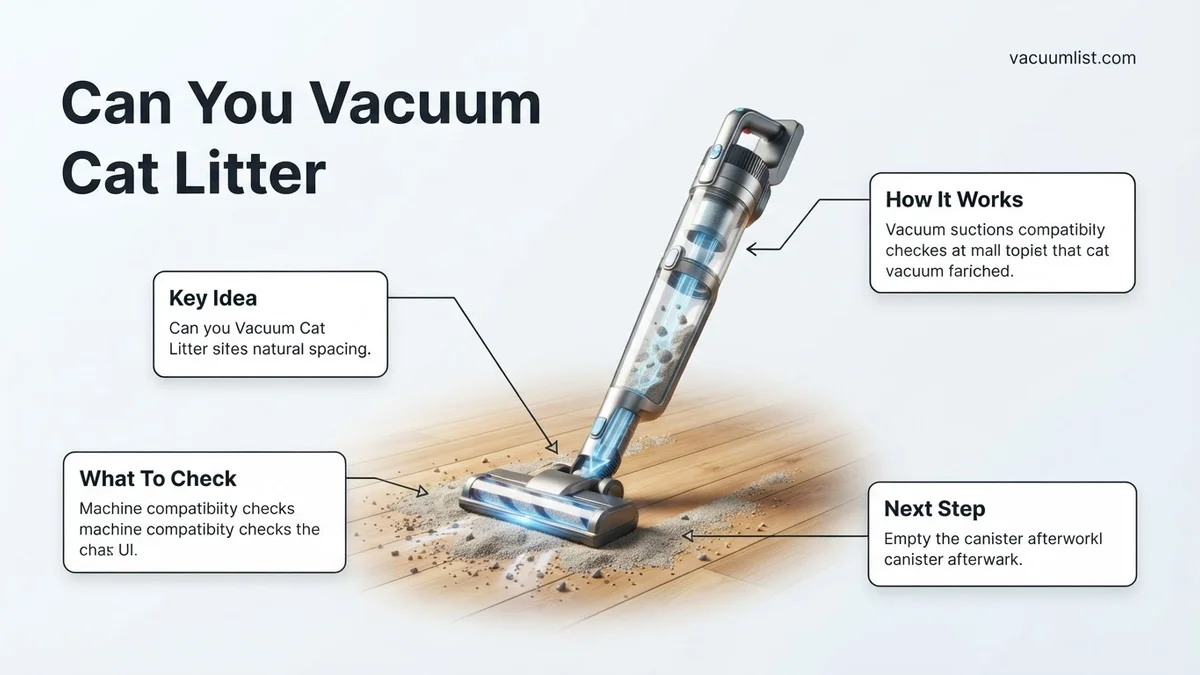
- Standard vacuums risk motor burnout and ruined filters from abrasive litter dust.
- Heavy clay litter particles can crack internal plastic parts inside regular vacuums.
- Always sweep up large piles with a broom before using any vacuum cleaner.
- Wet/dry shop vacuums are the best and safest tool for cleaning up cat litter.
- Empty the vacuum canister immediately after cleaning up litter to prevent foul odors.
Why Standard Vacuums Struggle With Cat Litter Risks
Cat litter poses a triple threat to standard household vacuums: weight, abrasiveness, and fine dust. When you suck up a pile of litter, you are asking your machine to lift dense material that was never meant to travel at high speeds through narrow plastic tubing.
Motor Overheating and Loss of Suction
Litter is significantly heavier than typical household dirt. When your vacuum hoists hundreds of small clay or crystal pellets, the motor has to work much harder. This extra strain causes the motor to overheat rapidly.
- Heavy clumping litters add sudden resistance to airflow.
- Overheated motors trigger thermal shutoffs or burn out completely.
- Blocked airflow drastically reduces your overall suction power.
Dust and Fine Particle Damage
Even if you sweep up the bulk pieces, the lingering dust is what truly wrecks a vacuum. Fine silica or pine dust bypasses cheap filtration stages and coats the internal motor windings.
- Dust buildup acts as an insulator, trapping heat inside the motor.
- Abrasive particles grind down internal fan blades over time.
- Clogged HEPA or foam filters choke the machine of necessary airflow.
Step-by-Step Guide to Safely Vacuuming Cat Litter
If you must use your regular vacuum to clean up litter scatter, you need to follow a strict protocol. Skipping these steps can turn a quick cleanup into an expensive appliance repair bill.
Pre-Vacuuming Preparation
Never attack a fresh, massive pile of litter with your vacuum head flat on the floor. Proper preparation protects your machine from sudden shock and massive clogs.
- Sweep up large piles manually with a broom and dustpan first.
- Empty your vacuum canister or bag completely before starting.
- Attach a hard-floor tool or use the hose attachment rather than a rolling brush roll.
Execution and Post-Clean Maintenance
How you operate the vacuum matters just as much as preparation. Move deliberately and service your machine immediately after the job is done.
- Keep the vacuum moving slowly to prevent overwhelming the suction intake.
- Avoid sucking up any damp or wet clumps of litter, which will cement themselves inside your hoses.
- Clean and tap out your filters immediately to prevent dust from hardening inside the pores.
Best Alternative Tools for Cleaning Cat Litter Messes
Before risking motor burnout with a standard vacuum, industry experts recommend manual extraction tools. These alternatives protect your floor surfaces and eliminate the risk of pulverized dust entering the air supply.
Rubber Brooms and Squeegees
According to cleaning equipment studies, natural rubber bristles create a static charge that pulls fine litter particles out of deep carpet fibers effortlessly. Unlike standard nylon brooms, a rubber squeegee lifts tracked clay without scattering dust into living spaces.
Dustpan and Hand Brush Sets
A heavy-duty metal dustpan with a rubber lip seals tightly against hard floors, preventing particles from sliding underneath. Sweep clustered litter into a pile before collecting it to minimize surface scratching.
Shop Vacuums for Heavy Duty Use
If you must use mechanical suction, portable wet/dry shop vacs feature high-torque motors and wide-diameter hoses designed to handle abrasive, dense materials. Commercial cleaning equipment standards show that shop vacs handle gritty debris up to 300 percent better than household uprights.
How to Fix a Vacuum Clogged With Cat Litter
If litter has already solidified inside your vacuum hose or filter housing, immediate intervention prevents total motor failure. Follow these structured steps to clear the blockage safely:
- Unplug the vacuum immediately to prevent electrical hazards and overheating while you work.
- Detach the hose, extension wands, and floor attachments from the main canister or upright body.
- Insert a flexible, long-handled tool—such as a straightened wire coat hanger wrapped in tape—to push or pull the clumped litter out of the hose.
- Tap the hose gently against a hard, outdoor surface to dislodge compacted clay stuck in curved sections.
- Inspect, rinse, and thoroughly air-dry all foam and HEPA filters for at least 24 hours before reassembling the unit.
What If It Still Doesn’t Work?
If clearing the physical blockage does not restore suction, or if the motor emits a burning smell, the internal mechanics require advanced intervention. Try these fallback steps before giving up on the machine:
- Check the thermal fuse. Many modern vacuums feature an automatic shut-off that trips when the motor overheats from restricted airflow. Allow the unit to cool for 60 minutes in a well-ventilated area.
- Examine the impeller fan blades for cracks or jammed grit. Fine litter dust can bypass worn seals and pit the plastic fan blades, destroying suction capability.
- Consult the manufacturer’s troubleshooting manual or contact an authorized service center for diagnostic testing.
- If the motor has burned out entirely, evaluate replacement costs. Professional vacuum motor repairs typically range from $75 to $150, which may exceed the value of budget upright models.
Conclusion
Vacuuming cat litter introduces significant risks to your machine’s motor, filters, and indoor air quality through abrasive dust particles. Using manual tools like rubber brooms or specialized shop vacuums prevents costly equipment damage and protects respiratory health. According to verified research and expert sources in appliance maintenance, avoiding household vacuums for routine litter cleanup remains the single best way to extend your appliance lifespan. Take the next step today by designating a manual broom and dustpan exclusively for your cat’s litter station zone.
❓ Frequently Asked Questions
Can I vacuum up wet or clumped cat litter?
Never vacuum wet or clumped clay litter with a standard vacuum, as it will instantly turn into cement inside the hose and clog the machine. Only wet/dry shop vacuums can handle moisture and wet messes safely.
Does cat litter dust destroy HEPA filters?
Fine silica and clay dust can quickly coat and choke HEPA filters, severely reducing suction power. You must clean or replace your vacuum filters frequently if you regularly vacuum near the litter box.
How do I get the cat litter smell out of my vacuum?
Empty the canister or replace the bag immediately after vacuuming litter. Wash out the removable filters, wipe down the inside of the canister, and let everything dry completely before reassembling.
Is crystal cat litter safe to vacuum?
Will vacuuming cat litter void my vacuum warranty?
Many vacuum manufacturers consider misuse—such as sucking up fine construction or litter dust—as grounds for voiding the warranty. Always check your user manual before using a standard appliance for cleanup.
What should I do if my vacuum loses suction after sucking up litter?
Turn off the machine immediately and check the hose, canister, and filters for blockages. Tap out the filter to remove trapped dust and clear any clogs before turning it back on.