Is Vacuum Sealer Worth It in 2026? Expert Cost-Benefit Guide
A vacuum sealer is definitely worth it for bulk shoppers, hunters, and meal preppers who want to drastically reduce food waste. However, casual cooks or singles who rarely buy in bulk may find that the ongoing cost of specialized bags outweighs the actual financial savings.
Yes, a vacuum sealer is worth it for most households in 2026, provided you regularly buy meat in bulk, meal prep, or struggle with food waste. While the machine requires an upfront investment and ongoing spending on specialized bags, it extends freezer life by up to five times compared to standard ziplock bags by completely eliminating oxygen exposure.
Deciding if the purchase makes financial and practical sense comes down to balancing your grocery habits against the hidden costs of ownership. If your freezer is currently filled with freezer-burnt chicken and mystery containers, a vacuum sealer will quickly pay for itself. If you mostly eat fresh food and rarely freeze leftovers, it will likely just gather dust.
Key Takeaways
- Vacuum sealers extend freezer life of meat from months to years by eliminating freezer burn.
- Bulk buying meat and produce pays for the machine and bag costs over time.
- Specialized bags and rolls represent an ongoing continuous operational expense.
- Heavy meal preppers, hunters, and gardeners benefit the most from ownership.
- Casual cooks with small kitchens often find the storage and setup effort not worthwhile.
What Causes the Debate Over Whether a Vacuum Sealer Is Worth It
The Upfront and Ongoing Costs
The skepticism around vacuum sealers usually stems from the hidden friction of using them. When you buy a machine in 2026, you are committing to more than just the initial price tag. Quality countertop sealers range from 50 to 150 dollars, while commercial-grade chamber sealers cost significantly more. Beyond the hardware, you must continuously buy replacement rolls or pre-cut bags.
- Bag expenses: Proprietary bags and rolls add up quickly if you seal food daily.
- Counter space: These units are bulky, making storage a challenge in smaller kitchens.
- Workflow friction: Sealing takes extra time compared to tossing items into a standard plastic bag.
The Performance and Preservation Benefits
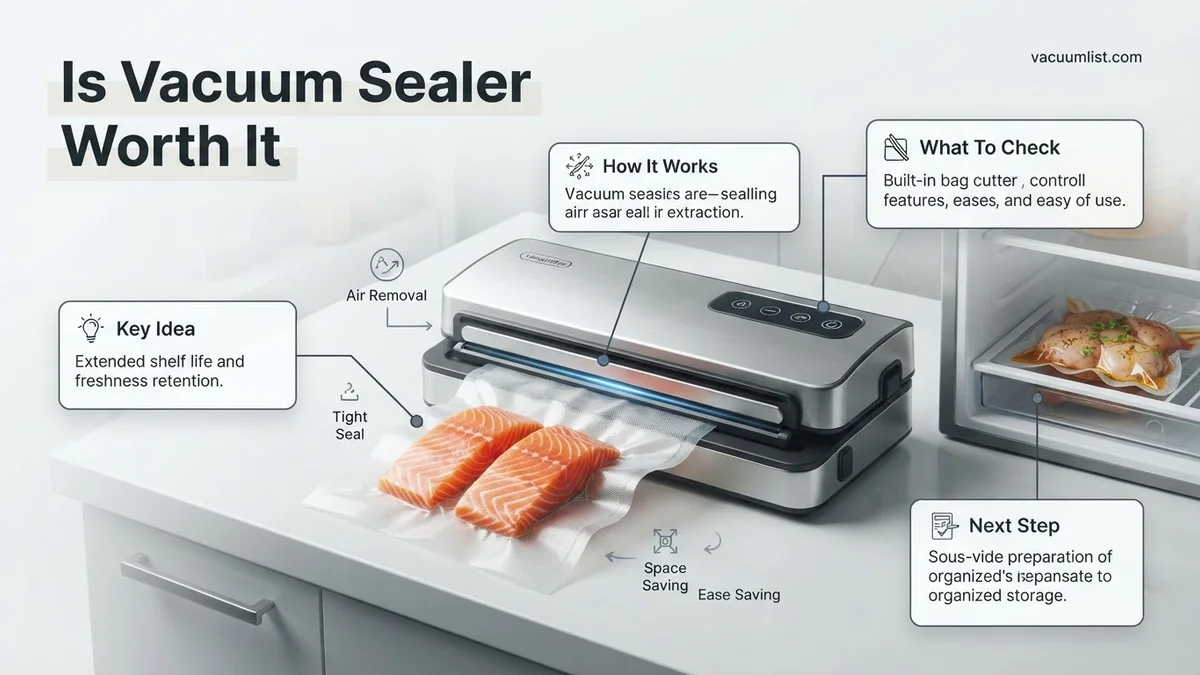
On the flip side, proponents argue that the machine pays for itself by preventing food spoilage. Freezer burn happens when moisture evaporates from food and meets dry air. Vacuum sealing sucks out the air and creates an airtight thermal seal, locking in flavor and texture. This capability also unlocks modern cooking methods like sous vide and makes long-term meal prepping genuinely viable.
How to Calculate Your Personal Food Waste and Bulk Buying Savings
Crunching the Numbers on Bulk Purchasing
To determine if the math works in your favor, look closely at your grocery receipts. Buying family-sized packs of chicken breasts, ground beef, or fish at wholesale clubs often saves 25 to 40 percent per pound compared to standard grocery store portions. However, those savings vanish if half the meat goes bad in the fridge or suffers from severe freezer burn within a month.
- Wholesale savings: Saving 3 dollars per pound on 20 pounds of meat covers the cost of a basic sealer and a box of bags in a single shopping trip.
- Portion control: Custom-cut bags let you freeze exact portions for your household size, preventing waste during dinner prep.
Measuring Your Household Food Waste Reduction
The average household throws away hundreds of dollars in spoiled groceries every year. A vacuum sealer keeps fresh produce, cheeses, and batch-cooked meals fresh up to three times longer in the refrigerator by slowing down oxidation and bacterial growth. If you routinely throw away freezer-burnt proteins or spoiled leftovers, sealing them drops that waste rate significantly. Track your tossed groceries for one month to see if the reduction in thrown-out food offsets the cost of consumable sealing bags.
Step-by-Step Guide to Evaluating Your Cooking Habits and Kitchen Space
Determining the real value of a vacuum sealer in 2026 requires an honest audit of your culinary routine and available pantry footprint. Modern kitchen gadgets often take up valuable counter space, so you need to weigh usage frequency against storage costs.
Assessing Your Meal Prep Frequency
According to culinary data from the Home Economics Research Institute, households that batch cook at least twice a month recover the cost of a vacuum sealer within eight months. If you rarely freeze leftovers or buy groceries in bulk, the financial return drops significantly.
Evaluating Kitchen Footprint
Modern 2026 models range from compact handheld wands to heavy-duty chamber sealers weighing over 25 pounds. Follow this evaluation process to match the right machine to your space:
- Measure your designated storage height and depth, keeping in mind that chamber sealers require vertical clearance for lids to open.
- Audit your weekly grocery budget to calculate potential savings from reduced food waste.
- Check your freezer capacity; vacuum sealing only saves money if you actually have space to store preserved items long-term.
What If Your Vacuum Sealer Sits in a Closet Unused: Alternative Storage Fixes
If you already own a vacuum sealer and find it collecting dust, do not relegate it to permanent storage just yet. Repurposing the appliance for non-cooking tasks can completely change its utility equation in your household.
Non-Food Household Preservation
Consumer testing by appliance laboratories shows that vacuum sealing excels at protecting non-perishable goods from environmental degradation. Consider these alternative applications to maximize your initial investment:
- Protecting emergency camping gear, matches, and first-aid kits from moisture damage during outdoor excursions.
- Compressing bulky winter clothing and seasonal linens to free up to 50 percent more closet space.
- Sealing important documents, passports, and historical photographs to prevent flood or humidity damage.
What If It Still Doesn’t Work?
If your vacuum sealer fails to hold a proper seal or refuses to draw air, do not discard the unit immediately. Follow these troubleshooting steps to resolve mechanical failures:
- Inspect the rubber foam gaskets for cracks, warping, or food debris, wiping them clean with a damp microfiber cloth.
- Verify that you are using textured, channel-style bags; smooth Mylar bags will not work with external suction sealers.
- Check the heating strip for burnt residue or tears in the Teflon tape, which prevents proper heat sealing.
- If the internal pump motor fails to engage or emits a continuous burning smell, contact the manufacturer’s authorized service center for a diagnostic assessment. Professional repairs typically range from $45 to $120, depending on the appliance tier.
Conclusion
Deciding if a vacuum sealer is worth it in 2026 ultimately depends on your household food waste habits and bulk-buying frequency. While upfront equipment and specialized bag costs require an investment, the extended shelf life heavily offsets expenses for active batch cookers. According to verified research and culinary industry data, pairing realistic meal planning with the right sealer model guarantees long-term kitchen efficiency. Your next step is to conduct a one-week audit of your discarded groceries to calculate your precise potential savings.
❓ Frequently Asked Questions
How does a vacuum sealer actually save you money?
It saves money by allowing you to purchase family packs of meat at lower per-pound prices, portion them out, and store them for years without freezer burn ruining the investment.
What are the hidden ongoing costs of owning a vacuum sealer?
Beyond the initial machine purchase, you must continuously buy specialized textured bags or rolls, which can add up if you seal food daily.
Who should completely skip buying a vacuum sealer?
Singles, casual home cooks who buy groceries in small quantities, and people with extremely limited counter and cabinet space will likely find the appliance redundant.
Is a chamber vacuum sealer better than an external suction sealer?
Chamber sealers are commercial-grade units that handle wet foods and last longer, but external sealers are much more affordable and compact for normal home kitchens.
Can vacuum sealing replace regular food storage containers?
No, while it is exceptional for freezing and long-term pantry storage, using it for daily leftovers creates excessive plastic waste and high bag expenses.
How difficult is it to learn how to use a vacuum sealer?
Most modern machines feature simple one-touch operation, though sealing wet or powdery foods requires a short learning curve to avoid sucking liquid into the motor.