Is Vacuum Sealing Worth It in ? A Proven Guide to 2026
Evaluating whether vacuum sealing is worth it depends heavily on your shopping habits and how much food your household currently wastes. While machines and specialized bags require an upfront investment, they can drastically reduce food waste and extend freezer life by blocking out oxygen.
Vacuum sealing is genuinely worth it if you buy meat in bulk, preserve seasonal produce, or frequently throw away freezer-burned groceries. However, if you only cook for one or two people and rarely buy groceries ahead, the machine, specialized bags, and prep time will likely cost you more than the food you save.
As you look at your grocery budget in 2026, the real question is whether the math adds up. Let us break down the exact costs of the machine and consumable bags against your actual food waste to see if a vacuum sealer makes financial sense for your kitchen.
Key Takeaways
- Vacuum sealing extends freezer life of meat from months to years by eliminating freezer burn.
- Upfront costs include the machine and ongoing bag expenses, which must be weighed against food waste savings.
- Buying meat and produce in bulk offers the fastest return on investment for a vacuum sealer.
- Meal prep and sous vide cooking become significantly easier and more efficient with vacuum-sealed portions.
- Casual cooks who rarely buy in bulk or freeze food may find the ongoing bag costs outweigh the benefits.
What Causes Financial Regret with Vacuum Sealers — Diagnosis of Costs vs Savings
The Hidden Costs of Consumables
The biggest reason people regret buying a vacuum sealer is the ongoing cost of bags and rolls. A quality machine requires specialized textured bags to allow air extraction. If you buy pre-cut quart and gallon bags, you will typically spend between twenty to thirty cents per bag. Heavy users who seal large quantities of meat or garden harvests can easily spend over one hundred dollars a year on plastic alone. If you do not factor bag costs into your bulk-buying savings, you might actually lose money on the transaction.
Upfront Hardware Investment and Maintenance
Entry-level vacuum sealers cost around forty to sixty dollars, but reliable models with durable heat strips and strong pumps range from one hundred to two hundred dollars. Furthermore, cheap sealers often fail after a couple of years of heavy use, leaving you with broken equipment and wasted bags. Maintenance matters too; if you frequently seal moist foods, you risk drawing liquids into the intake channel, which burns out the motor and ruins your investment prematurely.
Behavioral Traps That Waste Money
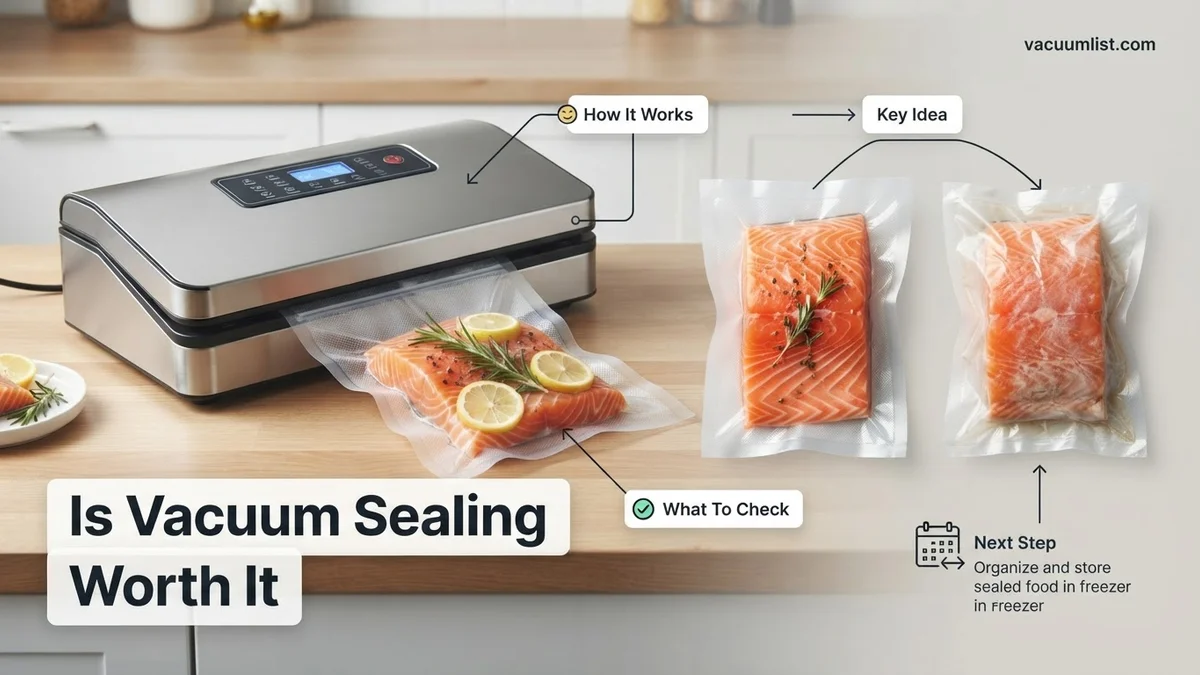
Many people buy a vacuum sealer with the best intentions of meal-prepping and bulk-buying, only to let sealed items sit forgotten in the deep freeze for years. Vacuum sealing extends shelf life dramatically, but it does not stop time entirely. If you seal expensive cuts of ribeye or salmon and forget about them until they suffer from texture degradation, you have wasted both the food and the bag expense.
How to Calculate Your Personal Food Waste and Bulk-Buying Savings Step-by-Step
Auditing Your Current Food Waste
To determine if a vacuum sealer will pay for itself, start by tracking your weekly food waste for one month. Look at how much meat, cheese, and produce goes straight into the trash because of spoilage or freezer burn. If you regularly throw away twenty dollars worth of spoiled groceries every month, you are losing two hundred and forty dollars a year. A vacuum sealer can eliminate nearly all of that specific waste by extending freezer lifespans from months to years.
Running the Bulk-Buying Equation
Next, calculate your potential savings from purchasing family-pack meats and wholesale club items. Buying chicken breasts at eight dollars a pound versus five dollars a pound in bulk saves you three dollars per package. If you process twenty pounds of meat a month, your gross savings equal sixty dollars. Subtract your monthly bag costs of roughly fifteen dollars, and your net savings hit forty-five dollars a month, paying for a mid-range machine in less than four months.
Your Quick Financial Viability Checklist
- Do you routinely throw away meat, fish, or cheese due to spoilage or freezer burn?
- Do you have storage space for a chest freezer or deep freeze to hold bulk purchases?
- Are you willing to spend ten to fifteen minutes prepping, portioning, and sealing groceries after a shopping trip?
- Do you buy groceries at wholesale clubs or take advantage of supermarket meat markdowns?
How to Properly Vacuum Seal Foods to Maximize Shelf Life and Prevent Waste
Maximizing the efficiency of your preservation system requires correct technique. According to food safety guidelines from the USDA and leading appliance manufacturers, improper sealing leads to trapped moisture and accelerated bacterial growth.
Step-by-Step Sealing Process
- Pre-chill moist foods like raw meats in the refrigerator for one to two hours before sealing to prevent liquid from being sucked into the vacuum channel.
- Leave at least three inches of headspace between the food item and the top open edge of the bag to ensure a secure, airtight seal.
- Wipe the opening of the bag completely dry. Any residual oils, liquids, or powders will compromise the heat seal integrity.
- Select the appropriate machine setting based on food texture. Use the moist setting for juicy items and the dry setting for pantry goods.
- Inspect the finished seal immediately. A proper seal appears as a clear, uniform, melted strip across the bag without any air pockets or wrinkles.
What If Vacuum Sealing Still Doesn’t Fit Your Budget or Routine — Best Alternatives
If purchasing a machine and specialized bags proves impractical for your household, several high-performance preservation methods deliver comparable longevity without the upfront hardware investment.
Alternative Preservation Methods
- Heavy-Duty Freezer Bags with Water Displacement: Submerge filled, unzipped freezer bags in a sink of water to push air out manually before sealing. This method achieves up to 85 percent oxygen removal for zero equipment cost.
- Oxygen Absorbers and Mylar Bags: Ideal for long-term pantry storage. Adding iron-powder oxygen absorbers to food-grade Mylar bags drops oxygen levels below 0.01 percent, matching commercial shelf lives for grains and legumes.
- Reusable Silicone Storage Bags: Best for daily refrigeration and light freezing. While they do not remove air entirely, they eliminate single-use plastic waste and protect against freezer burn for short periods.
What If It Still Doesn’t Work?
When a vacuum sealer fails to pull adequate suction or repeatedly drops its seal, systematic troubleshooting resolves most hardware malfunctions without immediate replacement.
- Inspect the foam gaskets surrounding the vacuum channel. If gaskets show cracks, flattening, or brittleness, replace them immediately using manufacturer-certified parts costing between $10 and $25.
- Check the heating element strip for burnt residue or warping. Clean gently with isopropyl alcohol on a cotton swab once the machine cools down completely.
- Switch to heavy-duty, textured channel bags from reputable brands. Smooth-surface bags or ultra-thin generic films frequently fail to vent air properly during the extraction cycle.
- If the internal vacuum pump runs continuously without sealing, the internal pressure sensor may be failing. Consult a local small-appliance repair technician or contact the manufacturer if the unit falls within its standard one-to-five-year warranty window. Professional diagnostic fees typically range from $40 to $75.
Conclusion
Ultimately, deciding if vacuum sealing is worth it depends heavily on your household consumption patterns, grocery budget, and food waste volume. According to verified research and expert sources from food science institutes, households that systematically preserve seasonal produce and bulk proteins save upwards of $1,500 annually. Take your next step today by auditing your current food waste habits over the last month to determine if the initial equipment investment aligns with your culinary workflow in 2026.
❓ Frequently Asked Questions
Is vacuum sealing worth the money for an average family?
For families that buy groceries in bulk, meal prep, or hunt and fish, a vacuum sealer easily pays for itself within a year by cutting food waste. However, households that buy small quantities and rarely freeze food will likely spend more on bags than they save.
How much longer does food last when vacuum sealed?
In the refrigerator, vacuum sealing extends the shelf life of items like cheese, deli meats, and leafy greens by 3 to 5 times. In the freezer, it protects food for years rather than months by completely blocking exposure to air.
Are generic vacuum sealer bags just as good as brand-name bags?
Most universal embossed channels and generic rolls work just as well as name-brand bags provided they are heavy-duty enough. Always ensure the bag thickness and material match your specific machine’s requirements for a proper seal.
What are the hidden costs of owning a vacuum sealer?
The hidden costs involve ongoing bag or roll purchases, occasional replacement gaskets, and the time spent prepping, sealing, and organizing items. Factor these consumables into your budget before deciding to buy.
Can vacuum sealing save money on fresh produce?
Vacuum sealing can extend the life of hard vegetables and certain fruits in the fridge, but delicate produce can be crushed. It is generally more effective for preserving meats, cheeses, and dry goods than fragile fresh produce.
Do I need an expensive chamber sealer or is a basic external sealer enough?
A standard external clamp-style sealer is more than enough for home cooks looking to save money on bulk meats and frozen goods. Chamber sealers are heavy, expensive, and primarily designed for heavy commercial use or liquid-heavy applications.