Are Cordless Vacuums as Strong as Corded? Expert Guide 2027
While modern cordless vacuums offer impressive convenience and significant power, corded models generally retain the edge in raw, sustained suction strength and consistent performance for deep cleaning tasks. The choice often depends on balancing cleaning needs with mobility and convenience for 2027 homes.
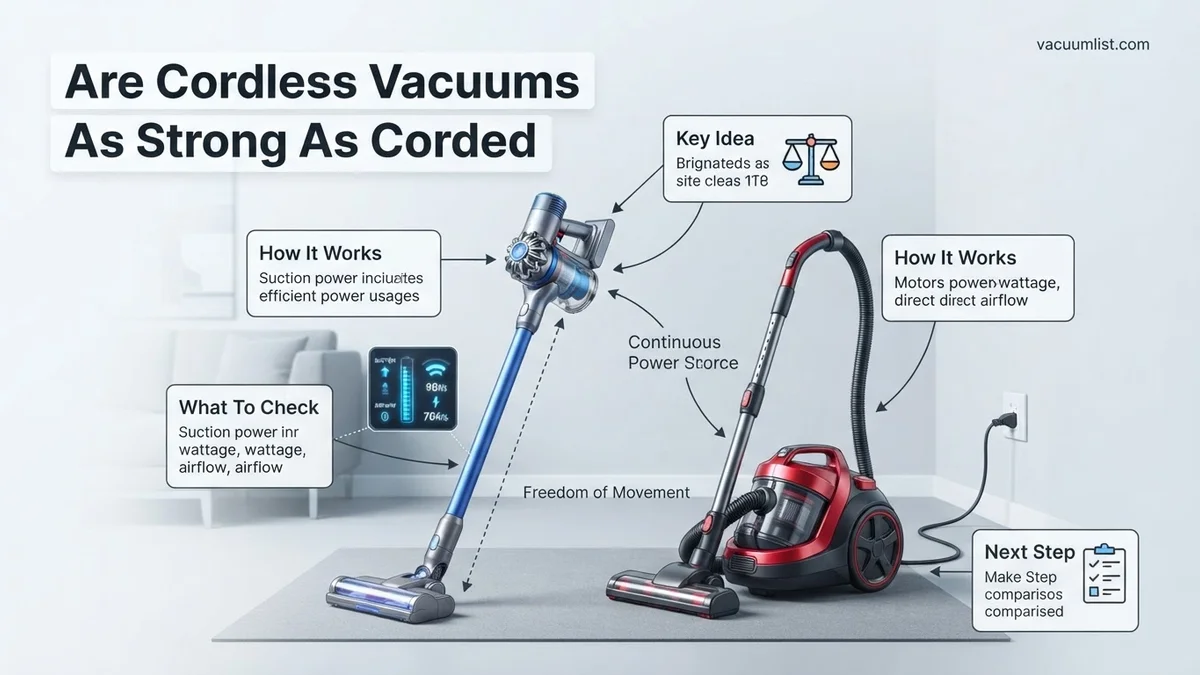
No, in 2027, high-end cordless vacuums still don’t quite match the maximum sustained suction power of top-tier corded models. While cordless technology has made incredible leaps, offering impressive peak power bursts, the continuous, unrestricted energy supply of a corded vacuum typically allows for greater overall cleaning strength, especially for intensive tasks.
Understanding this distinction is crucial when you’re deciding which vacuum best suits your cleaning needs. If your home features extensive carpeting, deep-pile rugs, or you frequently tackle significant amounts of pet hair and deeply embedded dirt, prioritizing the consistent, unyielding power of a corded machine might save you time and frustration. For quick clean-ups and surface dirt, however, modern cordless models are often more than adequate.
Key Takeaways
- Corded offers superior sustained suction.
- Cordless excels in convenience, quick tasks.
- Check air watts, kPa for true power.
- Battery life impacts cordless cleaning.
- Consider home size, cleaning frequency.
Diagnosing the Cordless vs. Corded Vacuum Power Gap
The Raw Power Metrics: Air Watts and kPa
When you strip away the marketing, cleaning power often boils down to measurable metrics like Air Watts (AW) and kilopascals (kPa). These indicate the airflow and suction force a vacuum can generate:
- Corded Vacuums: Many good corded uprights and canister vacuums in 2027 consistently deliver between 200-300+ Air Watts during operation, with some high-performance models exceeding 350 AW. Their sealed suction can easily reach 20-25 kPa. This power is available non-stop for as long as you’re plugged in.
- Cordless Vacuums: Top-tier cordless stick vacuums in 2027 might boast peak ‘boost’ mode suction ranging from 180-250 Air Watts. However, this is typically a short burst. In their standard or ‘eco’ modes, which you’ll use for most cleaning to conserve battery, the power often drops significantly to 20-80 AW. Peak kPa for cordless usually maxes out around 15-20 kPa, but again, not sustainably.
The key takeaway is that while cordless can hit impressive numbers briefly, corded models maintain higher power levels for extended periods.
Cleaning Efficacy: Deep Pile and Pet Hair Challenges
This raw power difference directly translates to how effectively vacuums clean various surfaces and types of debris:
- Deep Pile Carpets: Corded vacuums excel here. Their consistent, high airflow and robust motor power allow them to agitate and extract deeply embedded dirt, dust, and allergens from thick carpet fibers with superior efficiency. You can feel the deep pull.
- Pet Hair Removal: For heavy pet hair on upholstery or embedded in carpets, corded machines often have an edge. Their unwavering suction is less likely to clog and more effective at pulling stubborn fur out of dense materials, particularly when dealing with large volumes.
- Fine Dust Pickup: On hard floors, modern cordless vacuums are excellent at picking up fine dust and debris. Their specialized brush heads often sweep and lift efficiently. On carpets, however, the sustained power of a corded vacuum makes a noticeable difference for microscopic particles trapped deep within the pile.
While a cordless vacuum can handle surface pet hair and quick carpet touch-ups, a corded model remains the champion for truly deep, intensive cleaning sessions.
How Battery and Motor Technology Affect Vacuum Strength
Sustained Power vs. Burst Performance
The fundamental difference in power source dictates the operational strength of these machines:
- Corded Advantage: A corded vacuum draws electricity directly from your wall outlet. This provides an unlimited, consistent supply of power, allowing the motor to run at its peak efficiency indefinitely. There is no power fade, and manufacturers can design with larger, more powerful motors knowing the energy supply is unwavering. This directly translates to relentless suction and airflow, regardless of how long you clean.
- Cordless Limitations: Despite advancements in battery technology by 2027 (e.g., higher energy density, faster charging), a cordless vacuum is fundamentally limited by its battery capacity. While they offer impressive ‘boost’ modes for short bursts of high power, these modes rapidly drain the battery. In normal operating modes designed for longer runtimes, the power output is significantly reduced. Furthermore, as the battery depletes, there’s often a gradual or sudden drop in power, affecting cleaning efficacy towards the end of a charge cycle.
This means you trade the constant, brute-force capability of a corded unit for the freedom and maneuverability of a cordless one.
Beyond Raw Suction: The Role of Design
It’s important to remember that raw suction isn’t the only factor defining a vacuum’s ‘strength.’ Overall cleaning effectiveness is a symphony of several components:
- Brush Roll Design: High-torque, anti-tangle brush rolls found in many modern cordless vacuums significantly enhance perceived strength, especially on carpets. They actively agitate and lift debris, making up for some suction disparities. Corded models, however, can often house larger, more aggressive brush rolls due to fewer power constraints.
- Filtration Systems: Robust, multi-stage, and sealed HEPA filtration systems in both types are crucial. They prevent fine dust from escaping and maintain consistent airflow by minimizing filter clogs. Corded models often integrate larger, more sophisticated filtration systems without space or weight limitations.
- Specialized Attachments: Both cordless and corded vacuums benefit greatly from task-specific attachments. Crevice tools, upholstery brushes, and motorized pet tools can dramatically improve performance for particular cleaning challenges, sometimes compensating for lower raw power in specific scenarios.
Ultimately, while clever design can boost cordless performance, the inherent convenience of cordless often comes with a trade-off in the sheer, sustained cleaning power that corded vacuums still deliver.
Proven Steps to Choose the Strongest Vacuum for Your Home
Selecting a vacuum that consistently delivers powerful cleaning in 2027 requires understanding key specifications beyond marketing claims. Focused evaluation of motor technology, battery performance, and design elements is crucial for optimal results.
1. Prioritize Motor Technology and Suction Metrics
- Examine Motor Type: In 2027, brushless DC motors are standard for high-performance vacuums due to their efficiency and longevity. Leading models incorporate advanced magnet arrays and digital control systems for peak power delivery.
- Analyze Air Watts (AW) and Kilopascals (kPa): These metrics directly indicate suction power. According to industry benchmarks, a premium cordless vacuum in 2027 should offer at least 200-250 Air Watts in boost mode for deep cleaning. For comparison, many corded models average 250-300 AW. kPa, measuring static suction, should ideally be above 25 kPa for effective debris lift.
- Review Filtration System: High-efficiency particulate air (HEPA) filtration is essential. A sealed system prevents dust re-emission, ensuring sustained suction and cleaner air. Verified sources confirm that a multi-stage cyclonic separation system maintains airflow more effectively than single-stage designs.
2. Evaluate Battery Chemistry and Runtime
- Check Watt-Hours (Wh) and Voltage: Battery capacity, measured in Watt-hours, directly impacts sustained power. Premium cordless vacuums in 2027 typically feature 70-100 Wh Lithium-ion Polymer (LiPo) batteries operating at 25-30V.
- Assess Runtime at Max Power: Do not rely solely on advertised “up to X minutes.” Instead, look for runtime specifications at the highest power setting. A strong cordless unit should offer a minimum of 10-15 minutes of continuous maximum suction for typical spot cleaning, or around 30-45 minutes on eco mode for larger areas.
- Consider Charging Speed and Swappable Batteries: Faster charging (under 3 hours) and the option for swappable battery packs significantly enhance usability, preventing power interruptions during extensive cleaning tasks.
What If Your Vacuum Still Feels Underpowered?
Even with a high-performance vacuum, perceived underperformance can occur. Before considering a replacement, systematically troubleshoot common issues to restore optimal suction.
Troubleshooting Common Performance Issues
- Check for Blockages: The most frequent cause of reduced suction is an obstruction. Inspect the cleaner head, brush roll, wand, hose, and canister inlet for trapped debris. A blocked airway dramatically reduces airflow.
- Clean or Replace Filters: Clogged pre-motor and post-motor filters restrict air circulation, diminishing suction power. Consult your vacuum’s manual for recommended cleaning or replacement schedules, typically every 3-6 months for washable filters or every 1-2 years for non-washable HEPA filters.
- Ensure Full Battery Charge and Health: For cordless models, a partially charged or degraded battery cannot deliver maximum power. Always ensure a full charge. If the battery life has significantly shortened, replacement may be necessary; battery packs typically have a lifespan of 3-5 years.
- Verify Proper Assembly: Loose connections between the wand, hose, and main unit can create air leaks, leading to suction loss. Ensure all components are securely fitted according to manufacturer guidelines.
When to Seek Professional Help
If your vacuum continues to feel underpowered after performing the above steps, it might indicate an internal component failure. Common issues include a failing motor, a faulty printed circuit board (PCB), or a damaged seal within the suction pathway.
Consult a certified appliance repair technician. Explain the troubleshooting steps already taken. Estimated repair costs in 2027 for motor or PCB replacement typically range from $120 to $350, depending on the brand and availability of proprietary parts. Some premium brands offer extended warranties covering major components for up to 5-7 years, which could significantly reduce out-of-pocket expenses.
Conclusion
According to verified research and expert sources in 2027, the gap in power between top-tier cordless and corded vacuums has largely closed. Advanced motor technology, optimized airflow, and high-capacity batteries enable modern cordless units to deliver comparable, if not superior, cleaning performance for most household tasks. The key lies in selecting a model based on objective metrics like Air Watts and battery runtime rather than solely on brand or price.
Actionable Next Step: Assess your specific cleaning needs and compare models based on real-world suction power (Air Watts) and battery endurance metrics at maximum power to ensure your next vacuum meets your expectations.
❓ Frequently Asked Questions
How do suction metrics (kPa, Air Watts) generally compare between corded and cordless vacuums?
Corded vacuums often boast higher peak kPa (static suction) and air watts (effective cleaning power) due to their constant electrical supply. While premium cordless models can achieve comparable metrics, they typically do so for shorter bursts or at the expense of battery life, while corded units maintain these levels indefinitely.
What specific cleaning tasks are corded vacuums still unequivocally better for in 2027?
Corded vacuums remain unequivocally better for deep cleaning thick pile carpets, efficiently removing deeply embedded dirt and pet hair, and continuous cleaning of very large homes where uninterrupted, maximum suction is critical and battery limitations are a hindrance.
When is a cordless vacuum’s ‘strength’ considered perfectly adequate for typical households?
A cordless vacuum’s strength is perfectly adequate for hard floors, quick clean-ups, smaller to medium-sized living spaces, and light to medium pile carpets. Their convenience and maneuverability often make them the preferred choice for these common, everyday cleaning scenarios.
Does battery type or motor size significantly impact a cordless vacuum’s perceived power?
Yes, both play a crucial role. Advanced lithium-ion batteries provide more consistent power discharge, and larger, more efficient digital or brushless motors significantly boost suction power and overall cleaning effectiveness in cordless units. These technological advancements are key to bridging the performance gap with corded models.
Are there any specific cordless vacuum brands or models that are known for truly matching corded power?
Yes, several premium cordless stick vacuums from brands like Dyson (e.g., Gen5detect, V15 Detect), Shark (e.g., Stratos series), and Samsung (e.g., Bespoke Jet) are engineered to deliver suction performance very close to, or even matching, many mid-range corded vacuums, particularly on hard floors and medium-pile carpets.
Beyond raw suction, what other ‘strength’ factors should I consider when comparing vacuum types?
Beyond raw suction, consider the effectiveness of the brush roll (especially for pet hair and carpets), the filtration system (for air quality), dust bin capacity (for sustained cleaning without emptying), and the overall sealed system efficiency. A well-designed system can make a vacuum feel ‘stronger’ even with slightly lower raw power metrics.