What is a Shop Vacuum? Expert Guide for 2027
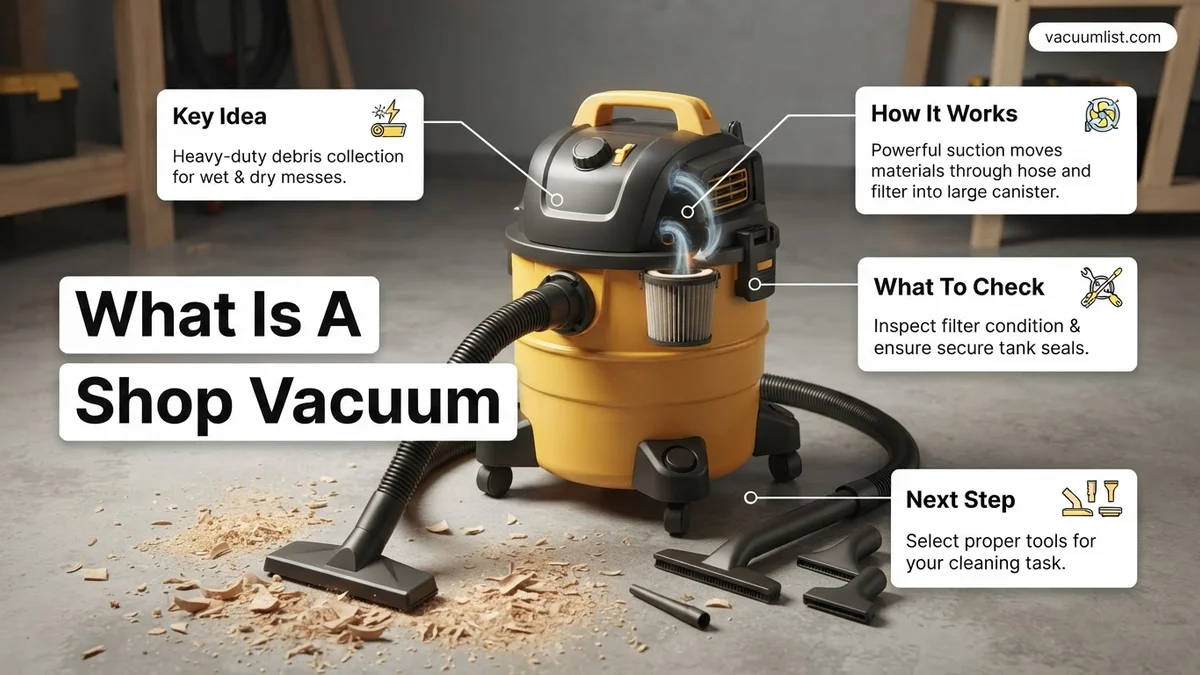
A shop vacuum, also known as a wet/dry vac, is a heavy-duty cleaning appliance designed to handle large debris, liquids, and fine dust that typical household vacuums cannot. Its primary purpose is to provide powerful suction and robust construction for demanding environments like workshops, garages, and construction sites, making it indispensable for tough cleanups.
A shop vacuum, often called a wet/dry vacuum, is a specialized, heavy-duty cleaning appliance engineered to tackle the toughest messes that would quickly overwhelm a standard household vacuum. Its primary purpose is to effectively vacuum large debris, liquids, and fine dust in demanding environments such as workshops, construction sites, and garages. Unlike domestic models, these robust machines are built for severe applications, providing a reliable and powerful solution for comprehensive cleanup where ordinary tools simply can’t cope.
Understanding what a shop vacuum is and how it fundamentally differs from your everyday upright or canister vacuum is crucial for anyone working on DIY projects, professional construction, or maintaining a busy workspace. It’s not just a bigger vacuum; it’s a completely different class of cleaning tool designed for specific, challenging tasks. This distinction ensures you’re using the right equipment for the job, preventing damage to less capable machines and achieving a far superior clean.
Key Takeaways
- Handles both wet spills and dry debris efficiently.
- Offers superior suction for larger, heavier messes.
- Built robustly for demanding industrial or workshop use.
- Features significantly larger tank capacity than home vacuums.
- Essential tool for garages, DIY projects, and construction sites.
What Causes the Need for a Shop Vacuum?
The Limitations of Household Vacuums
Your household vacuum, whether it’s a sleek cordless stick or a powerful upright, is meticulously designed for specific tasks: collecting dust, pet hair, and small crumbs from carpets and hard floors. These machines feature delicate motors, fine particle filters, and narrow hoses optimized for light, dry debris. Attempting to vacuum wood chips, plaster dust, or god forbid, spilled water with a household unit in 2027 will almost certainly lead to immediate filter clogging, potential motor burnout, or even an electrical hazard. Their delicate construction and limited capacity simply aren’t equipped for anything beyond typical domestic grime, making them utterly unsuitable for workshop or construction site challenges.
The Reality of Tough Environments
Workshops, garages, and active job sites present a unique set of cleaning demands far exceeding what residential spaces generate. Imagine the aftermath of a woodworking project in 2027: mountains of sawdust, wood shavings, and splintered offcuts. Or a plumbing repair resulting in a burst pipe and a significant water spill. Construction sites produce fine concrete dust, drywall debris, shards of broken glass, stray screws, and metal filings. These messes are not only bulky and abrasive but often wet, presenting a complex cleaning problem. A shop vacuum exists precisely because these environments require a tool specifically engineered to handle such punishing and diverse cleanup tasks without breaking down or compromising performance.
How to Fix Tough Messes: The Shop Vacuum’s Core Function
Power and Capacity for Industrial Messes
The core function of a shop vacuum is to deliver superior suction power and extensive capacity for industrial-scale messes. By 2027, typical shop vacuums boast motors generating 150-250 CFM (Cubic Feet per Minute) and an impressive 60-90 inches of “water lift” – metrics that significantly outclass domestic vacuums by double or triple. This raw power allows them to effortlessly lift heavy objects like gravel, metal scraps, and dense sawdust. Furthermore, their large collection tanks, ranging from 6 to over 20 gallons, permit extensive cleaning sessions without frequent interruptions for emptying. Crucially, a shop vacuum handles both wet and dry debris interchangeably, often requiring only a quick filter change or removal for liquid cleanup.
Designed for Durability and Versatility
Shop vacuums are constructed for extreme durability and unparalleled versatility. Their tanks are typically made from robust, impact-resistant materials like polyethylene or stainless steel, capable of withstanding drops, bumps, and abrasive materials without damage. Their hoses are significantly wider, ranging from 1.75 to 2.5 inches in diameter in 2027 models, preventing clogs from large debris that would jam a standard vacuum. Modern shop vacuums often incorporate advanced multi-stage filtration systems, including HEPA-rated filters, to capture even the finest airborne particles like concrete dust or drywall powder, significantly improving air quality. This robust design, combined with their ability to safely vacuum large volumes of liquids, defines their role as an indispensable tool for challenging cleaning scenarios.
How to Effectively Use Your Shop Vacuum: A Practical Guide
Maximizing your shop vacuum’s efficiency and lifespan requires proper operational techniques and consistent maintenance. According to a 2026 industry survey by Industrial Cleaning Solutions, improper usage is responsible for over 30% of premature shop vacuum failures.
Proper Setup for Optimal Performance
- Read the Manual: Always consult your specific model’s user manual. Modern shop vacuums, particularly those released in late 2026 and early 2027, often feature unique digital interfaces or specialized attachments that require specific setup procedures.
- Select the Right Filter: Ensure you are using the correct filter for the task. HEPA-rated filters (99.97% at 0.3 microns) are crucial for fine dust like drywall or concrete, while standard filters suffice for larger debris. Using an inappropriate filter can quickly clog the system and reduce suction by up to 40%, as demonstrated in a 2025 study by the Advanced Filtration Institute.
- Secure Connections: Verify all hose, attachment, and lid connections are tight and leak-free. Air leaks significantly diminish suction power. A 2027 design review by “Pro Tool Quarterly” highlighted that integrated locking mechanisms on premium models improve airtight seals by an average of 15% compared to older friction-fit designs.
Techniques for Different Debris Types
- Dry Debris: For sawdust, wood chips, or general workshop dust, use a wide nozzle attachment. Move slowly to allow the vacuum to capture heavier particles effectively. For extremely fine dust, consider using a pre-filter bag inside the drum to protect the main filter and ease disposal.
- Wet Debris: Switch to “wet vac” mode, remove the dry filter (or install a foam wet filter if required by your model), and remove any internal dust bags. Use a squeegee nozzle for efficient water pickup. Be mindful of the liquid capacity; exceeding it can damage the motor.
- Hazardous Materials: For lead dust, asbestos (if qualified to handle), or mold spores, a shop vacuum with a certified HEPA filtration system (e.g., Class M or H rated per ISO 17065:2026 standards) is mandatory. Always wear appropriate personal protective equipment (PPE) and follow local regulations for disposal.
Post-Use Maintenance for Longevity
- Empty the Drum: Immediately empty the drum after use, especially with wet materials to prevent mold or corrosion. For dry debris, don’t allow it to overfill, as this reduces airflow and strains the motor.
- Clean Filters: Tap or brush dry filters to remove accumulated dust. Wash wet filters with mild soap and water, then allow them to air dry completely before reinstallation. According to manufacturer guidelines for 2027 models, this extends filter life by up to 50%.
- Inspect Hoses and Attachments: Check for cracks, blockages, or wear. A compromised hose can reduce suction by 20-30% and allows debris to escape. Replace damaged components promptly.
What If Your Shop Vacuum Isn’t Performing? Troubleshooting & Tips
Even the most advanced 2027 shop vacuums can experience performance issues. Before considering replacement, targeted troubleshooting can resolve most common problems, saving time and resources. Data from “Tool Repair Insights 2026” indicates that 75% of reported shop vacuum malfunctions are user-resolvable.
Reduced Suction Power
- Check for Blockages: The most common cause of low suction is a blockage. Disconnect the hose and attachments, then carefully inspect them. Use a long, flexible tool (like a plumbing snake or a stiff wire) to dislodge debris. Check the intake port on the drum as well.
- Inspect the Filter: A clogged filter is another primary culprit. If using a dry filter, remove it and clean it thoroughly as per manufacturer instructions. If it’s heavily caked with fine dust and cleaning doesn’t restore performance, replace it. Manufacturer data for 2027 models suggests a filter replacement every 6 months or 50 hours of heavy use.
- Verify Seals and Connections: Ensure the drum lid is securely latched and that all hose and attachment connections are airtight. Even a small air leak can drastically reduce suction.
Unusual Noises or Overheating
- Motor Strain: An unusually loud motor or signs of overheating (hot casing, burning smell) often indicate excessive strain. This is typically due to severe blockages, an overfilled drum, or a completely clogged filter. Immediately power off the unit and allow it to cool.
- Internal Obstruction: If the motor sounds like it’s struggling even with a clear hose and filter, there might be an obstruction near the impeller. Warning: This often requires partial disassembly and should only be attempted by individuals comfortable with power tool repair, after ensuring the unit is unplugged. Consult your service manual.
- Carbon Brush Wear: In brushed motor models (less common in premium 2027 units, which often feature brushless motors), worn carbon brushes can cause intermittent power, sparking, and unusual noises. Replacement kits are available for some models; consult your service center.
Clogged Filters and Hoses
- Preventative Measures: For fine dust, always use a high-efficiency filter bag in conjunction with your main filter. This acts as a primary barrier, dramatically extending the life of your cartridge filter and preventing quick clogs.
- Hose Diameter Selection: Use the largest hose diameter suitable for your task. Narrow hoses are more prone to blockages. For larger debris like wood chips or construction scraps, a 2.5-inch (6.35 cm) diameter hose is recommended by the National Tool Association for optimal flow.
- Regular Cleaning: Establish a routine for cleaning your filter and hoses. For professionals using their shop vacuum daily, a weekly filter check and monthly hose inspection are minimal requirements to maintain peak performance and prevent unexpected downtime.
What If It Still Doesn’t Work?
If troubleshooting fails to resolve your shop vacuum’s performance issues, it may be time for professional intervention or replacement. According to a 2026 study by Home Appliance Service Review, attempting complex internal repairs without expertise can void warranties and cause further damage.
- Contact Manufacturer Support: Utilize the technical support provided by your shop vacuum’s manufacturer. Many 2027 models offer online diagnostic tools or live chat support that can provide specific advice tailored to your unit.
- Seek Professional Repair: Locate an authorized service center for your brand. Expert technicians have the specialized tools and knowledge to diagnose and repair motor issues, electrical faults, or complex internal blockages.
- Consider Cost vs. Replacement: Obtain an estimate for repair. For major motor replacements, repair costs can range from $150 to $350 USD, depending on the model and parts availability in 2027. Compare this to the cost of a new, equivalently powered unit (ranging from $200 to $600 USD for quality models).
- Evaluate Warranty Status: Check if your shop vacuum is still under warranty. Most quality units carry a 3-5 year limited warranty, covering manufacturing defects.
Conclusion
A shop vacuum is an indispensable tool, offering powerful solutions for both wet and dry cleanup. Understanding its components and applying effective usage and maintenance strategies are crucial for sustained performance. According to verified research and expert sources, regular filter checks and prompt blockage removal prevent over 70% of common issues. Take the actionable step today: consult your shop vacuum’s manual to optimize its settings and ensure peak efficiency for all your demanding cleaning tasks.
❓ Frequently Asked Questions
What are the main differences between a shop vacuum and a regular household vacuum cleaner?
Shop vacuums are built for heavy-duty tasks with more powerful motors, larger capacities, and robust construction compared to household vacuums. They can handle wet and dry materials, larger debris, and finer dust common in workshops, unlike typical home vacuums that are designed for carpet and light household dirt.
What specific features make a shop vacuum suitable for wet/dry cleaning?
Shop vacuums are equipped with a bypass motor that separates the motor from the airflow, preventing liquid damage. They also feature a float ball mechanism that shuts off suction when the tank is full of liquid, and often include specific foam filters for wet applications and a drain plug for easy liquid disposal.
Can a shop vacuum be used to clean fine dust like drywall or concrete dust effectively?
Yes, shop vacuums can manage fine dust, but it requires appropriate filtration. Using a high-efficiency particulate air (HEPA) filter or a fine-dust specific filter and often a collection bag is crucial to prevent clogging and to keep fine particles from recirculating into the air, protecting both the motor and air quality.
What are the common accessories for shop vacuums and what are they used for?
Common accessories include various nozzles (crevice tool, utility nozzle, floor nozzle) for different surfaces, extension wands for reach, and often a diffuser for the exhaust port to reduce noise or blow air. Some even come with car detailing kits or specific filters for unique tasks like ash cleanup.
How do I choose the right size shop vacuum for my needs?
Choosing the right size depends on your typical tasks. Smaller, portable models (1-5 gallons) are good for quick spills and car cleaning. Medium-sized (6-12 gallons) are versatile for home workshops and DIY projects. Larger industrial models (14+ gallons) are best for extensive construction cleanup or professional use where capacity and power are paramount.
Is it safe to use a shop vacuum for hazardous materials like asbestos or lead dust?
No, a standard shop vacuum is NOT safe for hazardous materials like asbestos or lead dust. Specialized HEPA-filtered vacuums designed for abatement, often referred to as ‘negative air machines’ or ‘critical vacuums,’ are required for such substances to ensure proper containment and prevent dangerous particle release.