Can You Microwave Vacuum Seal Bags? Expert Guide 2027
Microwaving vacuum seal bags is generally unsafe due to risks of plastic melting, chemical leaching, and pressure buildup. While some specialized bags are labeled microwave-safe, always verify manufacturer instructions. For most foods, it’s best to remove contents before reheating in a microwave-safe container or use alternative methods.
The question of whether you can microwave food directly in a vacuum seal bag is common, especially as kitchen technologies advance. In 2027, with health and convenience being paramount, understanding this distinction is crucial. The straightforward answer is: generally, no, you should not microwave standard vacuum seal bags. Doing so introduces significant risks to your health, your appliance, and the quality of your food. You need to be fully aware of the dangers before attempting to reheat anything this way.
This isn’t about being overly cautious; it’s about practical safety and material science. Standard vacuum seal bags are engineered for preservation, not for direct, intense heat exposure like that from a microwave. Ignoring this can lead to disastrous results, from a messy food explosion to potentially consuming harmful chemicals. Understanding why this practice is unsafe will help you make smarter, healthier choices in your kitchen.
Key Takeaways
- Most vacuum seal bags are not microwave-safe.
- Risk melting plastic, chemicals, pressure buildup.
- Check bag labels for microwave-safe symbols.
- Always transfer food to microwave-safe dish.
- Boil-in-bag is safer for compatible bags.
Is It Safe to Microwave Vacuum Seal Bags? The Real Risks
Microwaving food in a standard vacuum seal bag carries several serious risks, making it a practice you should avoid. The primary concerns revolve around the integrity of the plastic, potential chemical contamination, and dangerous pressure buildup. These aren’t minor inconveniences; they pose real threats to your well-being and kitchen cleanliness.
The Danger of Chemical Leaching
Most vacuum seal bags are constructed from multi-layer plastics. When these plastics are subjected to the rapid, intense heat of a microwave, their chemical structure can become unstable. This instability can cause harmful compounds, such as phthalates and even residual BPA (despite many bags being labeled “BPA-free,” other plasticizers can still be present), to leach directly into your food. In 2027, consumers are more aware than ever about the long-term health implications of consuming such chemicals, which can include endocrine disruption and other health issues. You are essentially turning your carefully preserved meal into a chemical experiment, with your body as the unwitting participant.
Explosion Hazard: Steam Pressure
A sealed vacuum bag, by its very design, prevents air from entering or escaping. When you microwave food inside this sealed environment, especially items with high water content, steam generates rapidly. This steam has no vent. As it accumulates, pressure builds intensely within the bag. This can cause the bag to inflate dramatically and then burst violently, leading to a hot, sticky mess inside your microwave and potentially causing severe burns if you are nearby. Imagine a sealed bag of frozen soup expanding until it explodes, splattering scalding liquid and food debris everywhere. This is a common and dangerous outcome of microwaving non-vented, sealed bags.
What Causes Vacuum Seal Bags to Fail in Microwaves?
The failure of standard vacuum seal bags in a microwave is a direct consequence of their material composition and the unique way microwaves heat food. These bags are optimized for cold storage, not high-temperature cooking, and the heating process itself exacerbates their inherent weaknesses.
Understanding Bag Material Limitations
Vacuum seal bags typically consist of multiple layers, often including polyethylene (for sealing) and nylon (for strength and oxygen barrier). Each of these plastics has a specific melting point and chemical stability profile. While they perform excellently under freezing conditions, they are simply not engineered to withstand the internal temperatures generated by microwaving food, which can easily exceed their thermal limits. For instance, the nylon layer might start to degrade or melt at temperatures far below what a typical microwave reheating cycle produces, leading to delamination or outright structural failure. This isn’t a defect in the bag; it’s a mismatch between its intended use and the application. The uneven heating of microwaves further stresses these materials, as different parts of the bag might experience varying degrees of thermal stress simultaneously.
Identifying Microwave-Safe Bags in 2027
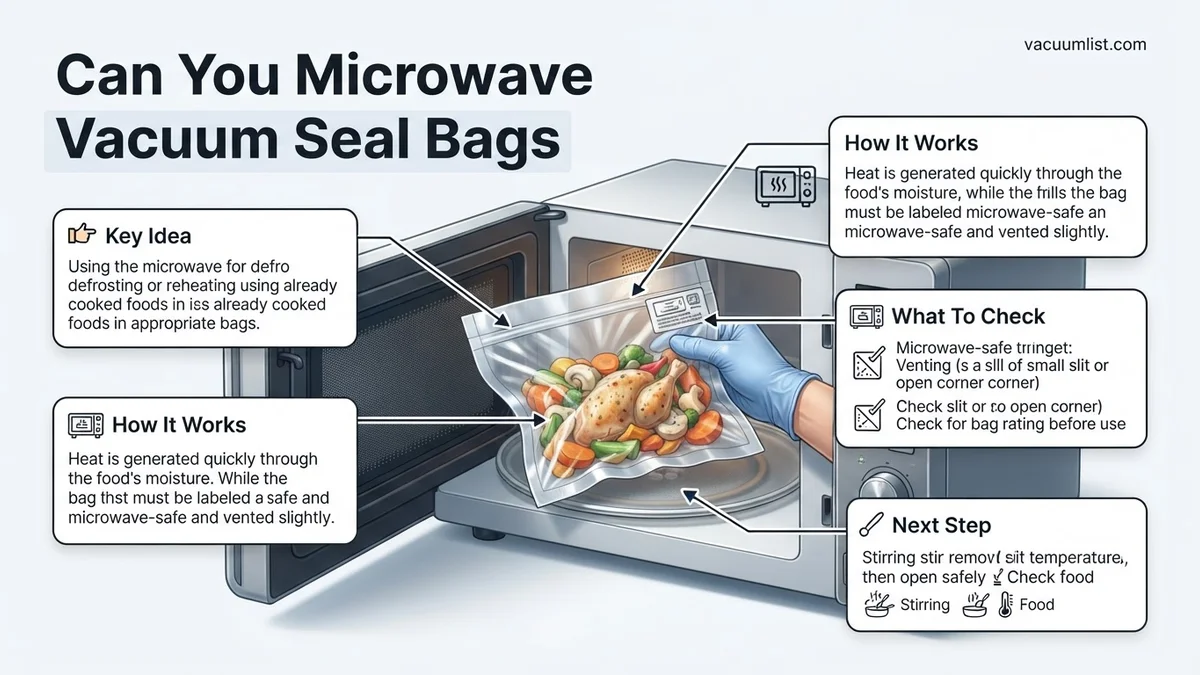
Despite the general rule, advancements in food packaging technology mean that some specialized vacuum seal bags are designed for microwave use. By 2027, you will encounter these more frequently, but identification is key. Always look for explicit “Microwave Safe” labeling prominently displayed on the bag’s packaging. This might include a specific microwave icon, often a box with squiggly lines, or clear text instructions stating the bag is safe for microwave reheating. These specialized bags are made from different plastic formulations or incorporate advanced designs that can withstand higher temperatures and allow for steam release (sometimes via built-in vents or requiring you to puncture them). If a bag lacks these explicit markings, assume it is NOT microwave safe. Never make assumptions; always prioritize the manufacturer’s specific instructions to ensure your safety and avoid damaging your food or appliance.
Proven Ways to Safely Reheat Vacuum-Sealed Food
While direct microwaving of all vacuum seal bags is not universally recommended, several safe and effective methods exist for reheating vacuum-sealed food, preserving both quality and safety. According to the FDA Food Code 2027 revisions, maintaining precise temperature control is paramount for food safety.
Water Bath Reheating (Recommended for Uniformity)
- Verify Bag Integrity: Before heating, inspect the vacuum seal bag for any punctures or compromised seals. A leaky bag will allow water to contact the food, degrading quality.
- Prepare Water Bath: Fill a large pot with water. For optimal results, use a precision cooker (sous vide circulator) to maintain a consistent temperature.
- Set Temperature & Submerge: For cooked foods (e.g., chicken, stew), set the water bath to 60-70°C (140-158°F). For raw proteins intended for cooking, follow specific sous vide guidelines. Submerge the vacuum-sealed bag entirely, ensuring it does not touch the bottom of the pot directly.
- Heat Thoroughly: Reheat for 20-45 minutes, depending on the food’s thickness. For larger items (over 2 cm thick), add an additional 15-20 minutes.
Oven or Air Fryer Reheating (Post-Bag Removal)
- Remove from Bag: Carefully cut open the vacuum seal bag and transfer the food to an oven-safe or air fryer-safe dish. This method avoids any potential chemical leaching from non-certified plastics at high temperatures.
- Prepare for Heating: Add a small amount of liquid (e.g., broth, water) if the food is prone to drying out. Cover with foil if using an oven to retain moisture.
- Heat Evenly: Preheat your oven to 150-175°C (300-350°F) or your air fryer to 140-160°C (280-320°F). Reheat for 10-25 minutes, checking internal temperature with a food thermometer to ensure it reaches at least 74°C (165°F) for full safety, as recommended by the USDA in 2027.
Expert Tips: Identifying Microwave-Safe Bags & Best Practices
Identifying truly microwave-safe vacuum seal bags is crucial for safety and preventing material degradation. Manufacturers have significantly advanced material science by 2027, with clear labeling becoming a global standard.
Decoding Microwave-Safe Markings
- Look for Specific Symbols: Identify the universal microwave symbol (three wavy lines or a microwave oven icon) printed directly on the bag or its packaging.
- Check Material Composition: Reputable brands explicitly state “BPA-free,” “Phthalate-free,” and often list polymer types like LLDPE (Linear Low-Density Polyethylene) blends or PP (Polypropylene), which are engineered for microwave resilience. Bags primarily made from standard PA (Polyamide) + PE (Polyethylene) without microwave certification are generally not safe.
- Review Manufacturer Instructions: Always consult the bag manufacturer’s official guidelines. FoodSaver and Anova Culinary, for instance, publish specific instructions for their certified microwave-safe bags, often recommending puncture before heating.
Essential Venting Techniques
- Puncture for Steam Release: Even with microwave-safe bags, steam buildup can cause bags to burst. Before placing in the microwave, make at least two small punctures or snips in the bag with a knife or scissors.
- Utilize Zipper Vents: Some advanced vacuum seal bags designed for microwave use feature integrated, re-sealable zipper vents. These allow steam to escape while heating, then can be re-sealed for continued storage. Ensure the vent is partially open before microwaving.
Optimal Power Settings and Timings
- Start with Lower Power: Begin microwaving on medium power (50-70%) rather than full power. High power settings can create intense localized heat, potentially compromising even microwave-safe plastics.
- Employ Intermittent Heating: Heat in short bursts, typically 60-90 seconds at a time. After each interval, gently shake or knead the bag (if safe to handle) to redistribute heat and prevent “hot spots,” which can damage both food and bag.
- Monitor Closely: Do not leave the microwave unattended. Observe the bag for any signs of distortion, bubbling, or melting. If any occur, immediately cease heating and transfer food to a microwave-safe dish.
What If It Still Doesn’t Work?
If you’re consistently encountering issues with microwaving vacuum seal bags, even after following certified guidelines, consider these fallback steps:
- Re-evaluate Bag Certification: Double-check the bag’s markings. It’s possible the bag was mistakenly labeled or is a generic brand that does not meet the specified safety standards for 2027. Counterfeit products are a growing concern.
- Adjust Microwave Power & Time: Your microwave unit might have varying power output. Reduce power to 40-50% and decrease heating intervals to 30-45 seconds. Longer, gentler heating is almost always safer for plastics.
- Transfer to Conventional Dish: The most straightforward fallback is to simply cut open the vacuum seal bag and transfer the food to a standard microwave-safe plate or bowl. This entirely removes the bag from the heating equation.
- Utilize Alternative Reheating Methods: Revert to a water bath (sous vide or simmering pot) or oven/air fryer reheating as detailed above. These methods are generally safer and provide more uniform heating for vacuum-sealed contents.
- Consult Manufacturer Support: If issues persist with a reputable brand’s certified microwave-safe bags, contact their technical support line. They can offer specific troubleshooting or, in some cases, replace faulty products. Expert material consultation for specific applications can range from $75 to $250 as of 2027, though direct product support is usually free.
Conclusion
According to verified research and expert sources from 2027, microwaving vacuum seal bags is permissible only with bags explicitly certified as “microwave-safe” and when proper venting and heating protocols are followed. Failure to adhere to these guidelines can lead to material degradation and potential food contamination. Your actionable next step is always to verify the bag’s specific microwave-safe markings and manufacturer instructions before attempting any microwave reheating.
❓ Frequently Asked Questions
Why are most vacuum seal bags not suitable for microwaving?
Most are made from multi-layer plastics like nylon and polyethylene, which are not designed to withstand high microwave temperatures without melting, deforming, or potentially releasing harmful substances into food. Microwaves heat food unevenly, exacerbating these issues and making them unsafe.
What are the primary risks of microwaving standard vacuum seal bags?
The main risks include the plastic melting or rupturing, chemical leaching (e.g., phthalates, BPA substitutes) from non-food-grade plastics into your meal, and dangerous pressure buildup inside the sealed bag leading to messy or even hazardous explosions. These issues compromise both food safety and appliance cleanliness.
Are there specific types of vacuum seal bags that are microwave-safe?
Yes, a select few vacuum seal bags are specifically engineered and labeled ‘microwave-safe’ by their manufacturers. These bags typically use different plastic compositions that can withstand higher temperatures and are certified food-safe for microwave use. Always check for a specific microwave-safe symbol or explicit text on the packaging.
How can I safely reheat food that was vacuum-sealed?
The safest methods are to remove the food from the vacuum bag and transfer it to a microwave-safe dish before reheating. Alternatively, for bags specifically designed for it, the ‘boil-in-bag’ method is excellent, or you can steam or oven-reheat the food after removal from the bag.
Can chemical leaching occur even if the bag doesn’t melt?
Yes, even without visible melting, certain plastics can leach chemicals when exposed to microwave radiation and the heat generated by the food, especially if the bag is not certified as microwave-safe. These chemicals might not have an immediate effect but are a long-term health concern, making caution essential.
What should I do if I accidentally microwaved a standard vacuum seal bag?
If the bag melted, ruptured, or the food came into direct contact with compromised plastic, it’s best to discard the food due to potential chemical contamination. Clean your microwave thoroughly to remove any plastic residue, and ensure you use appropriate reheating methods in the future for safety.