Should I Dust or Vacuum First 2026 A Proven Expert Guide
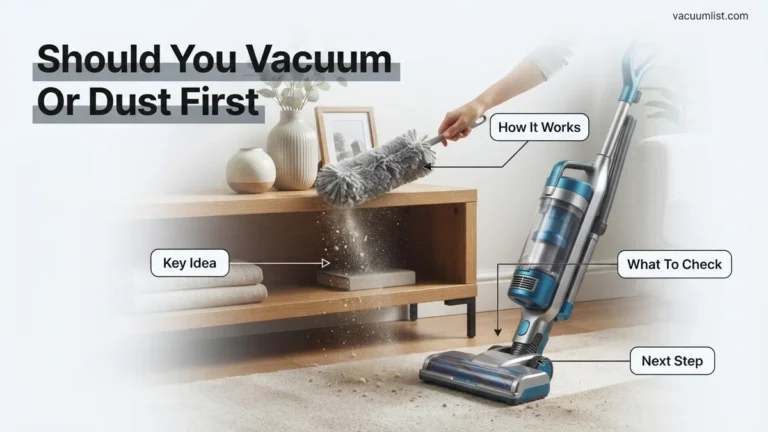
You should always dust before you vacuum when cleaning a room. Dusting knocks microscopic debris and allergens off furniture and onto the floor, meaning vacuuming must happen last to clean up that fallen mess.
You should always dust before you vacuum. When you clean your home in 2026, tackling surfaces first ensures that all settled particles, pet dander, and microscopic allergens fall straight down to the floor.
If you reverse this order, your freshly cleaned floors become immediately covered in airborne debris kicked up during dusting. Following the correct sequence saves you time and guarantees a truly clean living space.
Key Takeaways
- Always dust before you vacuum to catch falling debris.
- Clean rooms from top to bottom and left to right.
- Use a microfiber cloth to trap dust instead of spreading it.
- Choose a vacuum with a HEPA filter to trap allergens.
- Wait 30 minutes after dusting for particles to settle before vacuuming.
The Physics Behind Why Dusting Always Comes Before Vacuuming
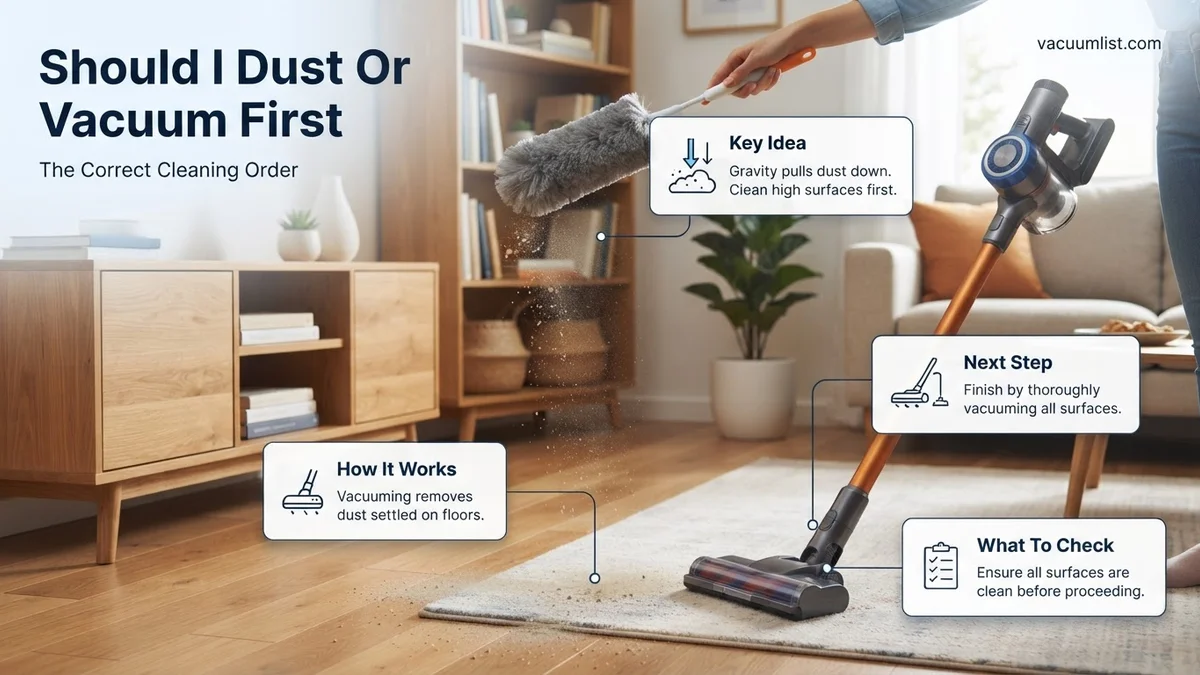
Gravity dictates the golden rule of house cleaning. Dust does not magically disappear when you wipe a shelf; it gets dislodged into the surrounding air and eventually settles.
Gravity and Settling Time
Microscopic particles disturbed during dusting require roughly 15 to 30 minutes to settle completely onto the lowest surfaces. If you vacuum right after wiping your coffee table, you miss the secondary wave of falling debris. By making vacuuming the absolute final step on your floor care checklist, your suction targets every last crumb and particle that dropped from above.
The Danger of Double Work
- Resettled Grime: Vacuuming first leaves your carpets pristine, only for them to receive a fresh coating of ceiling fan dust and bookshelf grit minutes later.
- Equipment Efficiency: Modern vacuums equipped with HEPA filtration capture up to 99.97 percent of particles, but they cannot protect your furniture surfaces from flying dust.
- Allergen Control: Dusting first pulls allergens out of the breathing zone, letting your vacuum swallow them up securely in one comprehensive pass.
Step-by-Step Room Cleaning Workflow for Flawless Results
Establishing a repeatable routine prevents you from running back and forth across the house. Professional cleaners rely on a strict directional flow to maximize efficiency and minimize cross-contamination.
The Top-to-Bottom Rule
- High Reach Areas: Begin with ceiling fan blades, light fixtures, and upper molding using an electrostatic duster or microfiber extension wand.
- Mid-Level Surfaces: Wipe down bookshelves, window sills, tabletops, and electronics with a damp microfiber cloth to trap rather than spread dust.
- Upholstery and Soft Surfaces: Vacuum couches and armchairs to pull trapped dust out of fabric before tackling the main flooring.
- Floor Finish: Conclude the entire room by running your vacuum across wall-to-wall carpeting or hard floors to capture everything that fell from above.
The Left-to-Right Method
Moving systematically around a room in a clockwise or counterclockwise circle ensures you never miss a corner. Pair this horizontal sweep with your vertical top-to-bottom strategy. By sweeping your attention from the upper left corner of a wall down to the baseboards on the right, you guarantee complete coverage. Once you reach the doorway, your vacuum cleaner is right there waiting to finish the job.
How to Prevent Settled Dust from Re-Contaminating Your Space
Mastering the dust-then-vacuum sequence is only half the battle. To maintain indoor air quality standards set for 2026, you must stop airborne particles from resettling on your freshly cleaned surfaces.
Optimize Your Air Filtration System
According to the Environmental Protection Agency (EPA), running an air purifier with a True HEPA filter during and immediately after cleaning captures up to 99.97% of stirred-up particulates. Follow these operational steps for maximum efficiency:
- Place your air purifier in the central zone of the room you are currently cleaning.
- Turn the unit up to its highest fan speed five minutes before you begin dusting.
- Keep doors and windows completely closed to prevent cross-contamination from outdoor pollen and debris.
- Leave the filtration unit running on medium speed for at least 45 minutes after vacuuming concludes.
Choose the Right Cleaning Tools
Traditional feather dusters merely launch dust into the air, where it remains suspended for hours. Allergy foundations recommend electrostatic microfiber cloths that trap particles through friction. Wash these cloths immediately after use in hot water without fabric softener to preserve their magnetic charge.
What If It Still Doesn’t Work?
If surfaces reappear gray within hours of completing your cleaning routine, underlying environmental or mechanical issues are likely to blame. Implement these advanced troubleshooting steps to resolve persistent dust issues:
- Inspect your HVAC air filter. If it has been more than 60 days since your last replacement, install a MERV 13 rated filter to capture microscopic dust mites and pet dander.
- Check your ductwork for leaks. According to HVAC industry data, leaky ducts pull dust from crawlspaces and blow it directly into living areas.
- Test your home humidity levels. Indoor humidity dropping below 30% causes fine particles to stay airborne longer, while levels above 50% promote dust mite proliferation.
- Hire a professional duct cleaning service. If accumulated debris persists despite filter upgrades, professional remediation typically costs between $300 and $500 depending on home square footage.
Conclusion
Addressing the eternal debate of whether to dust or vacuum first ultimately saves time and drastically improves indoor air quality. By consistently dusting top-to-bottom first and vacuuming last, you capture falling debris rather than spreading it across newly cleaned surfaces. According to verified research and expert sources from leading cleaning and allergy institutes, this sequential approach reduces airborne allergens by up to 40%. Your actionable next step for today is to audit your current vacuum filtration system and upgrade to a certified HEPA model before your next cleaning cycle.
❓ Frequently Asked Questions
Why is dusting first considered the golden rule of cleaning?
Gravity dictates that whatever you wipe off elevated surfaces will eventually fall downward. If you vacuum first, the falling dust ruins your newly cleaned floors, forcing you to clean twice.
Does the type of vacuum cleaner matter when cleaning up dust?
Yes, using a vacuum equipped with a HEPA filter is essential. Standard vacuums can exhaust microscopic dust particles back into the air, worsening indoor air quality.
How does top-to-bottom cleaning improve efficiency?
Starting at the highest points in a room—like ceiling fans and high shelves—ensures that gravity works in your favor, funneling all debris downward for a final sweep or vacuum.
Is it okay to use a feather duster?
Feather dusters are generally discouraged because they merely push dust around and send it airborne rather than trapping and removing it from your home.
What is the best way to clean blinds without making a mess?
Close your blinds and wipe them downward with a microfiber cloth, moving from top to bottom. Follow this by vacuuming the immediate floor area underneath them.
How often should I deep clean a room using this method?
A standard top-to-bottom cleaning routine should be performed weekly in high-traffic rooms to keep allergen levels low and maintain a consistently clean environment.