Why Are Dogs Scared of Vacuums Expert Guide 2026
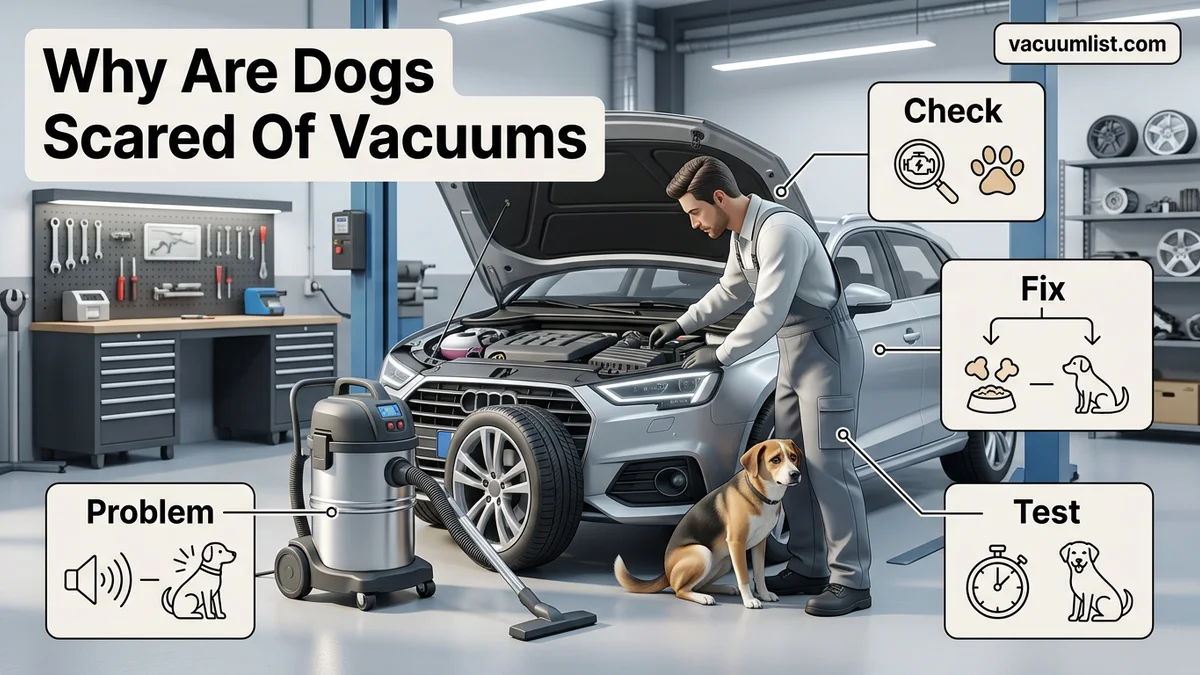
Dogs are terrified of vacuums primarily due to sensory overload from ultrasonic noises, erratic movements, and trapped odors. This combination triggers a strong predator-prey or fight-or-flight response in most household pets.
Dogs are terrified of vacuum cleaners because these machines trigger a multi-sensory assault that combines ultrasonic frequencies, erratic spatial movements, and threatening synthetic odors. To your dog, a running vacuum is not a household tool; it is a loud, unpredictable predator invading their territory.
Understanding this sensory overload is essential for keeping your home peaceful and preventing your dog from developing severe, long-term anxiety or aggressive reactivity in 2026. Addressing this phobia correctly protects your dog’s mental well-being and stops destructive panic behaviors during routine cleaning.
Key Takeaways
- Dogs hear high-frequency sounds from vacuums that humans cannot perceive.
- Erratic movements make the vacuum look like a living predator.
- Sensory overload combines loud noise, strange vibrations, and trapped smells.
- Desensitization requires slow, systematic exposure paired with high-value treats.
- Punishing fear worsens anxiety and damages trust between pet and owner.
Why Are Dogs Scared of Vacuums: Sensory and Instinctual Triggers
Auditory Overload and High-Frequency Noises
Canine hearing is vastly superior to human hearing. While we perceive a vacuum as a loud hum, dogs hear a chaotic mix of deep mechanical rumbles and high-frequency whines that often reach up to 80 decibels or higher. This high-pitched whine hurts their sensitive ears, turning a standard chore into a painful acoustic experience.
Erratic Movement and Visual Confusion
Vacuums move in unnatural, jerky patterns that defy the predictable physics of living creatures or normal objects. Your dog’s predatory instinct perceives this fast-moving, roaring object as an aggressive entity invading their personal space. Because the machine sweeps toward them, it triggers an immediate fight-or-flight response.
- Smell dispersion: Vacuums heat up internal dust and circulate trapped odors that are intensely magnified to a dog’s powerful nose.
- Lack of control: The machine moves independently of human body language, confusing dogs who rely on visual cues.
How to Fix Vacuum Phobia with Step-by-Step Desensitization
Phase One: Passive Exposure and Distance
Start your desensitization process by placing the turned-off vacuum in the middle of a room without interacting with it. Let your dog sniff the machine at their own pace, rewarding them with high-value treats whenever they show calm curiosity. Repeat this for several days until your dog views the stationary vacuum as completely neutral and unthreatening.
Phase Two: Controlled Sound and Movement Pairing
Once your dog ignores the stationary vacuum, plug it in across the room and turn it on for just two seconds before turning it off immediately. Pair this short burst of noise with high-value rewards like chicken or cheese.
- Turn the vacuum on at a distance while feeding continuous treats.
- Gradually increase the running time as your dog remains calm.
- Slowly move the vacuum closer over the span of two to three weeks.
- Stop immediately if your dog displays whale eyes, panting, or trembling.
Proven Counter-Conditioning Techniques for Aggressive Dogs
When a dog’s fear shifts into defensive aggression, standard desensitization methods require careful modification. Clinical animal behaviorists emphasize that safety must remain the absolute priority during any behavior modification protocol in 2026. If your dog snaps, lunges, or bites when the vacuum appears, you must slow down the progression significantly.
Step-by-Step Counter-Conditioning Protocol
- Muzzle Conditioning: Introduce a comfortable, basket-style muzzle using high-value treats so your safety is guaranteed without raising the dog’s stress baseline.
- Distance Management: Keep the vacuum turned off and stationary at the far end of the room while feeding meals or tossing premium treats like freeze-dried liver.
- Gradual Movement: Move the powered-off vacuum just one foot closer per training session, immediately rewarding calm behavior and stopping if whale-eye or lip-licking appears.
According to veterinary behavior guidelines, rushing this process reinforces the panic response. Keep individual training sessions under five minutes to prevent cognitive overload.
What If Desensitization Fails and Anxiety Persists
Some dogs possess genetic predispositions to sound phobias that do not resolve with basic home training alone. If your dog still panics after weeks of consistent exposure, alternative interventions are necessary.
Advanced Strategies for Severe Phobias
- Consult a Board-Certified Veterinary Behaviorist: Seek a DACVB specialist if panic attacks cause self-injury or destructive home escape attempts.
- Discuss Pharmaceutical Support: Modern veterinary medicine utilizes situational anxiolytics, such as Sileo or gabapentin, prescribed specifically to lower neurological reactivity during cleaning days.
- Integrate Pheromone Therapy: Plug in a DAP (Dog Appeasing Pheromone) diffuser near the primary storage area of the vacuum to continuously release calming synthetic maternal pheromones.
- Outsource the Cleaning: Utilize robotic vacuums with ultra-quiet brushless motors, or hire professional cleaning services while your dog stays at a quiet local pet resort.
Professional behavioral consultations generally range from $250 to $600 per initial assessment, while specialized pharmaceutical interventions average $30 to $80 per month depending on the dog’s weight and prescription type.
Conclusion
Overcoming a dog’s intense vacuum phobia requires patience, systematic desensitization, and strict adherence to emotional pacing. By transforming a loud, terrifying monster into a predictable source of high-value treats, owners can permanently rewire their pet’s neurological response to household cleaning tools. According to verified research and veterinary behavioral sources, pairing gradual exposure with expert-backed management strategies yields a permanent reduction in canine anxiety. Take the first actionable step today by placing your powered-off vacuum in the middle of the room and rewarding your dog simply for remaining calm nearby.
❓ Frequently Asked Questions
Why are dogs scared of vacuums even when turned off?
If the vacuum is off, dogs may still fear it due to negative associations from past experiences or its strange, imposing shape. They view stationary objects that have previously caused stress as lingering threats.
How does a dog’s hearing amplify vacuum fear?
Dogs hear sounds at much higher frequencies than humans and can detect mechanical whines and motor vibrations that we miss. This turns a normal cleaning tool into a deafening, painful experience.
What is counter-conditioning in vacuum training?
Counter-conditioning involves changing your dog’s emotional response to the vacuum from fear to excitement. This is achieved by pairing the presence of the vacuum with high-value treats like chicken or cheese.
Should I let my dog sniff the vacuum while it’s running?
Never let a terrified dog get close to a running vacuum, as this can lead to accidental injury or severe trauma. Only allow sniffing when the machine is completely turned off and stationary.
Why does my dog bark at the vacuum robot?
Robot vacuums move unpredictably across the floor without warning, which activates a dog’s territorial and defensive instincts. The low humming sound combined with autonomous movement feels like an intruder.
When should I consult a professional trainer?
If your dog shows extreme aggression, self-harm behaviors, or severe panic attacks that do not improve with gradual exposure, a certified behaviorist can provide specialized intervention.