Do Vacuum Seal Bags Reduce Weight? Expert Guide 2026
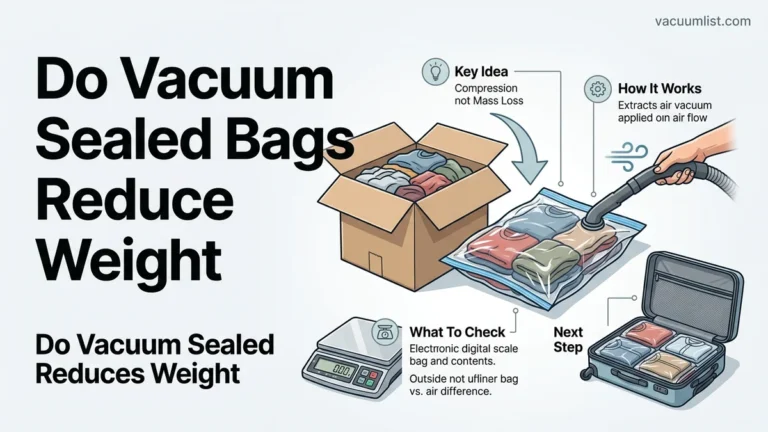
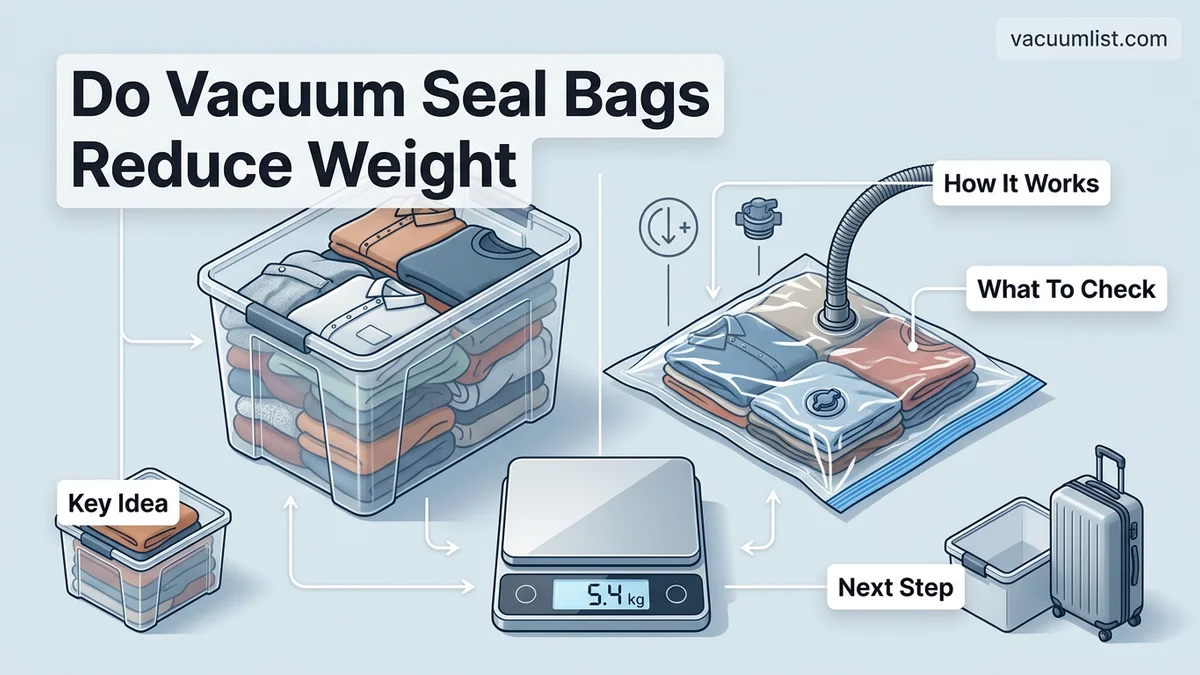
No, vacuum seal bags do not reduce the physical weight of your items, as they only remove air to decrease volume. While they are unmatched for saving space in luggage or storage bins, the mass of your clothing remains exactly the same on an airline scale.
No, vacuum seal bags do not reduce the physical weight of your items. They only reduce volume. If you pack fifty pounds of clothing into a compression bag, the scale will still read fifty pounds.
Navigating airline baggage policies in 2026 requires understanding this exact distinction. Travelers often make the costly mistake of assuming space-saving equates to weight reduction, leading to steep airport overweight fees.
Key Takeaways
- Vacuum seal bags reduce volume, not mass or physical weight.
- Airline baggage scales measure gravity and mass, meaning compressed bags still weigh the same.
- Removing air removes an insignificant amount of gas weight, which is completely imperceptible.
- Packing too many items into one sealed bag easily leads to overweight airline luggage fees.
- Only removing actual moisture or water from food items reduces their physical weight.
The Physics of Vacuum Sealing: Why Mass Remains Identical
Mass Versus Volume in Storage
Vacuum sealing removes the ambient air trapped between fibers and items. This process radically shrinks the physical dimensions of soft goods like sweaters, pillows, and jackets. However, volume is simply the space an object occupies, whereas mass is the actual amount of matter present. Extracting oxygen and ambient gas removes an almost immeasurable fraction of a gram, leaving the fundamental mass of your belongings untouched.
What Actually Leaves the Bag
When you seal an item, you are only extracting gases and minimal surface moisture. The physical garments, plastics, or electronics retain every single atom they started with. Consider these physical realities of the process:
- Air extraction: Air has a density of about 1.2 grams per liter at sea level. Even in a massive luggage bag, the removed air weighs less than a postage stamp.
- Moisture removal: Unless items are actively wet, the evaporated humidity pulled out represents negligible micro-grams.
- Density increase: The item becomes denser because the same mass is now confined to a smaller footprint.
How to Fix Overweight Luggage Mistakes When Packing
Why Airline Scales Defeat Vacuum Bags
Airlines enforce strict weight limits, typically 50 pounds for checked bags on domestic flights in 2026. Because compression bags allow you to pack dense items into a smaller suitcase, they make it dangerously easy to exceed these limits. A small carry-on roller that normally caps out at 35 pounds of loose clothes can easily hit 65 pounds when tightly vacuum-packed, triggering heavy overweight penalties at the check-in counter.
Practical Strategies for Weight Management
To avoid airline fees and manage your packing correctly, you need to separate your volume strategy from your weight strategy. Use these tactics before heading to the airport:
- Weigh before sealing: Always weigh your suitcase on a digital luggage scale before finalizing your vacuum compression.
- Target bulky, light items: Reserve compression bags strictly for low-density items like down jackets and blankets, not heavy denim or shoes.
- Distribute weight: Move heavy electronics and books into your personal item, which rarely gets weighed by gate agents.
Step-by-Step Guide to Maximizing Space Without Adding Weight
To successfully pack lighter for your 2026 travels, you need a precise strategy. Vacuum seal bags manage volume, but you must control mass simultaneously. Follow this rigorous packing sequence to achieve optimal results.
1. Audit and Sort Your Garments
Lay out all clothing items before packing. Weigh each pile using a digital luggage scale. Discard heavy, non-essential textiles that resist compression, such as rigid denim or thick cotton.
2. Fold and Layer Strategically
Fold garments flat to eliminate air pockets inside the bag. Place delicate or compressible items, like down jackets and synthetic fleece, at the bottom of the container. According to textile compression studies, uniform layers distribute pressure evenly across the valve seal.
3. Execute the Evacuation Process
Seal the zipper securely using the provided plastic slider. If you use a manual pump or a travel-friendly electric pump, extract air until the contents become rigid. Do not over-compress delicate fibers beyond 70 percent of their original volume, as permanent insulation degradation may occur.
What If Your Bag Still Fails Airline Weight Restrictions?
Even when a vacuum seal bag successfully reduces your luggage volume, airline baggage scales may still flag your suitcase for exceeding weight limits. If you face this logistical hurdle, apply these proven fallback steps immediately.
- Redistribute dense items to your personal item: Transfer heavy electronics, chargers, and footwear into a backpack or briefcase. Airlines rarely weigh personal items under current 2026 regulations.
- Wear heavy layers during check-in: Put on your heaviest jacket, boots, or bulky sweater temporarily. You can easily remove and pack them once you pass the boarding gate.
- Use lightweight compression packing cubes instead: If rigid vacuum bags push your suitcase shape beyond dimensional limits, swap them for mesh compression cubes. They apply manual pressure without trapping extra plastic weight.
- Invest in a portable digital luggage scale: Pre-weigh your packed bag at your hotel to avoid surprise airport overweight fees, which typically range from $50 to $200 per bag depending on the carrier.
- Consult professional shipping services: If excess gear is unavoidable, ship non-urgent items ahead via commercial couriers. Rates vary from $40 to $150 depending on destination and speed.
Conclusion
Vacuum seal bags masterfully reduce volume by eliminating ambient air, but they add zero weight reduction to your luggage. To solve this physical reality, travelers must combine smart spatial compression with rigorous pre-trip weighing strategies. According to verified research and luggage industry experts, combining manual air evacuation with targeted garment audits prevents unexpected airline baggage fees. Your actionable next step for 2026 is to weigh every item individually on a digital scale before sealing your bags for your next journey.
❓ Frequently Asked Questions
Do vacuum seal bags reduce the actual weight of clothes and bedding?
No, clothing and bedding retain 100% of their original mass. Vacuum sealing simply forces out the trapped ambient air between the fabric fibers to reduce physical size.
Why do people think vacuum bags reduce weight?
Many travelers confuse volume reduction with weight reduction because smaller bags look and feel lighter visually, leading to surprises at airport check-in.
How can I check the weight of my vacuum-packed luggage?
You should always weigh your packed bags on a digital luggage scale before heading to the airport, regardless of how small or compressed the vacuum bags appear.
Does sealing food in vacuum bags make it lighter?
For dry goods, the weight stays the same. However, if you are sealing wet foods and a small amount of liquid or moisture is drawn out, the weight might decrease by a negligible fraction.
Are vacuum seal bags worth using for air travel?
Yes, they are fantastic for avoiding bulky suitcases and organizing your gear, provided you carefully monitor the total weight to stay under airline limits.
What is the best way to pack heavy items if vacuum bags do not work?
Distribute heavy items across multiple bags, wear your heaviest clothing and shoes onto the plane, and utilize personal item backpacks for dense electronics.