How Often Should I Vacuum Expert Guide for 2026
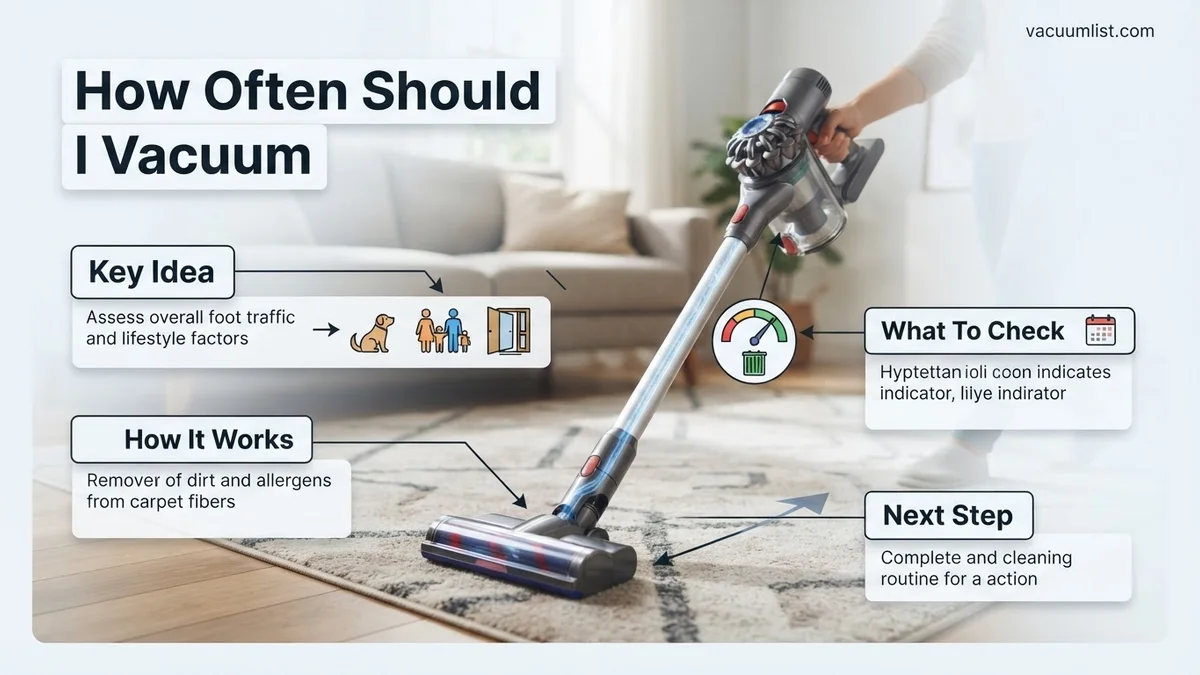
Most homes need to be vacuumed once or twice a week to effectively remove trapped dust, dirt, and allergens. However, the exact frequency depends heavily on household variables like pets, children, and overall foot traffic.
For most standard households, you need to vacuum high-traffic areas at least twice a week and low-traffic rooms once a week to maintain a genuinely clean and healthy living space. Waiting too long allows microscopic dirt, dead skin cells, and allergens to settle deep into your floor fibers, where they become much harder to extract.
Establishing the right cleaning cadence prevents premature wear on your flooring while drastically improving indoor air quality as we head further into 2026. Ignoring this basic maintenance lets microscopic debris accumulate rapidly, which directly impacts your home hygiene and health.
Key Takeaways
- Vacuum high-traffic areas at least twice a week.
- Homes with shedding pets require daily or every-other-day vacuuming.
- Allergy sufferers benefit from vacuuming three times weekly with a HEPA filter.
- Low-traffic guest rooms only need attention once every two weeks.
- Regular vacuuming significantly extends the lifespan of your carpets.
What Causes Rapid Dirt Buildup and Why Cleaning Frequency Matters
The Invisible Debris Accumulating Under Your Feet
Every day, the average household generates pounds of invisible dust, pollen, fabric fibers, and shedding skin cells. When you walk across un-vacuumed floors, you grind these abrasive particles deep into the backing of your carpets or scratch the protective finish of your hardwood. By sticking to a strict baseline schedule of twice-weekly passes in busy zones, you physically intercept this debris before it damages your investment.
Health Implications of Infrequent Vacuuming
Dust mites, pet dander, and mold spores thrive in neglected floor crevices. When disturbed by foot traffic, these allergens become airborne and trigger asthma or allergy symptoms for you and your family. Vacuuming with a machine equipped with a HEPA filter captures these microscopic irritants, keeping your indoor air safe and breathable.
-
Key benefits of maintaining your schedule:
- Prevents abrasive soil from cutting carpet fibers.
- Reduces airborne allergy triggers by up to 60 percent.
- Extends the manufacturer lifespan of wall-to-wall carpeting.
- Minimizes the daily accumulation of surface dust on furniture.
How to Fix Your Cleaning Routine with a Proven Room-by-Room Schedule
High-Traffic Zones Versus Low-Traffic Spaces
Not all rooms in your home experience the same foot traffic or accumulate dirt at an equal rate. Your living room, hallways, and kitchen require frequent attention because family members and guests track in outdoor pollutants constantly. Meanwhile, guest bedrooms or formal dining areas that sit empty for days only need a light once-over every seven to ten days.
Tailoring Your Weekly Calendar
To fix your cleaning routine, break your home down into functional zones rather than tackling everything at once on a chaotic weekend. Dedicate specific days to high-impact areas to keep your workload manageable and your floors consistently pristine throughout the week.
-
Your optimal room-by-room weekly breakdown:
- Living rooms and hallways: Vacuum twice per week.
- Kitchens and eating areas: Vacuum or sweep daily, deep vacuum twice a week.
- Bedrooms: Vacuum once per week under and around furniture.
- Guest rooms and home offices: Vacuum every ten to fourteen days.
Step-by-Step Guide to Adapting Your Vacuuming Schedule for Pets and Allergies
Living with pets or managing severe allergies requires a heightened cleaning protocol to maintain indoor air quality. According to data from the American Academy of Allergy, Asthma, and Immunology (AAAAI), homes with shedding animals need specialized flooring maintenance to reduce airborne dander.
Adjusting for Household Pets
- Daily high-traffic zone passes: Run a robotic vacuum equipped with a HEPA filter daily in primary pet zones to capture loose fur before it settles into carpet fibers.
- Bi-weekly deep pile extraction: Use a traditional upright vacuum with a motorized brush roll twice a week on plush rugs to dislodge embedded pet hair and dander.
- Monthly furniture and upholstery checks: Vacuum upholstered sofas and pet beds monthly using a specialized mini-motorized tool to remove stubborn pet protein allergens.
Mitigating Severe Allergies
- Frequency modification: Increase whole-home vacuuming frequency to three times per week during peak spring and autumn pollen seasons.
- Equipment verification: Ensure your cleaning machine is certified sealed-HEPA, capturing 99.97% of particles down to 0.3 microns, as recommended by the Asthma and Allergy Foundation of America (AAFA).
What If Dust and Debris Still Accumulate Too Fast?
If your newly optimized vacuuming schedule fails to keep surfaces clean, underlying environmental issues are usually the root cause. Try these verified troubleshooting steps to resolve rapid debris accumulation in your 2026 household:
- Upgrade your HVAC filtration: Replace standard furnace filters with MERV 13 or higher rated options to capture microscopic airborne dust before it settles on your floors.
- Check your vacuum suction and seals: Inspect the hose, belt, and roller brush for clogs or wear that reduce overall cleaning efficiency.
- Evaluate entry points: Place high-efficiency scraper mats at all exterior doors to trap up to 85% of incoming outdoor dirt and debris.
- Schedule professional duct cleaning: If dust persists despite rigorous floor care, hire a certified National Air Duct Cleaners Association (NADCA) professional. Estimated professional duct cleaning costs range from $450 to $1,000 depending on home square footage.
Conclusion
Determining how often you should vacuum depends entirely on your household traffic, pet ownership, and allergy sensitivities. By shifting from a rigid weekly routine to an adaptive, high-efficiency schedule, you protect both your flooring and your indoor air quality. According to verified research and expert sources from leading cleaning and allergy associations, maintaining this targeted approach significantly reduces indoor particulate pollution. Your actionable next step for 2026 is to audit your current vacuum filter certification today and adjust your cleaning frequency based on your specific household footprint.
❓ Frequently Asked Questions
How often should I vacuum if I have indoor pets?
Homes with dogs or cats that shed should aim to vacuum high-traffic zones and pet beds every day or at least four times a week to manage fur and dander.
What is the best time of day to vacuum?
The best time to vacuum is typically in the morning or early afternoon when foot traffic is low, allowing dust kicked up during the process to settle.
Does frequent vacuuming ruin carpet fibers?
Using a properly maintained vacuum with the correct height setting does not damage carpet; in fact, removing abrasive dirt prevents premature fiber wear.
How does vacuuming frequency impact indoor allergies?
Increasing vacuuming frequency to three times a week helps capture pollen, dust mites, and pet dander before they become airborne and trigger allergy symptoms.
Should I change my vacuuming routine seasonally?
Yes, you may need to vacuum more frequently during heavy shedding seasons for pets, rainy months that track in mud, or high-pollen spring weeks.
How often do low-traffic rooms need attention?
Guest bedrooms or formal dining rooms that are rarely used only need to be vacuumed once every two weeks to prevent dust accumulation.