How Long Will Vacuum Packed Meat Last in 2026 Expert Guide
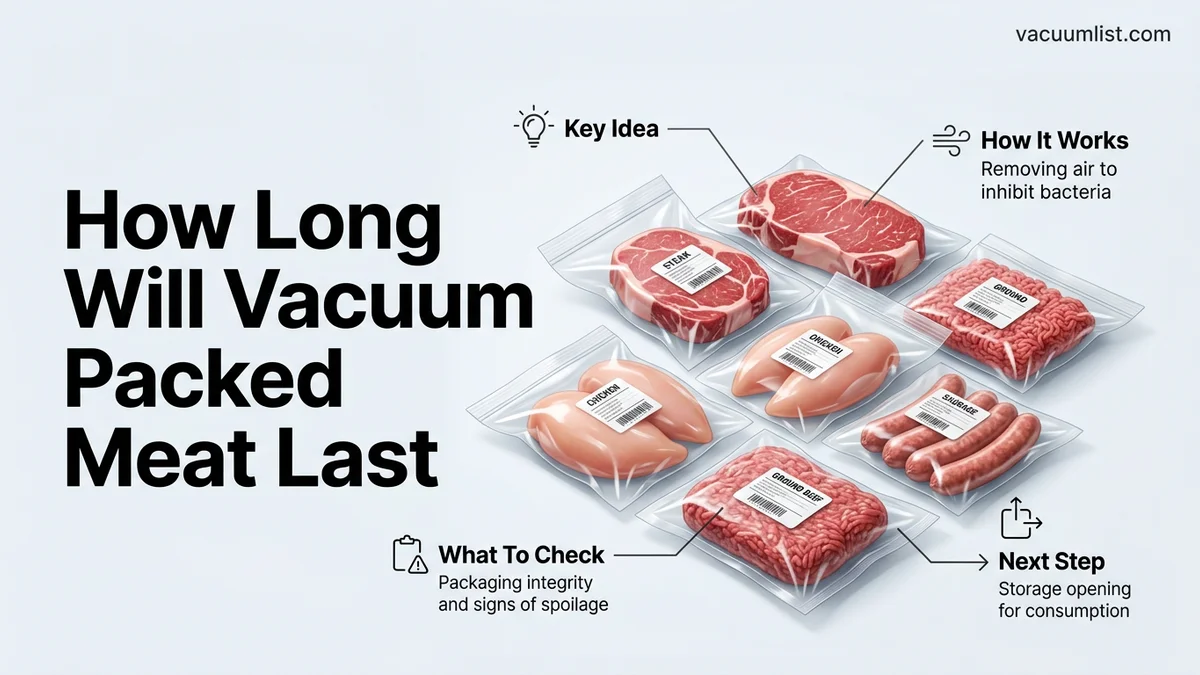
Vacuum packing significantly extends the shelf life of meat by removing oxygen, keeping cuts fresh in the refrigerator for 1 to 2 weeks or in the freezer for 1 to 3 years. However, exact storage times vary depending on the specific type of meat and proper temperature control.
Vacuum-packed meat lasts significantly longer than conventionally wrapped meat, extending refrigerator life from a few days to several weeks, and freezer storage from months to several years. By removing oxygen, vacuum sealing halts aerobic bacteria growth and prevents freezer burn, protecting your grocery investment in 2026.
Whether you buy meat pre-packaged from the butcher or seal bulk purchases at home, knowing exact timelines prevents foodborne illness and wasted meals. This guide breaks down exact storage limits for every type of meat so you can meal-prep with confidence.
Key Takeaways
- Vacuum-sealed beef lasts 1 to 2 weeks in the fridge and up to 3 years in the freezer.
- Ground meat has a shorter shelf life, lasting only 2 to 4 days refrigerated.
- Poultry remains safe for up to 9 days in the fridge and 3 years frozen.
- Freezer burn is virtually eliminated when meat is correctly sealed without air pockets.
- Always thaw vacuum-packed meat in the refrigerator after cutting open the package.
What Causes Vacuum Packed Meat to Spoil Over Time
Vacuum sealing is a game-changer for food preservation, but it is not magic. Understanding why vacuum-packed meat eventually spoils helps you spot safety issues before cooking in 2026.
The Role of Oxygen and Anaerobic Bacteria
Standard packaging exposes meat to oxygen, which accelerates spoilage and bacterial growth. Vacuum sealing removes this air, drastically slowing down standard spoilage.
- Aerobic bacteria: Most common spoilage bacteria require oxygen to thrive, which is why vacuum-sealed meat stays fresh much longer.
- Anaerobic bacteria: Pathogens like Clostridium botulinum do not need oxygen to grow. This is why vacuum-packed meat must always be kept properly refrigerated or frozen.
- Enzymatic breakdown: Natural enzymes inside the meat continue to break down proteins slowly, even without oxygen, leading to eventual texture and flavor changes.
Temperature Fluctuations and Seal Integrity
Even the best seal will fail if storage conditions fluctuate. Micro-punctures or broken seals reintroduce oxygen and ruin your timeline.
- Ice crystal expansion: Fluctuating freezer temperatures cause ice crystals to grow, which can puncture the plastic lining.
- Refrigerator stability: Keeping your fridge at or below 38 degrees Fahrenheit is critical for maximizing vacuum-sealed shelf life.
How to Store Vacuum Packed Meat Safely in the Fridge and Freezer
The shelf life of your vacuum-packed meat depends heavily on the specific cut and your chosen storage temperature. Different meats react uniquely to vacuum pressure and freezing.
Refrigerator Storage Timelines by Meat Type
In the refrigerator, vacuum-packed meat generally lasts three to five times longer than traditional grocery store packaging.
- Steaks and chops: Beef, pork, and lamb cuts last 10 to 14 days safely in the fridge.
- Ground meat: Ground beef, turkey, and pork have a shorter lifespan of just 4 to 6 days due to increased surface area and handling.
- Poultry: Chicken and turkey breasts, thighs, or whole birds remain fresh for 6 to 9 days.
- Cured or smoked meats: Items like bacon or ham can last up to 2 to 4 weeks thanks to added preservatives and curing.
Freezer Storage Timelines for Maximum Quality
Freezing halts bacterial growth indefinitely, but quality degrades over time due to moisture loss and residual enzymatic activity.
- Beef, lamb, and venison steaks: Up to 2 to 3 years of peak quality when properly sealed.
- Ground meat: Best used within 1 year to prevent texture degradation and freezer burn.
- Poultry: Whole chickens and parts maintain great quality for 1 to 2 years in the freezer.
- Pork roasts and chops: Lasts safely for 1 to 2 years without losing significant flavor.
Step-by-Step Guide to Thawing and Inspecting Vacuum Sealed Meat
Properly thawing vacuum packed meat ensures both food safety and optimal texture retention. According to USDA food safety guidelines, improper thawing allows harmful bacteria to multiply rapidly in the danger zone between 40°F and 140°F.
Safe Thawing Methods
- Refrigerator Thawing: Place the vacuum sealed package on a plate on the bottom shelf of your refrigerator. This method takes 24 hours per 4 to 5 pounds of meat, keeping the temperature safely below 40°F.
- Cold Water Bath: Submerge the intact vacuum packed meat in a large bowl of cold tap water, changing the water every 30 minutes. This method thaws small cuts in about one hour.
- Microwave Defrosting: Use the defrost setting only if you plan to cook the meat immediately afterward. Cut open the vacuum seal before microwaving to release any built-up pressure.
Inspection Protocols
Once the meat is thawed, remove it entirely from the vacuum packaging before evaluation. Food safety experts recommend allowing the meat to rest for five minutes to let any harmless trapped gases dissipate. Check the color, texture, and aroma carefully. Fresh beef should be bright red once oxygen hits it, while poultry should have no unusual odor or tacky texture on the surface.
What If Your Vacuum Packed Meat Shows Signs of Spoilage
Even with advanced 2026 commercial and household sealers, meat can occasionally spoil prematurely due to micro-leaks, temperature fluctuations, or pre-existing bacterial contamination. Recognizing the warning signs prevents severe foodborne illnesses like botulism or listeriosis.
Critical Spoilage Indicators
- Loss of Vacuum Seal: If the plastic package has lost its tight grip, balloons outward, or contains excessive liquid accumulation, discard the contents immediately.
- Unpleasant Odor: A pungent, sulfur-like, or sour smell upon opening the package indicates advanced bacterial decomposition.
- Abnormal Texture: Slimy, sticky, or excessively mushy surfaces mean the meat is unsafe for consumption, regardless of the freezer duration.
- Discoloration: While slight darkening inside the oxygen-free package is normal, green, grey, or dark brown patches signal active spoilage.
What If It Still Doesn’t Work?
If your vacuum sealing machine consistently fails to maintain an airtight seal, or if you suspect your storage equipment is malfunctioning, follow these troubleshooting steps to protect your food supply:
- Inspect the heating element and rubber gaskets on your vacuum sealer for cracks, warping, or moisture buildup, wiping them clean with isopropyl alcohol.
- Switch to heavy-duty, multi-layer commercial grade vacuum sealer bags rather than budget alternatives to prevent microscopic punctures.
- Calibrate your chest freezer or kitchen refrigerator using a standalone digital thermometer to verify that temperatures remain at or below 0°F and 38°F respectively.
- Consult a certified appliance repair technician if mechanical suction pressure drops below industry standards, with professional diagnostic and repair costs typically ranging from $75 to $150.
Conclusion
Maximizing the shelf life of vacuum packed meat requires precise temperature control, high-quality barrier bags, and rigorous adherence to food safety standards. According to verified research and expert sources from food science institutions, maintaining a constant freezer temperature of 0°F preserves meat quality for up to three years. Your actionable next step for 2026 is to invest in a reliable digital freezer thermometer and inspect all current vacuum seals for integrity today.
❓ Frequently Asked Questions
How long will vacuum packed meat last at room temperature?
Vacuum packed meat should never be left at room temperature for more than two hours. Bacteria multiply rapidly in the danger zone between 40°F and 140°F, regardless of whether air has been removed.
How can you tell if vacuum packed meat has gone bad?
Check for a sour or sulfur-like odor, a slimy or sticky texture, and an unusual discoloration such as gray or green spots. If you notice any of these signs, discard the meat immediately.
Why does vacuum-packed beef sometimes look purple?
When meat is first vacuum-sealed, the lack of oxygen causes the myoglobin pigment to turn a purplish color. This is entirely normal and safe, and the red color usually returns shortly after opening.
Can you freeze meat directly from the grocery store styrofoam tray?
Grocery store wrapping is not airtight and will cause severe freezer burn within weeks. You should remove the meat, rewrap it tightly, and use a proper vacuum sealer for long-term storage.
Does vacuum packing prevent freezer burn completely?
Yes, removing all air from the packaging prevents moisture from evaporating out of the meat and forming ice crystals, which is the primary cause of freezer burn.
What is the maximum freezer storage time for vacuum packed fish?
Fatty fish like salmon and mackerel last about 6 months in the freezer when vacuum-sealed, while lean fish can last up to 1 to 2 years without losing quality.