
How Long Will Vacuum Sealed Meat Last Expert Guide for 2026
Vacuum sealing dramatically extends the shelf life of meat by removing oxygen, which prevents freezer burn and bacterial growth. Properly sealed meat can last up to 3 to 5 times longer in the freezer and refrigerator compared to traditional storage methods.
Vacuum sealing dramatically extends the shelf life of your meat by removing oxygen, which stops freezer burn and drastically slows down bacterial growth. In the refrigerator, vacuum-sealed meat generally lasts 1 to 2 weeks—up to five times longer than standard grocery store packaging. When moved to the freezer, that same cut of meat can safely endure anywhere from 1 to 3 years without losing its flavor, moisture, or structural integrity.
As food safety standards and preservation technology evolve into 2026, home cooks are increasingly relying on vacuum sealing to cut down on food waste and maximize grocery budgets. Knowing the exact expiration timelines for different cuts prevents costly spoilage and ensures your meals remain safe and delicious.
Key Takeaways
- Vacuum sealed beef lasts 1 to 2 weeks in the fridge and up to 3 years in the freezer.
- Ground meat spoils faster, lasting only 4 to 6 days refrigerated and 1 year frozen.
- Poultry maintains peak quality for 6 days in the fridge and up to 3 years in the freezer.
- Always store vacuum sealed meat at or below 40°F to prevent dangerous bacterial growth.
- Inspect for foul odors, discoloration, and slimy textures before consuming stored meat.
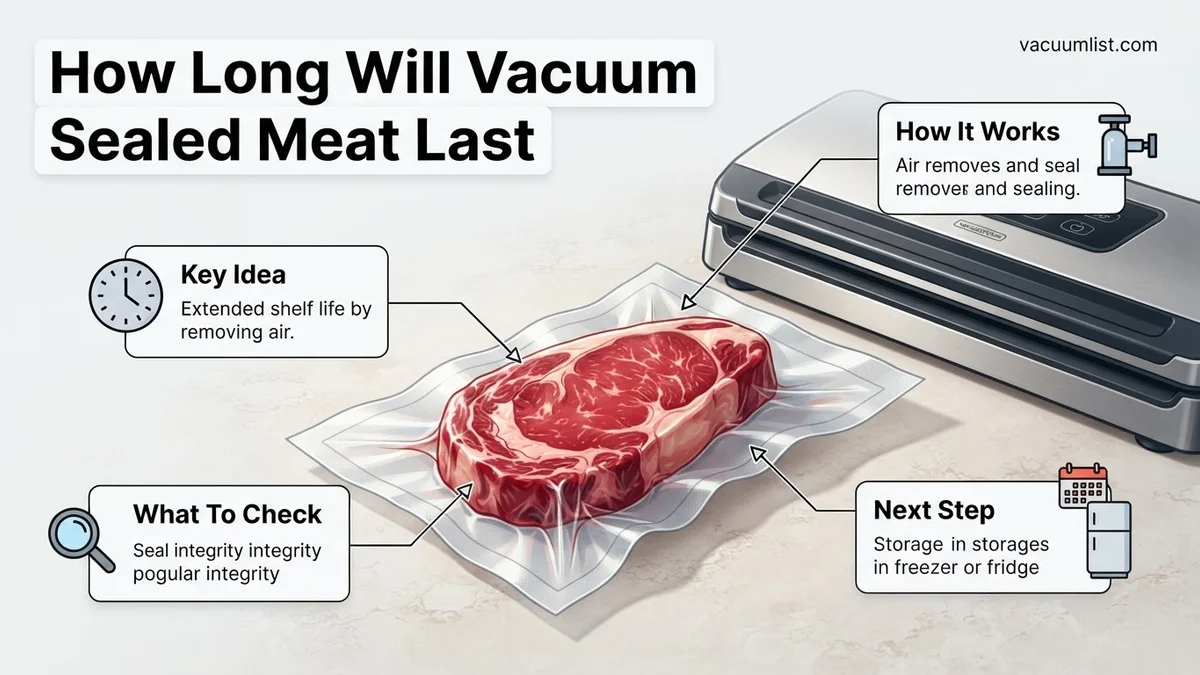
Understanding Why Vacuum Sealing Extends Meat Longevity
Standard packaging traps ambient air against your meat, causing oxidation, moisture loss, and rapid bacterial proliferation. Vacuum sealing eliminates this threat by extracting air and hermetically sealing the package. Without oxygen, aerobic spoilage bacteria and mold cannot thrive, which buys your protein significantly more time.
The Science of Oxygen Removal and Spoilage Prevention
- Inhibits Oxidation: Removing oxygen prevents fats from going rancid, preserving the natural taste of beef, pork, and poultry.
- Stops Freezer Burn: Moisture cannot sublimate out of the meat and form ice crystals when a tight, airtight barrier is present.
- Suppresses Aerobic Bacteria: Common spoilage microorganisms require oxygen to multiply rapidly, so vacuum packaging drastically slows their activity.
Crucial Safety Realities Regarding Anaerobic Bacteria
While removing oxygen stops most spoilage, it creates a unique environment for anaerobic pathogens like Clostridium botulinum. You must manage this risk carefully:
- Refrigeration is Mandatory: Vacuum-sealed meat stored in the fridge must remain at or below 38°F (3°C) to prevent bacterial toxin production.
- No Room Temperature Storage: Never leave vacuum-sealed meat at room temperature; oxygen-free environments at warm temperatures can facilitate rapid bacterial growth.
- Thaw Safely: Always cut open the vacuum pouch before thawing meat in the refrigerator to allow oxygen back in and neutralize botulism risks.
How to Fix and Optimize Your Meat Storage Timelines for Fridge and Freezer
Not all meat ages the same way under a vacuum seal. Dense red meats handle extended storage much better than delicate seafood or ground meats. To maximize your 2026 meal prep strategy, you need to align your storage habits with the specific type of protein you are preserving.
Refrigerator Storage Timelines by Meat Type
Keep your refrigerator dialed to 36°F to 38°F to hit these maximum refrigerated windows for vacuum-sealed cuts:
- Beef Steaks and Roasts: 10 to 14 days safely stored in the coldest part of your fridge.
- Poultry (Chicken and Turkey): 6 to 9 days due to the higher initial surface bacteria count on raw birds.
- Ground Meats (Beef, Pork, Turkey): 4 to 6 days because grinding distributes surface bacteria throughout the meat matrix.
- Pork Chops and Loin: 7 to 10 days before quality begins to degrade.
Freezer Storage Timelines for Maximum Quality
Freezing halts bacterial growth completely, meaning safety isn’t an issue past a few months, but texture and taste will eventually degrade. Here is how long your meat stays at peak quality when properly vacuum sealed and frozen at 0°F (-18°C) or lower:
- Lean Beef and Game Meats: 2 to 3 years of exceptional quality due to lower fat content.
- Pork Cuts: 1 to 2 years before minor fat oxidation impacts flavor.
- Poultry: 1 to 3 years, though keeping it under 18 months prevents texture from turning dry or stringy.
- Ground Meats: 6 to 12 months, as the higher surface area accelerates minor freezer-induced changes.
What If It Still Doesn’t Work and Signs of Spoiled Meat Appear
Even with advanced 2026 vacuum sealing technology, preservation failures can still happen due to micro-leaks, seal fatigue, or improper initial handling. Knowing how to troubleshoot sealing failures and identify spoilage ensures you never risk foodborne illness. If your seal fails or you suspect contamination, execute these immediate fallback protocols:
Recognizing Spoilage Signs
According to the USDA Food Safety and Inspection Service, vacuum-sealed meat can still harbor anaerobic bacteria like Clostridium botulinum if left at unsafe temperatures. Check for these warning signs before cooking:
- Unusual Odor: A sour, sulfur-like, or ammonia smell upon opening the package indicates advanced bacterial growth.
- Discoloration: While slight darkening is normal due to lack of oxygen, a greenish or grayish hue signals spoilage.
- Slimy Texture: A sticky or slimy surface coating means proteins have broken down significantly.
- Loss of Vacuum: Air bubbles or a loose package means the seal compromised, resetting shelf life to normal refrigerator standards.
Troubleshooting Seal Failures
- Inspect the seal line for wrinkles, moisture, or grease residue that prevented a proper thermal bond.
- Submerge the packaged meat in water to check for escaping air bubbles if a micro-leak is suspected.
- Repackage the meat immediately into a fresh, clean vacuum bag using a double-seal setting if the original seal failed within two hours of initial packing.
- Consult a certified food safety technician or commercial equipment repair service if your chamber vacuum sealer consistently fails to pull a proper negative pressure; professional diagnostic and repair services typically range from $100 to $250.
Best Safety Practices for Thawing and Preparing Vacuum Sealed Meat
The safety of vacuum-sealed meat depends heavily on how it transitions from the freezer to the cooking surface. Improper thawing can quickly activate dormant bacteria in oxygen-depleted environments. Follow these strict preparation guidelines established by food safety authorities for 2026:
Safe Thawing Methods
- Refrigerator Thawing: Place the vacuum-sealed package on a lower shelf in your refrigerator to catch any potential juices. This method preserves optimal moisture and safety, taking 24 hours per 5 pounds of meat.
- Cold Water Thawing: Submerge the sealed meat in cold tap water, changing the water every 30 minutes. Cook the meat immediately after thawing with this method.
- Microwave Thawing: Use the defrost setting only if you plan to cook the meat immediately afterward. Note that vacuum seals should be cut open before microwaving to prevent dangerous pressure buildup.
Crucial Safety Rules
- Always cut open the vacuum seal before placing the meat in the refrigerator to thaw. This eliminates the anaerobic environment and prevents potential botulism risks.
- Never thaw meat at room temperature on the kitchen counter, as the outer layers will enter the USDA “Danger Zone” between 40°F and 140°F.
- Sanitize all cutting boards, knives, and countertops thoroughly after handling raw, thawed meat to prevent cross-contamination.
Conclusion
Maximizing the lifespan of vacuum-sealed meat requires strict adherence to proper freezing temperatures, high-barrier packaging materials, and safe thawing protocols. When executed correctly, vacuum sealing extends refrigerated meat life by 3 to 5 times and freezer life up to 3 years. According to verified research and expert sources from food safety authorities, always inspect packages for seal integrity and remove bags prior to refrigerator thawing. Take action today by auditing your current freezer inventory and upgrading to heavy-duty, multi-layer vacuum seal bags for optimal 2026 food preservation results.
❓ Frequently Asked Questions
How does vacuum sealing actually extend the shelf life of meat?
Vacuum sealing removes oxygen from the packaging environment. Because most spoilage bacteria and mold require oxygen to multiply, eliminating it drastically slows down decomposition and prevents oxidation.
What is the exact shelf life difference between fridge and freezer storage?
In the refrigerator, vacuum sealed meat generally lasts 1 to 2 weeks, compared to 3 to 5 days for traditionally wrapped meat. In the freezer, the timeline jumps from 6 to 12 months up to 2 to 3 years.
Are there specific types of meat that do not last as long when vacuum sealed?
Yes, ground meats and fatty fish tend to have shorter shelf lives even when vacuum sealed. Ground meat contains more surface area exposed to handling, limiting fridge life to 4 to 6 days.
What are the primary safety risks associated with vacuum sealed meat?
The main risk involves anaerobic bacteria, particularly Clostridium botulinum, which thrives in oxygen-free environments if the meat is stored at improper temperatures above 40°F.
How can you tell if vacuum sealed meat has gone bad despite the seal?
Check for a foul or sulfur-like odor upon opening, unusual discoloration such as deep gray or green tints, and a sticky or slimy texture on the surface of the meat.
What is the safest way to thaw vacuum sealed meat?
Always thaw vacuum sealed meat in the refrigerator rather than on the counter. Crucially, cut open or puncture the vacuum seal before thawing to allow oxygen back in and prevent botulism risks.