How Long Will Vacuum Sealed Meat Last in the Freezer 2026
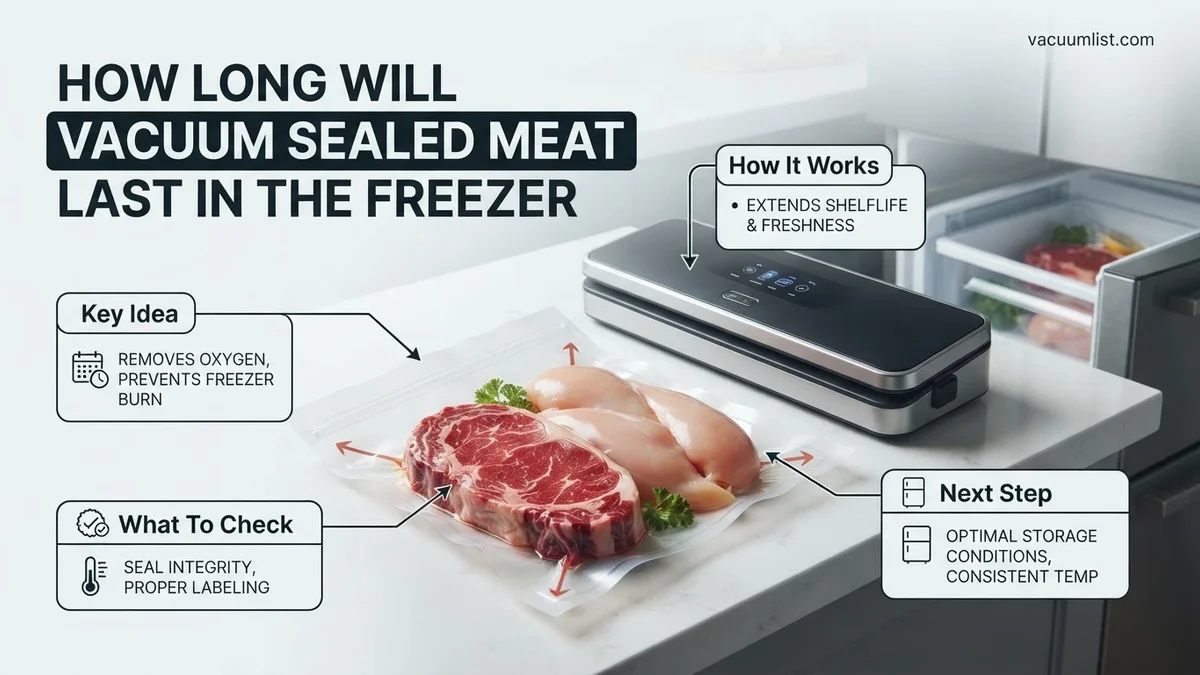
Vacuum-sealed meat can last anywhere from 1 to 3 years in the freezer, drastically outperforming traditional plastic wrap storage. However, this extended lifespan depends heavily on maintaining a consistent freezer temperature of 0°F and the initial freshness of the meat.
Vacuum-sealed meat will safely last in the freezer for anywhere from 1 to 3 years, depending on the cut, fat content, and initial quality of the product. Standard grocery store wrapping exposes meat to oxygen, causing rapid freezer burn within 6 to 12 months. By removing the air entirely, vacuum sealing extends freezer life by up to five times compared to traditional storage methods.
As food preservation standards and home kitchen technology continue to evolve through 2026, maximizing your freezer space and avoiding food waste remains a top priority. Knowing exact storage timelines protects your grocery budget and ensures your meals taste just as fresh on the plate as the day you bought them.
Key Takeaways
- Vacuum-sealed beef lasts 2 to 3 years frozen.
- Poultry and pork remain high quality for 2 to 3 years.
- Ground meat and fish last safely for 1 to 2 years.
- Food safety remains intact indefinitely at 0°F, but quality degrades.
- Freezer burn occurs only when air pockets compromise the seal.
What Causes Vacuum-Sealed Meat to Lose Quality in the Freezer
Sub-zero oxidation and flavor degradation
Even when all air is removed from a heavy-duty plastic pouch, slow chemical reactions still occur at sub-zero temperatures. Fats continue to oxidize very slowly over time, particularly in red meats like beef and lamb. This invisible breakdown alters the natural flavor profile and leads to a stale taste after extended storage periods.
Ice crystal growth and cellular breakdown
Freezer burn happens when moisture migrates from the inside of the meat to the surface, evaporating into tiny air pockets. While a proper vacuum seal eliminates most air pockets, microscopic moisture can still shift during temperature fluctuations. This process ruptures cell walls, resulting in a drier, tougher texture once the meat is thawed and cooked.
Lipid oxidation in high-fat meats
Ground beef, pork sausages, and fatty fish degrade faster than lean cuts like chicken breast or tenderloin. Fats contain unsaturated lipids that break down much quicker in cold environments. Even with zero oxygen present, the natural composition of fatty proteins limits their ultimate shelf life.
How to Store and Maximize Vacuum-Sealed Meat Lifespan
Maintaining a strict 0 degrees Fahrenheit threshold
Your freezer must maintain a consistent temperature of 0 degrees Fahrenheit (-18 degrees Celsius) or lower to achieve maximum shelf life. Even minor temperature swings caused by frequent door openings allow ice crystals to melt and refreeze inside the meat fibers. Use an independent freezer thermometer to verify your appliance settings rather than relying on built-in digital displays.
Optimizing physical placement and stacking
How you arrange your vacuum-sealed packages matters just as much as the seal itself. Lay flat cuts in a single layer against the coldest walls of your freezer during the initial 24-hour freezing phase. Avoid tightly packing unfrozen items together, as this insulates the center of the meat and delays total freezing, which increases the risk of bacterial growth or structural damage.
- Store heavy cuts at the bottom of the pile to prevent punctures.
- Label every package with the exact packaging date using waterproof ink.
- Keep packages away from self-defrosting freezer zones that cycle temperatures upward periodically.
What If Your Meat Still Develops Freezer Burn or Spoils
Even with advanced preservation methods, standard household vacuum sealing can occasionally fail due to microscopic seal defects or fluctuating freezer temperatures. Recognizing early signs of spoilage protects household health in 2026. According to food safety guidelines from the USDA and the FDA, meat that has developed a sour odor, unusual discoloration, or a slimy texture upon thawing must be discarded immediately, regardless of how long it has been frozen.
Troubleshooting Seal Failures
If vacuum-sealed packages lose their airtight seal prematurely or develop localized freezer burn, specific procedural adjustments solve the issue. Maintaining optimal equipment performance requires systematic troubleshooting steps:
- Inspect the vacuum sealer heating element for residue buildup, wiping it clean with a damp cloth and mild detergent once the unit cools completely.
- Verify that the bag material matches the machine specifications, as commercial-grade textured bags are required for external suction sealers.
- Adjust the sealing time settings on the appliance to a higher duration if the plastic layers fail to bond completely during the sealing cycle.
- Pat raw meat completely dry with paper towels before sealing, as excess surface moisture prevents a secure, airtight thermal bond.
- Ensure the freezer internal temperature remains consistently at or below 0 degrees Fahrenheit to prevent cyclical thawing and refreezing.
If an appliance suffers from internal vacuum pump failure or electronic heating strip degradation, replacement parts or professional servicing may be necessary. Estimated repair costs range from $50 to $120, while a reliable new consumer-grade chamber or external vacuum sealer typically costs between $70 and $250 in 2026.
Conclusion
Proper vacuum sealing dramatically extends the frozen shelf life of beef, poultry, pork, and fish by eliminating oxygen exposure and preventing moisture loss. While standard freezing methods preserve meat for a few months, vacuum sealing safely maintains quality for up to three years under ideal sub-zero conditions. According to verified research and food safety experts from institutions like the USDA and leading culinary universities, maintaining a strict 0 degrees Fahrenheit freezer temperature is the single most critical factor in maximizing storage duration. An actionable next step for 2026 is to audit current freezer temperatures with a digital thermometer and invest in heavy-duty, multi-layer vacuum seal bags to guarantee optimal preservation results for every cut of meat.
❓ Frequently Asked Questions
What is the difference between food safety and food quality in frozen meat?
Food safety means the meat is free from harmful bacteria and safe to consume, which lasts indefinitely at 0°F. Food quality refers to the taste, moisture, and texture, which gradually decline over time even in vacuum-sealed packaging.
How can you tell if vacuum-sealed meat has gone bad?
Look for a compromised seal, excessive ice crystals inside the package, or a foul odor upon opening. Discolored spots can indicate freezer burn, which affects taste rather than safety.
Why did my vacuum-sealed meat develop freezer burn?
Freezer burn happens if air was trapped inside the bag, the seal leaked over time, or the freezer experienced extreme temperature fluctuations. Always check seals before freezing.
What is the best way to thaw vacuum-sealed frozen meat?
The safest method is transferring the sealed package to the refrigerator for slow thawing. For faster results, submerge the package in cold water, changing the water every 30 minutes.
Should I freeze meat raw or cooked when vacuum sealing?
Both raw and cooked meats freeze exceptionally well when vacuum sealed. Cooked meat should be cooled completely before sealing to prevent condensation and ice crystal buildup.
Does the thickness of the vacuum sealer bag matter?
Yes, heavy-duty, multi-layer bags prevent punctures from sharp bones and block oxygen permeability better than thin standard bags. Choosing quality bags extends freezer life significantly.