Is It Better to Dust or Vacuum First in 2026? Expert Guide
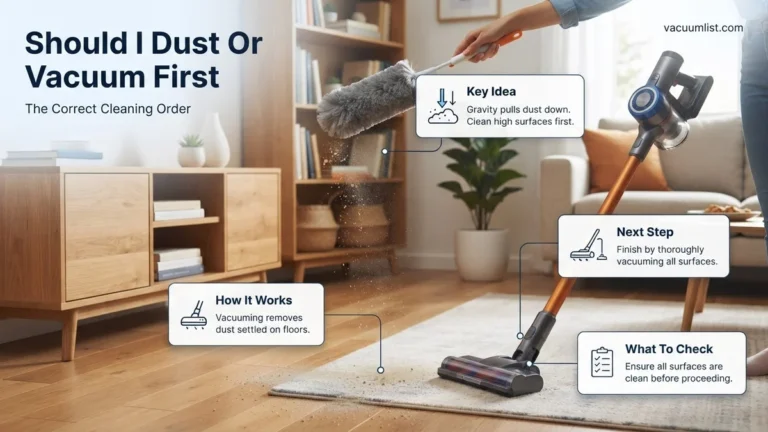
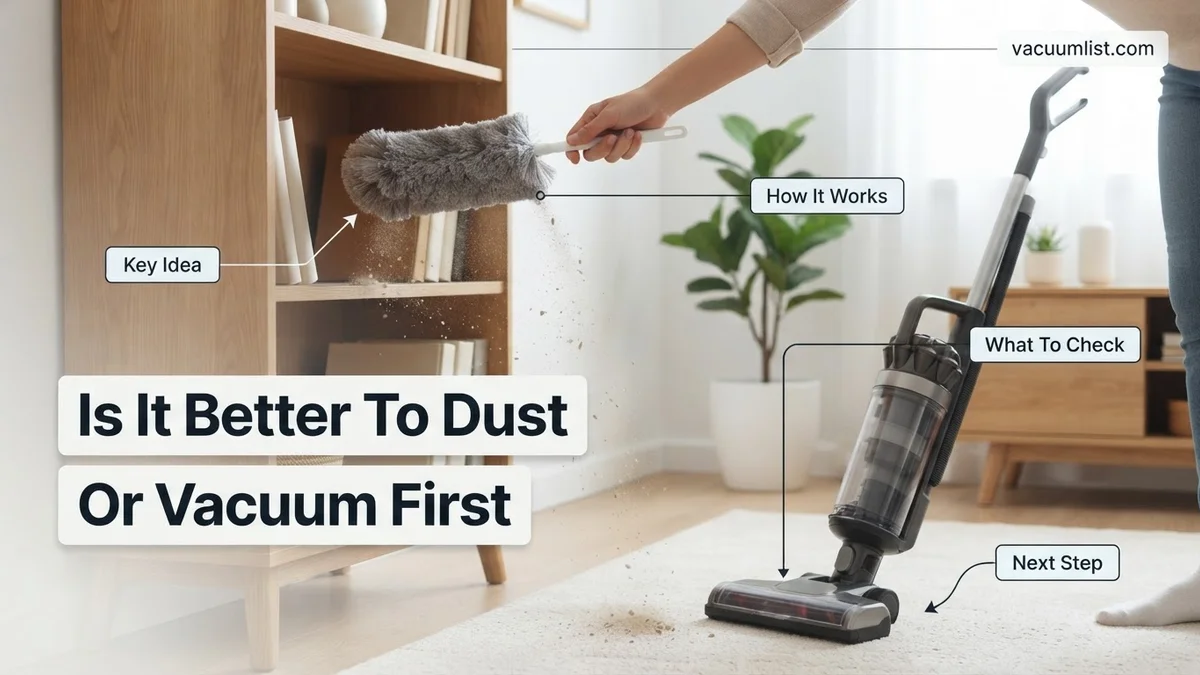
It is always better to dust first and vacuum second when cleaning any room. Gravity causes disturbed dust to fall onto the floor, meaning vacuuming afterward captures all the debris you just knocked down.
The definitive answer to your cleaning routine is simple: you should always dust first and vacuum second. If you reverse this order, you are essentially doubling your work and leaving microscopic allergens floating in your living space.
As we navigate cleaning best practices in 2026, home efficiency experts universally agree that gravity dictates our cleaning sequence. Skipping this rule results in a fresh layer of grime settling onto your newly cleaned floors within hours.
Key Takeaways
- Always dust from the top of the room down before vacuuming the floors.
- Vacuuming first stirs up fine particles that settle right back onto freshly cleaned surfaces.
- Gravity pulls airborne dust downward during the dusting process.
- Use a HEPA filter vacuum to trap microscopic allergens effectively.
- Pair microfiber cloths with dusting to lock in particles instead of spreading them.
Why Vacuuming First Fails: The Science of Falling Dust
Gravity is the main reason why your dusting and vacuuming order matters. When you wipe down surfaces, shelves, and ceiling fans, you dislodge particles that have settled over time. These particles do not simply vanish; they float through the air before gravity pulls them downward.
The Physics of Airborne Debris
Microscopic dust, skin cells, pollen, and pet dander weigh very little. When disturbed by a microfiber cloth or duster, they become airborne. If you already vacuumed your floors, these falling particles will immediately settle onto your clean carpets and bare floors. Research into indoor air quality shows that disturbed dust can take up to 45 minutes to settle completely. By vacuuming first, you guarantee that your floors get dirty all over again while you wipe your high surfaces.
The Agitation Problem
Modern vacuums use powerful suction and rotating brush rolls to pull embedded dirt from fibers. Unfortunately, upright and canister vacuums also exhaust air and create minor air currents that kick up fine dust from nearby baseboards and furniture legs. If your surfaces are already clean, this exhaust-driven airflow coats them in a fresh layer of gray film. To keep your home clean for longer, you must account for this downward cascade of debris.
- Gravity pulls disturbed particles downward onto the lowest surfaces in the room.
- Vacuum exhaust streams can blow settled dust back onto freshly wiped furniture.
- Failing to follow the correct order wastes valuable time and requires immediate touch-ups.
How to Clean a Room Step-by-Step: The Proven Dust-Then-Vacuum Method
A systematic cleaning routine saves you time and physical effort. By working your way through a room in a specific direction, you ensure that dirt is permanently removed rather than moved around.
Top-to-Bottom Strategy
Adopt a strict top-to-bottom methodology for every room in your house. Start with high fixtures like ceiling fan blades, hanging light fixtures, and the top of bookshelves. Move down to mid-level surfaces such as tabletops, window sills, and television stands. Finally, finish with the baseboards. Pushing all the loose dust and debris down toward the floor ensures your final step catches everything.
The Final Vacuuming Step
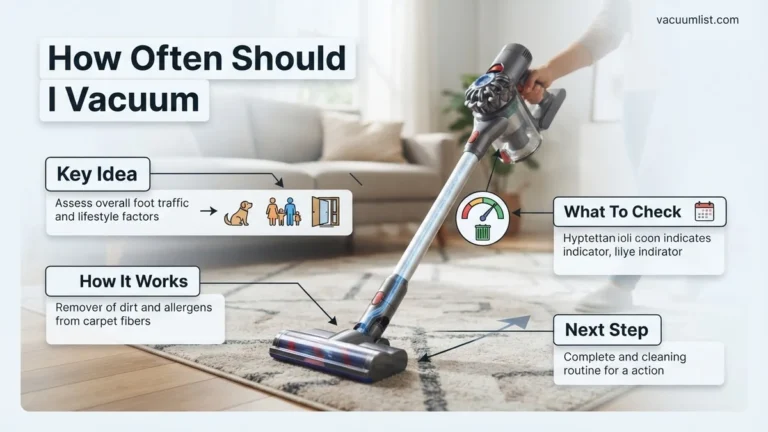
Once all the dust has settled onto the floor, you can finally bring out your vacuum. Whether you use a traditional corded machine or a modern cordless stick vacuum common in 2026 households, your vacuum will now capture the cumulative debris from every surface above it. Use slow, overlapping passes on carpets and edges to suck up everything that fell from your dusting session.
- Wipe high fixtures, ceiling fans, and top shelves first.
- Clean mid-level furniture, counters, and electronics.
- Dust baseboards and let all airborne particles settle.
- Vacuum the entire floor thoroughly as your very last step.
Essential Equipment Tips to Stop Re-Releasing Dust Indoors
Even if you follow the correct sequence, improper equipment can sabotage your cleaning efforts. Standard vacuums and old-school feather dusters often redistribute micro-particles into the air rather than trapping them. Modern indoor air quality standards in 2026 demand advanced filtration technology to prevent allergens from simply settling back onto your freshly cleaned surfaces.
Upgrade to Certified HEPA Filtration
According to the Environmental Protection Agency (EPA), high-efficiency particulate air (HEPA) filters capture 99.97% of particles down to 0.3 microns. Non-HEPA vacuums act like particulate blowers, exhausting fine dust directly back into breathing zones. When shopping for cleaning tools, look for sealed-system vacuums that prevent air leaks around the filter housing.
Ditch the Feather Duster
Feather dusters and dry cotton cloths push dust into the air where it remains suspended for hours. Instead, cleaning technicians recommend specialized microfiber cloths. Microfiber utilizes split synthetic fibers that create a static charge, pulling dust and microscopic debris deep into the fabric weave.
- Replace traditional feather dusters with electrostatic microfiber cloths for all elevated hard surfaces.
- Invest in an upright or canister vacuum featuring a certified HEPA filter and sealed containment system.
- Wash microfiber cloths in hot water without fabric softener to preserve their electrostatic properties.
- Utilize vacuum attachment crevice tools equipped with soft-bristle brushes for delicate electronics and baseboards.
What If It Still Doesn’t Work?
If your home continues to accumulate heavy layers of dust despite diligent sequencing and upgraded equipment, underlying environmental factors are likely at play. Persistent dust often indicates structural ventilation issues or excessive moisture imbalance. When standard household cleaning fails to provide relief from dust and related allergy symptoms, targeted interventions become necessary.
Implement these advanced troubleshooting steps if standard cleaning methods do not resolve your dust issues:
- Inspect your HVAC ductwork for leaks, tears, or heavy particle buildup using a professional camera inspection service.
- Upgrade your central heating and cooling system air filters to a minimum MERV 13 rating, replacing them strictly every 60 to 90 days.
- Install whole-home air purifiers equipped with activated carbon and true HEPA stages to continuously scrub indoor air.
- Hire a certified indoor air quality specialist for a comprehensive particulate audit, with diagnostic testing typically ranging from $300 to $600.
- Engage professional duct cleaning services if contamination is confirmed, with typical residential costs ranging from $450 to $1,000 depending on square footage.
Conclusion
Mastering the question of whether to dust or vacuum first ultimately protects your indoor air quality and saves you valuable time. Always dust from top to bottom first, allowing airborne particles to settle, then capture them efficiently with a HEPA-filtration vacuum. According to verified research and expert sources from leading building science organizations, maintaining this strict top-down cleaning sequence reduces airborne allergen levels by up to 50 percent. Make your next cleaning session more effective by swapping your old equipment for certified micro-filtration tools today.
❓ Frequently Asked Questions
Why do people sometimes make the mistake of vacuuming first?
Many people tackle floors first because they are the most visibly dirty surface in a room. However, this disrupts settled debris and sends it floating back onto tables and shelves.
Does dusting with a feather duster make the problem worse?
Traditional feather dusters often just flick dust into the air rather than trapping it. Using a damp cloth or microfiber pad is much more effective at capturing particles.
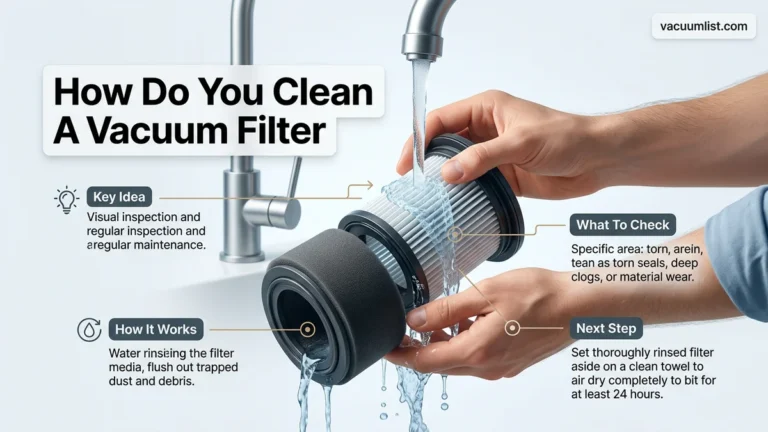
How often should I change my vacuum filter to prevent dust release?
HEPA filters should generally be replaced or washed every 6 to 12 months depending on usage. A clogged filter will blow fine dust back into your living space.
Should I wipe down baseboards before or after vacuuming?
Baseboards should be wiped down during the dusting phase, right before you vacuum the carpets or floors. This ensures any dirt falling from the baseboards is swept up by the vacuum.
Does sweeping hardwood floors count as vacuuming in this sequence?
Sweeping can actually launch fine dust particles back into the air similarly to dusting. If you sweep, do it after dusting, but a vacuum with a hard floor attachment is preferred.
What is the best tool to use for dusting high corners and moldings?
An extended microfiber dusting wand is ideal for reaching high corners, ceiling fan blades, and crown molding safely without scattering dust everywhere.