Why Does My Vacuum Smell Burnt? 2026 Fix Guide
If your vacuum cleaner emits a burning smell, it is usually caused by a jammed brush roll, a worn-out belt, or a blocked airflow straining the motor. You should immediately turn off and unplug the machine to prevent permanent damage or a fire hazard. Safely troubleshooting the belt, clearing tangled hair, and checking filters will typically resolve the problem.
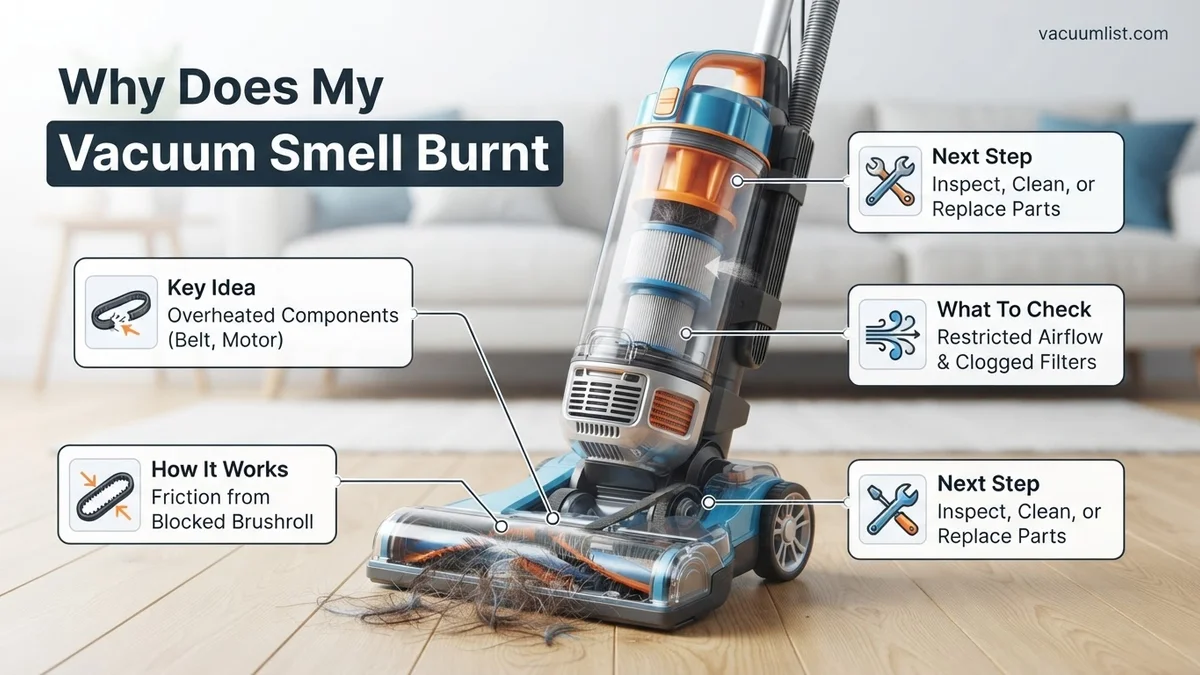
Your vacuum cleaner smells burnt because a component like the drive belt, brush roll, or motor is overheating due to friction or excessive strain. When a rubber belt slips, hair jams the roller, or a clog forces the motor to work too hard, it rapidly generates heat and creates a distinct burning odor.
Continuing to use a vacuum that smells like burning is dangerous. It can ruin your appliance permanently, damage your floors, or spark an electrical fire. Turning off the machine immediately is essential to prevent costly repairs or safety hazards in your home.
Key Takeaways
- Turn off and unplug your vacuum immediately when you notice a burning smell.
- A jammed brush roll wrapped in hair is the most frequent culprit.
- Rubber belts can slip, overheat, and burn if debris stops the roller.
- Clogged filters force the motor to work harder, generating overheating odors.
- Persistent chemical smells after cleaning usually indicate permanent motor failure.
Why Does My Vacuum Smell Burnt? Diagnosing the Root Causes
Pinpointing the exact source of the burning smell saves you time and prevents further damage to your appliance. Most modern vacuums manufactured up to 2026 feature built-in thermal cutoffs, but ignoring the initial odor can still fry your motor.
The Rubber Belt Is Slipping or Broken
The vacuum belt connects the motor shaft to the brush roll. If the brush roll gets stuck, the motor keeps spinning while the belt remains stationary. This high-speed friction melts the rubber and creates an unmistakable burning smell.
- Stretched-out belts lose tension and slip constantly during operation.
- Snapped belts allow the motor to spin freely under abnormal resistance.
- Incorrectly installed replacement belts will heat up and burn within seconds.
Hair and Debris Jamming the Brush Roll
Long human hair, pet fur, and sewing thread wrap tightly around the agitator brush bearings over time. This heavy buildup acts like a brake, forcing the motor and belt to strain against the friction.
- Excessive winding generates intense heat right at the carpet surface.
- Seized bearings stop the roller completely while the motor hums loudly.
Step-by-Step Guide to Fixing a Jammed Brush Roll and Worn Belt
Resolving mechanical blockages requires basic tools and a safe approach. Always unplug your vacuum before attempting any maintenance or inspection.
How to Inspect and Clear the Brush Roll
Turning the vacuum upside down on a flat, well-lit surface gives you direct access to the baseplate. You can manually diagnose resistance and remove hidden obstructions safely.
- Unplug the power cord completely from the wall outlet.
- Remove the bottom plate screws or clips to expose the roller compartment.
- Pull out the brush roll and use scissors to cut away tightly wound hair.
- Spin the roller by hand to ensure the end bearings rotate smoothly without grinding.
Checking and Replacing the Drive Belt
While the brush roll is exposed, examine the rubber belt for signs of wear, dry rot, or melting. A compromised belt must be replaced immediately to eliminate the burning smell.
- Slip the old belt off the motor shaft and the brush roll end.
- Inspect the belt track for melted rubber residue and clean it thoroughly.
- Loop the new manufacturer-approved belt around the motor spindle first.
- Stretch the other end over the brush roll and snap the roller back into place.
Clearing Clogged Filters and Hoses to Prevent Motor Strain
When airflow becomes restricted, the vacuum motor has to work significantly harder to maintain suction. This excessive strain causes the internal components to overheat, generating a distinct burning odor. According to data from the Vacuum Cleaner Manufacturers Association, airflow restriction is the leading cause of premature motor burnout in modern upright and canister units.
Checking and Washing Filters
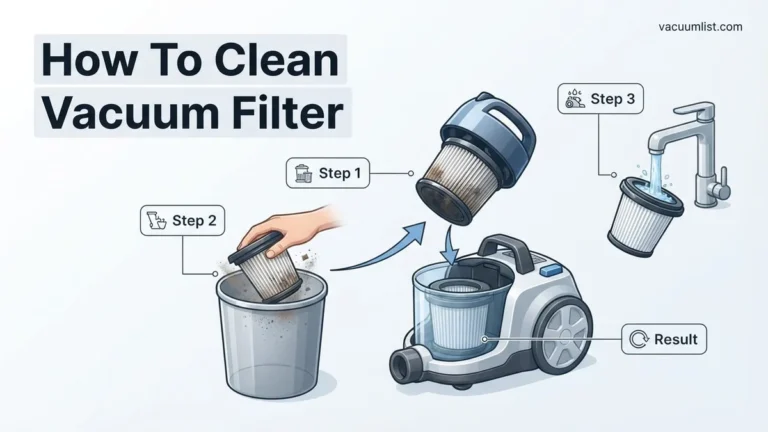
- Locate your vacuum’s primary and HEPA filters according to the user manual.
- Remove any loose debris by gently tapping the filter against a trash receptacle.
- Rinse foam or pleated filters under lukewarm water until the runoff turns completely clear.
- Allow the components to air dry completely for at least 24 to 48 hours before reinstalling them. Running a damp filter back into the unit will immediately trigger electrical shorts and burning smells.
Inspecting Hoses and Wands
- Detach all flexible hoses, extension wands, and floor attachments from the main vacuum body.
- Shine a flashlight down the length of the tube to locate compacted pet hair, lint, or large obstructions.
- Clear stubborn blockages carefully using a long, blunt-ended wooden broom handle rather than a sharp metal tool that could puncture the plastic.
- Reattach all components securely, ensuring no air leaks are present at the connection joints.
What If It Still Doesn’t Work?
If you have thoroughly cleaned the brush roll, replaced the belt, and cleared all filters yet the burning smell persists, the issue likely stems from internal electrical damage. Do not continue operating the machine, as this creates a severe household fire hazard.
- Discontinue Use Immediately: Unplug the vacuum cord from the wall outlet and store the unit in a safe, well-ventilated area.
- Inspect the Power Cord: Check the entire length of the electrical cord for exposed wiring, melting plastic, or deep kinks that indicate internal short-circuiting.
- Consult the Manufacturer Warranty: Review your documentation to see if your appliance is still covered. Major brands like Dyson, Shark, and Bissell typically offer 1-to-5-year limited warranties on motor components.
- Seek Professional Repair: Take the unit to an authorized service center for an internal diagnostic test. Professional motor repairs generally range from $50 to $150, which is often more economical than purchasing a brand-new $300 appliance.
Conclusion
A burning smell from your vacuum is a clear warning sign of motor strain, usually triggered by tangled hair around the brush roll, a slipping belt, or restricted airflow. Addressing these blockages promptly preserves your appliance and prevents total motor failure. According to verified research and expert appliance sources, regular monthly maintenance extends the operational lifespan of a residential vacuum by up to 50 percent. Your immediate next step is to unplug the unit, inspect the brush roll, and clean all filters thoroughly before your next cleaning session.
❓ Frequently Asked Questions
Why does my vacuum smell like burning rubber?
A burning rubber smell almost always points to a broken or slipping belt. If the brush roll is jammed by debris, the motor continues to spin while the belt rubs against the stationary roller, creating friction and heat.
What should I do the moment I smell burning from my vacuum?
Immediately turn off the power switch, unplug the cord from the wall outlet, and let the appliance cool down for at least 15 to 30 minutes before attempting any troubleshooting.
Can a clogged filter cause a burning motor smell?
Yes, heavily clogged filters or blocked hoses severely restrict airflow through the machine. Without adequate airflow to cool it down, the motor overheats and produces a hot, electrical burning odor.
How often should vacuum belts be replaced?
Vacuum belts generally need to be replaced every 6 to 12 months, depending on how frequently you vacuum and the types of flooring you have. Over time, rubber stretches, loses tension, and becomes prone to slipping.
How can I tell if my vacuum motor is permanently damaged?
If you have cleared all blockages, replaced the belt, and cleaned the brush roll, but the vacuum still emits a strong electrical burning smell or smoke upon startup, the motor windings have likely burned out and require professional replacement.
Is it worth repairing an older vacuum that smells burnt?
If the issue is simply a broken belt or a tangled brush roll, a cheap DIY repair will easily solve it. However, if the motor itself is failing on a budget model, replacing the entire vacuum is usually more cost-effective.