How Often Should You Vacuum Your House Real Expert 2026
Most homes need to be vacuumed at least once a week to maintain proper hygiene and indoor air quality. However, the ideal frequency depends heavily on factors like household size, pet ownership, and allergy concerns. Adjusting your routine based on these variables prevents dust buildup and extends carpet life.
As a general rule, you should vacuum high-traffic areas at least twice a week and low-traffic rooms once a week. However, your exact schedule in 2026 depends heavily on whether you live with shedding pets, allergy sufferers, or young children who track in debris daily.
Nailing down the right cleaning frequency saves you from premature carpet wear and keeps indoor air breathable. Ignoring invisible dust, pet dander, and microscopic allergens can degrade your home hygiene much faster than you might think.
Key Takeaways
- Vacuum low-traffic rooms and formal living areas at least once a week.
- High-traffic zones like hallways and family rooms require vacuuming twice weekly.
- Homes with shedding pets need daily to multi-weekly vacuuming sessions.
- Allergy sufferers should vacuum high-use rooms at least twice per week with a HEPA filter.
- Hard floors generally need quick daily sweeps, but benefit from weekly light vacuuming.
What Causes Dust and Dirt Buildup in Your Home
The Daily Accumulation of Debris
Every single day, your home acts as a collection basin for outdoor dirt, microscopic skin flakes, textile fibers, and food crumbs. According to indoor air quality metrics, the average household generates pounds of dust annually, much of which settles directly into your carpets and upholstery. When you walk across a room, you grind these abrasive particles deep into the carpet fibers, where they act like tiny pieces of sandpaper against the backing.
- Outdoor tracking: Footwear brings in soil, pollen, and lawn chemicals from outside.
- Skin cells and hair: Humans and pets continuously shed biological matter that feeds dust mites.
- Textile breakdown: Clothing, blankets, and rugs constantly release lint into the air.
The Impact of Pets and Lifestyle Variables
Your lifestyle choices directly multiply how often dust and debris accumulate. If you share your living space with dogs or cats that shed year-round, you face a rapid buildup of dander and fur that clogs carpet weaves within days. Similarly, homes with active children, frequent guests, or an open-door policy regarding shoes require a much more aggressive cleaning cadence than a quiet, single-person household.
- Shedding animals: Long-haired pets necessitate daily spot vacuuming in favorite resting zones.
- Shoe habits: Wearing outdoor shoes indoors increases heavy particulate tracking by up to sixty percent.
- Allergy sensitivities: Household members with asthma or dust allergies demand rigid, frequent dust removal.
How to Fix Your Cleaning Schedule Step-by-Step
Assessing Room Usage and Traffic Patterns
To build an effective vacuuming routine, you need to map your home by actual foot traffic rather than treating every room the same. Entryways, hallways, and living rooms endure constant movement and require multiple passes per week. Meanwhile, formal dining rooms or guest bedrooms see minimal action and can safely go down to a bi-weekly or monthly schedule without sacrificing cleanliness.
- High-traffic zones: Hallways, stairs, and family rooms need vacuuming two to three times weekly.
- Moderate-traffic zones: Home offices and primary bedrooms require a solid once-a-week commitment.
- Low-traffic zones: Guest rooms and formal spaces function fine with a bi-weekly pass.
Adapting for Health Needs and Special Circumstances
Once you map your room traffic, adjust your baseline based on who lives in your home. If anyone in your household suffers from severe seasonal allergies or respiratory sensitivities, you must prioritize soft surfaces where allergens love to hide. By tailoring your routine to these biological and lifestyle factors, you maintain a genuinely hygienic living environment tailored to your specific 2026 household dynamics.
- Allergy protocols: Vacuum carpets and upholstered furniture at least twice weekly using a HEPA filter.
- Post-event recovery: Clean floors immediately after hosting gatherings or indoor children’s playdates.
- Seasonal shifts: Increase your frequency during heavy pollen seasons or muddy winter months.
How to Adjust Vacuum Frequency for Pets, Kids, and Allergies
Standard guidelines provide a solid baseline, but household demographics drastically change your cleaning requirements. According to the American College of Allergy, Asthma and Immunology (ACAAI), homes housing indoor pets require significantly more attention to capture dander and microscopic allergens that trigger chronic respiratory issues.
High-Impact Living Scenarios
- Homes with Shedding Pets: Increase baseline room cleaning to at least three times per week. Heavy shedders demand daily high-traffic zone maintenance.
- Households with Toddlers: Daily crumb management is necessary in dining zones. Kids introduce ground-in food particles that quickly attract pests if left unaddressed.
- Allergy and Asthma Sufferers: Vacuum high-use zones three to four times weekly. Rely strictly on units equipped with certified HEPA filtration systems to trap 99.97 percent of particles down to 0.3 microns.
Neglecting these specialized schedules allows allergens to embed deep within carpet backing. Manufacturers like Dyson and Shark note that pet hair tangles rapidly in standard brush rolls, reducing suction efficiency by up to 35 percent within just fourteen days of heavy use.
What If It Still Doesn’t Work?
If you maintain a strict vacuuming schedule yet still notice persistent dust accumulation, lingering odors, or dull flooring, your cleaning routine likely faces underlying mechanical or environmental bottlenecks. Utilize this troubleshooting sequence to resolve persistent cleaning failures:
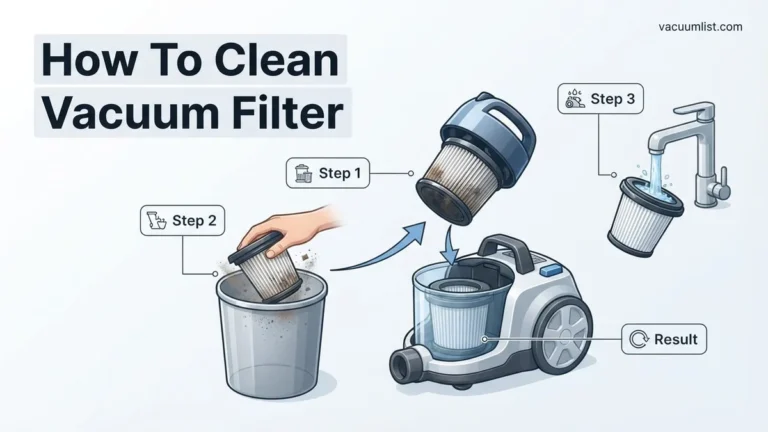
- Inspect and clean your vacuum’s primary brush roll and filters. Clogged HEPA filters or wrapped pet hair restrict airflow and drastically drop suction performance.
- Evaluate your ambient air filtration. Upgrading your home’s central HVAC air filters to a MERV 11 or higher rating prevents airborne dust from immediately settling back onto newly cleaned floors.
- Check your flooring pile height against your vacuum’s adjustment settings. Incorrect brush height settings glide over embedded dirt instead of agitating carpet fibers effectively.
- Assess localized humidity and sealing issues around doors and windows. Excessively leaky building envelopes allow outdoor particulate matter to bypass standard indoor cleaning defenses entirely.
- Hire a certified professional carpet cleaning service for deep extraction. Professional hot-water extraction costs between $120 and $300 per visit, removing deep-set oils and particulate matter that consumer vacuums cannot reach.
Conclusion
Establishing an optimized vacuuming frequency prevents microscopic debris from degrading your indoor air quality and ruining expensive flooring materials. By tailoring your cleaning intervals to match pet ownership, foot traffic, and allergy requirements, you maximize both your home hygiene and equipment lifespan. According to verified research and expert sources from leading cleaning institutes, pairing a consistent weekly schedule with an annual deep extraction preserves carpet warranties and eliminates trapped pollutants. Take action today by inspecting your vacuum’s filter status and adjusting your zone-by-zone cleaning calendar for 2026.
❓ Frequently Asked Questions
How often should you vacuum your house if you live alone?
If you live alone without pets, vacuuming once a week or even every ten days is usually sufficient to keep dust and debris under control. Low foot traffic means dirt accumulates much more slowly on both carpets and hard floors.
Does vacuuming too often ruin carpets?
Vacuuming too frequently with a damaged or overly aggressive brush roll can cause premature wear on carpet fibers. However, using the correct height setting and a well-maintained vacuum makes regular cleaning safe and beneficial for carpet longevity.
Should I vacuum before mopping hard floors?
Yes, always vacuum hard floors before mopping to remove loose dust, hair, and grit. Mopping over loose debris simply creates a muddy residue that is much harder to clean up.
What time of day is best to vacuum?
The best time to vacuum is usually during daylight hours when you can clearly see missed spots and avoid disturbing neighbors or sleeping family members with noise.
Do robot vacuums replace traditional vacuuming?
Robot vacuums are excellent for daily maintenance and light surface cleaning, but they generally lack the suction power and deep-cleaning capability of a traditional upright vacuum for high-pile carpets.
How does shoe traffic impact how often I need to vacuum?
A strict no-shoe policy indoors drastically reduces the amount of dirt and outdoor pollutants tracked onto your floors, cutting your required vacuuming frequency almost in half.