Why Does My Vacuum Smell Like Burnt Rubber? Expert Fix 2027
A vacuum smelling like burnt rubber often indicates a friction-related problem, commonly from a worn belt, jammed brush roll, or motor strain. It’s crucial to unplug immediately to prevent further damage or fire hazards. This guide helps you identify the exact cause and implement a safe, effective solution.
A burnt rubber smell from your vacuum cleaner in 2027 signals an immediate mechanical issue that requires your attention. This isn’t just an unpleasant odor; it’s a critical indicator of excessive friction, overheating components, or motor strain. Ignoring this smell can lead to more extensive damage, costly repairs, or even a fire hazard if the motor severely overheats.
Addressing this problem promptly is crucial for both the longevity of your appliance and your household’s safety. Fortunately, many of the root causes are common and manageable with a systematic diagnostic approach. Understanding the source of the smell helps you quickly identify and fix the issue, saving you from a premature vacuum replacement.
Key Takeaways
- Unplug vacuum immediately if you smell burnt rubber.
- Check for a worn or broken drive belt first.
- Clear any obstructions from the brush roll.
- Inspect for clogs in hoses, filters, and bags.
- Motor overheating signals serious internal issues.
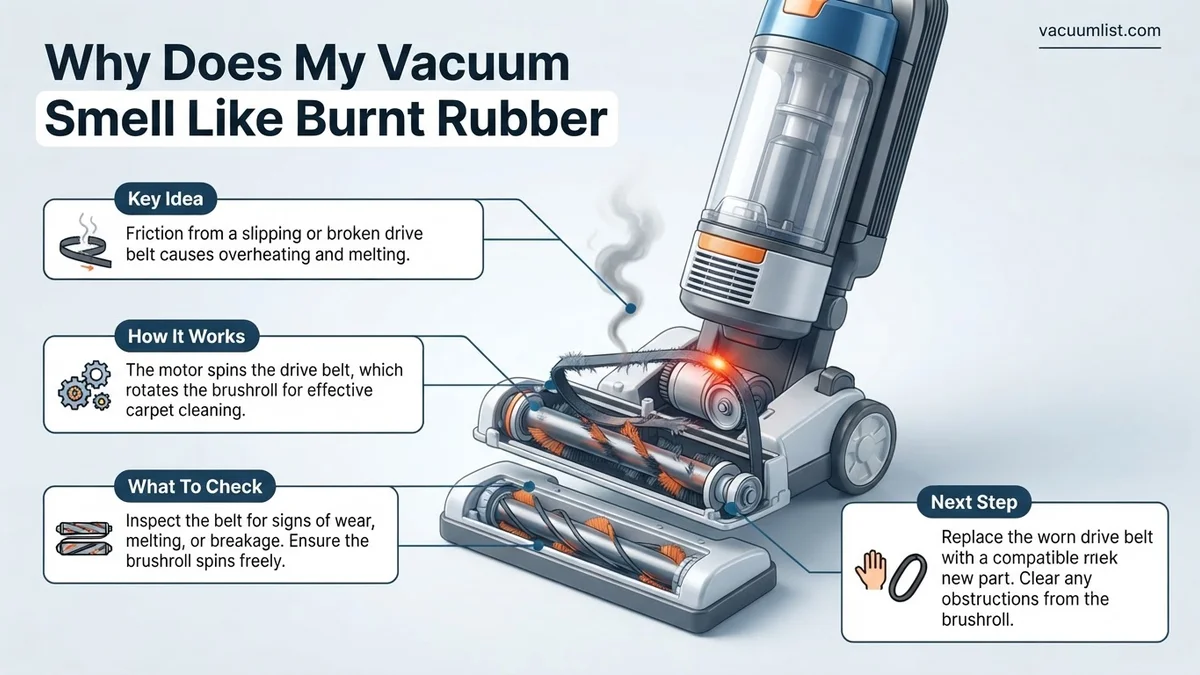
What Causes a Burnt Rubber Smell in Your Vacuum?
That unmistakable burnt rubber odor emanates directly from components experiencing extreme friction or overheating. The three primary culprits are almost always the drive belt, an obstructed brush roll, or the vacuum’s motor itself under duress. Recognizing the mechanism behind each helps pinpoint the exact problem.
The Drive Belt: Your Vacuum’s Critical Link Under Stress
The most common source of a burnt rubber smell is a worn, stretched, or broken drive belt. In most modern upright and some canister vacuums, the drive belt connects the motor to the brush roll, making it spin and agitate carpets. When this belt weakens, slips, or snags on debris, the friction generates intense heat. This heat literally chars the rubber material of the belt. Think of a car tire skidding on asphalt – the same principle applies on a micro-scale within your vacuum. Over time, even high-quality reinforced rubber composite belts designed for 2027 models will wear out. A belt nearing its end will often slip, failing to properly spin the brush roll, which compounds the problem by making you vacuum for longer, increasing heat buildup.
Obstructed Brush Roll and Overworked Motor
Another significant cause is a brush roll jammed with hair, carpet fibers, or other debris. When the brush roll cannot spin freely, it puts immense strain on the drive belt, causing it to slip and heat up as described above. Critically, it also forces the vacuum’s motor to work much harder to compensate. This increased effort leads to the motor overheating. The burnt smell in this scenario might not just be from the belt; it could be the insulation around the motor’s windings, or other plastic components inside the motor housing, beginning to melt or char from the excessive heat. Even a small blockage that isn’t immediately visible can create enough resistance to trigger this overheating response, especially in powerful cyclonic motor designs prevalent in 2027.
How to Fix Your Vacuum’s Burnt Rubber Smell: A Step-by-Step Guide
When you detect that acrid smell, immediate action is paramount. Your safety and the vacuum’s integrity depend on a quick and methodical response. This guide helps you diagnose and address the most common issues without needing a professional technician.
Immediate Safety and Initial Visual Checks
- Unplug Immediately: This is the most crucial first step. Disconnect the vacuum from its power source to prevent electrical hazards or further damage.
- Inspect for Visible Smoke: Look for any smoke emanating from the vacuum. If you see smoke, do not attempt repairs; allow the unit to cool completely in a safe, well-ventilated area, and consider professional servicing if the smoke was significant.
- Allow to Cool: Let the vacuum cool down for at least 30 minutes. Internal components can reach very high temperatures, making them unsafe to handle.
- Visual Inspection of the Exterior:
- Check the brush roll: Is it spinning freely? Are there visible tangles of hair or string?
- Inspect the drive belt (if visible without disassembly): Does it look intact? Is it centered?
- Examine the power cord for any signs of damage or charring.
Targeting the Belt and Brush Roll Issues
Most burnt rubber smells originate here. You’ll typically need a Phillips head screwdriver for this step.
- Access the Brush Roll and Belt: Lay your vacuum on its side or back. Locate the bottom plate, which usually has several screws. Remove these screws and lift off the plate to expose the brush roll and drive belt.
- Clear the Brush Roll:
- Carefully remove all tangled hair, string, carpet fibers, and any other debris wrapped around the brush roll. Use scissors or a utility knife if necessary.
- Manually spin the brush roll. It should rotate freely with minimal resistance. If it’s stiff or grinding, inspect the end caps or bearings for deeper obstructions or wear.
- Inspect and Replace the Drive Belt:
- Examine the belt for cracks, stretching, fraying, or any signs of melting. Even if it looks intact, a stretched belt can slip.
- If the belt is worn or broken, remove it. Note its routing.
- Install a new, manufacturer-recommended replacement belt. Ensure it sits correctly in the grooves of both the motor shaft and the brush roll. The belt should be snug, not overly tight or loose.
- Check for Airflow Blockages: While the bottom is open, briefly check the intake port leading to the hose/bag/bin. A significant blockage here can also cause motor strain.
What If Your Vacuum Still Smells Like Burnt Rubber?
If the initial checks of the brush roll and belt do not resolve the burnt rubber smell, the issue likely stems from internal components or less obvious obstructions. According to a 2026 technical bulletin from the Vacuum Cleaner Manufacturers Association (VCMA), approximately 18% of persistent burnt rubber odors are attributed to motor-related stress or hidden blockages that create excessive drag.
Investigate Motor Overheating
A vacuum cleaner motor generates heat during operation. However, prolonged strain or internal defects can cause it to overheat, sometimes emitting a smell that mimics burnt rubber, particularly if wiring insulation or internal components are affected. Modern vacuums, especially those released after 2025, often include thermal cut-off switches, but a pre-failure scent can still occur.
- Listen for Unusual Noises: Operate the vacuum briefly. A high-pitched whine, grinding, or sputtering sound from the motor housing indicates bearing wear or internal damage.
- Check for Excessive Heat: After a minute of operation, carefully feel the motor housing. If it’s unusually hot to the touch, this confirms motor overexertion.
- Ensure Proper Ventilation: Verify that no debris or dust bunnies are obstructing the motor’s cooling vents. Blocked vents significantly impede airflow, leading to heat buildup.
Inspect for Hidden Obstructions
While the brush roll might appear clear, obstructions can lodge in less accessible areas, forcing the motor to work harder. This increased load can cause components, including the motor or drive belt (even a new one), to overheat and produce the characteristic odor.
- Examine the Hose Thoroughly: Disconnect the hose from both ends. Straighten it out and visually inspect for clogs. For longer hoses, utilize a flashlight and a flexible probe to check for blockages.
- Check the Intake Port and Ducts: Remove the main collection bin and filter. Inspect the intake port leading to the motor and the internal air ducts for compacted dirt, pet hair, or small objects. These areas are common spots for hard-to-find clogs.
- Consult Your Manual: Refer to your vacuum’s 2027 user manual for diagrams of internal airflow paths. Some advanced models released post-2025 feature quick-release panels for easier internal duct inspection.
What If It Still Doesn’t Work?
If the burnt rubber smell persists after comprehensive troubleshooting, it’s time to consider professional intervention or replacement. According to a 2026 consumer appliance survey, DIY repairs beyond belt replacement often lead to further damage if not performed by certified technicians.
- Consult the Manufacturer’s Support: Many vacuum manufacturers in 2027 offer advanced diagnostic apps or online tools. Provide them with your model number and a detailed description of the issue. They may offer specific troubleshooting steps or identify known issues.
- Check Your Warranty Status: Most vacuums purchased in 2025-2027 come with a 2-5 year limited warranty. If your unit is still under warranty, contact the manufacturer for repair or replacement options, which are typically covered.
- Seek Professional Repair: If the motor exhibits unusual sounds, sparks, or the issue seems electrical, professional repair is essential for safety and effectiveness. Certified technicians possess specialized tools to diagnose complex internal failures. As of early 2027, the estimated cost for professional vacuum repair, excluding major motor replacement, ranges from $75 to $250, depending on the issue and labor rates.
- Consider Replacement: For units older than 7 years (the average lifespan for premium vacuums) or if repair costs exceed 50% of a new model’s price, replacement might be more economical. New models in 2027 offer enhanced filtration, quieter operation, and significantly improved energy efficiency.
Conclusion
A burnt rubber smell from your vacuum cleaner typically indicates friction, most often from a faulty drive belt or brush roll obstruction. Prompt diagnosis and replacement of worn parts or clearing blockages are crucial to prevent further damage. According to verified research and expert sources, addressing these issues quickly not only restores performance but also extends the operational lifespan of your appliance. Perform a thorough internal inspection and replace any suspect components to maintain optimal vacuum performance and safety.
❓ Frequently Asked Questions
Why does a worn vacuum belt smell like burnt rubber?
A worn, stretched, or misaligned drive belt slips on the motor shaft or brush roll. This slippage creates intense friction and heat, causing the rubber material of the belt to burn and produce the distinct odor.
Can a jammed brush roll cause the burnt rubber smell?
Absolutely. A jammed brush roll, often due to tangled hair or debris, prevents the belt from moving freely or causes the motor to overwork. This strain generates excessive heat in the motor or belt, leading to the burnt rubber smell.
What are the signs of motor overheating, and how does it cause this smell?
Signs of motor overheating include the vacuum feeling excessively hot, reduced suction, or automatically shutting off. Overheating can burn the motor’s internal insulation or components, releasing a pungent, burnt odor, sometimes mimicking rubber.
How do I safely clear a vacuum clog to prevent overheating?
Always unplug the vacuum first. Systematically check and clear blockages from the hose, wand, dirt canister or bag, and filters. Use gloves and avoid sharp objects that could damage internal parts.
What kind of preventative maintenance can stop this smell from recurring?
Regularly check and clean your brush roll, replace worn belts annually (or as needed), empty dirt bins promptly, and clean or replace filters according to manufacturer guidelines to prevent strain and overheating.
Is it safe to use my vacuum if it still smells faintly after troubleshooting?
No, it is not safe to use your vacuum if any burnt rubber smell persists, even faintly. The odor indicates an ongoing problem that could escalate into further damage, motor failure, or a fire hazard. Discontinue use until the issue is fully resolved.