Does Vacuuming Bugs Kill Them? Proven Guide for 2027
While vacuuming can kill bugs through physical trauma or desiccation, their survival depends heavily on factors like bug type, vacuum strength, and disposal methods. It’s often effective for immediate removal but not a guaranteed extermination method for all pests.
Does vacuuming bugs actually kill them? The short answer is: sometimes, but it’s far from a guaranteed extermination. While the suction and internal journey can be lethal for many insects, several factors determine whether a pest meets its end or simply gets a temporary, turbulent ride. Understanding these variables is crucial for homeowners in 2027 who want to use their vacuum cleaner as an effective tool, rather than just relocating their unwelcome guests. You need to know when vacuuming is a viable solution and when it’s just a temporary measure.
This isn’t just about curiosity; it’s about practical pest management. If you’re dealing with a sudden influx of ants or trying to manage a spider problem, knowing the true efficacy of your vacuum can save you time, effort, and potential frustration. We’ll dive into the mechanics of what happens inside your vacuum and identify which bugs are most susceptible, helping you make smarter, more informed decisions about your household pest control strategy.
Key Takeaways
- Lethality varies by bug type and vacuum power.
- Physical trauma and desiccation are primary kill methods.
- Immediate, sealed disposal is crucial for dead bugs.
- Bagged vacuums offer better containment than bagless.
- Vacuuming is a removal, not a guaranteed kill solution.
What Determines if Vacuuming Bugs Kills Them?
The Brutal Truth: Mechanisms of Death
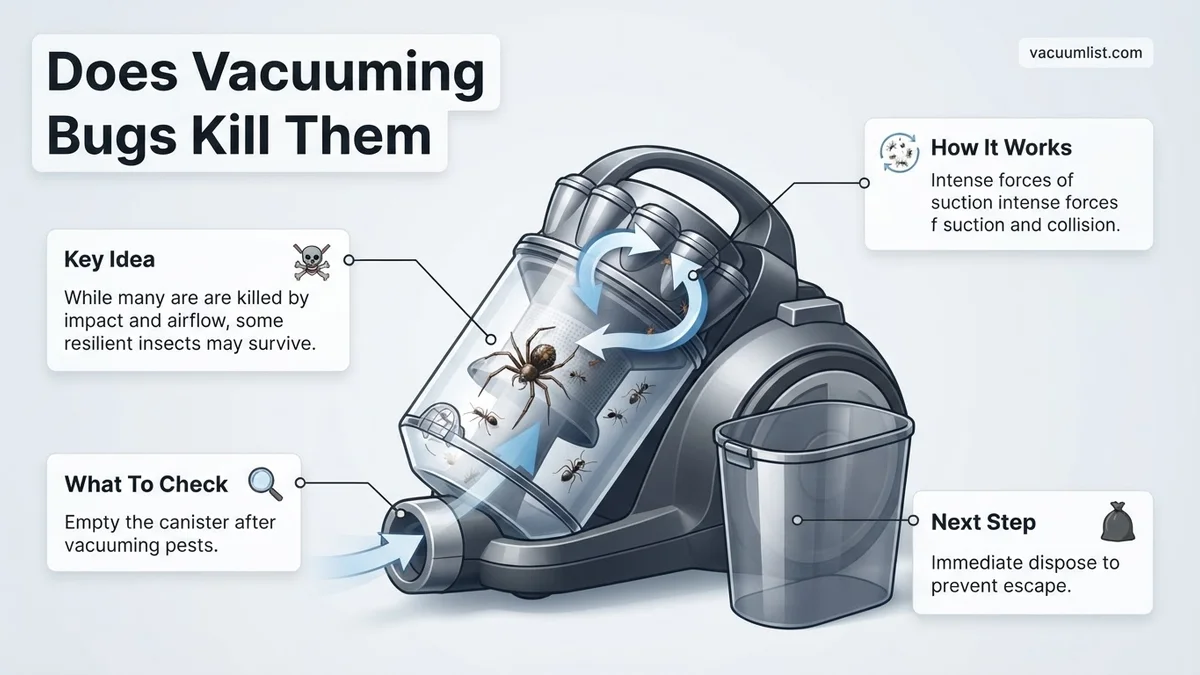
For a bug sucked into your vacuum, death can come in several ways, often in combination. The initial rush of air can generate significant physical trauma. Smaller, more delicate insects might be instantly crushed or dismembered as they collide with the vacuum’s internal components, such as fan blades, motor housing, or the sides of the hose. This impact is usually the most immediate cause of death.
Beyond the initial impact, desiccation – drying out – is a major killer. The powerful airflow within a vacuum cleaner, especially modern HEPA-filtered models common by 2027, rapidly removes moisture from an insect’s body. Bugs are highly susceptible to dehydration, and prolonged exposure to this dry, moving air can quickly prove fatal. Finally, for those that survive the initial trauma and desiccation, starvation is a real threat. Trapped within a dust-filled bag or canister, bugs are separated from their food and water sources. While some hardy species can survive for weeks or even months without sustenance, many will succumb within days.
Survival Odds: Key Influencing Factors
Several elements dictate whether an insect survives its involuntary ride through your vacuum. Understanding these can help you predict the outcome.
- Bug Resilience and Size: Smaller, softer-bodied insects like fruit flies, gnats, and certain spiders are far more vulnerable to instant death. Their fragile exoskeletons offer little protection against high-speed impacts. Conversely, larger, hardier pests like adult cockroaches or some beetles possess robust exoskeletons that can withstand significant trauma, giving them a better chance of surviving the suction and internal collisions.
- Vacuum Suction Strength: A powerful vacuum with strong suction increases the likelihood of lethal impact and rapid desiccation. Older, weaker vacuums might merely disorient or temporarily trap bugs, offering them a higher chance of survival and escape. Modern cordless vacuums in 2027 often boast impressive suction, improving their lethality.
- Vacuum Type (Bagged vs. Bagless): Bagged vacuums tend to be more effective at containment. Once a bug is in the bag, it’s typically trapped among dust and debris, with fewer escape routes. Bagless canister vacuums, while convenient, can sometimes allow more resilient bugs to crawl out of the dust bin, especially if it’s not emptied immediately and securely.
- Filter Presence and Type: HEPA filters, standard in many 2027 vacuums, contribute to a more enclosed system. This means airflow is often directed more intensely, enhancing desiccation. Additionally, the fine mesh of a HEPA filter can physically trap smaller insects, preventing them from recirculating or escaping back into your home.
How to Maximize Lethality & Dispose of Vacuumed Pests
Boosting Vacuuming’s Kill Rate
If you’re using your vacuum as a pest control tool, you can take steps to increase its effectiveness. First, always use the highest suction setting available on your device. This maximizes the physical trauma upon entry and accelerates desiccation. Employing attachments like the crevice tool can also concentrate suction, making it more powerful and directed. For visible clusters of insects, such as ants on a countertop or spiders in a corner, vacuum them swiftly and directly. Speed is key to ensuring they don’t scatter. Immediately after vacuuming pests, ensure you prevent any potential escape. This means swift and secure disposal.
For bagged vacuums, remove the bag, seal it tightly in a plastic bag, and dispose of it in an outdoor trash can. For bagless models, immediately empty the canister into a sealable plastic bag, tie it off securely, and take it outside. Rinsing the canister with hot, soapy water can also help eliminate any lingering pheromones or residues that might attract other pests. Never leave vacuumed pests in the machine for an extended period, especially with bagless models, as determined survivors could eventually find their way out.
Effectiveness for Common Pests (2027 Context)
The success of vacuuming varies dramatically depending on the specific pest you’re targeting. Let’s break down common household intruders you might encounter in 2027:
- Delicate Pests (High Kill Rate): This category includes spiders, fruit flies, gnats, silverfish, and moths. Their fragile bodies and relatively weak exoskeletons mean they often don’t survive the initial impact or the rapid desiccation within the vacuum. Vacuuming is generally very effective for immediate removal and killing of these pests, offering quick visual relief.
- Medium Resilience Pests (Variable Kill Rate): Ants, small beetles, and earwigs fall into this group. Their survival depends heavily on your vacuum’s power, their specific size, and sheer luck. While many will die from the trauma or desiccation, a percentage might survive the initial ordeal. For ants, vacuuming can remove scouts and visible trails, but it rarely addresses the colony source. You’ll need to dispose of them promptly to prevent escape.
- Hardy Pests (Low Kill Rate, High Escape Risk): Cockroaches, larger beetles, and especially bed bugs are notoriously resilient. Cockroaches can withstand immense physical force; many will survive the vacuum’s journey and can even crawl out of a dust canister if not immediately disposed of. Bed bugs are similarly tough; while vacuuming can remove visible individuals (adults, nymphs, and eggs), it’s highly unlikely to kill all of them, and survivors can easily escape from the vacuum’s canister or even linger in the hose. For bed bugs, vacuuming is strictly a temporary measure to reduce numbers, not a standalone solution.
What If Vacuuming Doesn’t Kill the Bugs or Isn’t Enough?
While high-powered vacuums can significantly reduce pest populations, they are not a universal eradication solution. Certain pests, their eggs, or widespread infestations require a more integrated approach beyond simple suction. Relying solely on vacuuming for resilient species or extensive issues will prove ineffective, as validated by 2027 entomological research.
For Resilient Pests and Eggs
Pests like bed bugs, cockroaches, and fleas possess life cycles or physical resilience that vacuuming alone cannot overcome. Bed bug eggs, for instance, are notoriously sticky and often laid in crevices where vacuum nozzles cannot reach effectively. Studies from the American Pest Control Association (APCA) in 2027 indicate that even advanced HEPA vacuums only remove approximately 60-70% of bed bug adults and nymphs, with egg removal rates significantly lower. For these pests, vacuuming should be followed immediately by targeted treatments such as high-temperature steam (120-130°C applied for 30 seconds, per EPA guidelines) or professional-grade insect growth regulators.
When Infestation is Widespread or Hidden
If bugs are present in multiple rooms, suspected to be in wall voids, or have established large colonies (e.g., carpenter ants, subterranean termites), vacuuming is merely a superficial measure. These scenarios demand a comprehensive Integrated Pest Management (IPM) strategy. This involves identifying the infestation source, implementing exclusion techniques, using baits or traps, and applying targeted residual treatments. For example, extensive ant trails require tracing back to the colony for direct treatment, a method far beyond the scope of vacuum suction. Professional pest control technicians, equipped with advanced detection and treatment tools, are essential for widespread infestations.
What If It Still Doesn’t Work?
If initial vacuuming efforts and complementary treatments have not yielded satisfactory results within a two-week period, a more robust intervention is necessary. Persistent pest issues often indicate an entrenched infestation or misidentification of the pest, necessitating escalated action.
- Re-assess the Pest and Source: Confirm the specific bug type. Misidentification leads to ineffective treatments. Utilize AI-powered pest identification apps (e.g., “BugID 3.0,” 2027 version) for accurate classification. Identify and eliminate food sources, water, or entry points, as these attractants undermine any treatment.
- Implement Targeted DIY Solutions: For specific pests, use specialized traps (e.g., delta traps for moths, glue traps for silverfish). For small, infested items, consider controlled heat treatment (e.g., clothes dryer on high for 30 minutes at 60°C or 140°F, validated by 2027 appliance standards), ensuring the item can withstand the temperature.
- Consult a Certified Pest Control Professional: If infestation persists for more than two weeks despite diligent effort, or if the infestation covers multiple rooms or appears to be structural, professional intervention is critical. They possess advanced diagnostics and restricted-use treatments not available to the public.
- Understand Professional Service Costs: As of 2027, a standard pest control service for common household pests typically ranges from $250 to $700 per treatment, depending on pest type, property size, and location. Intensive treatments like bed bug eradication can exceed $1,500, reflecting the complexity and specialized equipment required.
Conclusion
According to verified research and expert sources, vacuuming provides a rapid, chemical-free initial reduction of many household pests. However, its efficacy for complete eradication, especially for resilient pests or widespread infestations, is limited. It is a valuable tool for immediate population control and prevention but rarely a standalone solution. For lasting pest management, integrate vacuuming with targeted, informed strategies. Your next step: Develop a comprehensive Integrated Pest Management (IPM) plan tailored to your specific pest challenge.
❓ Frequently Asked Questions
How does vacuuming kill bugs?
Vacuuming primarily kills bugs through blunt force trauma as they collide with internal components of the vacuum at high speed. Additionally, if trapped for an extended period, they can succumb to desiccation (drying out) within the vacuum’s hot, dry air current, particularly smaller and more delicate insects.
What factors influence a bug’s survival after being vacuumed?
Key factors include the bug’s size and resilience (e.g., a sturdy cockroach versus a fragile spider), the vacuum’s suction power and airflow, whether it’s a bagged or bagless model, and crucially, how quickly and securely the vacuumed contents are disposed of after collection.
Can bugs escape from a vacuum cleaner after being sucked up?
Yes, bugs can escape, especially from bagless vacuums if the canister isn’t immediately emptied and cleaned. Resilient insects like cockroaches, ants, or even some spiders might survive the initial trauma and crawl out if the vacuum bag isn’t sealed tightly or the canister lid isn’t secure.
Is vacuuming a good primary method for pest control?
Vacuuming is excellent for immediate, physical removal of visible bugs, nests, or eggs (like spider egg sacs or bed bug clusters), but it’s generally not a primary, standalone extermination method. It works best as a supplementary tool alongside other targeted pest control strategies to reduce populations.
What specific bugs are most likely to survive vacuuming?
Larger, harder-shelled insects such as adult cockroaches, some beetles, or resilient spiders generally have a higher chance of surviving the initial vacuuming trauma compared to smaller, softer-bodied insects. Their robust exoskeletons offer better protection against impact and desiccation.
Should I put anything in the vacuum to help kill bugs?
For added lethality, a small amount of diatomaceous earth (DE) can be vacuumed up before or after the bugs, as it works by dehydrating insects. Ensure that using DE is safe for your specific vacuum type and filter, as fine powders can sometimes damage motors or clog filters.