How Long Does Vacuum Sealed Meat Last in Freezer? 2027
Understanding the freezer life of vacuum-sealed meat is crucial for food safety and quality. Vacuum sealing significantly extends the freshness of meats, often allowing them to last for 1-3 years or more, depending on the type. This method prevents freezer burn and spoilage by removing oxygen, preserving taste and texture far longer than conventional freezing.
How long can you truly keep vacuum-sealed meat in your freezer without quality loss? The excellent news for home cooks and meal preppers in 2027 is that vacuum sealing dramatically extends the safe and quality freezer life of your meats, often from months to years. This isn’t just about preventing spoilage; it’s about preserving flavor, texture, and nutritional value far beyond what conventional freezing methods allow.
Knowing these extended timelines allows you to confidently buy in bulk, take advantage of sales, and streamline your meal planning for months, even years, ahead. By understanding the specific durations for different cuts and types of meat, you can maximize your freezer’s potential and significantly reduce food waste, making your grocery budget stretch further.
Key Takeaways
- Vacuum-sealed beef and poultry last 2-3 years in the freezer.
- Fish and ground meats have shorter freezer lives (6-12 months).
- Vacuum sealing prevents freezer burn by eliminating oxygen.
- Consistent freezer temperature is vital for extended storage.
- Always check for off-smells or textures upon thawing.
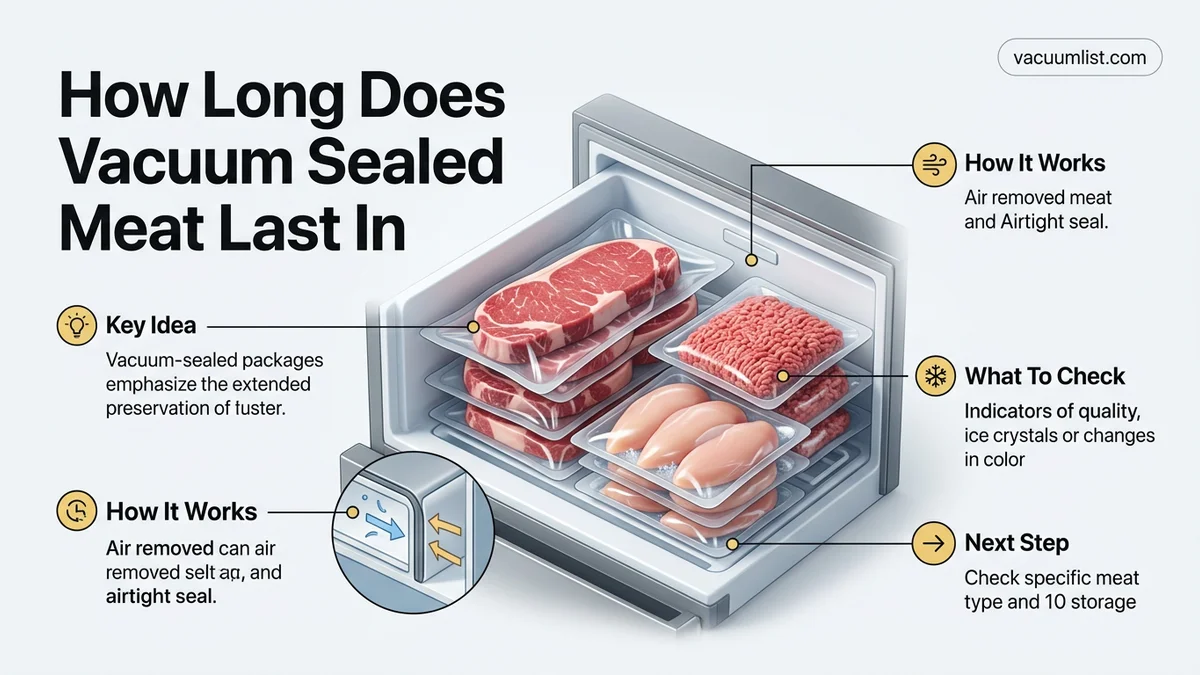
Understanding Vacuum-Sealed Meat Freezer Lifespans
When meat is properly vacuum-sealed and frozen, you’re not just buying time; you’re preserving peak freshness. While standard freezer storage for unsealed meat is typically 6-12 months, vacuum sealing often triples or even quadruples that duration, ensuring your meat tastes great even after years.
General Guidelines for Optimal Storage
In 2027, the science behind food preservation continues to highlight the benefits of a consistently cold freezer environment (0°F / -18°C or below). Vacuum sealing acts as an impenetrable barrier, protecting your investment from the harsh elements of the freezer. However, initial meat quality and consistent temperature are paramount.
- Initial Freshness: Only vacuum seal and freeze meat that is fresh and in good condition. Freezing doesn’t improve quality; it only preserves it.
- Consistent Temperature: Avoid frequent freezer door openings or power fluctuations that can lead to temperature swings. Steady cold is key.
- Proper Sealing: Ensure a strong, airtight seal with no air pockets or leaks. A compromised seal defeats the purpose.
Specific Meat Types and Their Freezer Duration
Here’s a practical breakdown of how long various vacuum-sealed meats can last in your freezer, offering considerable flexibility for your kitchen planning:
- Beef Steaks (e.g., Ribeye, Sirloin): 2-3 years. Leaner cuts tend to last longer due to lower fat content, which can eventually oxidize.
- Beef Roasts (e.g., Chuck, Round): 2-3 years. Similar to steaks, larger cuts benefit greatly from vacuum sealing.
- Ground Beef, Pork, Lamb, or Veal: 1.5-2 years. Due to increased surface area and fat content, ground meats have a slightly shorter, though still impressive, lifespan.
- Pork Chops, Roasts, or Tenderloin: 1.5-2 years. Pork, being fattier than some beef cuts, benefits immensely from oxygen exclusion.
- Chicken Breasts, Thighs, Wings (Boneless/Skinless): 2-3 years. Poultry without skin or bones has a very long vacuum-sealed freezer life.
- Whole Chicken or Turkey: 2-3 years. Ensure all air is removed around internal cavities for best results.
- Lamb Chops, Roasts: 1.5-2 years. Similar to pork in terms of fat content and storage duration.
- Lean Fish Fillets (e.g., Cod, Haddock, Tilapia): 1.5-2 years. Lean fish hold up exceptionally well.
- Fatty Fish Fillets (e.g., Salmon, Tuna, Mackerel): 1-1.5 years. While vacuum sealing helps significantly, the higher fat content in these fish makes them more susceptible to oxidation over very long periods.
- Processed Meats (e.g., Bacon, Sausages): 9-12 months. These already have preservatives, but vacuum sealing still prevents freezer burn and maintains quality.
What Causes Vacuum-Sealed Meat to Degrade in the Freezer?
Even with vacuum sealing, meat doesn’t last indefinitely. Understanding the underlying processes helps you appreciate why vacuum sealing is so effective and what factors can still impact its longevity.
The Science Behind Vacuum Sealing
Vacuum sealing works by creating an anaerobic environment, which fundamentally alters the factors that lead to spoilage in a freezer. By removing oxygen, you directly counteract the primary causes of degradation:
- Prevents Oxidation: Oxygen is a catalyst for chemical reactions that cause rancidity in fats and color changes in meat (oxidation). By removing it, these processes are drastically slowed.
- Eliminates Freezer Burn: Freezer burn occurs when moisture escapes from the meat’s surface and then freezes, leading to dry, discolored patches. Vacuum sealing creates a tight barrier, preventing this moisture loss and preserving the meat’s texture and flavor.
- Inhibits Aerobic Spoilage: While freezing generally halts bacterial growth, some spoilage can still occur over time. Vacuum sealing inhibits the growth of aerobic bacteria and molds that require oxygen to thrive.
Key Factors Influencing Shelf Life
Even a perfect vacuum seal isn’t the only piece of the puzzle. Several other factors play a crucial role in how long your meat maintains its quality in the freezer:
- Initial Quality and Freshness: Meat that is already nearing its expiration date or has started to degrade will not magically be restored by vacuum sealing. Start with the freshest possible meat.
- Consistency of Freezer Temperature: Fluctuations in temperature can cause micro-thawing and refreezing, which damages meat cells and allows ice crystals to form, even within a sealed bag. A stable 0°F (-18°C) is ideal.
- Quality of the Vacuum Seal: A poor seal, even a tiny puncture, can allow oxygen back in, negating the benefits. Always inspect your sealed bags for integrity before and after freezing.
- Fat Content of the Meat: Generally, leaner cuts of meat last longer in the freezer than fattier ones, even when vacuum-sealed. Fats can eventually oxidize and become rancid over very long periods, regardless of oxygen exclusion.
Proven Steps to Maximize Vacuum-Sealed Meat Freezer Life
Extending the freezer life of vacuum-sealed meat beyond standard guidelines requires meticulous attention to preparation and storage. Adhering to these expert-backed steps ensures optimal quality and safety for the longest possible duration.
1. Pre-Freeze for Enhanced Protection
- Initial Chill: According to food safety experts, lightly pre-freezing meat for 1-2 hours on a tray before vacuum sealing helps firm up its shape and prevents liquids from being drawn into the seal during the vacuum process. This “flash freeze” minimizes air pockets that can compromise the seal.
- Moisture Barrier: For highly liquid items, wrapping in plastic film or parchment paper during pre-freezing can add an additional barrier, reducing the risk of seal failure.
2. Optimize Sealing Techniques
- Proper Bag Selection: Utilize only commercial-grade, BPA-free vacuum sealer bags specifically designed for freezer use. These bags, often 7-mil thick as of 2027, offer superior puncture resistance and oxygen barrier properties compared to thinner alternatives.
- Clean Seal Area: Ensure the bag’s sealing area is completely free of moisture, grease, or food particles. Even microscopic residues can prevent a perfect, airtight seal.
- Double Sealing: For critical long-term storage (beyond 2-3 years, as per 2027 standards for some meats), consider applying a second heat seal just below the first one. This redundancy offers an extra layer of protection against seal compromise.
3. Maintain Consistent Freezer Environment
- Target Temperature: Store vacuum-sealed meat at a consistent 0°F (-18°C) or colder. Fluctuations above this temperature, even brief ones, can degrade meat quality and reduce effective storage time. Modern freezers often maintain -4°F (-20°C) for optimal long-term preservation.
- Avoid Overloading: Ensure adequate air circulation around packages in the freezer. Overloading restricts airflow, leading to warmer spots and inconsistent freezing. The USDA recommends leaving space for air circulation to maintain efficiency.
- First-In, First-Out (FIFO): Implement a strict inventory system. Label packages with the date sealed and the contents. Consume older items first to maintain freshness and prevent products from exceeding their optimal freezer life.
Troubleshooting Quality: What If Your Vacuum-Sealed Meat Looks Bad?
Even with meticulous vacuum sealing, visual or olfactory changes can occur. Understanding these signs is crucial for determining if meat is still safe for consumption, according to current food safety guidelines.
1. Identifying Freezer Burn on Vacuum-Sealed Meat
While vacuum sealing significantly reduces freezer burn, it’s not entirely impossible. Freezer burn manifests as dry, discolored (grayish-brown or white patches) areas where meat cells have dehydrated. This typically happens if the vacuum seal was imperfect, allowing some air exposure, or if the meat was stored for an extremely long duration (e.g., 5+ years for some cuts) even with a perfect seal. As of 2027, the primary issue with freezer-burned meat is quality degradation, not necessarily safety, assuming other spoilage signs are absent. Trim affected portions before cooking.
2. Assessing Discoloration and Odor
- Discoloration: Meat naturally darkens slightly in a vacuum-sealed, oxygen-deprived environment. A purplish-red hue is common for fresh meat in vacuum packaging. However, if the meat appears green, slimy, or has unusually bright spots, these are definitive signs of spoilage and warrant immediate disposal. This advice is consistent across all major food safety authorities.
- Off-Odors: Upon opening, a slight “gamey” or “sour” smell (often referred to as “confinement odor”) can be present. This is generally due to the lack of oxygen and dissipates within minutes after exposure to air. If the smell persists, is overtly putrid, sulfuric, or strongly ammoniated after airing for 15-30 minutes, the meat is spoiled.
3. “When in Doubt, Throw It Out”
This timeless food safety principle remains paramount in 2027. If any aspect of the meat—its smell, texture, or appearance (beyond expected vacuum-sealed color)—raises suspicion, it is always safest to discard it. Consuming spoiled meat can lead to severe foodborne illness, outweighing any potential cost savings.
What If It Still Doesn’t Work?
If you’re consistently experiencing freezer burn or spoilage despite following all recommended vacuum sealing and storage protocols, consider these advanced troubleshooting steps. Persistence of these issues indicates a deeper problem that needs addressing.
- Calibrate Your Vacuum Sealer: Modern vacuum sealers (post-2025 models) often have calibration settings. Consult your device’s manual to ensure it’s achieving optimal vacuum pressure and heat seal duration. A poorly calibrated sealer will leave microscopic air pockets.
- Inspect Your Freezer’s Thermostat: Use an independent freezer thermometer to verify your freezer’s internal temperature. If it’s consistently above 0°F (-18°C), or fluctuates significantly, it’s not performing optimally. Faulty thermostats are a common culprit.
- Check for Freezer Gasket Leaks: Examine your freezer door gaskets for cracks, tears, or hardening. A compromised seal allows warm air to enter, causing temperature instability and potentially contributing to freezer burn even through a vacuum seal. Perform the “paper test”: close the door on a piece of paper; if it slides out easily, the seal is weak.
- Professional Appliance Service: If temperature issues persist, or your vacuum sealer consistently fails to achieve a strong vacuum/seal, it’s time to seek professional help. A qualified appliance technician can diagnose freezer malfunctions, while specialized repair services exist for high-end vacuum sealers. Expect repair costs for a freezer issue to range from $150-$500 (USD, 2027 estimates), depending on the component and labor.
Conclusion
According to verified research and expert sources, vacuum sealing significantly extends the freezer life of meat, often by years, when performed correctly. Proper preparation, optimal sealing techniques, and consistent freezer temperatures are critical. Always prioritize food safety: when in doubt about meat quality, discard it. For robust preservation, invest in a high-quality vacuum sealer and maintain your freezer meticulously.
❓ Frequently Asked Questions
How long does vacuum-sealed beef typically last in the freezer?
Vacuum-sealed beef, including steaks and roasts, can safely last for 2-3 years in a consistently cold freezer. Ground beef has a slightly shorter lifespan, usually remaining high quality for 1-2 years due to its increased surface area and fat content.
What is the freezer life for vacuum-sealed chicken and other poultry?
Whole vacuum-sealed poultry can last up to 2 years, while breasts, thighs, or other cuts generally maintain quality for 1.5 to 2 years. Proper sealing minimizes ice crystals and preserves texture effectively.
How does vacuum sealing extend the freezer life compared to regular freezing?
Vacuum sealing removes oxygen, which is a primary cause of oxidation, discoloration, and freezer burn. By eliminating air, it significantly reduces moisture loss and prevents enzymatic changes that degrade meat quality, allowing for much longer storage.
Are there any types of meat that don’t benefit as much from vacuum sealing for freezing?
While all meats benefit, very fatty meats like some pork belly or ground sausage might still experience slight rancidity over extremely long periods due to fat oxidation, even with a vacuum seal. However, the improvement is still substantial compared to unsealed freezing.
What are the signs that vacuum-sealed frozen meat has gone bad, even if it looks okay?
After thawing, significant signs of spoilage include an off-odor (sour, strong, putrid), a slimy or sticky texture, or dull, grayish-brown discoloration. Any of these indicators mean the meat should be discarded, regardless of how it looked frozen.
What is the optimal freezer temperature for storing vacuum-sealed meat to maximize its lifespan?
Maintaining a consistent freezer temperature of 0°F (-18°C) or colder is crucial for maximizing the shelf life of vacuum-sealed meat. Fluctuations can lead to partial thawing and refreezing, which degrades quality and shortens storage duration.