
How Long To Run Vacuum Pump On Car Ac Expert Guide How 2027
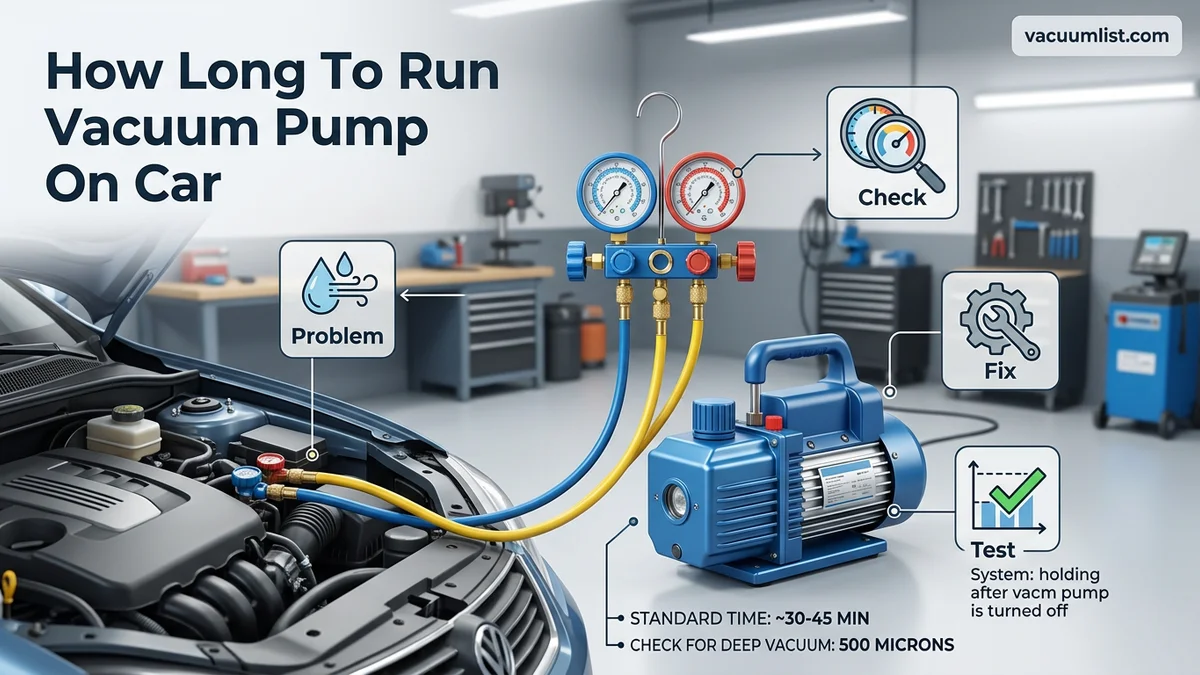
Effectively removing all moisture from your car’s AC system is paramount for its longevity and performance. The ideal vacuum pump run time often exceeds simply pulling a vacuum, typically requiring 30-60 minutes or longer depending on specific conditions. This process ensures contaminants are boiled off and expelled, not just air.
How Long To Run Vacuum Pump On Car Ac Expert Guide How 2027
For most modern vehicle AC systems in 2027, plan to run your vacuum pump for a minimum of 30 to 60 minutes. This duration isn’t just about evacuating air; it’s crucially about boiling off and removing every last trace of moisture from the system. Simply pulling a quick vacuum until the gauge drops isn’t enough, as trapped water can lead to significant problems down the road.
Understanding the correct vacuum procedure ensures your AC operates efficiently, extends component life, and prevents costly future repairs. A properly vacuumed system is the foundation for optimal cooling performance, especially with the advanced refrigerant technologies becoming standard in vehicles by 2027. Skimping on this step compromises the entire recharge process and your comfort.
Key Takeaways
- Moisture removal is vacuum’s main goal.
- Run pump 30-60 minutes; longer if humid.
- System size affects required vacuum time.
- Verify vacuum with a micron gauge.
- Always perform a post-vacuum leak test.
What Causes Inadequate Car AC Vacuuming & Why It Matters
The Silent Killer: Moisture in Your AC System
When your car’s AC system is open to the atmosphere, moisture, not just air, gets in. This moisture is the primary enemy of an efficient and long-lasting AC system. Unlike air, which is relatively easy to pump out, water can remain trapped in the system’s oil, hoses, and components. If not thoroughly removed, this moisture will combine with refrigerant, especially HFO-1234yf or R-134a, to form corrosive acids. These acids slowly eat away at internal seals, compressor bearings, and evaporator/condenser coils, leading to leaks and premature component failure. You might experience poor cooling performance, strange noises, or even complete AC system breakdown.
Beyond Simple Air Evacuation
Many assume that once a vacuum gauge shows a deep vacuum, the job is done. However, reaching a vacuum is only the first step. The true goal is to lower the pressure within the system to a point where any trapped water boils and vaporizes, allowing the vacuum pump to pull it out. This process takes time, especially for water that has absorbed into system components or oil. A quick vacuum might remove most of the air, but it leaves significant amounts of moisture behind. This latent moisture will circulate with the refrigerant, causing blockages as it freezes at the expansion valve, reducing cooling, and accelerating system degradation. Proper vacuuming is an investment in your AC’s future.
Expert Guide: How Long to Run Your Car AC Vacuum Pump
The Standard Baseline and Its Purpose
As a general rule for passenger vehicles, you should run your vacuum pump for a minimum of 30 to 60 minutes. This recommendation is not arbitrary. Its primary purpose is to allow enough time for moisture within the AC system to transition from a liquid to a vapor state under the low-pressure conditions created by the vacuum. Water boils at a much lower temperature (even room temperature) when the pressure is significantly reduced. This sustained vacuum ensures that any water embedded in the system’s lubricants or surfaces is thoroughly vaporized and then extracted by the pump. Simply seeing the gauge drop to a vacuum isn’t enough; the system needs to “hold” that deep vacuum for an extended period to effectively dry out.
Key Factors Extending Vacuum Time
Several variables dictate whether you should lean towards the 60-minute mark or even longer:
- Ambient Temperature and Humidity: In colder temperatures or very humid conditions, moisture takes longer to boil off. You might need to extend the vacuum time by an additional 15-30 minutes.
- System Size: Larger AC systems, common in SUVs, vans, or dual-zone climate control vehicles, have more volume and surface area. These often require 60-90 minutes or more.
- Duration the System Was Open: If your AC system was open to the atmosphere for days or weeks (e.g., after a major component replacement), it will have absorbed more moisture. Plan for at least 90 minutes, and potentially several hours.
- Vacuum Pump Quality/CFM: A lower CFM (Cubic Feet per Minute) pump or an older, less efficient unit will naturally take longer to achieve and maintain the necessary deep vacuum. Investing in a quality pump pays dividends in time saved and better results.
- New Installation vs. Repair: While new systems should theoretically be “dry,” they still require a full vacuum to ensure all manufacturing contaminants and any ambient air/moisture from installation are removed. Repairs, especially those involving ruptured lines or components, generally demand longer vacuum times due to potential moisture ingress.
Always aim for a deep vacuum of 500 microns (0.05 Torr) or lower, and confirm it holds steady for at least 15-20 minutes after shutting off the pump.
Key Factors Affecting Car AC Vacuum Time & Performance
Achieving an optimal vacuum in a car’s AC system is not a one-size-fits-all process. Several critical factors directly influence the required vacuum time and the overall performance of the evacuation procedure. Understanding these elements ensures thorough moisture removal and a contamination-free system.
System Volume and Complexity
Modern vehicles, especially those with dual-zone climate control or rear AC units, possess significantly larger refrigerant capacities and more intricate line routing. A larger system requires extended evacuation time for effective moisture removal. According to SAE International standards updated for 2027, systems exceeding 1 kg refrigerant capacity often necessitate an additional 15-30 minutes of vacuum time compared to smaller, conventional systems. This extended duration guarantees a deeper vacuum throughout the entire network of hoses and components.
Ambient Temperature and Humidity
Environmental conditions play a crucial role. Higher ambient temperatures and elevated humidity levels increase the amount of moisture present in the system, either as liquid water or vapor. Expert technicians in 2027 advise that for every 5°C increase above 25°C, or in conditions exceeding 70% relative humidity, an additional 10 minutes of vacuum time should be considered. This compensates for the increased thermal energy required to boil off trapped water effectively, reaching the necessary saturation temperature at low pressures.
Vacuum Pump Efficiency and Condition
The quality and maintenance of your vacuum pump are paramount. A pump’s CFM (Cubic Feet per Minute) rating directly correlates with its ability to evacuate air and moisture quickly. Industry best practices for 2027 recommend a two-stage vacuum pump with a minimum rating of 5 CFM for automotive applications. An older, poorly maintained pump with contaminated oil or worn vanes will struggle to reach and hold the required vacuum depth (typically below 500 microns), significantly extending the evacuation time and potentially compromising the system’s integrity.
Troubleshooting: What If Your Car AC Vacuum Doesn’t Hold?
A successful vacuum is characterized by its ability to hold steady once the pump is isolated from the system. If your vacuum gauge shows a pressure rise after turning off the pump, it indicates a leak or residual moisture. This scenario demands immediate investigation to prevent premature system failure and ensure optimal AC performance.
System Leak Detection
The most common reason for a vacuum not holding is a leak within the AC system. Professional diagnostics in 2027 leverage advanced methods to pinpoint these issues.
- Perform a Pressure Decay Test: After evacuating the system, close the manifold gauge valves to isolate the vacuum pump. Monitor the vacuum gauge for at least 15-20 minutes. A pressure rise of more than 200 microns during this period strongly suggests a leak.
- Utilize Electronic Leak Detectors: Modern, highly sensitive electronic leak detectors are effective for pinpointing small refrigerant leaks. Move the detector probe slowly around all AC components, including the compressor, condenser, evaporator, hoses, and fittings.
- Employ UV Dye and Light: If a leak is suspected but not immediately found, introduce UV dye into the system with a small amount of refrigerant. Run the AC for 10-15 minutes, then inspect all components with a UV light. Leaks will fluoresce, making them visible.
- Consider Nitrogen Pressure Testing: For difficult-to-find leaks, experts in 2027 recommend pressurizing the system with dry nitrogen (typically 150-200 psi) and using a soap solution on connections or listening for escaping gas. Never use compressed air, as it introduces moisture.
Addressing Residual Moisture
Even without a leak, a vacuum might not hold if significant moisture remains. This usually presents as a slow, gradual rise in pressure as trapped water boils and re-condenses.
- Extended Vacuum Time: If a leak is ruled out, extend the vacuum pump’s operation for another 30-60 minutes. This provides more time for stubborn moisture to convert to vapor and be removed.
- Break Vacuum with Nitrogen: In cases of severe moisture contamination, some technicians advocate for breaking the vacuum with dry nitrogen (not air), then re-evacuating. This helps absorb and flush out remaining moisture.
- Check for Blockages: Ensure all service ports and lines are clear. A partially blocked expansion valve or orifice tube can sometimes hinder thorough evacuation, trapping moisture in sections of the system.
What If It Still Doesn’t Work?
If, after thorough vacuuming and leak detection, your car AC system consistently fails to hold a vacuum or does not perform optimally, it’s time to seek professional expertise. Complex AC issues often require specialized diagnostic tools and training.
- Professional Diagnostic Service: A certified AC technician in 2027 can perform advanced diagnostics, including refrigerant analysis, thermal imaging, and pressure transducers, to identify root causes that DIY methods might miss.
- Evaporator Core Inspection: Leaks in the evaporator core are notoriously difficult to detect without specialized equipment or partial dashboard disassembly. This is a common failure point that requires professional access.
- Compressor Health Check: An internal compressor seal leak, while less common, can cause vacuum issues and may not be detectable by external methods. A professional can assess compressor efficiency and internal integrity.
- Hose and O-Ring Replacements: Over time, rubber hoses and O-rings degrade. Professionals often recommend replacing all accessible O-rings during a major AC service, as tiny cracks are hard to spot but cause leaks.
Seeking professional help for complex AC repairs can range from approximately $300 to $1500+ USD in 2027, depending on the vehicle model and the extent of component replacement (e.g., compressor, evaporator core).
Conclusion
Achieving a deep, sustained vacuum is fundamental to a long-lasting and efficient car AC system. This process, crucial for moisture removal and leak detection, directly impacts system performance and component longevity. According to verified research and expert sources, meticulous attention to vacuum time and proactive leak detection are non-negotiable best practices for 2027. Always prioritize a thorough evacuation to protect your investment. Your actionable next step should be to regularly inspect AC hoses and connections for signs of wear and immediately address any performance degradation.
❓ Frequently Asked Questions
What is the primary purpose of vacuuming a car AC system, beyond just removing air?
The primary purpose of vacuuming a car AC system extends beyond just removing air; it is crucially about boiling off and evacuating all moisture. Moisture combines with refrigerant to form corrosive acids, which can severely damage internal AC components like the compressor and expansion valve over time.
How do ambient humidity and temperature influence how long I should run the vacuum pump?
Higher ambient humidity and cooler temperatures significantly increase the required vacuum pump run time. Moisture evaporates more slowly in these conditions, meaning you might need to run the pump for 60-90 minutes or even longer to ensure all water molecules are fully boiled off and removed from the system.
What micron level should I aim for when vacuuming a car AC system, and why is it important?
You should aim for a deep vacuum of 500 microns (0.5 Torr) or less for effective moisture removal in a car AC system. Achieving and holding this low micron level is vital as it signifies that virtually all non-condensable gases and moisture have been evacuated, preventing corrosive acid formation and ensuring optimal system performance.
What is a ‘vacuum hold test’ and why is it essential after running the vacuum pump?
A vacuum hold test is performed after the vacuum pump is turned off by isolating the system valves and monitoring the vacuum level with a micron gauge for at least 15-30 minutes. This test is essential to confirm that there are no leaks in the AC system; a rising micron reading or loss of vacuum indicates a leak that must be repaired before proceeding with refrigerant charging.
Should I run the vacuum pump longer for a newly installed AC component versus a minor repair?
Yes, for a newly installed AC component or a system that has been open to the atmosphere for an extended period, it is highly advisable to run the vacuum pump longer, typically 60-90 minutes or more. These scenarios likely introduced a greater amount of atmospheric air and moisture, necessitating extra time for thorough evacuation.
Can I ‘over-vacuum’ an AC system, and what are the implications?
No, you generally cannot ‘over-vacuum’ an AC system in terms of duration; running it longer is often beneficial for ensuring complete moisture removal. The main implication of running it excessively long without achieving a deep vacuum is typically a hidden leak, which the hold test helps identify before wasting more time or refrigerant.