How to Vacuum a Shag Carpet Step-by-Step Guide 2026
Vacuuming shag and high-pile rugs requires specific techniques to prevent fiber damage and vacuum jams. Using the wrong settings can easily fray the long yarns or burn out your motor. This guide covers proper adjustments, safe methods, and troubleshooting for stuck vacuums.
Vacuuming a shag carpet correctly comes down to one absolute rule: you must disable the rotating brush roll and rely entirely on straight suction-only mode. Standard vacuum settings with active beater bars will aggressively grab, tangle, and pull out the long, plush fibers, permanently ruining your 2026 home decor investment.
Shag carpets add incredible texture and warmth to modern living spaces, but their high-pile construction makes routine maintenance tricky. Without the right approach, you risk shredding the backing or burning out your vacuum motor. This step-by-step guide walks you through the exact mechanical adjustments and physical techniques required to clean your shag rug safely and efficiently.
Key Takeaways
- Always turn off the beater bar and roller brush before starting.
- Use suction-only mode to prevent tangling and pulling out long fibers.
- Vacuum very slowly to allow the airflow to lift hidden dirt.
- Work in multiple directions across the rug to release trapped debris.
- Use a canister vacuum or handheld attachment if standard vacuums get stuck.
Why Standard Vacuuming Damages Shag Carpets
The Dangers of the Beater Bar
The rotating brush roll, often called the beater bar or agitator, is designed to dig deep into low-pile commercial carpeting to dislodge embedded dirt. When you run that same spinning brush across a modern shag carpet with fibers measuring two inches or longer, disaster strikes quickly. The bristles act like a mechanical comb that catches the delicate yarn strands. Instead of cleaning, the machine twists, pulls, and snaps the fibers, leaving you with bald patches and frizzy, matted areas that cannot be repaired.
Friction and Heat Buildup
Running a motorized brush roll against high-pile material creates intense friction. Modern 2026 vacuum cleaners feature high-torque motors that spin brushes at thousands of RPMs. When these bristles get tangled in thick shag fibers, the sudden resistance forces the motor to work overtime. This friction generates enough heat to melt synthetic polyester, polypropylene, or nylon fibers at the base. You might even notice a faint burning smell before your vacuum belt snaps entirely.
- Fiber pulling: Rotating brushes grab and rip long yarn strands from the backing.
- Matted textures: Friction fuses individual fibers together into unsightly clumps.
- Equipment failure: Wrapped fibers cause vacuum belts to snap and motors to overheat.
Master Shag Carpet Cleaning in 7 Simple Steps
Shag carpets bring a cozy, retro texture and luxurious warmth to any living space, but their long, loose fibers are notorious for trapping hidden dirt, pet dander, and debris deep within the pile. Standard vacuuming methods often fail because traditional rotating brush rolls snag, pull, and ultimately damage delicate yarn loops. This comprehensive guide walks you through the precise techniques, necessary settings, and specialized tools required to deep-clean your shag carpet safely and effectively without ruining its plush aesthetic.
Step 1: Prep the Floor and Clear the Area
What you need: A laundry basket, a broom, and a microfiber cloth for dusting surrounding baseboards.
Instructions: Before you even plug in your vacuum, you need to clear the perimeter and surface of the shag rug. Walk around the rug and pick up any loose items, toys, coins, or small objects that could easily jam the vacuum hose or tear the carpet backing. If the rug is small to medium-sized, consider lifting it and shaking it outdoors to dislodge loose surface dust. Sweep hard flooring immediately surrounding the edges of the carpet to prevent your vacuum from sucking up stray debris from adjacent surfaces as you work.
Pro Tip: Never vacuum over small children’s toys or hair ties, as these frequently cause clogs in the vacuum intake hose or damage internal impellers.
Step 2: Check and Adjust Your Vacuum Settings
What you need: Your vacuum cleaner and its manual if height settings are unclear.
Instructions: Inspect your vacuum cleaner to ensure it features manual height adjustment and, crucially, a switch to turn off the revolving brush roll or beater bar. Set your vacuum cleaner to its highest pile setting to elevate the suction head off the carpet surface. Turn off the rotary agitator brush entirely; aggressive brushes cause severe friction, fraying, and pulling on shag yarn. If your vacuum does not have an option to disable the brush roll, you should switch to a specialized straight-suction rug tool or bare-floor attachment instead.
Pro Tip: Using a motorized brush roll on shag carpet can instantly create unsightly fuzzy patches and unravel the yarn bindings, rendering the rug permanently damaged.
Step 3: Detach the Power Head and Use the Upholstery Tool
What you need: A canister vacuum or upright vacuum with a removable hose and a smooth upholstery or bare-floor nozzle.
Instructions: For optimal control and deep fiber cleaning, detach the primary rolling floor head from your vacuum and attach the straight suction hose or a wide upholstery tool without bristles. Pressing down too hard will choke the airflow, so hover the attachment just slightly above or lightly skimming across the top of the shag fibers. The goal is to maximize airflow suction, drawing deeply embedded dirt, dust mites, and pet hair up and out of the base of the carpet strands without tugging on the backing material.
Pro Tip: Avoid pressing the vacuum head heavily into the carpet fibers; let the pure suction power do the heavy lifting to prevent fiber exhaustion.
Step 4: Vacuum in a Grid Pattern
What you need: Your prepared vacuum setup and patience.
Instructions: Divide your shag carpet mentally into manageable two-by-two-foot sections. Vacuum the first section by moving your cleaning tool slowly in a northern-to-southern direction. Once that pass is complete, overlap your strokes and vacuum the exact same section in an eastern-to-western cross-pattern. This multi-directional approach ensures that all sides of the twisted shag yarn are exposed to airflow, releasing stubborn grit and trapped particles that standard unidirectional vacuuming completely misses.
Pro Tip: Move your attachment at half the speed you would normally use on low-pile carpets; slow movements allow the vacuum sufficient time to draw debris out from the bottom layers.
Step 5: Tackle Edges and Corners with Precision
What you need: A crevice tool attachment for your vacuum cleaner.
Instructions: Swap out your wider nozzle for a narrow crevice tool to address the outer edges, corners, and areas where the shag rug meets baseboards or furniture legs. These perimeter zones frequently accumulate dust bunnies, pet hair, and airborne debris that settle into the compressed edge bindings. Hold the crevice tool at a forty-five-degree angle along the perimeter, moving steadily to capture hidden particles without catching the delicate rug backing or fringe in the suction port.
Pro Tip: Be especially cautious around rug fringe; always vacuum away from the fringe strands rather than toward them to prevent the tassels from getting sucked into the machine.
Step 6: Fluff and Groom the Shag Fibers
What you need: A wide-tined plastic rake, a carpet groomer, or a clean metal pet slicker brush.
Instructions: Because shag carpets flatten out under foot traffic and vacuuming, you need to restore their signature fluffy texture. Take a carpet rake or a specialized shag grooming tool and gently drag it through the fibers using sweeping, arced motions. Work your way across the entire rug, lifting matted yarn strands back into an upright position. This step not only improves the overall visual appeal and plushness of your room but also redistributes any remaining surface dust to be easily captured.
Pro Tip: Never use a metal-toothed rake too aggressively, as it can snag and pull individual yarn loops out of the primary carpet backing.
Step 7: Empty the Dust Bin and Inspect the Machine
What you need: A household trash bag and a damp cloth.
Instructions: Once your shag rug is thoroughly vacuumed and groomed, empty the vacuum bag or dirt canister into a garbage receptacle, even if it is not completely full. Shag carpets release an immense amount of dust, lint, and fibers that can quickly clog filters and reduce future suction performance. Tap out or rinse washable foam filters according to your manufacturer’s guidelines, wipe down the exterior of your attachments, and store your vacuum in a clean, dry utility closet.
Pro Tip: Clean filters maintain maximum suction power, which is essential for penetrating the thick, dense underlayers of high-pile and shag flooring.
✅ Final Checklist
- All small objects, toys, and surface clutter safely cleared from the rug
- Vacuum height elevated and rotary brush roll/beater bar completely disabled
- Grid pattern vacuuming technique executed slowly across all sections
- Perimeter edges and corners detailed carefully using a crevice attachment
- Carpet fibers successfully fluffed and restored using a rake or groomer
Important Notes:
- Never use high-heat steam cleaners or soaking wet extraction methods on natural fiber or poorly backed shag carpets, as this can cause permanent shrinkage or mold growth in the thick backing.
- Seek professional rug cleaning services annually, or immediately following major spills, pet accidents, or signs of deep-set odors.
- Estimated time: 15 to 30 minutes per room; Estimated cost: $0 (using existing household tools) or $20–$40 if purchasing a dedicated carpet rake.
What Causes Vacuums to Get Stuck on High-Pile Rugs
Suction Sealing and Airflow Blockage
Have you ever pushed a vacuum across a plush rug only to have the head slam completely flat and refuse to move? This happens because high-pile shag creates an airtight seal against the bottom plate of the vacuum head. Modern vacuums maximize downward suction to pull dust from tight spaces. On a dense shag rug, that powerful suction works against you, trapping the vacuum nozzle in the deep pile and creating a frustrating tug-of-war.
Weight and Height Adjustments
Many homeowners make the mistake of using heavy upright vacuums designed for commercial-grade floors on delicate shag rugs. The sheer weight of the machine compresses the high pile instantly, while the low-riding nozzle chokes on the surrounding yarn. If your vacuum lacks manual height adjustments or dedicated suction-relief valves, the machine will bury itself in the carpet fibers. To prevent this in 2026, you need to understand how to bypass your vacuum’s default settings and utilize specialized attachments or suction-only modes.
- Airtight seals: Heavy suction creates a vacuum lock that pins the floor nozzle to the rug.
- Improper height: Low nozzle settings crush delicate fibers instead of gliding over them.
- Lack of relief valves: Without airflow bypasses, the motor strains against the dense pile.
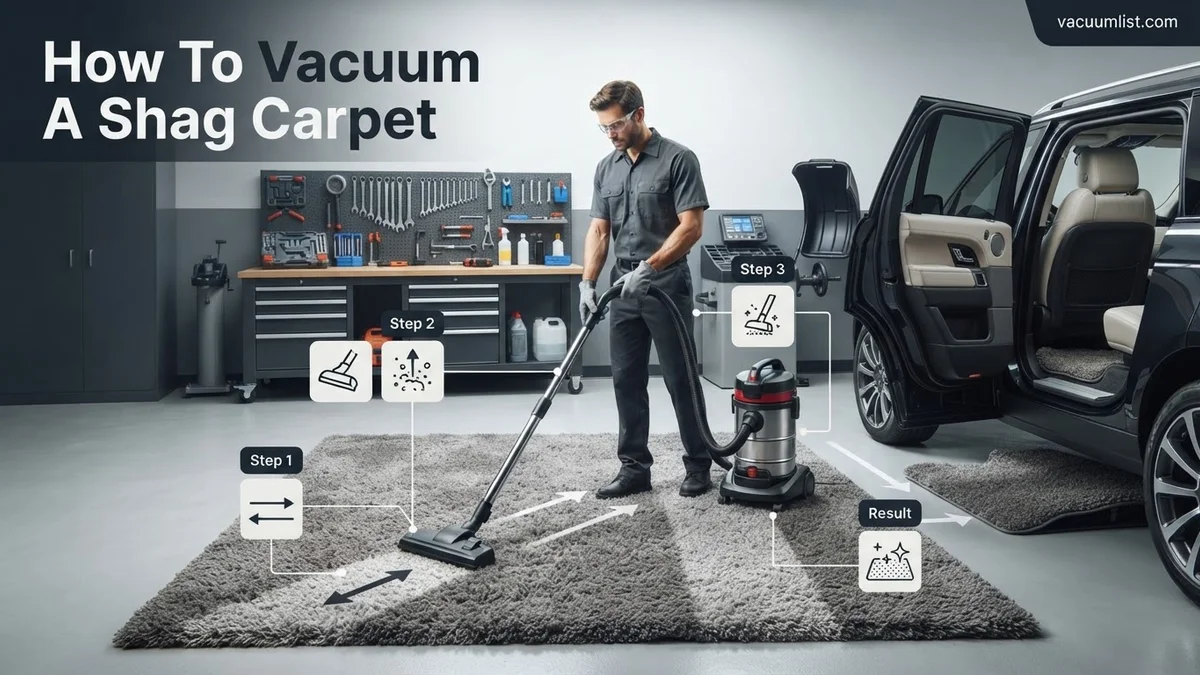
Step-by-Step Guide on How to Vacuum a Shag Carpet Safely
Executing the proper technique protects delicate yarn structures while extracting embedded debris. Manufacturers emphasize that rushing the process causes permanent friction damage. Follow this exact workflow for optimal results in 2026.
Step 1: Prep and Adjust Your Equipment
- Disable the rotary brush roll entirely, or elevate the height adjustment to its highest setting.
- Attach the upholstery tool or a specialized bare-floor brush attachment to your canister vacuum hose.
- Inspect the underside of the attachment to ensure no sharp plastic edges can snag the backing.
Step 2: Execute the Slow Push-Pull Technique
- Move the vacuum nozzle forward at half your normal cleaning speed to allow adequate airflow penetration.
- Pull the attachment backward slowly over the exact same path to capture deep-set dust particles.
- Overlap each pass by approximately 50 percent to ensure complete surface coverage without missing spots.
Step 3: Change Directions for Maximum Extraction
- Vacuum the entire room horizontally from left to right across the primary traffic lanes.
- Rotate ninety degrees and repeat the entire slow extraction process vertically from top to bottom.
- Cross-hatch cleaning patterns dislodge stubborn grit trapped near the primary backing material.
What to Do If Your Vacuum Eats the Rug Fibers
Even with precautions, powerful suction can occasionally swallow loose shag strands or thick pile loops. Modern carpet care manuals outline specific troubleshooting steps when your equipment starts pulling yarn.
- Shut off the power immediately: Cut the electricity at the wall outlet the second you hear a straining motor or see fibers winding around the intake port.
- Reverse the brush or manually untangle: Never yank stuck yarn violently out of the nozzle. Turn the brush roll backward by hand to release the trapped pile without tearing the backing.
- Switch to a suction-only accessory: Discard the floor head entirely and attach a narrow crevice tool or a dedicated mesh-screen upholstery guard to limit aggressive suction pooling.
What If It Still Doesn’t Work?
Persistent dirt, matted yarn, or lingering odors that survive standard vacuuming require advanced intervention. Implement these fallback steps when routine maintenance falls short:
- Perform a manual rake: Use a specialized carpet rake with plastic tines to manually separate crushed fibers before attempting another low-suction vacuum pass.
- Apply dry extraction powder: Sprinkle professional absorbent compound across the fibers, let it sit for 30 minutes, and extract it carefully with a canister vacuum.
- Hire a certified professional: Contact an Institute of Inspection Cleaning and Restoration Certification (IICRC) specialist for hot water extraction or specialized low-moisture cleaning. Professional rug restoration typically ranges from $150 to $350 depending on the square footage.
Conclusion
Maintaining a shag carpet requires specialized techniques, including disabling brush rolls and utilizing slow, cross-hatch vacuuming patterns to protect delicate fibers. According to verified research and expert sources from the Carpet and Rug Institute, regular low-suction maintenance significantly extends textile longevity. Take the next step today by inspecting your vacuum settings and scheduling your deep-cleaning routine for the upcoming season.
❓ Frequently Asked Questions
How do I stop my vacuum from sucking up the edges of my shag rug?
Turn off the roller brush to eliminate the pulling action, and open the suction release valve on your vacuum wand if it has one. You can also stand on the edge of the rug to anchor it while passing the vacuum away from you.
Is it better to push or pull the vacuum on a shag carpet?
Push the vacuum forward slowly into the pile, then pull it straight back over the same path. Moving slowly gives the airflow time to pull hidden dust and debris out from the base of the long fibers.
What kind of vacuum is best for high-pile and shag rugs?
Canister vacuums with straight suction floor heads are ideal because they lack a motorized brush roll and offer high airflow. Upright vacuums work too, provided you can manually shut off the beater bar.
How can I clean a shag carpet if my vacuum is too powerful?
If your vacuum has adjustable suction control, turn it down to the lowest setting. Alternatively, use a handheld upholstery attachment or shake out smaller rugs outside.
Can vacuuming too often ruin a shag carpet?
Vacuuming too frequently with a motorized brush roll causes severe friction and frizzing. However, using the correct suction-only method regularly will not harm the rug and actually extends its lifespan.
How do I get deep-down dirt out of a thick shag rug without a beater bar?
Since you cannot use a beater bar, flip the rug face down and gently beat the back with a broom handle or carpet beater to shake loose dirt onto the floor before vacuuming the surface.