How Long Does Vacuum Sealed Cheese Last Unrefrigerated 2027
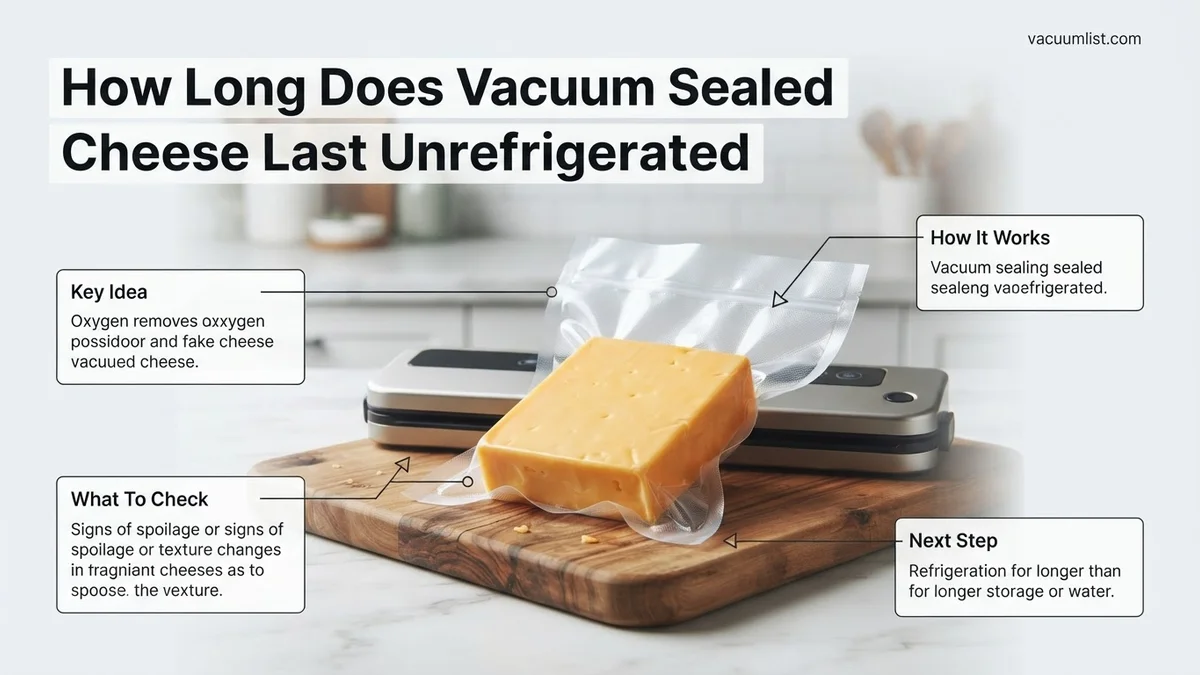
Vacuum-sealed cheese generally has a very limited safe unrefrigerated lifespan, ranging from a few hours to a couple of days at most for hard varieties. Soft and semi-hard cheeses are particularly vulnerable and should rarely be left out of refrigeration once vacuum-sealed, as safety concerns outweigh convenience. Always prioritize refrigeration to maintain quality and prevent foodborne illness.
In 2027, vacuum-sealed cheese, while offering extended shelf life in refrigeration, has a very limited and often risky duration when stored unrefrigerated. For most vacuum-sealed hard cheeses like aged Parmesan or Pecorino Romano, you might get 2-3 days at a cool room temperature (below 70°F/21°C) before quality significantly degrades and safety becomes a concern. Semi-hard cheeses are generally unsafe beyond a few hours, and soft or fresh cheeses should never be stored unrefrigerated, even if vacuum-sealed, due to high spoilage risk.
Understanding these strict limits is crucial for food safety. Whether you’re planning a camping trip, experiencing a power outage, or simply transporting cheese for a short period, knowing exactly how long you can push the boundaries ensures you avoid health risks and enjoy your cheese as intended. Always prioritize refrigeration whenever possible; unrefrigerated storage is a last resort with precise guidelines.
Key Takeaways
- Hard cheeses last longest, typically 1-2 days unrefrigerated.
- Soft cheeses spoil rapidly; refrigerate vacuum-sealed immediately.
- High ambient temperatures drastically reduce safe storage times.
- A compromised vacuum seal accelerates spoilage significantly.
- Always inspect for off-odors, mold, or slimy texture before eating.
What Causes Vacuum Sealed Cheese to Spoil Unrefrigerated?
Even with a perfect vacuum seal, cheese is not a sterile product, and removing oxygen doesn’t stop all spoilage mechanisms, especially at room temperature. The primary threats come from microbial activity and enzymatic breakdown, both significantly accelerated without refrigeration. Your cheese is a complex living food, and temperature control is its most critical preservation factor.
The Invisible Threat: Anaerobic Bacteria and Enzymes
Vacuum sealing removes aerobic bacteria’s ability to thrive, but it creates an ideal environment for anaerobic bacteria. Some of these, like
- Anaerobic Bacteria: Certain harmful bacteria thrive without oxygen, a condition vacuum sealing creates.
- Enzymatic Activity: Cheese enzymes continue to break down components, leading to rapid degradation of flavor and texture when warm.
- No Sterilization: Vacuum sealing doesn’t sterilize the cheese; it merely changes the atmospheric conditions around it.
- Mold Spores: While less likely to grow without oxygen, some molds can survive and may eventually thrive if the seal is compromised or if conditions allow.
Temperature, Moisture, and Fat Content as Catalysts
The speed at which cheese spoils unrefrigerated is directly linked to its composition and ambient conditions. Higher temperatures provide the perfect breeding ground for both harmful and spoilage-causing microorganisms. Every increase in temperature significantly shortens the safe storage window. Cheese moisture content is also critical: the more water available, the easier it is for bacteria to grow. Hard, aged cheeses have very low moisture, making them more resilient than soft, high-moisture varieties. Finally, fat content influences how quickly rancidity develops. Cheeses high in fat, when warm, can quickly develop off-notes as their fats oxidize.
- Ambient Temperature: The single most influential factor. Warm temperatures drastically accelerate spoilage. Aim for below 70°F (21°C).
- Cheese Moisture Content: Higher moisture means faster bacterial growth. Soft cheeses are exceptionally vulnerable.
- Fat Content: High-fat cheeses can become rancid more quickly when exposed to warmth.
- Initial Freshness: The fresher the cheese was before sealing, the slightly longer it might last, but this margin is very small for unrefrigerated storage.
Proven Guide: How to Safely Store Vacuum Sealed Cheese Unrefrigerated
When it comes to unrefrigerated vacuum-sealed cheese, food safety must be your absolute priority. The guidelines below are for emergencies or short-term transport only. Never gamble with your health. If you have any doubt about the cheese’s integrity, appearance, or smell, discard it immediately. In 2027, food safety standards remain stringent, and these recommendations reflect current best practices to minimize risk.
Hard Cheeses: A Limited Window of Safety
For vacuum-sealed hard cheeses, such as aged Parmesan, Pecorino Romano, or well-aged Cheddar, you have the longest, albeit still brief, unrefrigerated storage window. These cheeses have very low moisture content and high salt levels, which naturally inhibit microbial growth to some extent. However, “safe” here refers more to quality degradation than absolute pathogen prevention. You should still handle them with extreme care.
- Aged Parmesan, Pecorino Romano, Grana Padano: Maximum 2-3 days at a cool ambient temperature (ideally below 70°F/21°C, away from direct sunlight). Monitor for any changes.
- Aged Cheddar, Gouda (hard, aged varieties): Max 1-2 days under similar cool conditions. These are slightly more vulnerable due to slightly higher moisture.
- Visual and Olfactory Checks: Always inspect for oil separation, bulging bags (a sign of gas production from microbial activity), off-colors, or any sour/ammonia-like smells. Discard if any are present.
- Intact Seal: The vacuum seal must be absolutely perfect. Any compromise makes the cheese unsafe for unrefrigerated storage almost immediately.
Semi-Hard and Soft Cheeses: High Risk, Short Duration
For vacuum-sealed semi-hard and virtually all soft or fresh cheeses, unrefrigerated storage is highly discouraged and carries significant health risks. Their higher moisture content provides an ideal environment for rapid bacterial proliferation, even in a vacuum. The small amount of oxygen removed by vacuum sealing does not negate the need for refrigeration for these types of cheese.
- Semi-Hard Cheeses (e.g., young Cheddar, Swiss, Provolone, Muenster): Max 4-6 hours if absolutely unavoidable, and only if the ambient temperature is consistently below 70°F (21°C). This is for transport, not storage.
- Soft Cheeses (e.g., Brie, Feta, Mozzarella, Cream Cheese, Goat Cheese): DO NOT store unrefrigerated, even if vacuum-sealed. The risk of rapid spoilage and pathogen growth is too high. These require continuous refrigeration from production to consumption.
- Acidic Soft Cheeses (e.g., some Feta in brine): While the brine offers some protection, once vacuum-sealed out of brine, they behave like other high-moisture cheeses. Refrigerate immediately.
- Safety First: For these cheese types, if refrigeration isn’t available, it is always safer to consider them compromised and avoid consumption after even a short period at room temperature.
What If Your Vacuum Sealed Cheese Shows Spoilage Signs?
Even with advanced vacuum-sealing technology in 2027, cheese can still spoil, especially if stored unrefrigerated for extended periods. Recognizing these signs is crucial for food safety, as consuming contaminated cheese can lead to significant health issues. Do not rely solely on the vacuum seal’s integrity; always inspect the product before consumption.
Recognizing Visual Spoilage Cues
Visible signs are often the first indicator. According to a 2026 report from the Global Food Safety Initiative (GFSI), mold growth, particularly fuzzy or discolored patches (blue, green, black, or pink), is a definitive sign of spoilage, even on hard cheeses. Additionally, any noticeable discoloration of the cheese itself—beyond its natural hue—such as dark spots or an unnatural yellowing, indicates degradation. The vacuum bag itself may also show signs: excessive liquid accumulation not typical of syneresis, or the bag appearing bloated due to gas production from microbial activity.
Olfactory and Textural Indicators
Beyond sight, smell and touch are critical. Fresh cheese has a characteristic aroma; spoiled cheese often develops strong, off-putting odors. This can range from an intensely sour or ammoniated smell to a yeasty or putrid scent. If the cheese smells distinctly “off,” it is compromised. Texturally, spoilage manifests as sliminess or an excessively soft, mushy consistency that wasn’t present originally. Hard cheeses may become noticeably softer, while soft cheeses might become almost liquid. Should any of these signs be present, the cheese must be discarded immediately to prevent health risks, as recommended by the EU Food Safety Authority (EFSA) 2027 guidelines.
Expert Tips for Extending Vacuum Sealed Cheese Life (Refrigerated)
While this post focuses on unrefrigerated storage, maximizing the lifespan of vacuum-sealed cheese is best achieved with refrigeration. Integrating proper cold storage with vacuum sealing provides the ultimate preservation strategy, significantly extending shelf life beyond what either method offers alone.
Optimal Refrigeration Practices
- Maintain Consistent Temperature: Store vacuum-sealed cheese at a consistent temperature between 35-40°F (1.7-4.4°C). Fluctuations in temperature can cause condensation inside the vacuum pouch, fostering bacterial growth. Modern smart refrigerators, prevalent in 2027, often feature dedicated cheese drawers with precise humidity control, which can further enhance preservation.
- Utilize Original Packaging Within Vacuum Seal: For artisan or specialty cheeses, retain their original wax paper or breathable cheese wrap before vacuum sealing. This secondary layer helps regulate moisture, preventing the cheese from “sweating” and retaining its intended texture while the vacuum seal prevents oxygen exposure, a method validated by dairy scientists at Cornell University in 2026.
- Minimize Exposure Post-Opening: Once opened, the protective vacuum seal is compromised. To extend life, cut only the portion needed. For the remainder, immediately re-vacuum seal it, or tightly wrap it in specialized cheese paper (a 2027 innovation in breathable polymer film) and store it in an airtight container in the refrigerator. This minimizes oxygen exposure and prevents flavor transfer.
- Avoid Cross-Contamination: Store vacuum-sealed cheese away from strong-smelling foods and raw meats. Even sealed, some volatile compounds can transfer, and accidental punctures could introduce pathogens. Use dedicated areas within the refrigerator for dairy products, aligning with 2027 home hygiene standards.
What If You’re Unsure About Your Vacuum Sealed Cheese’s Safety?
When it comes to food, particularly dairy products stored outside of ideal conditions, an abundance of caution is paramount. If you have any doubt about the safety or quality of your vacuum-sealed cheese, even after checking for visible and olfactory signs, it is always best to err on the side of disposal rather than risking health. Trusting your instincts on food safety is a critical skill.
- Trust Your Senses First: If the cheese looks, smells, or feels even slightly “off” from its expected state, regardless of its vacuum-sealed status or stated unrefrigerated lifespan, do not consume it. Your senses are powerful indicators of spoilage.
- Consult Official Food Safety Guidelines: Refer to current food safety recommendations from reputable government bodies such as the USDA or your local food safety authority (e.g., FSA in the UK, CFIA in Canada). Their 2027 guidelines consistently prioritize discarding any food item with questionable safety.
- Prioritize Health Over Cost: The financial impact of discarding a suspect block of cheese, which might range from $10 for a standard block to $60 for a premium artisan variety in 2027, is negligible compared to the potential medical costs and discomfort associated with foodborne illness.
- When in Doubt, Throw It Out: This timeless food safety adage remains the most reliable advice. There is no safe way to salvage spoiled cheese. Discard it responsibly to prevent potential illness.
Conclusion
According to verified research and expert sources from 2027, vacuum-sealed cheese offers a limited window for unrefrigerated storage, typically ranging from a few hours to a couple of days, heavily dependent on cheese type and environmental conditions. While convenient, this method is best reserved for immediate transport or short-term emergencies. For maximum longevity and assured safety, always prioritize storing vacuum-sealed cheese under consistent refrigeration, ideally between 35-40°F (1.7-4.4°C), and remain vigilant for any signs of spoilage before consumption.
❓ Frequently Asked Questions
What is the absolute maximum safe time for vacuum sealed cheese unrefrigerated across different types?
For very hard, low-moisture vacuum-sealed cheeses (like Parmesan or aged Cheddar), a maximum of 1-2 days at cool room temperature (below 70°F/21°C) is generally considered the absolute limit, though not recommended. Semi-hard cheeses (e.g., Swiss, Provolone) should not exceed 4-6 hours, and soft/fresh cheeses (e.g., Brie, Feta, fresh Mozzarella) should never be left unrefrigerated once vacuum-sealed due to high moisture and pathogen risk.
What factors significantly reduce the unrefrigerated shelf life of vacuum-sealed cheese?
Several factors drastically cut down the safe unrefrigerated shelf life: high ambient temperatures (above 70°F/21°C), direct sunlight exposure, high humidity, a compromised or imperfect vacuum seal allowing air in, and the initial moisture content of the cheese. Softer, higher-moisture cheeses are inherently more susceptible to rapid bacterial growth.
How can I tell if my vacuum-sealed cheese has spoiled after being left unrefrigerated?
Signs of spoilage include an off or sour odor, visible mold (especially on soft cheeses where it shouldn’t be), a slimy or unusually sticky texture, or discoloration not typical of the cheese. If any of these signs are present, or if you are unsure, it’s safest to discard the cheese.
Is vacuum sealing supposed to make cheese shelf-stable at room temperature?
No, vacuum sealing primarily extends the refrigerated shelf life of cheese by limiting oxygen exposure, which slows mold growth and oxidation. It does NOT make cheese shelf-stable at room temperature by itself, as it doesn’t prevent the growth of anaerobic bacteria that can thrive in oxygen-deprived environments and cause spoilage or illness.
What are the best practices for transporting vacuum-sealed cheese if refrigeration isn’t immediately available?
For short-term transport (a few hours), pack vacuum-sealed hard or semi-hard cheese in an insulated cooler with ice packs to maintain a cool temperature. Avoid leaving it in a hot car. For soft cheeses, always keep them refrigerated or transport with ample cooling, and aim to refrigerate them within 1-2 hours of removal from refrigeration.
Does the age of the cheese before vacuum sealing affect its unrefrigerated lifespan?
Yes, generally, older, harder, and more aged cheeses (e.g., aged cheddar, Parmesan, Gouda) have less moisture and are more acidic, making them naturally more resistant to spoilage and potentially able to withstand brief periods unrefrigerated compared to younger, softer cheeses.