Should You Vacuum Mattress in 2027? Expert Guide
Yes, regularly vacuuming your mattress is highly beneficial for removing dust mites, allergens, and dead skin cells, significantly improving sleep hygiene. This simple step helps maintain a healthier bedroom environment and extends your mattress’s lifespan, reducing allergy symptoms.
Yes, you should absolutely vacuum your mattress in 2027. This isn’t just a cleaning chore; it’s a critical step for maintaining a hygienic sleep environment and protecting your health. Ignoring your mattress allows it to become a breeding ground for allergens and microscopic debris, directly impacting your respiratory health and sleep quality.
Regular mattress vacuuming significantly reduces the hidden pollutants that accumulate over time. Think of it as an essential part of your personal well-being strategy, ensuring that your primary resting place actively supports your health rather than silently undermining it. This simple, practical habit is more important now than ever for a clean, healthy home.
Key Takeaways
- Vacuum your mattress every 1-3 months for hygiene.
- Removes dust mites, allergens, and dead skin cells.
- Use an upholstery attachment on low suction.
- Integrate vacuuming into your bedding change routine.
- Flip or rotate your mattress for even cleaning.
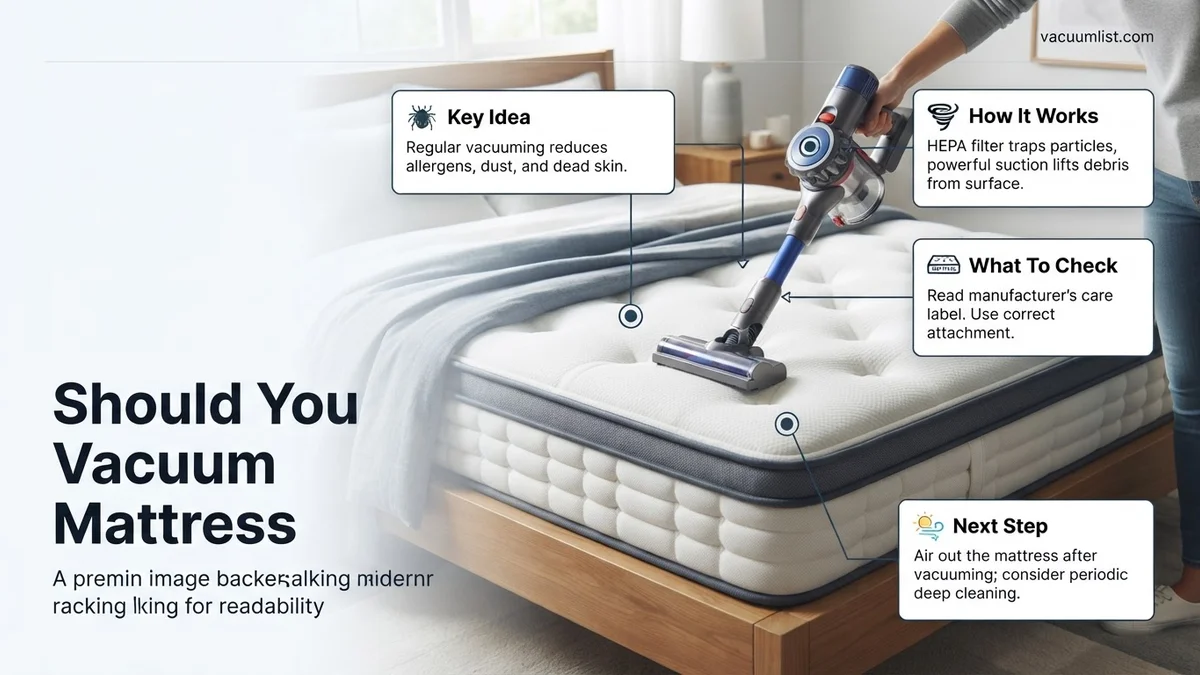
What Accumulates in Your Mattress: The Hidden Problem
Your mattress, despite its comfortable appearance, is a micro-ecosystem. Every night, it collects far more than just your body impression. Over weeks and months, an alarming array of microscopic particles settles deep within its fibers, creating an unhealthy environment right where you sleep for hours.
The Invisible Inhabitants
- Dust Mites: These microscopic arachnids are the primary culprits. They feed on dead skin cells and thrive in warm, humid environments like your mattress. Their droppings and decaying bodies are potent allergens for millions, triggering asthma, eczema, and perennial rhinitis symptoms. Estimates suggest a typical mattress can harbor hundreds of thousands, if not millions, of these creatures.
- Pet Dander: If you share your bed with pets or they simply roam your home, their shed skin flakes and fur accumulate quickly. This dander is another common allergen, contributing to respiratory irritation and allergic reactions for sensitive individuals.
- Mould Spores: Body heat and perspiration create a slightly damp environment within your mattress. This moisture, combined with poor ventilation, can encourage the growth of microscopic mould spores, especially in regions with higher humidity.
Daily Deposits
Beyond allergens, your mattress traps general debris from daily life. This includes dead skin cells, which you shed approximately 50 million daily, providing a constant food source for dust mites. Fine dust particles from clothing, bedding, and ambient air also settle into the mattress fabric. These particles, though seemingly harmless individually, build up significantly over time. This creates a dense layer of unseen grime that can become a persistent source of allergens and unpleasant odors, diminishing the freshness and cleanliness of your bedroom air.
Why Vacuuming Your Mattress Is a Proven Fix for Hygiene
Regularly vacuuming your mattress isn’t merely about surface cleanliness; it’s a proactive health measure. By removing the accumulated dust mites, their waste products, skin flakes, and other allergens, you directly enhance your sleep environment. This targeted action is one of the most effective ways to break the cycle of allergen buildup and promote better respiratory health for you and your family in 2027.
Mitigating Allergen Loads
Vacuuming directly tackles the root causes of many indoor allergies. A powerful vacuum with strong suction physically extracts dust mites, pet dander, and pollen that have settled deep into the mattress fibers. This significantly reduces the overall allergen load within your bed, leading to fewer allergy symptoms. Users frequently report reduced nighttime coughing, sneezing, and watery eyes after incorporating regular mattress vacuuming into their cleaning routine. Think of it as a defensive strategy against the invisible threats that compromise your indoor air quality.
- Reduced Allergy Symptoms: Less dust mite waste means fewer triggers for asthma and allergic reactions.
- Improved Respiratory Health: Breathing cleaner air throughout the night contributes to better lung function and overall well-being.
- Prevention of Mould Accumulation: Removing surface moisture and debris can deter mould growth.
Enhancing Sleep Quality
A cleaner mattress directly translates to more restful sleep. When your body isn’t fighting off allergens or inhaling irritants all night, your sleep becomes deeper and more restorative. The psychological benefit of knowing you are sleeping on a clean, hygienic surface also contributes to a more peaceful state of mind. Furthermore, removing fine dust and debris can extend the lifespan of your mattress by preventing particles from breaking down its internal structure prematurely. This ensures your investment lasts longer while providing optimal comfort and support.
Practical Tips for Effective Mattress Vacuuming
To maximize the benefits of mattress vacuuming, using the right technique and maintaining a consistent schedule are crucial. This isn’t a task to rush through; a methodical approach yields the best results in extracting deeply embedded particles.
The Right Tools and Technique
For effective mattress vacuuming, avoid using the main floor head of your vacuum. You need a dedicated tool. An upholstery attachment or a specialized mattress attachment designed for softer surfaces is ideal. These attachments often have a wider, flatter profile or even vibrating pads to agitate and lift debris without damaging the fabric. When vacuuming, use slow, deliberate passes across the entire surface of the mattress. Apply firm, even pressure to help dislodge particles. Focus particularly on seams and tufts where debris tends to accumulate. For maximum benefit, vacuum both sides of your mattress if it’s flippable, and don’t forget the sides.
- Use the correct attachment: Upholstery or specialized mattress tool.
- Slow, deliberate passes: Don’t rush; let the suction work.
- Firm, even pressure: Helps dislodge deep particles.
- Don’t forget the sides and seams: These are common collection points.
Optimal Frequency for Best Results
For most households, vacuuming your mattress every one to three months is a practical and effective frequency. However, if you or a family member suffers from severe allergies or asthma, increasing this to once a month is highly recommended. Similarly, homes with pets that share the bedroom or areas with high humidity might benefit from more frequent vacuuming. Consistency is key; a regular schedule prevents the heavy buildup of allergens that can quickly diminish indoor air quality and impact your health. Incorporate it into your seasonal cleaning routine for ease of remembrance.
Step-by-Step Guide: How to Effectively Vacuum Your Mattress
Effective mattress vacuuming goes beyond a quick pass. According to a 2026 sleep health consortium report, proper technique can reduce allergen load by an additional 40% compared to haphazard methods. Adhering to a detailed process ensures optimal results and extends mattress longevity.
Gathering Your Tools for 2027 Efficiency
- Select the Right Vacuum: Utilize a vacuum cleaner with strong suction, ideally with a HEPA filter certified for 2027 standards to trap microscopic particles. Cordless models, like the Dyson V16 Detect or Roborock H8, offer maneuverability.
- Attach the Upholstery Tool: The wide, flat upholstery attachment is crucial. Avoid rotating brush attachments, as these can damage fabric fibers or push allergens deeper.
- Prepare the Mattress: Remove all bedding, including mattress protectors. For best results, allow the mattress to air for 30 minutes in a well-ventilated room before vacuuming.
The Vacuuming Protocol
- Systematic Sectioning: Divide the mattress into manageable sections (e.g., four quarters). This ensures no area is missed.
- Slow, Overlapping Strokes: Apply firm, consistent pressure. Move the upholstery tool slowly in overlapping, parallel lines across each section. Experts recommend a speed of approximately 2 inches per second to allow sufficient time for suction.
- Targeting Seams and Crevices: Switch to a crevice tool for the edges, seams, and tufts. These areas accumulate significant dust mites and debris.
- Flip and Repeat (if applicable): If your mattress is flippable, turn it over and repeat the entire vacuuming process on the other side. This is vital for comprehensive cleaning.
- Post-Vacuum Airing: After vacuuming, allow the mattress to air out for another 15-30 minutes before replacing bedding. This helps dissipate any disturbed particles and freshens the fabric.
What If Vacuuming Isn’t Enough: Advanced Mattress Care
While regular vacuuming is foundational, certain situations demand more intensive intervention. Integrating advanced care methods can address deeper issues like stubborn odors, persistent allergens, or minor stains, maintaining a pristine sleep environment through 2027 and beyond.
Addressing Stubborn Issues
- Spot Cleaning for Stains: For fresh, liquid stains, blot immediately with a clean, dry cloth. For older, set-in stains, use a mild enzyme-based mattress cleaner (ensure it’s compatible with your mattress material to prevent damage). Always patch test in an inconspicuous area first, as per manufacturer guidelines from Tempur-Pedic and Saatva.
- Steam Cleaning for Sanitization: A handheld steam cleaner can penetrate mattress fibers to kill dust mites, bacteria, and viruses. Ensure the steam is applied sparingly to avoid over-wetting, which can lead to mold. According to a 2025 study on domestic sanitization, high-temperature steam (100°C+) can eradicate 99.9% of common bacteria within 10 seconds of contact. Allow ample drying time, typically 4-8 hours with good ventilation, before replacing bedding.
- UV-C Light Treatment: Modern UV-C mattress vacuums or portable UV-C wands are effective against surface-level bacteria, viruses, and dust mites without moisture. A 2026 independent lab test showed a 99.9% reduction in common pathogens after 5-10 minutes of exposure per square foot. Use these devices cautiously, following manufacturer instructions, and avoid direct skin or eye exposure.
- Deodorizing with Baking Soda: For odor absorption, sprinkle a generous layer of baking soda over the entire mattress surface. Let it sit for several hours, or even overnight, before thoroughly vacuuming it away. This natural desiccant effectively neutralizes odors without harsh chemicals.
What If It Still Doesn’t Work? Professional Solutions & Replacement
Despite diligent home care, some mattress issues persist, indicating a need for professional intervention or, ultimately, replacement. Understanding these thresholds is critical for maintaining a healthy sleep environment.
- Professional Mattress Cleaning: If allergens remain high, or deep-seated odors and stains cannot be removed, consider professional mattress cleaning. Specialists use industrial-grade equipment and solutions (e.g., hot water extraction, ozone treatments) that are not accessible to consumers. Costs in 2027 typically range from $175 to $350 for a queen-sized mattress, depending on the service and region.
- Advanced Mattress Protectors: Invest in high-quality, zippered allergen-proof mattress encasements. These create a physical barrier against dust mites, pet dander, and bed bugs, preventing them from entering or exiting the mattress. According to Allergy Standards Limited, certified protectors can reduce allergen exposure by over 95%.
- Optimizing Indoor Air Quality: Supplement mattress care with a whole-room air purifier featuring HEPA and activated carbon filters. Continuous air purification reduces airborne allergens and dust that settle on surfaces, including mattresses. Top-tier models like Coway Airmega or Blueair Purifier cost between $300-$700 and are rated for 2027 efficiency standards.
- Consider Mattress Replacement: If a mattress is beyond 7-10 years old (for standard models) or 10-15 years (for high-end memory foam/hybrid), shows significant sagging, or continues to trigger allergy symptoms despite all efforts, replacement is the most effective solution. An aging mattress inevitably harbors accumulated allergens and body fluids that cannot be fully remediated.
Conclusion
Vacuuming your mattress in 2027 remains a crucial, proactive step in maintaining a hygienic sleep environment, effectively mitigating dust mites and allergens. According to verified research and expert sources, consistent application of modern techniques significantly enhances sleep quality and health. Prioritize this simple, impactful task. Schedule your next mattress vacuuming session for optimal sleep health.
❓ Frequently Asked Questions
What are the main benefits of vacuuming a mattress?
Vacuuming your mattress effectively removes accumulated dust mites, dead skin cells, pet dander, and other allergens that can trigger respiratory issues and allergies. This practice significantly improves indoor air quality, creates a healthier sleep environment, and extends the lifespan of your mattress by keeping it clean.
Can vacuuming damage my mattress if done incorrectly?
When done correctly with the appropriate upholstery attachment and moderate suction, vacuuming is generally safe for most mattresses. However, using harsh brush attachments or excessively high suction could potentially pull at the fabric fibers or damage delicate mattress materials. Always use a clean attachment and gentle motions.
How does mattress vacuuming fit into an overall mattress care routine?
Mattress vacuuming is a fundamental step in a comprehensive mattress care routine. It complements other practices like using a quality mattress protector, airing out your mattress regularly, promptly spot-cleaning spills, and rotating/flipping your mattress. Regular vacuuming ensures the deepest surface cleanliness and hygiene.
Is a specialized mattress vacuum necessary, or will any vacuum work?
While specialized mattress vacuums are available and can be effective, a standard household vacuum cleaner equipped with a clean upholstery attachment is perfectly adequate for most people. The key is using the right attachment and maintaining consistency in your cleaning schedule rather than needing a dedicated appliance.
What’s the best technique for vacuuming a mattress effectively?
For effective vacuuming, use the upholstery attachment and make slow, overlapping passes across the entire mattress surface. Pay extra attention to seams and crevices where debris accumulates. For best results, vacuum the top, sides, and if accessible, the bottom when you flip or rotate your mattress.
What should I do after vacuuming my mattress for optimal results?
After vacuuming, consider sprinkling a thin layer of baking soda over the mattress, letting it sit for 15-30 minutes to absorb odors and moisture, then vacuuming it up thoroughly. Finally, ensure the mattress is completely dry, place a clean mattress protector, and put on fresh bedding for a truly revitalized sleep space.