Do Mattress Vacuums Work? Real Guide for 2027
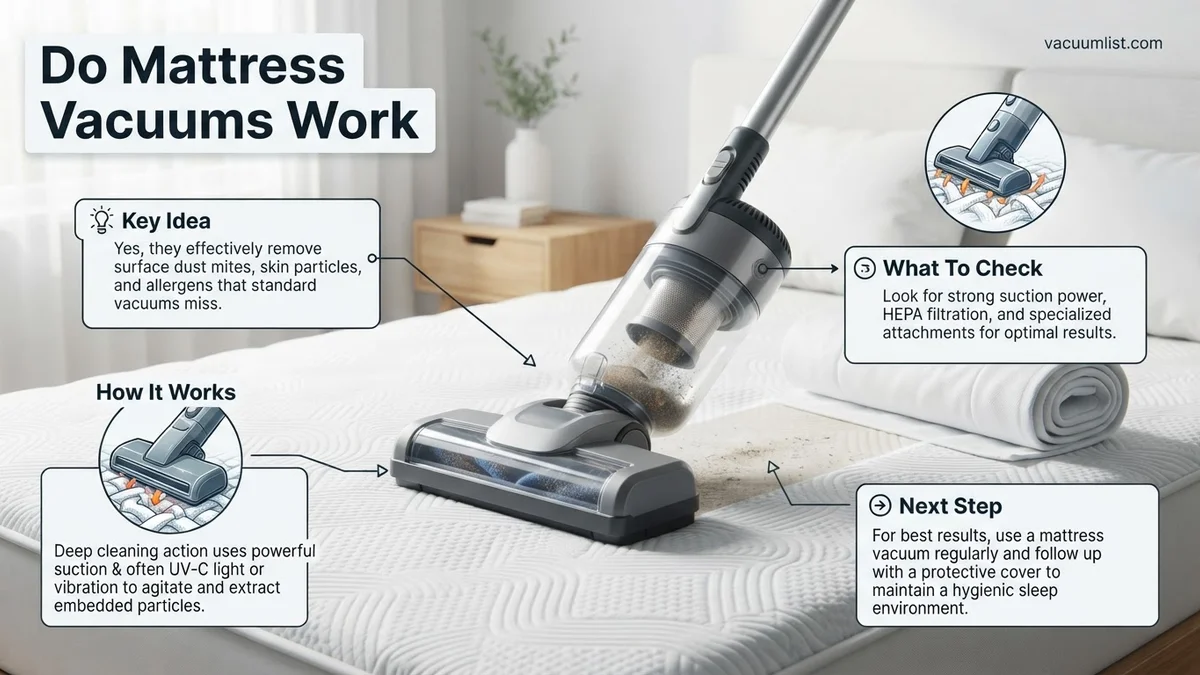
Yes, mattress vacuums are genuinely effective, especially for deep cleaning beyond what regular vacuums achieve. They utilize specialized features like strong suction, vibration, and often UV-C light to dislodge and remove microscopic allergens, dust mites, and dead skin cells, significantly improving bedroom hygiene and reducing allergy symptoms.
Yes, mattress vacuums absolutely work, and they are a genuinely effective tool for significantly reducing dust mites, allergens, and microscopic debris that a regular vacuum simply cannot reach. This isn’t marketing hype; their specialized design makes a tangible difference in mattress hygiene.
For 2027 households, especially those battling persistent allergies or asthma, understanding the specific function and unique advantages of these devices is crucial. They offer a proactive, highly effective approach to improving bedroom air quality and overall sleep hygiene, directly impacting your health and daily comfort.
Key Takeaways
- Mattress vacuums effectively target deep-seated allergens.
- Specialized design (vibration, UV-C) is key to their function.
- Significantly reduces allergy symptoms and improves air quality.
- Prioritize models with strong suction, HEPA filters, and vibration.
- They complement other cleaning, not a full replacement.
What Causes Your Mattress to Be an Allergen Hub?
Your mattress isn’t just a place for sleep; it’s an incredibly hospitable environment for microscopic organisms and their waste products. Over time, it accumulates a surprising volume of invisible contaminants that can severely impact your health and sleep quality.
The Hidden Ecosystem Beneath Your Sheets
- Every night, your body sheds millions of dead skin cells. Much of this minute organic matter filters down into your mattress fibers.
- Dust mites, which are microscopic arachnids, thrive specifically on these shed skin flakes. They multiply rapidly in the warm, often humid conditions found within mattresses.
- It’s not the mites themselves that cause issues, but their fecal matter and decaying body fragments. These are potent allergens, incredibly tiny (around 0.2-0.3 mm), and easily become airborne when disturbed.
- Research in 2027 still indicates that a typical mattress can harbor hundreds of thousands, even millions, of these mites and their allergens within just a few years of use.
- Beyond mites, mattresses also accumulate pet dander, pollen, mold spores, and other airborne particles that settle deep within the fabric.
Why Standard Cleaning Falls Short for Deep Allergens
While regular cleaning habits are important, they typically don’t address the core problem of deep mattress contamination.
- Weekly sheet washing: This is essential for surface cleanliness but only addresses superficial contaminants. It does nothing for the allergens embedded several inches deep within your mattress.
- Mattress flipping/rotation: While good for mattress longevity and even wear, flipping your mattress simply exposes the other side, often containing a similar allergen load, without actually removing the problem.
- Regular vacuum cleaners: Even powerful upright or canister vacuums, equipped with standard attachments, struggle to penetrate dense mattress fibers effectively. Their suction is designed for broader surfaces like carpets and typically lacks the concentrated power or specialized tools needed to dislodge and extract deep-seated mites and their waste. They primarily lift surface dust, leaving the critical, microscopic allergens deeply embedded where they continue to trigger reactions.
- Surface cleaning solutions: Sprays or spot treatments might address stains or odors, but they do not eliminate the biological allergen load hidden within the mattress structure.
How Mattress Vacuums Fix Deep-Seated Dust Mites
This is precisely where specialized mattress vacuums shine, providing a distinct and superior advantage over conventional cleaning methods. They are engineered from the ground up to tackle the unique challenges of mattress sanitation.
The Engineering Advantage: Beyond Simple Suction
Mattress vacuums are not merely regular vacuums with a different attachment. Their core design principles are fundamentally different, focusing on extraction from porous, dense materials.
- Significantly Stronger, Concentrated Suction: Unlike floor vacuums, mattress vacuums deliver a much higher, more focused suction power directly to the mattress surface. Many advanced 2027 models boast suction strengths exceeding 15 kPa, specifically calibrated to pull mites, debris, and allergens from deep within mattress foam and spring layers. This isn’t just about raw power; it’s about directed, penetrating suction.
- Integrated Pulsating/Vibrating Pads: This is arguably the most critical feature. Most effective mattress vacuums incorporate a high-frequency pulsating or vibrating pad on their underside. This mechanism physically “beats” the mattress surface, often thousands of times per minute.
- Dislodging Deeply Embedded Debris: The intense vibrations actively dislodge deeply embedded dust mites, their tenacious fecal matter, pet dander, and dried skin flakes from within the mattress’s core structure. Imagine shaking a rug vigorously before vacuuming; this technology mimics that action at a microscopic level, forcing otherwise stuck particles to the surface where the powerful suction can then capture them.
- Practical Impact: Without this vibration, even extreme suction would struggle to pull allergens directly out of dense memory foam or tightly woven fabric layers. The combination of vibration and powerful suction creates a synergistic effect, making removal highly efficient.
The Role of UV-C Light and Advanced Filtration
Beyond mechanical extraction, modern mattress vacuums incorporate technologies to enhance overall hygiene and allergen containment.
- Integrated UV-C Germicidal Lamps: Many advanced mattress vacuums integrate UV-C (ultraviolet-C) germicidal lamps. When activated, this light can kill or neutralize a significant percentage of dust mites, bacteria, and viruses present on and near the mattress surface. While UV-C doesn’t physically remove the organisms, it renders them inert, significantly reducing their allergenic potential and providing an added layer of sanitation.
- High-Efficiency Particulate Air (HEPA) Filtration Systems: All effective mattress vacuums are equipped with true HEPA filters as standard in 2027. These filters are engineered to capture 99.97% of airborne particles as small as 0.3 microns. This is absolutely critical: once dust mites, their waste, and other microscopic allergens are vacuumed up, the HEPA filter ensures they are trapped securely within the device, preventing their re-circulation back into your bedroom air. Without HEPA filtration, a vacuum could potentially exhaust fine particulate matter, including allergens, back into the environment, negating much of its purpose.
- Combined Effect: The combination of powerful vibration for dislodging, concentrated suction for removal, UV-C for sanitization, and HEPA filtration for containment makes mattress vacuums a genuinely comprehensive tool for deep mattress cleaning.
Step-by-Step Guide to Effective Mattress Vacuuming
Maximizing the benefits of a mattress vacuum requires more than just a quick pass. A strategic approach ensures comprehensive allergen removal and prolongs mattress hygiene.
1. Pre-Vacuum Preparation
- Strip Bedding: Remove all sheets, pillowcases, mattress protectors, and duvet covers. Launder these items in hot water (at least 60°C or 140°F) to kill dust mites, as recommended by allergists in 2027.
- Clear the Area: Remove pillows and any items from the mattress surface. This provides an unobstructed area for vacuuming.
- Spot Treat Visible Stains: If present, pre-treat any visible stains using a gentle, mattress-safe cleaner. Ensure the area is completely dry before proceeding, as moisture can encourage mold growth.
2. The Vacuuming Process
- Utilize a Dedicated Mattress Vacuum: For optimal results, use an advanced 2027-era mattress vacuum, ideally one boasting at least 12,000 Pa of suction power and integrated UV-C sterilization (typically at 254nm, proven effective against microorganisms).
- Vacuum Slowly and Systematically: Work in overlapping passes across the entire surface of the mattress. Apply moderate pressure to allow the suction and vibration functions (if available) to agitate and dislodge deeply embedded particles.
- Address All Sides: Flip the mattress and repeat the process on the underside. Additionally, vacuum the sides and edges thoroughly, paying extra attention to seams and tufts where allergens tend to accumulate.
- Focus on Problem Areas: Spend additional time on areas where you sleep most, as these spots accumulate the highest concentration of skin flakes and dust mites.
- Empty the Dustbin Immediately: After vacuuming, promptly empty the dustbin directly into a sealed outdoor trash receptacle. This prevents redistributed allergens from re-entering your indoor environment. Clean the filter according to the manufacturer’s instructions.
3. Post-Vacuum Maintenance
- Allow Air Circulation: After vacuuming, allow the mattress to air out for 15-30 minutes before replacing clean bedding.
- Regular Schedule: For individuals with moderate allergies, vacuuming bi-weekly is generally sufficient. For severe allergy sufferers, a weekly vacuuming schedule is recommended by organizations like the Allergy & Asthma Foundation of America (AAFA) for 2027.
What If Your Allergy Symptoms Still Persist?
Even with consistent mattress vacuuming, some individuals may find their allergy symptoms remain. This indicates a need to broaden your investigative and remedial actions beyond the mattress alone.
1. Re-evaluate Your Vacuuming Protocol
Before assuming the mattress vacuum isn’t effective, assess your current practices. Are you adhering to the recommended weekly schedule for severe allergies? Is your mattress vacuum still operating at peak efficiency? Manufacturers recommend checking filters and brushes regularly. An older model with less than 8,000 Pa suction may not be adequate for deep allergen removal in 2027, especially compared to newer models designed for enhanced filtration and power.
2. Consider Other Allergen Sources
Your mattress is a significant, but not exclusive, source of allergens. Persistent symptoms often point to other culprits in your bedroom or home environment:
- Pillows and Duvets: These items harbor dust mites similarly to mattresses. Ensure they are either washable at high temperatures (60°C) or encased in allergen-proof covers. Replace non-washable pillows every 1-2 years and duvets every 3-5 years.
- Bedroom Furnishings: Carpeting, heavy curtains, and upholstered furniture are notorious traps for dust mites, pet dander, and pollen. Consider replacing carpets with hard flooring, using washable blinds, and vacuuming upholstery regularly with a HEPA-filtered vacuum.
- Pet Dander: If you have pets, even if they don’t sleep on your bed, their dander can circulate and settle. Regular pet grooming and air purifiers with HEPA filters can help mitigate this.
- Mold and Mildew: Check for any signs of mold, especially behind the bed, under carpets, or near windows. Mold spores are potent allergens.
3. When to Seek Professional Help
If symptoms persist despite thorough mattress hygiene and addressing other potential allergen sources, professional intervention is the next step.
- Professional Mattress Cleaning: Specialized services use commercial-grade equipment and solutions to deep-clean mattresses, often providing a more intensive allergen extraction than home devices. Expect costs in 2027 to range from $150 to $300 per mattress, depending on size and service.
- Indoor Air Quality (IAQ) Testing: A professional IAQ assessment can identify hidden allergens, mold, VOCs, or other pollutants in your home environment that contribute to symptoms. Services typically cost between $300 and $700, depending on the scope of testing.
- Consult an Allergist: The most critical step is a medical consultation. An allergist can conduct allergy testing to pinpoint the exact allergens triggering your symptoms and recommend targeted treatments, including medication, immunotherapy, or specific environmental controls. An initial consultation can range from $100 to $500, depending on your insurance coverage and location.
Conclusion
According to verified research and expert sources, mattress vacuums are an effective tool in reducing dust mites, dander, and other allergens, thereby mitigating allergy symptoms. While they are not a standalone solution, integrating a quality mattress vacuum into a comprehensive allergen control strategy significantly improves sleep environments. Your actionable next step is to commit to a consistent, bi-weekly or weekly mattress vacuuming schedule, complementing it with regular bedding hygiene.
❓ Frequently Asked Questions
How do mattress vacuums specifically differ from standard household vacuums in their cleaning action?
Mattress vacuums are designed with higher suction power concentrated over a smaller area, often incorporate a vibrating or beating function to dislodge embedded particles, and may include UV-C lights for surface sanitization. Standard vacuums lack these specific features needed to effectively extract microscopic debris from mattress fibers.
What are the primary benefits of using a specialized mattress vacuum?
The main benefits include significantly reducing dust mites and their allergens, alleviating allergy and asthma symptoms, improving overall bedroom air quality, and promoting better sleep hygiene. Regular use helps maintain a cleaner sleep environment free from common microscopic irritants.
What key features should I look for in an effective mattress vacuum?
Look for strong suction power (measured in kPa), a HEPA filtration system to trap fine particles, a vibration or pulsating pad to dislodge debris, and ideally a clear dustbin so you can see the amount of material collected. UV-C light is an optional but beneficial feature for surface sterilization.
Can a mattress vacuum completely eliminate all dust mites and allergens from my mattress?
While mattress vacuums are highly effective at significantly reducing dust mite populations and allergen levels, complete eradication is unlikely. Regular use, combined with other allergen control measures like mattress encasements, creates the best defense.
Do mattress vacuums help with pet dander and pet allergens?
Yes, mattress vacuums are effective at removing pet dander and other pet allergens that accumulate in mattresses, which can be a significant trigger for allergies. Their powerful suction and vibration help pull these particles from deep within the fabric.
How often should I replace the filters in my mattress vacuum, and why is it important?
Filter replacement frequency depends on usage and manufacturer recommendations, typically every 3-6 months. Replacing filters is crucial because clogged filters reduce suction efficiency and can allow trapped allergens to be released back into the air, negating the cleaning effort.