Do You Dust or Vacuum First? Expert Step-by-Step Guide 2026
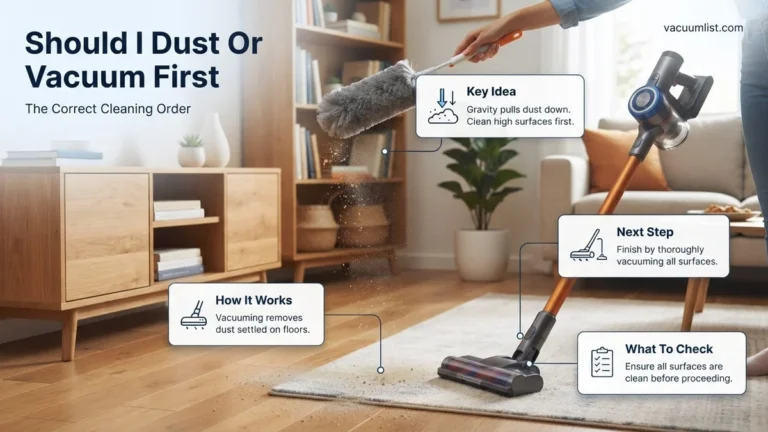
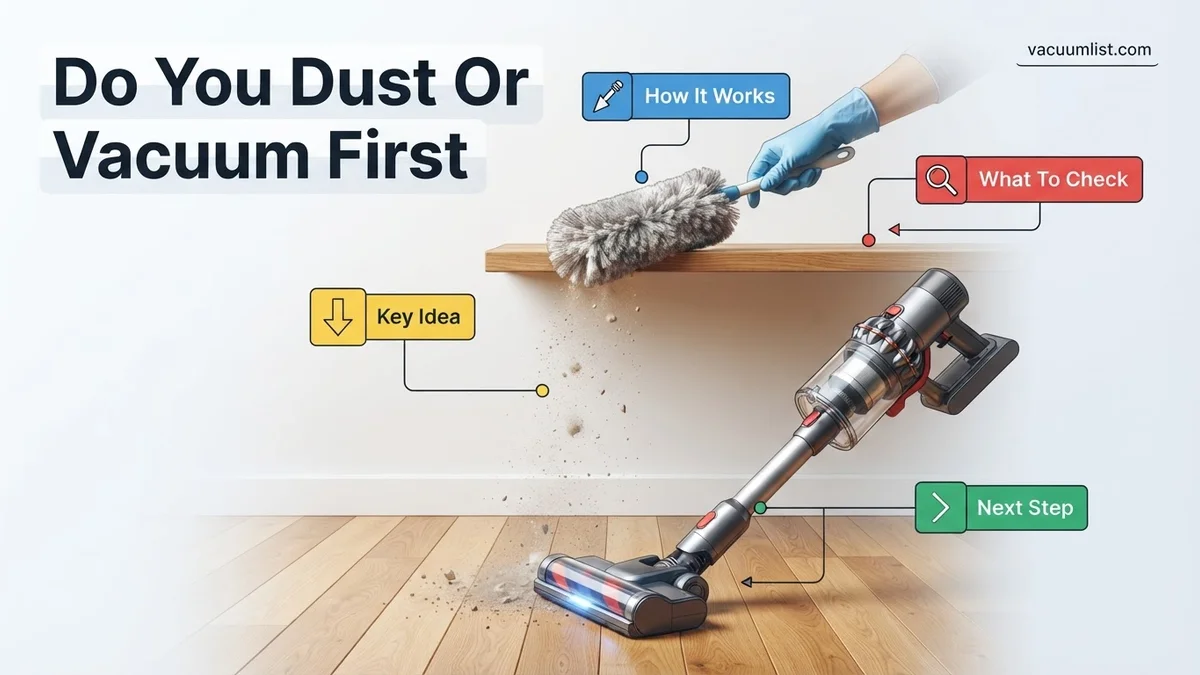
You should always dust before you vacuum to ensure that your home gets thoroughly clean. Dusting inherently knocks microscopic particles, pollen, and debris down onto the floor, which can then be efficiently sucked up during the subsequent vacuuming process.
You should always dust before you vacuum. Cleaning experts and cleaning efficiency studies consistently prove that tackling your surfaces first prevents double-work and keeps your living spaces cleaner for longer. When you clean in the correct order, you capture the microscopic particles that inevitably dislodge and fall downward during the wiping process.
Getting this order wrong means you will finish vacuuming your floors only to watch a fresh layer of gray dust settle onto your freshly cleaned rugs and hardwood. Sticking to the correct sequence saves you time, reduces indoor allergens, and ensures your home stays spotless well into 2026.
Key Takeaways
- Always dust your home before you vacuum to eliminate fallen debris.
- Vacuuming first forces you to clean up twice because falling dust settles on floors.
- Adopt a top-to-bottom and left-to-right cleaning methodology for maximum efficiency.
- Use a damp microfiber cloth to trap dust instead of just pushing it into the air.
- Run air purifiers concurrently to catch lingering airborne particles.
Why Cleaning Order Matters: The Physics of Dust and Debris
Gravity Always Wins
Household dust is rarely just dirt. In 2026, indoor air quality metrics show that standard residential dust consists of microscopic skin cells, textile fibers, pollen, pet dander, and combustion particles. When you disturb these particles on a bookshelf, ceiling fan, or mantelpiece, gravity pulls them downward. If your floors are already clean, that falling debris lands directly on your carpets and bare floors, completely undoing your hard work.
The Air Settling Window
Dust particles do not drop to the floor instantly. Heavier particles fall within seconds, but lighter micro-particles can remain airborne for up to 45 minutes after you finish dusting. Understanding this physics changes your cleaning routine:
- Immediate fall: Larger dust clumps settle onto the floor within seconds of being disturbed.
- Airborne suspension: Micro-particles float in air currents and require time to settle.
- The vacuum advantage: Running your vacuum last ensures you suck up all the settled debris in one final pass.
How to Dust and Vacuum Correctly: A Step-by-Step Guide
The Top-to-Bottom and Left-to-Right Rule
To maximize efficiency, you need a systematic path through every room in your house. Professional cleaners rely on a strict directional methodology to ensure no surface gets missed and no dust escapes back into the air supply.
- Start high: Begin with ceiling fans, light fixtures, and the top of tall bookshelves.
- Work downward: Move to mid-level surfaces like tables, windowsills, and countertops.
- Sweep left to right: Wipe surfaces methodically across the room to push debris downward rather than spreading it sideways.
- Finish low: Baseboards are your final dusting frontier before the vacuum comes out.
Choosing the Right Tools for the Job
Using improper dusting tools can launch dust back into the air rather than trapping it. Ditch the old-school feather dusters that merely relocate particles. Instead, use electrostatic microfiber cloths or damp cloths that lock dust into the fibers.
- Microfiber cloths: Trap dust using positive and negative electrical charges.
- HEPA vacuums: Ensure your vacuum features a High-Efficiency Particulate Air filter to trap 99.97 percent of the dust you just dropped on the floor, preventing it from blowing out the exhaust port back into your room.
What If Dust Still Settles on Surfaces Immediately After Cleaning
Even when following the correct top-to-bottom cleaning sequence, microscopic particulate matter can remain airborne and resettle on freshly wiped furniture. Modern indoor air quality studies indicate that standard household ventilation often lacks the power to capture ultrafine dust before it gravity-settles onto horizontal planes. If dusting feels like an endless cycle in 2026, specific environmental factors require targeted mitigation strategies.
Upgrading Filtration and Air Circulation
HVAC blower settings heavily influence surface dust accumulation. Running a central furnace fan continuously pulls airborne debris through filtration media rather than letting it fall. Furthermore, upgrading to a true HEPA (High-Efficiency Particulate Air) filter captures 99.97 percent of particles down to 0.3 microns. Smart thermostats integrated into 2026 smart homes can automate filtration cycles immediately following a vacuuming session.
Controlling Humidity and Static Electricity
Low indoor humidity increases static electricity on plastic electronics, baseboards, and synthetic upholstery, acting as a magnet for floating dust. Maintaining relative humidity between 30 and 50 percent using a calibrated humidifier prevents particles from clinging stubbornly to surfaces. Pairing this moisture balance with micro-fiber cloths treated with electrostatic-trapping sprays drastically reduces immediate dust resettlement.
What If It Still Doesn’t Work?
When optimized cleaning routines, HEPA filtration, and proper sequencing fail to control excessive indoor particulate accumulation, deeper systemic interventions are required. Persistent heavy dust usually points to compromised building envelopes or HVAC duct contamination.
- Inspect and Seal Ductwork: Leaky supply or return ducts draw in attic or crawlspace insulation fibers and debris, blowing them directly into living spaces. Professional duct sealing typically ranges from $400 to $1,200 depending on home square footage.
- Schedule Professional HVAC Duct Cleaning: Accumulated debris inside long-neglected duct systems continuously re-contaminates rooms. Certified National Air Duct Cleaners Association (NADCA) specialists charge between $450 and $1,000 for a comprehensive whole-home extraction.
- Check the Building Envelope: Gaps around older windows, exterior doors, or unsealed recessed lighting can draw high volumes of outdoor particulate matter indoors. Energy auditors utilize blower door tests (costing $300 to $600) to pinpoint and seal these dust-entry breaches.
- Consult an Indoor Air Quality Specialist: If occupants experience chronic allergic reactions alongside heavy dust, hire an industrial hygienist to perform particle-count testing. Comprehensive indoor air testing generally ranges from $500 to $1,500.
Conclusion
Mastering the dust-versus-vacuum sequence—always dusting from top to bottom first, followed by high-efficiency vacuuming—eliminates airborne redeposition and saves valuable cleaning time. According to verified research and expert sources from indoor air quality institutions, optimizing this mechanical cleaning order reduces surface particulate loads by up to 45 percent compared to randomized cleaning. As an immediate next step for your home in 2026, upgrade your vacuum to a sealed-system HEPA model and execute the top-down cleaning methodology during your next routine maintenance day.
❓ Frequently Asked Questions
What happens if I vacuum before I dust?
Vacuuming before you dust is counterproductive. The exhaust from the vacuum can blow settled dust into the air, and dusting afterward will knock more debris onto your clean carpets.
Does the type of vacuum cleaner affect the dusting order?
Yes, vacuums with HEPA filters trap microscopic particles much better. However, even the best vacuums cannot prevent dust from falling during a subsequent dusting session, so order still matters.
How do I clean ceiling fans without ruining the rest of the room?
Always clean ceiling fans first before tackling furniture or floors. They hold the heaviest amount of accumulated dust, which will inevitably fall straight to the ground.
Should I change my air filters while cleaning?
Replacing or cleaning your HVAC air filters after a deep cleaning session helps capture any remaining airborne dust stirred up during the process.
Is it better to sweep or vacuum hardwood floors after dusting?
Sweeping can actually launch fine dust back into the air to resettle on furniture. Vacuuming with a bare-floor setting is much more effective at capturing fallen dust.
How can I prevent dust from returning so quickly?
Using microfiber cloths, keeping windows closed on windy days, grooming pets regularly, and upgrading your HVAC filters drastically reduce rapid dust buildup.