How to Vacuum Shag Rug Step-by-Step Guide 2026
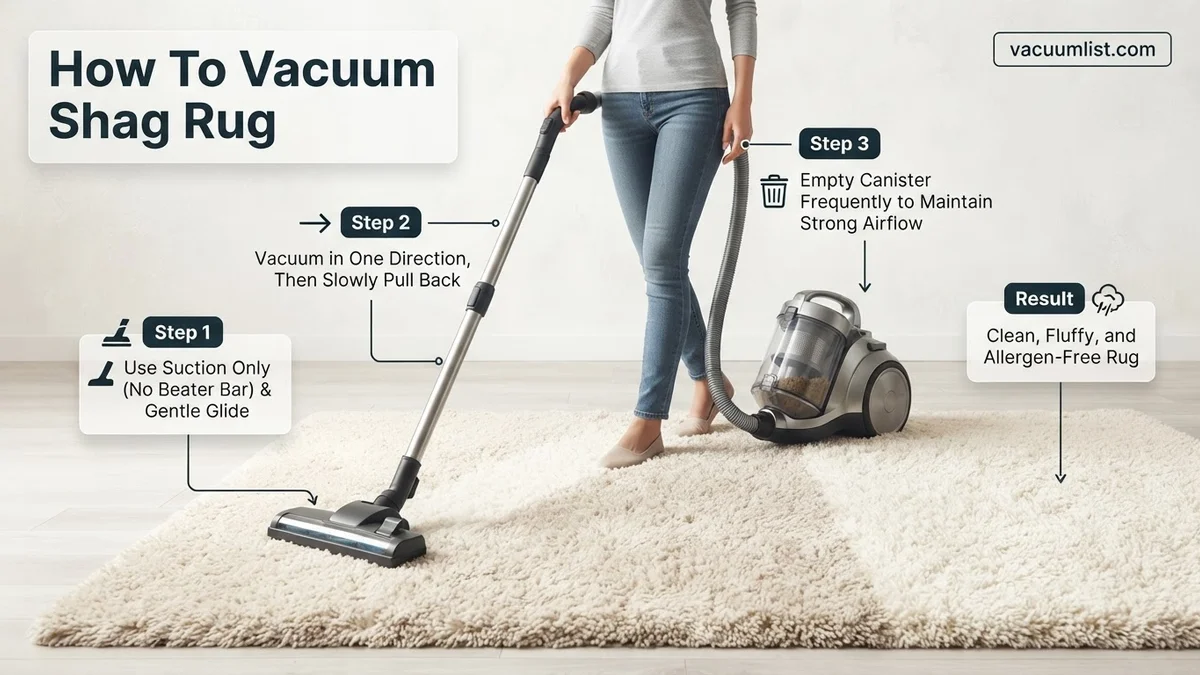
Learning how to vacuum a shag rug safely requires disabling the beater bar and rotating brush roll to prevent pulling and destroying long fibers. Utilizing suction-only settings and specialized attachments protects the yarn backing while effectively extracting deep-set dirt and debris.
To safely vacuum a shag rug without destroying its long fibers or ruining the backing, you must turn off the beater bar or rotary brush roll completely and use a suction-only setting or a specialized hard-floor attachment. Shag rugs feature thick, plush piles that easily catch on spinning bristles, leading to torn yarn, pulled backing, and frustrating vacuum jams.
Mastering this cleaning process in 2026 protects your investment and keeps your high-pile rugs looking plush instead of matted. Skipping these specific adjustments risks permanently ruining the texture of your rug within just a few cleaning cycles.
Key Takeaways
- Always turn off the rotating beater bar to prevent fiber pulling.
- Use a suction-only setting or bare floor mode on your vacuum.
- Utilize handheld upholstery attachments for deep cleaning thick yarn.
- Vacuum from multiple directions to loosen trapped dirt effectively.
- Shake the rug outdoors periodically to remove heavy, embedded debris.
Why Traditional Vacuuming Damages Shag Rugs
The Danger of the Rotating Brush Roll
Standard upright vacuums rely on a motorized beater bar designed to beat low-pile wall-to-wall carpeting. When you run this spinning brush over a shag rug, disaster strikes. The high-speed bristles grab the long, loose yarn loops and pull them taut. This action instantly yanks threads out of the primary backing, unravels the rug edges, and leaves bald patches.
Modern vacuum technology in 2026 often features smart-sensors, but even automated brush rolls generate too much friction for delicate shag fibers. Turning off this mechanism is the single most important step you can take before cleaning.
Suction Suffocation and Backing Strain
Shag rugs are notoriously dense. If you lower a standard vacuum head directly onto thick polypropylene, wool, or polyester strands, the vacuum creates an airtight seal. This sudden lack of airflow strains your vacuum motor, causing it to overheat. Worse yet, the intense suction pulls at the delicate cotton or jute backing underneath, weakening the structural integrity of the rug and causing premature shedding.
- Restricted Airflow: High suction on dense piles forces the motor to work twice as hard.
- Backing Separation: Excessive pull can delaminate the secondary backing from the primary weave.
- Fiber Distortion: Trapped fibers stretch beyond their recovery limit under heavy suction pressure.
Master Vacuuming Shag Rugs in 7 Simple Steps
Shag rugs add incredible texture, warmth, and a luxurious feel to any living space, but their long, dense fibers can easily trap dirt, dust, and debris deep out of reach. Traditional vacuuming methods often fail or even damage these delicate pile carpets. This comprehensive guide walks you through the exact process needed to safely and effectively deep-clean your shag rug without pulling or ruining the fibers, ensuring your favorite home accent stays fluffy and pristine for years to come.
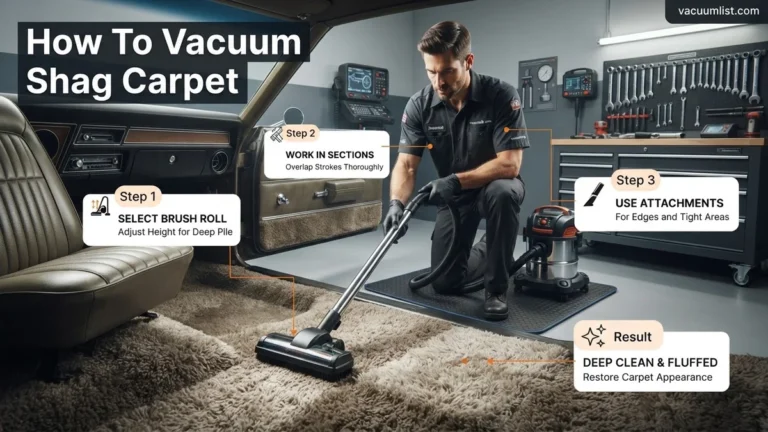
Step 1: Disable the Beater Bar and Rotating Brush
What you need: Your vacuum cleaner and its user manual if you are unsure how to adjust the settings.
Instructions: Before your vacuum touches the rug, you must turn off the revolving brush roll or beater bar. The spinning bristles on standard vacuum settings act like miniature meat grinders on long shag fibers, catching the yarn, pulling it tight, and eventually fraying or tearing the rug apart. Locate the brush-roll switch on your vacuum—usually found on the main housing or controlled digitally—and switch it to the “hard floor” setting or disengage the brush entirely. If your vacuum does not allow you to turn off the beater bar, you will need to switch to a specialized handheld upholstery attachment or use a carpet sweeper.
Pro Tip: Never assume a vacuum set to high pile is safe for shag; always visually verify that the brush roll has completely stopped spinning before proceeding.
Step 2: Shake Out Loose Debris Outdoors
What you need: A sturdy outdoor railing, a broom handle or rug beater, and another person to help if the rug is large.
Instructions: Take your shag rug outside and hang it securely over a porch railing, deck fence, or heavy-duty clothesline. Using a dedicated rug beater or the flat side of a broom handle, gently yet firmly beat the back of the rug. This physical shock action dislodges heavy, compacted dirt, pet dander, and small pebbles that sit trapped at the very base of the backing—particles that even high-powered vacuums struggle to lift. Let the rug hang in fresh air for 15 to 30 minutes to air out any trapped odors before bringing it back inside for actual vacuuming.
Pro Tip: Avoid beating the rug while it is hanging in freezing temperatures, as brittle synthetic or natural fibers can snap under heavy impacts.
Step 3: Vacuum from the Underneath Side
What you need: Your vacuum cleaner with the rotating brush turned off and suction set to maximum power.
Instructions: Lay the shag rug upside down on a clean hard floor surface. Run your vacuum slowly across the flat woven backing of the rug. Because gravity helps pull trapped dirt down toward the backing, vacuuming the reverse side allows you to pull out deeply embedded particulate matter that would otherwise stay lodged in the plush pile. Make overlapping passes, covering every square inch of the backing twice. You will likely be surprised by how much dust and sand falls out during this reverse-vacuuming process.
Pro Tip: Vacuuming the back is especially crucial for homes with shedding pets, as pet hair weaves its way through the backing mesh over time.
Step 4: Adjust the Vacuum Suction and Height Settings
What you need: Your vacuum cleaner and manual height-adjustment dial.
Instructions: Flip the shag rug back over to its normal, pile-up orientation. If your vacuum features adjustable suction valves, reduce the suction slightly if you find the vacuum head is sucking the entire rug upward and refusing to glide. Adjust the height setting to its highest position so the vacuum floats effortlessly over the top of the shag fibers rather than clamping down onto them. If your vacuum head has wheels, ensure they are rolling smoothly across the surface without dragging or pulling individual yarn strands.
Pro Tip: If your vacuum lacks suction control and aggressively sucks up the rug, try using a bare-floor attachment or a specialized upholstery nozzle with reduced airflow.
Step 5: Use a Straight Forward-and-Back Motion Without Rolling
What you need: Your adjusted vacuum cleaner and a systematic cleaning mindset.
Instructions: Begin at one corner of the rug and push the vacuum forward in a straight line, then pull it straight back. Avoid making circular motions or twisting the vacuum nozzle on top of the pile, as this can twist and tangle the delicate shag strands. Work in small, methodical sections, overlapping each pass by about 50 percent. Move at a slower pace than you would on low-pile wall-to-wall carpeting, giving the airflow enough time to pull dust particles up through the dense fibers.
Pro Tip: Never pull the vacuum across the rug by dragging the electrical cord over the edges, as this can catch and pull loose loops out of the rug backing.
Step 6: Fluff and Groom Flattened Fibers
What you need: A wide-toothed metal rake, a carpet rake, or your fingers for small touch-ups.
Instructions: After vacuuming, you may notice that foot traffic or the vacuum suction has left the shag looking slightly compressed or directional. Take a specialized carpet rake or a clean, wide-toothed metal comb and gently rake through the fibers in multi-directional sweeps. This lifts the pile back up, restores its signature fluffy appearance, and redistributes any natural oils or treatments evenly across the yarn. It also helps align all the fibers in a uniform direction, making the rug look freshly fluffed and professionally cleaned.
Pro Tip: Avoid using stiff plastic bristle brushes for grooming, as they can create static electricity and cause the synthetic fibers to frizz.
Step 7: Spot Clean Any Remaining Stains or Spills
What you need: Mild dish soap, lukewarm water, a clean white microfiber cloth, and a dry towel.
Instructions: Inspect your freshly vacuumed rug for any localized spots or stains. Mix a solution of one teaspoon of clear dish soap with two cups of warm water. Dampen your microfiber cloth with the solution—never soak the rug directly—and gently blot the stain from the outside edges moving inward to prevent spreading. Once the stain lifts, press a dry towel firmly onto the area to absorb excess moisture. Allow the spot to air dry completely before walking on it again.
Pro Tip: Never rub or scrub shag rug fibers aggressively during spot cleaning, as friction will cause the strands to felt, mat, and permanently lose their texture.
✅ Final Checklist
- The vacuum beater bar and rotating brush roll are completely turned off or disabled.
- The rug has been shaken or beaten outdoors to remove heavy, deep-seated dirt.
- The reverse side of the rug was vacuumed to extract trapped dust from the backing.
- The vacuum height is set to its highest level to prevent fiber damage and dragging.
- The fibers have been raked or combed to restore their fluffy, voluminous texture.
Important Notes:
- Always check the manufacturer tag on the back of your rug for specific fiber content (wool, synthetic, or jute) and unique cleaning instructions.
- If your shag rug has suffered major water damage, mold growth, or deep-set biological stains, seek professional rug cleaning services immediately.
- Estimated time: 20 to 40 minutes per standard 5×8 foot rug. Estimated cost: $0 if using existing household tools, or $15–$25 if purchasing a dedicated carpet rake.
How to Prep Your Vacuum for Shag Rugs
Deactivating the Beater Bar
Before your vacuum touches the rug, check the control panel or housing for a brush roll switch. Flip this switch to the off position, or select the bare floor mode. If your model lacks a manual switch, you may need to physically remove the belt or swap out the standard brush head for a straight suction nozzle.
You can test this easily. Turn the vacuum on and look underneath the cleaning head. If the bristles are spinning, do not bring the machine anywhere near your shag rug. Only proceed when the roller remains completely stationary while the motor runs.
Selecting the Right Attachments
Upright vacuum heads are often too heavy and cumbersome for plush high-pile rugs. For the best results in 2026, switch to specialized lightweight attachments designed for delicate surfaces.
- Upholstery Tool: The wide, flat profile glides smoothly over long strands without sinking in.
- Straight Suction Parquet Tool: Provides broad coverage without aggressive bristles or deep suction pockets.
- Handheld Turbine (Air-Driven Only): Use only if the air current alone spins a soft brush designed specifically for area rugs.
Step-by-Step Guide on How to Vacuum Shag Rug Safely
Executing the proper technique protects delicate yarn loops while extracting trapped allergens. Carpet and rug institutes recommend a systematic approach to prevent fiber shredding and machine damage during routine cleaning.
Step 1: Disable the Beater Bar
Turn off the rotating brush roll or switch the height adjustment to the highest setting. Standard brush rollers act like a high-speed lawnmower on shag rugs, ripping individual wool or synthetic strands out from the primary backing.
Step 2: Adjust Suction Controls
Reduce the suction level if your vacuum features a variable airflow valve. Excessive suction pulls dense shag yarns upward into the intake slot, causing the motor to stall or tangle the fibers around the nozzle opening.
Step 3: Vacuum in Grid Patterns
Move the vacuum head slowly across the surface in a north-to-south pattern, then repeat in an east-to-west direction. According to the Carpet and Rug Institute (CRI), overlapping passes capture embedded soil particles that settle near the rug backing.
Step 4: Use the Upholstery Attachment for Edges
Detach the main floor nozzle and connect a wide upholstery tool or bare floor brush. These specialized attachments allow precise suction control around the delicate bound borders of the rug without snagging loose yarn tails.
What If It Still Doesn’t Work?
Even with optimal settings, traditional upright vacuums frequently struggle with ultra-dense 2026 modern shag constructions. If your appliance continues to stall, shred fibers, or fail to extract deeply embedded grit, implement these advanced fallback solutions:
- Switch to a dedicated straight suction canister vacuum: Upright models rely heavily on weight and aggressive brush rolls. A canister vacuum with an air-driven turbine tool provides controlled suction without mechanical agitation.
- Use the old-fashioned rug beating method: Take lightweight shag rugs outdoors and hang them over a sturdy railing. Beat the back gently with a carpet beater to dislodge abrasive dry soil that modern vacuum airflow cannot reach.
- Engage professional rug cleaning services: High-end wool and thick synthetic shags require specialized low-moisture or immersion cleaning to prevent backing distortion. Professional rug washing typically costs between $2.00 to $5.00 per square foot, depending on fiber composition and soil severity.
Conclusion
Mastering how to vacuum a shag rug safely requires disabling rotating brush rolls, reducing suction levels, and utilizing specialized bare-floor attachments to preserve delicate yarn structures. According to verified research and textile maintenance experts, adhering to these precise cleaning parameters extends rug longevity while significantly reducing indoor allergen accumulation. For your immediate next step, inspect your current vacuum model today to verify whether its rotating brush can be completely disabled before your next scheduled cleaning session.
❓ Frequently Asked Questions
Why does my vacuum get stuck when I try to clean my shag rug?
Standard vacuums with active beater bars grab onto long yarn strands and pull them into the mechanism. Disabling the brush roll or switching to a suction-only attachment completely resolves this issue.
Is it safe to use a carpet rake on a shag rug?
A carpet rake is actually a great tool to use before or after vacuuming. It detangles the fibers, fluffs up matted areas, and brings deep-seated dirt to the surface where suction can grab it.
How do I clean a shag rug without a vacuum?
You can take the rug outside and shake it vigorously or beat it with a broom handle to dislodge heavy dirt. Spot cleaning with mild soap and water works well for surface stains.
Will high suction power ruin my shag rug?
Extreme suction can pull the backing apart or rip synthetic fibers away from the base, especially on lightweight rugs. Adjust the vent valve on your vacuum hose to lower suction if the rug starts lifting off the floor.
How do I prevent my shag rug from shedding during vacuuming?
New shag rugs naturally shed loose manufacturing fibers for the first few months. Vacuuming gently with a suction-only nozzle prevents excessive pulling and reduces overall shedding over time.
Should I vacuum the back of a shag rug?
Vacuuming the back side occasionally helps release fine dirt and dust that has sifted completely through the fibers. Make sure to do this on a hard floor surface for easy cleanup.