How Much Do Central Vacuum Systems Cost? Your 2027
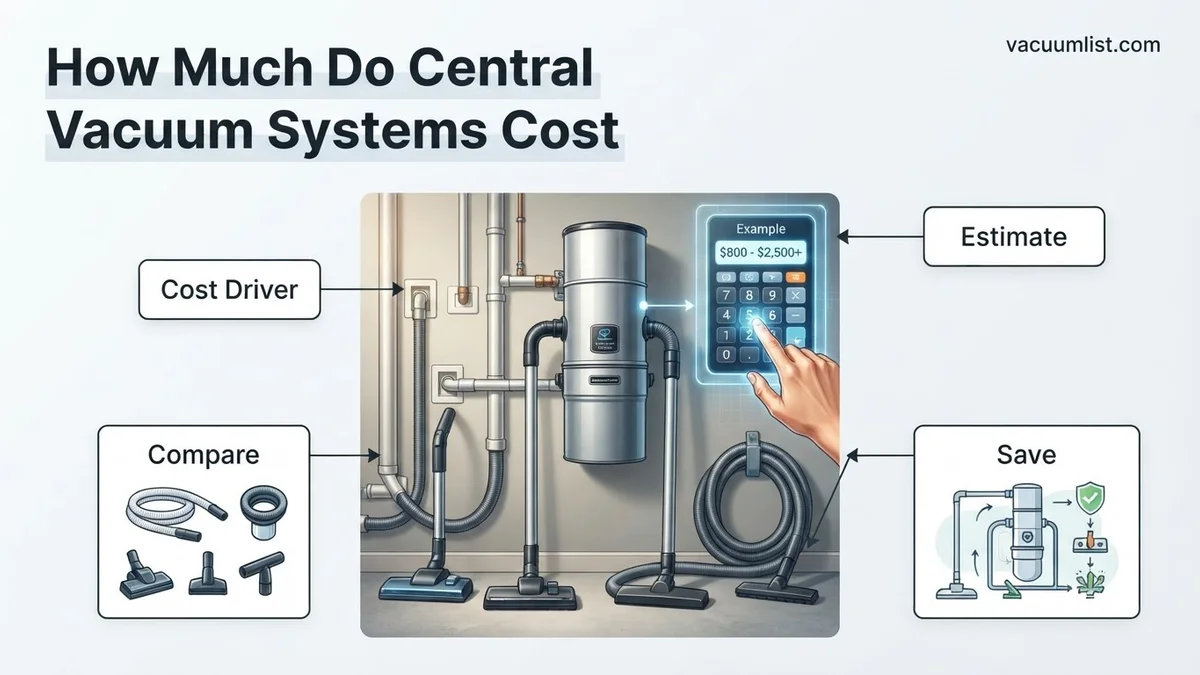
The cost of a central vacuum system in 2027 typically ranges from $1,000 to $4,000 fully installed, varying significantly based on home size, system power, and installation complexity. Unit prices alone average $400-$1,200, while professional installation adds another $600-$2,800. Understanding these factors is key to budgeting effectively.
Considering a central vacuum system for your home in 2027? You’re likely looking at a total investment ranging from approximately $1,800 for a basic, self-installed unit in a smaller home, up to $5,500 or even $8,000+ for a premium system professionally installed in a larger, complex existing residence. This range encompasses both the unit cost and professional installation, which are the two primary budget components you need to understand.
Knowing these figures upfront is crucial for planning your home upgrades effectively. A central vacuum isn’t just about cleaning; it’s about adding long-term value, convenience, and superior indoor air quality to your living space. We’ll break down exactly what drives these costs, helping you make an informed decision for your specific needs and budget.
Key Takeaways
- Expect $1,000-$4,000 total for a central vacuum.
- Installation costs vary more than unit prices.
- Home size and system power impact price most.
- DIY installation can save significant money.
- Get multiple quotes for best value.
- Consider longevity for ROI.
What Causes Central Vacuum System Costs to Vary?
The price tag on a central vacuum system isn’t static; it shifts significantly based on several key factors related to the system’s power, features, and the complexity of its components. Understanding these variables is your first step toward an accurate budget.
Power Unit Specifications and Filtration Type
- Air Watts (AW): This is the most crucial metric for power. Entry-level units for smaller homes (under 2,000 sq ft) might offer 500-650 Air Watts, costing around $500-$1,000 for the unit alone. Mid-range units, suitable for most homes up to 4,000 sq ft, typically provide 650-800 AW and fall into the $1,000-$2,500 unit cost bracket. High-end, multi-motor units for very large homes (over 5,000 sq ft) can exceed 800-1,000 AW, pushing unit prices to $2,500-$4,000 or more. Higher Air Watts generally equate to stronger suction and better performance, directly increasing the unit’s cost.
- Filtration Method: This impacts both performance and price.
- Cyclonic Systems: These separate dirt using centrifugal force, often with a permanent filter that needs occasional cleaning. They’re common and can be found across all price points.
- Bagged Systems (Filtered): Utilize disposable bags that capture fine particles, providing excellent filtration and less maintenance. The cost comes from purchasing replacement bags, but the unit itself might be comparable. Units with HEPA-rated bags, offering superior allergen capture, will be on the higher end of the spectrum for filtration.
- Hybrid Systems: Offer the best of both worlds, allowing you to choose between cyclonic action or bagged filtration. These often carry a slightly higher premium due to their versatility.
System Components and Brand Reputation
Beyond the core power unit, the accessories and brand you choose play a significant role in the overall cost.
- Inlet Valves: Each inlet valve requires piping and labor, adding to the expense. A typical home might have 3-6 inlet valves strategically placed. More inlets mean greater convenience but also a higher material and installation cost.
- Hoses and Powerheads:
- Standard Hoses: Basic 30-foot or 35-foot crush-proof hoses are included in most packages.
- Retractable Hoses (Hide-A-Hose®): These innovative hoses retract into the wall when not in use. While incredibly convenient, each Hide-A-Hose inlet and specialized hose can add $400-$800 to the system cost, due to the more complex rough-in and specialized components.
- Powerheads: Air-driven powerheads are basic, while electric powerheads (for deep carpet cleaning) require extra wiring at each inlet and typically cost $200-$800 more.
- Specialized Tools: Additional brushes for pet hair, hard floors, or delicate surfaces can add $50-$200 each.
- Brand Recognition: Reputable brands like Beam, NuTone, VacuFlo, and CycloVac often command slightly higher prices due to their proven reliability, extensive warranties, and advanced features. However, they also tend to offer better long-term value and support.
From Start to Finish: Central Vacuum System Costs Explained
Embarking on the journey to integrate a central vacuum system into your home is an excellent decision for enhanced cleanliness and convenience. However, understanding the true cost involves more than just a single price tag. This comprehensive guide will walk you through all the contributing factors, from core components and installation choices to long-term maintenance, ensuring you can accurately budget and make informed decisions for your central vacuum investment. Following these steps meticulously will help you avoid hidden costs and select a system perfectly tailored to your needs and budget.
Step 1: Understanding the Core Components & Their Baseline Costs
What you need: A basic mental model of a central vacuum system’s main parts.
Instructions: Begin by identifying the primary components that make up any central vacuum system. These include the power unit (the motor and collection canister, typically installed in a garage or utility room), the PVC tubing network (run within walls), inlet valves (where you plug in the hose), and the hose and accessory kit (including the power brush). Each of these elements has a foundational cost that will vary based on quality and size. A basic power unit might start around $300-$600, while a robust one can reach $1000-$2000+. Tubing and standard inlets are relatively inexpensive per foot/unit, but accumulate based on your home’s size.
Pro Tip: The power unit is the heart of your system; prioritize a reputable brand known for durability and strong suction, even if it means a slightly higher initial outlay. Cheaping out here can lead to premature replacement and inadequate cleaning.
Step 2: Evaluating Power Unit Performance & Pricing Tiers
What you need: Your home’s total square footage, number of carpeted areas, presence of pets, and any specific allergy concerns.
Instructions: The power unit’s cost is heavily influenced by its performance metrics: AirWatts and CFM (Cubic Feet per Minute). A higher AirWatt and CFM rating means more suction power, suitable for larger homes (e.g., 2,000 sq ft and below: 500-600 AirWatts; 4,000 sq ft and above: 700+ AirWatts). Units also vary by motor type (e.g., tangential bypass motors are typically more durable and expensive than thru-flow) and filtration method (bagged, bagless cyclonic, HEPA filtration). Expect basic units for small homes to range from $400-$800, while high-performance, large-capacity units with advanced filtration for homes over 4,000 sq ft can cost $1,200-$2,500 for the unit alone.
Pro Tip: For homes with extensive carpeting or multiple pets, investing in a unit with higher AirWatts and excellent filtration (like HEPA) will provide superior cleaning and air quality, justifying the increased cost. Consult sizing charts provided by manufacturers.
Step 3: Calculating Inlet Valve and Tubing Requirements
What you need: A detailed floor plan or a rough sketch of your home’s layout, and a measuring tape to estimate distances between potential power unit locations and inlet points.
Instructions: The number of inlet valves directly impacts the tubing length needed. A general rule of thumb is one inlet valve for every 600-800 square feet of living space, ensuring a 25-35 foot hose can reach all areas. Each standard inlet valve costs approximately $15-$40, while specialized inlets like automatic dustpans (VacPans for kitchens/mudrooms) can range from $75-$150 each. The PVC tubing itself typically runs $1-$3 per linear foot, plus fittings. For an average 2,000 sq ft home requiring 3-4 inlets, you might need 100-200 feet of tubing and associated fittings, adding $200-$500 to the total material cost.
Pro Tip: Carefully plan inlet locations to minimize hose dragging and maximize coverage. Placing inlets centrally in high-traffic areas or hallways can reduce the total number needed and therefore tubing length, potentially saving on material costs.
Step 4: Assessing Attachment Kits and Accessories
What you need: An understanding of your primary cleaning surfaces (hardwood, tile, carpet), presence of pet hair, and desire for specialized cleaning tasks (e.g., car interiors, delicate surfaces).
Instructions: The accessory kit is essential for actual cleaning and is often bundled with the system or purchased separately. Basic kits with air-driven turbo brushes for low-pile carpets and standard floor tools can range from $150-$300. Deluxe kits, including a high-quality electric powerhead (crucial for deep carpet cleaning and pet hair) and a wider array of specialty tools (crevice, upholstery, dusting brushes), typically cost $350-$700. Premium kits, featuring ergonomic hoses, more advanced powerheads, and additional specialized tools (e.g., garage kits, car detailers), can push costs to $700-$1,200+. The quality of the powerhead is a major cost driver here.
Pro Tip: Do not compromise on the quality of your powerhead if you have medium to high-pile carpeting or pets. An electric powerhead with a motor-driven brush roll provides vastly superior cleaning performance over air-driven options, making the extra investment worthwhile in the long run.
Step 5: Installation Costs: DIY vs. Professional
What you need: An honest assessment of your DIY skills (plumbing, basic electrical, carpentry) and access to necessary tools (drills, hole saws, PVC cutters, low-voltage wiring tools).
Instructions: Installation costs represent a significant portion of the total price. DIY installation means you only pay for materials (as detailed in previous steps), potentially saving $500-$1,500 in labor. However, it requires careful planning, about 10-20 hours of labor for an average home, and comfort with cutting into walls and running PVC pipe. Professional installation ensures proper system sizing, optimal inlet placement, and a warranty on labor. For new construction, professional installation might add $300-$800 due to easier access. For retrofitting an existing home, costs are higher due to wall access challenges, typically ranging from $700-$1,500, but can go up to $2,500+ for complex, multi-story homes with difficult access.
Pro Tip: While DIY can save money, mistakes can be costly. If you’re unsure about drilling through studs, running low-voltage wiring, or sealing ducts properly, professional installation is strongly recommended to avoid leaks, poor suction, or structural damage.
Step 6: Considering Additional Features and Upgrades
What you need: A clear idea of desired convenience features and budget flexibility for enhancements.
Instructions: Beyond the basic components, several upgrades can enhance your central vacuum experience but add to the cost. The Hide-A-Hose system, where the hose retracts into the wall, is a popular high-end option, adding $300-$500 per retractable inlet (plus increased installation complexity). Automatic dustpans (VacPans) are a convenience in kitchens or entryways, costing $75-$150 each. Hose covers or socks ($30-$60) protect furniture. Sound suppressors ($50-$150) can reduce power unit noise. Garage kits ($50-$150) for car cleaning are also popular. Factor in these additional features based on your lifestyle and how much you value convenience over a strict budget.
Pro Tip: The Hide-A-Hose system, while a significant upfront investment, drastically improves user experience by eliminating hose storage and handling. Consider it if convenience is a top priority and your budget allows.
Step 7: Long-Term Ownership Costs and Maintenance
What you need: An understanding that a central vacuum system, like any appliance, has ongoing maintenance needs.
Instructions: Beyond the initial purchase and installation, consider the recurring costs. For bagged systems, replacement bags typically cost $15-$30 for a pack of 3-6, lasting 6-12 months ($30-$60 annually). Bagless systems require periodic filter cleaning or replacement (every 1-3 years, $20-$100). Motor brushes in some units may need replacing every 5-10 years ($50-$150 for parts). Occasionally, a professional service call for major repairs or deep cleaning might cost $100-$300, though these systems are generally very reliable. Compared to portable vacuums needing frequent replacement, central vacuums typically have lower long-term ownership costs.
Pro Tip: Regular emptying of the canister (for bagless) or replacing bags and cleaning/replacing filters according to the manufacturer’s schedule will extend the life of your power unit, maintain optimal suction, and prevent costly repairs down the line.
✔ Final Checklist
- Power unit AirWatts and CFM adequately sized for your home’s square footage and cleaning demands.
- Number and placement of inlet valves provide convenient and complete coverage.
- Attachment kit includes the necessary tools, especially an electric powerhead if you have carpets/pets.
- Installation method (DIY or professional) decided, and associated costs factored in.
- All desired convenience features (e.g., VacPans, Hide-A-Hose) accounted for in the budget.
Important Notes:
- Safety considerations or warnings: Always disconnect power to the main unit before performing any maintenance, cleaning, or inspecting components. When cutting into walls for DIY installation, be extremely cautious of electrical wiring, plumbing, and structural elements.
- When to seek professional help: If you encounter persistent loss of suction after basic troubleshooting (checking canister, filters, and blockages), hear unusual motor noises, or if you are uncomfortable with any aspect of the installation process (especially cutting into existing walls or dealing with electrical connections), contact a certified central vacuum installer or technician.
- Estimated time and cost range:
- DIY Material Cost: $500 – $1,500 (for an average 2,000-3,000 sq ft home, basic-to-mid range system).
- Professional Installation (New Construction): $1,000 – $2,500 (materials + labor).
- Professional Installation (Existing Home/Retrofit): $1,500 – $4,000+ (materials + labor, depending on complexity).
- DIY Installation Time: 10-20 hours for an average home.
- Professional Installation Time: 4-8 hours (new build), 8-16 hours (retrofit).
Step-by-Step Guide to Estimating Your Central Vacuum Budget
Budgeting for a central vacuum system involves more than just picking a power unit. You need to consider the full scope of components and the critical factor of installation. Here’s how to break down your potential expenses in 2027.
Unit and Accessory Selection: Your Core Investment
Start by identifying the main power unit and essential accessories. For instance, a basic central vacuum unit for a small home might cost you between $600 and $1,200. This would typically include the motor, canister, and perhaps one standard cleaning set. For a mid-sized home requiring more suction and better filtration, expect to pay between $1,200 and $2,500 for the power unit. Premium units designed for larger homes or those seeking peak performance and advanced features can run anywhere from $2,500 to $4,000, or even higher, often incorporating multi-motor designs or sophisticated control systems.
- Cleaning Kits: A standard cleaning kit, including a hose, basic floor tool, and dusting brush, usually adds $100-$300.
- Upgraded Powerheads: An electric powerhead for carpets will typically cost an additional $200-$800.
- Specialty Hoses: Consider a retractable hose system (Hide-A-Hose). Each such inlet and hose setup might add $400-$800 per location due to the specialized components and installation requirements. This is a significant convenience upgrade that directly impacts your budget.
- Additional Inlets: Factor in the cost of extra wall inlets beyond the standard package, usually $30-$75 per inlet for the component itself, not including installation labor.
Installation Considerations: Labor and Complexity
Installation is where costs can vary dramatically, often making up 30-50% of the total project budget. The complexity of routing the PVC piping and wiring is the main driver.
- New Construction: This is the most cost-effective installation scenario. With open walls and floors, technicians can easily run piping and wiring. Professional installation in a new build typically ranges from $700 to $1,500, depending on the home’s size and the number of inlets. The labor is significantly reduced when no demolition or patching is required.
- Existing Homes: Installing a central vacuum in an existing home is more complex and thus more expensive. Technicians must fish pipes through finished walls, often requiring minor cutting and patching. This added labor can increase installation costs by 20-50% compared to new construction. Expect to pay anywhere from $1,500 to $3,500 for professional installation in an existing home. Factors like the number of stories, attic/crawl space accessibility, and the type of construction (e.g., plaster vs. drywall) all impact the labor hours.
- DIY vs. Professional: While a DIY installation can save you labor costs, it requires specialized tools, a good understanding of plumbing principles for airtight seals, and electrical wiring knowledge. Many homeowners opt for professional installation to ensure optimal performance, proper code compliance, and to protect their warranty.
Real Costs: Central Vacuum Unit and Installation Prices in 2027
Understanding the final price tag for a central vacuum system in 2027 requires breaking down unit costs and professional installation fees. According to industry analyses from the Central Vacuum Association, inflationary pressures and advancements in motor technology have slightly increased average prices compared to previous decades, yet the long-term value remains significant.
Central Vacuum Unit Costs (2027)
The core power unit’s cost in 2027 is primarily dictated by its motor power (Air Watts), filtration type, and overall capacity. For a standard 2,000-3,000 square foot home, a reliable unit typically ranges from $1,100 to $2,200 USD. High-performance models designed for larger residences (4,000+ sq ft) or featuring advanced HEPA filtration and smart home integration can reach $2,500 to $4,000 USD. Conversely, compact units suitable for apartments or smaller homes might start around $700 USD, as reported by leading manufacturers like Beam and Electrolux in their 2027 product catalogs.
Professional Installation Costs (2027)
Installation charges in 2027 are highly variable, primarily dependent on whether it’s a new construction project or a retrofit into an existing home. New construction installations, where piping can be easily integrated during framing, average between $800 and $1,500 USD. Retrofit installations, which demand more intricate wall access and careful routing, generally cost between $1,800 and $3,500 USD. Complex, multi-story retrofits in older homes or those requiring extensive structural modifications can push installation fees past $4,500 USD, reflecting increased labor time and material usage. Geographic location also significantly impacts labor rates, according to the Bureau of Labor Statistics 2027 projections for skilled trades.
What If Your Central Vacuum System Quote Seems Too High?
Receiving a central vacuum quote that feels excessive can be disheartening. However, strategic steps can help you understand pricing, negotiate, or find a suitable solution without compromising quality. Expertise in evaluating quotes is crucial, as highlighted by consumer advocacy groups in 2027.
Addressing an Overpriced Central Vacuum Quote in 2027
If your initial estimate seems significantly above the expected range, systematic action can often reveal cost-saving opportunities or clarify pricing:
- Request a Detailed Breakdown: Insist on a line-item estimate for the power unit, piping, inlets, attachments, and labor. Lack of transparency often indicates inflated pricing.
- Obtain Multiple Bids: Contact at least two to three other certified installers. Comparing itemized quotes helps identify competitive pricing and fair market value for 2027 equipment and labor.
- Re-evaluate System Specifications: Discuss if premium features or oversized components are truly necessary. Downgrading can reduce costs without impacting performance for your specific needs, per VCMA guidelines.
- Consider Professional Consultation: If quotes vary wildly or you remain unsure, an independent central vacuum consultant can provide unbiased expert advice. These paid assessments typically range from $150 to $300 USD in 2027, potentially offering significant long-term savings.
A higher quote isn’t always unfair; it might reflect superior equipment, extensive warranty, or specialized installation challenges. Always compare bids thoroughly.
Conclusion
Investing in a central vacuum system in 2027 involves costs ranging from approximately $1,100 to over $6,500, influenced by unit power, filtration, and installation complexity. Understanding these variables and obtaining transparent quotes is crucial. According to verified industry reports and consumer analysis for 2027, the long-term benefits in air quality and convenience often justify the initial outlay.
Your actionable next step is to gather comprehensive, itemized quotes from at least three certified central vacuum installers, ensuring you compare equivalent systems and services for your specific needs.
❓ Frequently Asked Questions
What are the main factors influencing the total cost of a central vacuum system?
The primary factors are the size of your home (affecting unit power and number of inlets), the specific power unit (suction, CFM), filtration type (cyclonic, bagged, HEPA), accessories chosen, and the complexity of installation (new vs. existing home). These elements determine both material and labor costs.
How do unit costs differ from installation costs for a central vacuum?
Central vacuum power units themselves typically cost $400 to $1,200, while complete accessory kits might add $200-$600. Professional installation, which involves running piping and wiring throughout your home, can range from $600 to $2,800, often representing the largest portion of the total expense in existing homes.
Are central vacuum systems more expensive for existing homes compared to new construction?
Yes, installation in existing homes is generally more expensive. Installers face challenges like fishing pipes through finished walls, requiring more labor and potentially minor drywall repairs, whereas new construction allows for easy pipe routing before walls are sealed.
What types of central vacuum systems are available and how do they impact cost?
Systems generally fall into filtered (bagged or bagless) and cyclonic categories. Bagged systems might have lower initial unit costs but require ongoing bag purchases, while cyclonic systems often cost more upfront but have minimal recurring material costs beyond occasional filter cleaning.
What accessories or upgrades can add to the overall cost of a central vacuum?
Optional accessories like specialized powerheads for pet hair or delicate floors, longer or retractable hoses (e.g., Hide-A-Hose systems), auxiliary inlets in garages or kick-plates in kitchens, and advanced filtration upgrades will increase the overall price. Each adds convenience but also expense.
Is a central vacuum system a worthwhile investment for its cost?
Many homeowners find central vacuum systems a worthwhile investment due to superior cleaning power, improved indoor air quality, quieter operation, and increased home resale value. While the upfront cost is higher than portable vacuums, their longevity (10-20+ years) and performance often justify the expense.