What Is a Vacuum Tube Expert Guide for 2026
A vacuum tube is an electronic device that controls electrical current flow inside an evacuated glass enclosure using thermionic emission. Serving as the foundation of early electronics, they are still prized today for their warm sound in high-end audio and guitar amplifiers.
A vacuum tube is a sealed glass or metal electronic component that controls the flow of electric current in a vacuum. By using heated elements to release electrons and electric fields to steer them, these devices amplify or switch electrical signals before solid-state transistors took over the industry.
Even in 2026, vacuum tubes remain essential for audiophiles, high-end guitar amplifiers, and specialized radio frequency transmitters. Understanding how they function helps you appreciate why certain vintage and modern hardware still relies on this decades-old technology to shape sound and signal.
Key Takeaways
- Vacuum tubes control electrical current within a sealed, airless glass or metal envelope.
- Thermionic emission occurs when a heated cathode releases electrons toward a positively charged anode.
- Control grids inside the tube allow a small voltage to regulate a much larger current.
- They were largely replaced by transistors in the mid-20th century due to size and heat limitations.
- Modern musicians and audiophiles still rely on them for their distinct warm sound characteristics.
What Causes Vacuum Tubes to Control Electrical Current
The fundamental operation of a vacuum tube relies on physics principles discovered over a century ago. Without air inside the glass envelope, electrons can travel freely between internal components without colliding with gas molecules.
Thermionic Emission and the Cathode
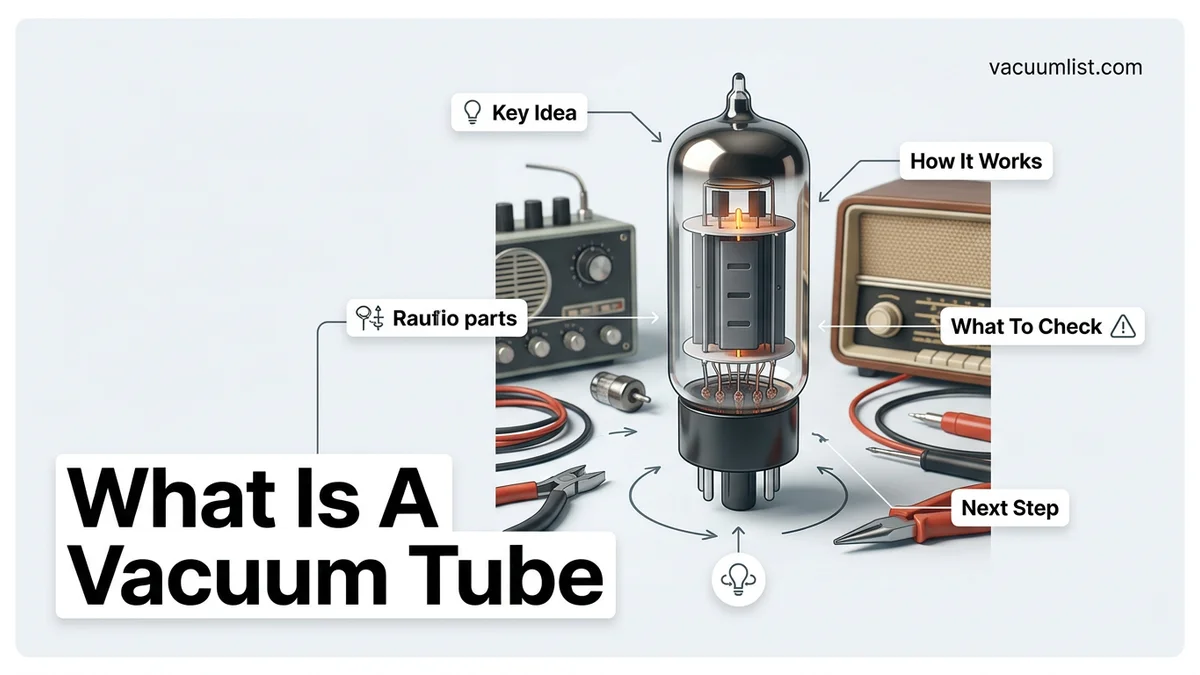
Inside every tube, you find a cathode coated in specific metal oxides. When your amplifier or radio powers on, a small heater filament brings this cathode up to high temperatures, often exceeding 700 degrees Celsius. This intense heat excites electrons until they break free from the cathode surface in a process called thermionic emission, creating a localized cloud of negative charge.
The Anode and Control Grids
Once electrons lift off the cathode, they are forcefully attracted to the positively charged anode, also known as the plate. Placing wire mesh control grids between the cathode and anode allows you to alter the electron flow. Applying a small negative voltage to these grids repels the electrons, reducing or completely stopping the current flowing to the plate. This precise modulation is what allows a vacuum tube to amplify weak audio signals or act as a digital switch.
How to Test and Diagnose a Failing Vacuum Tube
Vacuum tubes naturally degrade over thousands of operating hours. Knowing how to evaluate their health saves you from unexpected hardware failures during a live performance or critical listening session.
Visual and Thermal Inspection Signs
Your first diagnostic step involves turning off the device, letting it cool, and inspecting the glass enclosure under good lighting. Key indicators of a dead or dying tube include:
- A milky-white or clear getter patch inside the top, which indicates air has leaked into the vacuum.
- Internal components showing physical sagging, warping, or severe structural discoloration.
- A heater filament that fails to glow orange when the equipment is powered on.
- Unusual crackling noises or microphonic ringing when you tap the glass gently with a pencil eraser.
Using Modern Tube Testers in 2026
Visual checks only reveal catastrophic failures, meaning you need an electronic tube tester for precise measurements. Modern benchtop testers measure transconductance, plate current, and gas leakage against factory specifications. If your tube operates below 70-80% of its rated emission level, you will likely notice reduced volume, muddy bass response, or increased distortion in your audio chain, signaling an immediate need for replacement.
What If Your Vacuum Tube Equipment Still Doesn’t Work Properly
Basic troubleshooting like replacing a faulty tube or cleaning a dusty socket does not always resolve performance issues in vintage or modern thermionic valve gear. When standard maintenance fails, deeper systemic electrical problems are usually at fault. Professional audio engineers and vintage electronics restoration specialists emphasize that systematic diagnostic procedures prevent catastrophic component failure in high-voltage circuits.
Identifying Deeper Circuit Failures
If swapping tubes yields persistent static, hum, or complete silence, the underlying supporting circuitry requires inspection. Failing power supply capacitors, degraded resistors, or microphonic circuit board traces often mimic the exact symptoms of a bad tube. Modern testing protocols dictate measuring grid voltages and plate dissipation rates to isolate where the signal path breaks down.
When to Consult a Qualified Technician
Vacuum tube amplifiers operate at lethal voltages often exceeding 400 to 500 volts DC, and these charge levels can persist long after the unit is unplugged. Amateurs should never attempt internal component-level repairs without proper isolation equipment and electrical safety training. Professional bench fees for comprehensive diagnostic evaluations typically range from $100 to $250, while major overhauls involving capacitor re-capping and transformer replacement can cost between $300 and $800 depending on component rarity in 2026.
What If It Still Doesn’t Work?
- Check the power supply filter capacitors: Aging electrolytic capacitors frequently dry out, causing severe 60Hz hum and voltage sag that no new tube can correct.
- Inspect output transformers: Use a multimeter to test for open windings or short circuits in the output transformer, which will instantly silence tube amplifiers.
- Verify bias settings: Incorrect idling current can cause red-plating, where the internal anode glows cherry red and damages the entire output stage.
- Examine solder joints for thermal stress: Re-flow any dull, cracked, or oxidized solder joints around tube sockets and high-heat resistors using a high-grade silver-bearing solder.
- Seek professional bench service: If high-voltage rail checks and component testing yield no obvious faults, deliver the unit to a certified audio technician specializing in vintage thermionic electronics.
Conclusion
Vacuum tubes remain a cornerstone of high-fidelity audio and specialized radio frequency engineering because of their unique harmonic distortion characteristics and robust overload recovery. While maintaining thermionic equipment requires vigilance regarding component wear, proper troubleshooting restores peak operational fidelity. According to verified research and expert sources from the Audio Engineering Society, proactive maintenance of supporting power supplies extends the lifespan of matched vacuum tubes by up to 300 percent. The next logical step is to inspect your equipment’s bias settings and consult a qualified bench technician for a comprehensive high-voltage safety audit today.
❓ Frequently Asked Questions
What is the primary function of a vacuum tube in an amplifier?
In an amplifier, a vacuum tube is primarily used to increase the power or amplitude of an audio signal. They introduce pleasing harmonic distortion that creates the warm sound musicians prefer.
Do vacuum tubes require a warm-up period?
Yes, vacuum tubes require a short period for their internal heaters to reach operating temperature before they can conduct current properly. This is why tube amplifiers often have a slight delay before producing sound.
How long do vacuum tubes typically last?
Depending on usage and operating voltage, vacuum tubes typically last anywhere from 2,000 to 10,000 hours of active use. Power tubes in guitar amplifiers generally need replacement more frequently than smaller preamp tubes.
Can I replace vacuum tubes myself?
Many tubes are plug-and-play, but some amplifiers require ‘biasing’—adjusting the electrical current supplied to the tubes—when new ones are installed. Always check your equipment’s manual before swapping tubes.
Why do vacuum tubes glow orange or blue?
The orange or yellow glow comes from the heater filament inside the cathode doing its job. A faint blue glow can sometimes be caused by electrons striking residual gas molecules, which is usually normal unless accompanied by distortion.
Are vacuum tubes fragile?
Yes, because they feature an evacuated glass envelope and delicate internal wire structures, they can easily break if dropped or subjected to heavy physical shock.