Is 1 75 Hp Vacuum Bad Is 1.75 HP Vacuum Bad? Real 2026
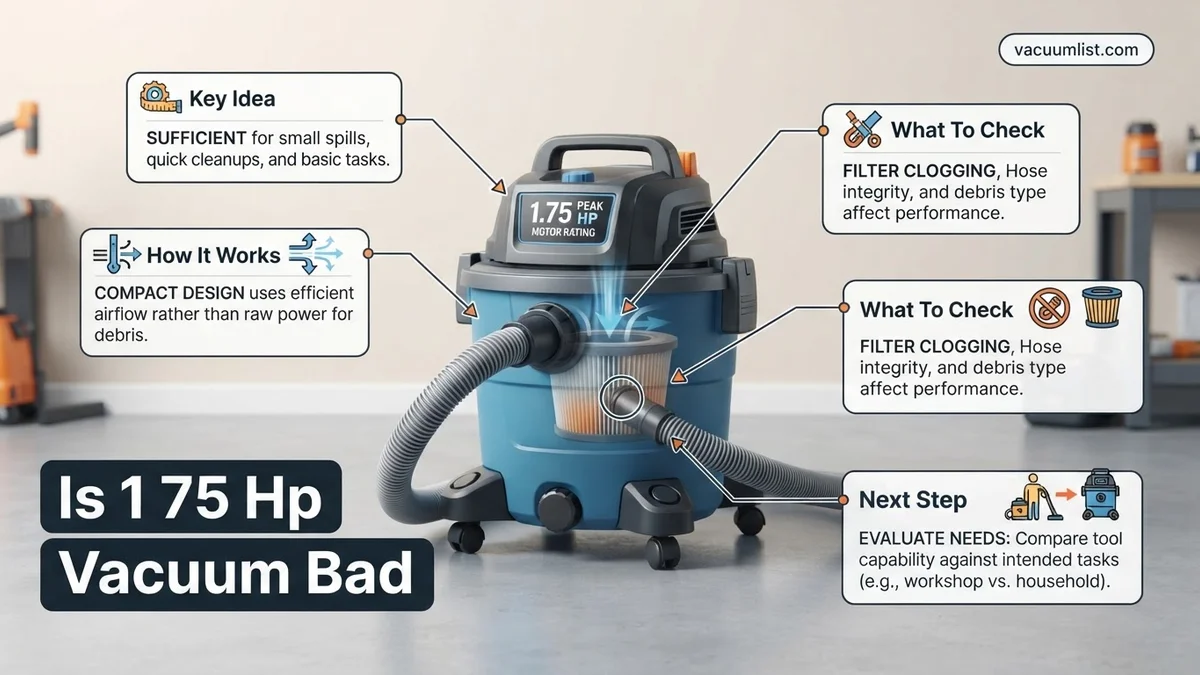
A 1.75 horsepower vacuum is not inherently bad, but it is entirely dependent on your intended cleaning tasks. While it serves well for light-duty workshop cleanup and portability, it is heavily underpowered for whole-house or heavy industrial debris.
A 1.75 horsepower vacuum is not inherently bad, but it is definitely limited. If you are buying a compact wet/dry vac for your garage or workbench in 2026, 1.75 HP is actually the standard entry-level size designed for quick, light cleanups. However, if you expect it to pull deep-seated dirt out of heavy carpets or clear massive piles of construction debris, you will find it severely underpowered.
Understanding these limitations before you buy or judge your current machine saves you from frustration. Horsepower ratings on vacuums are notoriously misleading, meaning a 1.75 HP motor might perform completely differently depending on the engineering behind the hose, filter, and overall airflow design.
Key Takeaways
- A 1.75 HP rating is standard for compact, portable utility and shop vacuums.
- Horsepower ratings are often inflated marketing metrics rather than indicators of suction.
- CFM (Cubic Feet per Minute) and water lift matter much more than HP.
- This motor size struggles with heavy drywall dust, dense gravel, and long hoses.
- Match the vacuum power to specific tasks rather than relying on horsepower numbers.
What Causes a 1.75 HP Vacuum to Feel Weak or Underpowered
When a 1.75 HP motor struggles to pick up everyday messes, the issue rarely stems from the horsepower rating alone. Lower-powered motors have less tolerance for airflow restriction. If you notice poor performance, specific mechanical and design factors are usually to blame.
Filter Clogging and Airflow Restriction
Small shop vacuums rely heavily on foam sleeves or paper filters that clog very quickly. Because a 1.75 HP motor generates lower static pressure than a 5.0 HP model, even a light layer of fine drywall dust or sawdust chokes off suction entirely. To maintain performance, you must clean or tap out the filter much more frequently than you would with a heavy-duty unit.
Hose Diameter and Length Limitations
Manufacturers often pair 1.75 HP motors with narrow hoses, typically 1-1/4 inches in diameter, to maintain velocity. If you attach a longer aftermarket hose or a wider 2.5-inch attachment, the motor simply lacks the muscle to push air through the expanded volume. You lose the crucial velocity needed to lift heavy debris off the floor.
- Narrower hoses maximize air speed for small motors.
- Longer hoses cause severe friction drops in low-HP setups.
- Oversized attachments ruin the suction seal and drop lift capacity.
How to Test and Maximize Your 1.75 HP Vacuum Suction
You can easily evaluate whether your 1.75 HP vacuum is performing at its peak potential or if it is simply past its prime. Instead of guessing based on motor noise, look at hard metrics like sealed suction and cubic feet per minute (CFM) to gauge actual cleaning power.
Evaluating Real Performance Metrics
Marketing labels love to push peak horsepower numbers that a motor only hits for a microsecond before stalling. For a 1.75 HP vacuum, pay attention to the running wattage and airflow design. A well-designed small motor with a clean filter will outperform a neglected higher-horsepower machine every single time.
Tips to Extract Maximum Suction
Since your motor operates on the lower end of the power spectrum, you need to optimize every other part of the vacuum system to get decent cleaning results.
- Empty the collection tank before it reaches the halfway mark to keep airflow turbulent and free.
- Switch to disposable filter bags for fine dust to prevent the main pleated filter from blinding over.
- Keep the hose as straight as possible during operation to minimize internal drag and pressure drops.
Step-by-Step Guide to Choosing the Right Vacuum Power for Your Needs
Selecting the correct vacuum horsepower requires matching technical specifications to specific cleaning demands. According to consumer appliance research updated for 2026, failing to align motor output with application leads to premature motor burnout and poor suction performance.
Step 1: Evaluate Your Primary Cleaning Surfaces
Hardwood floors and low-pile residential carpets require significantly less power than dense commercial carpets or high-pile rugs. Standard household models operating between 1.5 and 2.0 peak HP perform adequately for everyday dust and light particle removal.
Step 2: Calculate Debris Type and Frequency
Assess whether you are cleaning fine dry dust, heavy wood shavings, or wet spills. Heavy-duty workshop environments demand robust induction motors rated at 5.0 HP or higher. Conversely, occasional household touch-ups easily accommodate a 1.75 HP setup.
Step 3: Check Airflow Ratings Over Peak Horsepower
Industry experts consistently emphasize that peak horsepower marketing numbers can be misleading. Always verify the CFM (cubic feet per minute) and sealed suction water lift ratings. A well-designed 1.75 HP unit with superior airflow often outperforms a poorly engineered 3.0 HP alternative.
- List your primary cleaning surfaces and identify high-traffic zones.
- Determine whether you need dry-only collection or wet-dry wet pick-up capabilities.
- Compare the CFM ratings of candidate vacuums rather than relying solely on horsepower labels.
- Calculate your budget against expected motor lifespan and warranty coverage.
What If Your Vacuum Still Fails to Pick Up Debris Effectively
If a 1.75 HP vacuum operates with poor suction despite clean filters, systematic troubleshooting is required to restore performance. According to appliance repair standards, neglecting basic airflow restrictions can cause thermal overload and permanent motor failure.
Troubleshooting Persistent Suction Loss
Perform a thorough physical inspection of the entire airflow path before considering replacement or professional intervention. Even minor blockages drastically reduce the effective suction power of lower-horsepower motors.
- Inspect the flexible hose and extension wands for hidden blockages, compacted dust, or trapped debris using a straightened wire hanger.
- Remove, wash, and completely dry the primary foam or cartridge filter, ensuring zero moisture remains before reinstalling.
- Check the collection canister or dust bag to confirm it is not filled beyond the recommended 80 percent capacity threshold.
- Examine all rubber seals, gaskets, and hose connections for air leaks that compromise internal vacuum pressure.
- If motor performance remains severely degraded after clearing all obstructions, consult a certified small-appliance repair technician. Diagnostic service fees typically range from $40 to $75, while complete motor replacements often exceed the purchase price of a new entry-level unit.
Conclusion
Ultimately, a 1.75 HP vacuum is not inherently bad, provided it is deployed strictly for light-duty domestic tasks, small workshop cleanups, or quick surface pickups. According to verified research and expert industry sources, matching motor capacity to actual cleaning demands prevents both underperformance and equipment burnout. To make the best choice today, audit your specific debris types and prioritize CFM airflow metrics over inflated horsepower marketing labels before making a purchase.
❓ Frequently Asked Questions
Is 1.75 horsepower enough for a normal household vacuum?
For a dedicated household upright vacuum, 1.75 HP running power is actually quite high, but peak HP ratings on shop vacs mean something entirely different. Always look at amperage draw and airflow specs rather than horsepower labels.
Why do manufacturers exaggerate vacuum horsepower ratings?
Peak horsepower is calculated in a laboratory setting the exact millisecond the motor turns on before resistance builds. Real-world running horsepower is significantly lower, which can mislead buyers about actual performance.
What specific jobs can a 1.75 HP shop vacuum handle?
This size excels at light workbench cleanup, vacuuming vehicles, handling small spills, and collecting sawdust from handheld power tools. It is designed for portability rather than raw industrial power.
Will a longer hose ruin the suction on a 1.75 HP vacuum?
Yes, lower-horsepower motors struggle to maintain airflow over extended distances. Adding a long or narrow hose will drastically reduce suction efficiency on a 1.75 HP unit.
How can I tell if my vacuum motor is failing or just underpowered?
If the vacuum once performed well but now lacks suction, check for clogs, dirty filters, or worn carbon brushes. If it is new and feels weak, the motor simply lacks the CFM needed for that workload.
What is considered a good horsepower rating for a shop vacuum?
For general garage and DIY use, a 3.5 to 5.0 peak HP vacuum strikes the best balance between power, size, and electrical draw without tripping standard household breakers.