Should You Vacuum Glass Shards? Best Expert Guide for 2026
No, you should never use a standard vacuum cleaner to clean up broken glass shards. Doing so can tear internal bags, puncture hoses, damage the fan motor, and blow dangerous glass dust back into the air.
No, you should not use a standard vacuum cleaner to clean up medium or large glass shards. Doing so will likely ruin your vacuum by tearing internal plastic parts, puncturing the collection bag, or destroying the motor fan.
Shattered glass on your floor creates an immediate panic. In 2026, modern home vacuums feature high-powered suction and complex filtration systems that are utterly defenseless against sharp, jagged edges. Before you grab the nearest upright or stick vacuum, you need to understand the physical toll glass takes on machinery and the safety hazards it creates for your home.
Key Takeaways
- Never use a standard vacuum to clean up broken glass shards.
- Glass can easily tear vacuum bags, puncture hoses, and ruin internal fans.
- Use a broom and dustpan first to gather large and medium pieces safely.
- Damp paper towels, white bread, or duct tape effectively pick up microscopic shards.
- A shop vac with a heavy-duty filter is the only safe vacuum alternative.
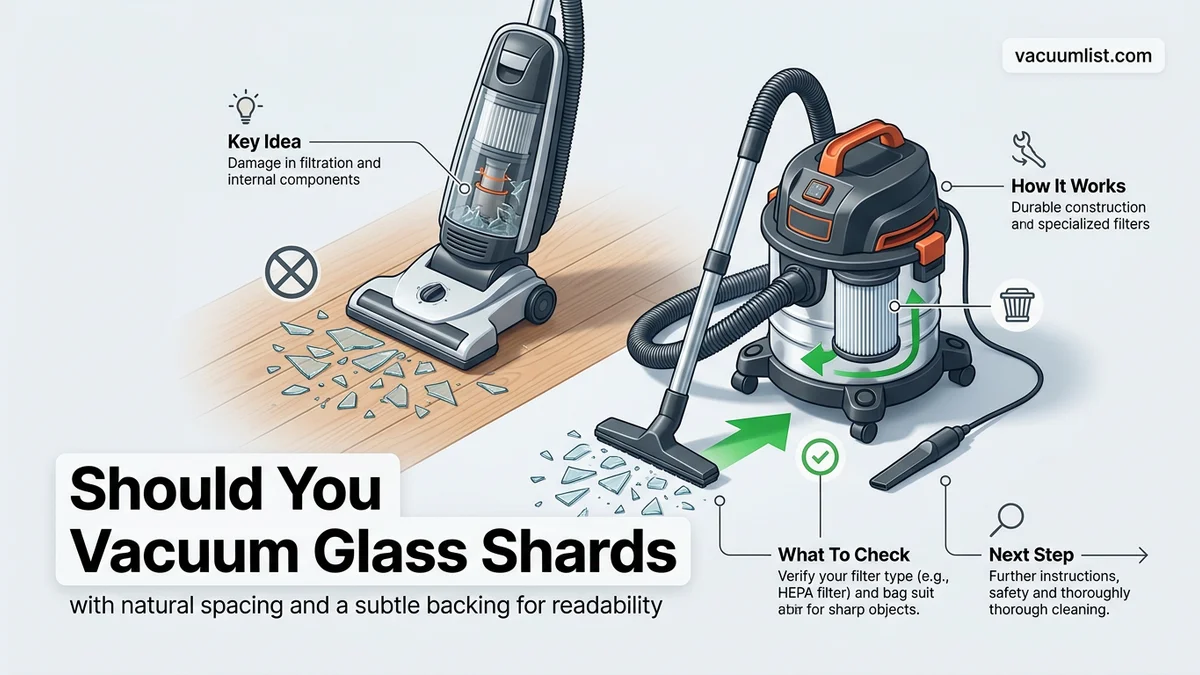
Why You Should Never Vacuum Glass Shards: The Hidden Risks
Internal Machine Damage and Motor Failure
When you suck glass shards into a standard vacuum, those sharp edges do not simply land gently in the dust bin. They act like miniature knives traveling at high speeds. Glass will easily slice through paper vacuum bags or puncture plastic cyclonic bins, allowing microscopic shards to escape into the motor housing. Once inside the motor, glass dust grinds against the bearings and fan blades, leading to catastrophic equipment failure that often costs more to repair than buying a brand-new vacuum.
The Danger of Airborne Glass Exhaust
Even if your vacuum survives the initial suction without tearing the internal chamber, you face another major problem: exhaust blowback. Standard exhaust filters and HEPA filters are designed to capture dust, pet dander, and pollen. They are not rated to stop microscopic glass dust. When the vacuum forces air back out into the room, it can aerosolize tiny, invisible glass particles. You and your family might end up inhaling these shards or getting them trapped in your skin and eyes long after you thought the room was clean.
- Ripped hoses: Sharp shards easily pierce flexible corrugated vacuum hoses from the inside.
- Destroyed roller brushes: Rotating brush rolls fling glass fragments further across the room instead of capturing them.
- Electrical hazards: Punctured internal wiring can cause short circuits or complete electrical failure.
How to Clean Up Broken Glass Safely Using Step-by-Step Methods
The Manual Sweep and Physical Pickup
The safest approach to clearing broken glass involves low-tech tools that give you absolute control. Start by putting on thick, puncture-resistant gloves and hard-soled shoes to protect your hands and feet. Carefully pick up the largest visible shards by hand and place them directly into a heavy-duty trash bag or a rigid cardboard box. Never use bare hands, even if the pieces look large and manageable. Once the big pieces are gone, use a standard broom and dustpan to sweep the surrounding hard surface.
Alternative Household Tools for Invisible Shards
After sweeping, microscopic slivers often remain scattered across the floor, waiting for bare feet. Instead of a vacuum, deploy clever household alternatives to trap these hidden hazards. Press a folded piece of thick duct tape or packaging tape sticky-side down across the affected zone. Alternatively, take a slice of soft white bread and press it firmly against the floor; the dense crumb structure traps tiny glass fragments instantly. For carpeted areas, use a damp paper towel wiped gently in one direction to grab stubborn fibers before calling it safe.
- Damp paper towels: Fold a paper towel multiple times, dampen it with water, and press it along the floor to catch invisible slivers.
- The bread trick: Press a slice of sandwich bread over the impact zone to safely embed and lift away microscopic glass dust.
- Flashlight check: Turn off overhead lights and shine a flashlight horizontally across the floor to spot lingering glints of light from missed shards.
Alternative Household Items to Pick Up Tiny Glass Splinters
Even after using a broom and dustpan, microscopic glass shards often linger on hardwood and tile surfaces. Standard vacuums remain a hazard in 2026, but several clever household items safely lift these invisible hazards without damaging your cleaning tools.
The Sliced Bread Technique
Pressing a soft slice of white bread firmly against the affected floor area captures tiny, needle-like fragments instantly. The porous texture and soft crumb structure trap microscopic shards deep inside the bread. Dispose of the bread immediately in a heavy-duty trash bag or wrap it in newspaper first.
Duct Tape and Damp Paper Towels
Adhesives provide superior results for trapping fine glass dust that brooms miss entirely. Follow these precise steps for safe manual removal:
- Wrap heavy-duty duct tape around your dominant hand with the sticky side facing outward.
- Press the tape firmly across the entire contaminated zone, overlapping each pass by 50 percent.
- Fold multiple layers of damp paper towels and drag them across the floor to catch any remaining fine dust particles.
- Inspect the area using a flashlight held at a low angle to catch the reflection of any lingering splinters.
What If It Still Does Not Work?
If DIY methods fail to capture deeply embedded glass shards from thick carpets or expansive areas, specialized equipment or professional intervention becomes necessary. Attempting to force standard cleaning tools on stubborn glass messes usually worsens the safety risk.
Advanced Removal Steps
- Deploy a specialized wet-dry shop vacuum equipped with a high-efficiency particulate air (HEPA) filter to contain microscopic shards safely.
- Rent a commercial-grade carpet extractor from a local hardware store if glass penetrated deep pile residential carpeting.
- Contact professional residential cleaning services specializing in hazardous debris mitigation if the spill involves shattered safety glass or large surface areas.
- Expect professional emergency cleanup services to cost between $150 and $350 depending on the total square footage and glass density.
Conclusion
Vacuuming glass shards with a standard household machine risks severe equipment damage and sends dangerous projectiles airborne. Safe cleanup relies on manual containment using brooms, damp paper towels, heavy-duty tape, and specialized wet-dry vacuums for stubborn areas. According to verified research and expert safety sources from the 2026 Home Safety Council, prevention and proper disposal protect occupants from costly injuries. Take action today by equipping your home with heavy-duty disposal bags and quality work gloves before your next cleanup emergency.
❓ Frequently Asked Questions
Why is it dangerous to use a standard vacuum on glass shards?
Standard vacuums rely on plastic fans, flexible hoses, and thin collection bags that are easily sliced or punctured by sharp glass. Furthermore, the exhaust system can aerosolize microscopic glass dust, creating an inhalation hazard.
Can glass shards damage a vacuum motor?
Yes, if sharp glass pieces bypass the bag or canister and strike the spinning fan blades, they can chip or shatter the motor components, destroying the appliance instantly.
What is the absolute best way to clean up broken glass?
Start by sweeping up large and medium pieces with a broom and dustpan. Follow up by pressing a damp paper towel or a slice of white bread over the area to grab invisible fragments.
Can I use duct tape on carpet to pick up glass?
Duct tape or packing tape works exceptionally well on carpets. Wrap the sticky side outward around your gloved hand and dab the carpet firmly to pull up embedded glass slivers.
Are shop vacuums safe for cleaning up broken glass?
Shop vacuums are generally safer than household vacuums due to their rigid plastic collection tanks. However, you should inspect the hose and use a high-grade filter to prevent sharp pieces from causing damage.
How do I safely dispose of collected glass shards?
Place all swept and picked-up glass into a heavy-duty cardboard box, a thick paper grocery bag, or wrap it tightly in multiple layers of newspaper before putting it in the trash.