Does Vacuuming Get Rid of Fleas? Proven 2026
Yes, vacuuming is a powerful weapon against fleas, but it rarely eliminates an infestation on its own. While it effectively sucks up adult fleas, eggs, and larvae from deep within carpet fibers, resilient pupae and unaddressed pets require additional treatments to completely solve the problem.
The short answer is yes, vacuuming is one of the most effective mechanical weapons you have against a flea infestation, but it is not a standalone cure. When executed correctly in 2026, a high-powered vacuum can physically remove a massive percentage of an active flea population from your carpets and upholstered furniture.
However, relying on suction alone will fail if you do not understand how fleas survive inside household environments. To truly win the battle, you need to know exactly how vacuuming impacts each stage of the flea life cycle and where these pests hide when your back is turned.
Key Takeaways
- Vacuuming successfully removes adult fleas, eggs, and vulnerable larvae from carpets and furniture.
- Flea pupae in cocoons resist suction and insecticides, hatching even after being vacuumed up.
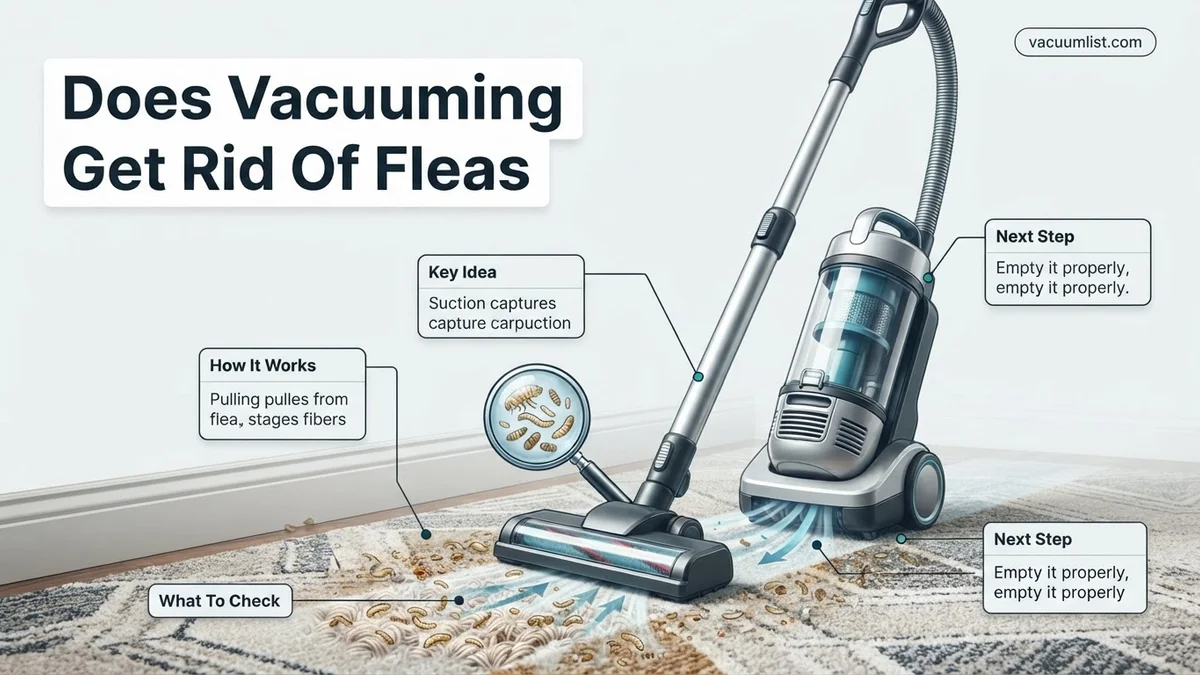
- Immediately empty your vacuum bag or canister outside to prevent captured fleas from escaping.
- Combine daily vacuuming with washing pet bedding in hot water for maximum effectiveness.
- Treat your pets with veterinarian-approved flea medication to stop the infestation at the source.
What Causes Flea Infestations to Persist Despite Regular Cleaning
You might vacuum your living room three times a week and still find fleas biting your ankles. This frustrating scenario happens because standard cleaning routines often miss the biological strongholds where fleas thrive.
The Hidden Safe Zones in Your Floors
Fleas do not just sit openly on top of your carpet fibers. They actively burrow down into the base of the carpet, away from foot traffic and light.
- Baseboard cracks and crevices collect organic debris that feeds flea larvae.
- Underneath heavy furniture legs, vibrations from everyday walking are absent, making these zones undisturbed breeding grounds.
- Pet beds and favorite lounging rugs trap millions of microscopic eggs that slip past weak suction vacuums.
Equipment Limitations and Suction Failures
Not all vacuums are built to handle a biological infestation. If your machine lacks proper sealing or filtration, you might just be giving pests a free ride.
- Standard vacuums without HEPA filters can exhaust live flea eggs and microscopic larvae back into your breathing air.
- Worn-out agitator brush rolls fail to pull deep-seated debris out of high-pile carpets.
- Bagless canisters without immediate disposal routines allow hatched fleas to crawl right back out into your home.
How Vacuuming Affects Fleas Across Different Life Stages
Understanding the anatomy of an infestation means looking at how physical suction impacts eggs, larvae, pupae, and adults differently. Each stage responds to vacuuming with varying degrees of vulnerability.
Vulnerability of Eggs, Larvae, and Adults
The vast majority of your vacuum’s daily harvest consists of these three susceptible stages.
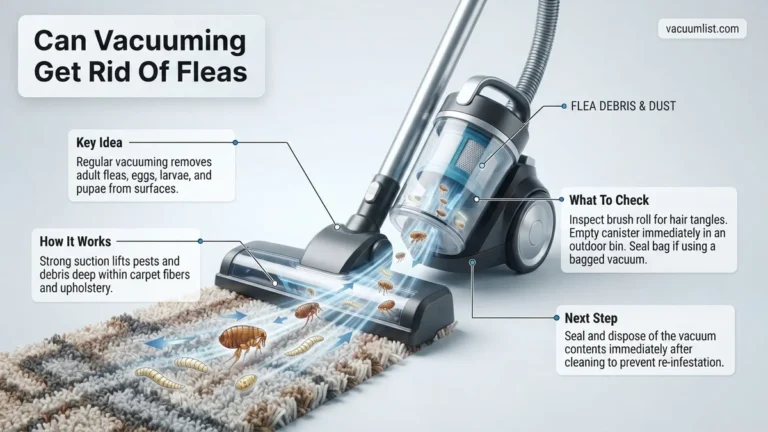
- Adult Fleas: Most adult fleas pulled into a vacuum die from the physical trauma of the rotating brush bar and the intense airflow, though some survive inside the bag.
- Flea Eggs: Smooth and non-sticky once they drop from your pet, eggs roll easily into carpet weaves where direct suction easily dislodges and kills them.
- Flea Larvae: Blind and sensitive to light, larvae wriggle away from the surface, but high-velocity suction can successfully pull them from the deep underlayment.
The Resilience of the Pupae Stage
This is where your vacuum meets its ultimate match. The pupal stage is protected by a remarkably tough cocoon.
- Cocoons are naturally sticky, anchoring themselves firmly to carpet fibers so that standard vacuum suction often fails to dislodge them.
- The pupal casing acts as an armored shell, protecting the developing adult flea from household insecticides and physical crushing forces.
- Vibration and carbon dioxide are what finally trigger emerging adults to break out of these cocoons, which means your vacuum’s heavy footsteps and motor rumble can sometimes prematurely force them out into the open where you can deal with them.
Step-by-Step Guide to Vacuuming Effectively During an Outbreak
Maximizing the efficiency of your vacuum cleaner requires a strict, methodical routine. According to leading entomology and pest management data from 2026, standard passes over carpets leave behind resilient cocoons unless specific protocols are followed.
1. Clear the Floors
Pick up all toys, shoes, and clothing items before you begin. Fleas hide underneath clutter where vacuum suction cannot reach effectively.
2. Apply a Flea Treatment Powder (Optional)
Sprinkle a borate-based carpet treatment or baking soda across the fibers. Allow it to sit for 15 to 30 minutes to dehydrate hidden adult fleas and disrupt the life cycle.
3. Execute Slow, Overlapping Passes
Move the vacuum head slowly across high-traffic zones, baseboards, and pet sleeping areas. Make at least two perpendicular passes over every square foot to capture deep-set debris.
4. Empty the Container Immediately
Seal bagless canisters inside a plastic trash bag and take them to an outdoor bin instantly. If using a bagged vacuum, remove the bag, seal it tightly, and discard it to prevent live insects from escaping back into your living space.
What If It Still Does Not Stop the Flea Infestation?
If consistent, aggressive vacuuming fails to reduce the flea population after two weeks, the infestation has likely surpassed the mechanical removal threshold. Here are the necessary fallback steps to regain control:
- Treat All Household Pets: Consult a veterinarian for an oral or topical preventative. Vacuuming cannot stop fleas if your pets continue serving as an untreated breeding ground.
- Wash Pet Bedding at High Heat: Launder all pet blankets, covers, and human bedding in water exceeding 140°F to kill eggs and larvae.
- Apply Insect Growth Regulators (IGRs): Spray an IGR like S-methoprene or pyriproxyfen across carpets. These chemicals prevent immature fleas from maturing into reproducing adults.
- Hire Professional Pest Control: If DIY chemical treatments and intensive vacuuming fail after 30 days, contact a licensed exterminator. Professional whole-home treatments typically range from $250 to $400 depending on the square footage.
Conclusion
Does vacuuming get rid of fleas? Yes, it serves as a powerful mechanical control method that removes up to 90 percent of flea larvae and up to 60 percent of unhatched eggs when executed correctly. However, vacuuming alone cannot break a severe life cycle without concurrent pet treatments and proper waste disposal. According to verified research and expert entomology sources, combining high-suction vacuuming with targeted growth regulators provides the most reliable long-term defense. Make your next step emptying your vacuum canister into an outdoor bin immediately after your cleaning session.
❓ Frequently Asked Questions
Does vacuuming get rid of fleas completely on its own?
Vacuuming is highly effective at reducing the overall population by removing eggs, larvae, and adult fleas, but it rarely solves an infestation entirely. Because flea pupae are protected inside sticky cocoons that resist suction, they will often hatch later, requiring you to combine vacuuming with pet treatments and premise sprays.
How do different flea life stages respond to vacuuming?
Adult fleas, fragile larvae, and loose eggs are easily sucked up by standard vacuums. However, the pupal stage anchors itself securely to carpet fibers and shrugs off physical suction and many surface chemicals, making patience and repeat treatments necessary.
What is the proper way to dispose of fleas after vacuuming?
After every vacuuming session, immediately take your vacuum outside. If you use a bagged vacuum, remove the bag, seal it tightly in a plastic trash bag, and throw it in an outdoor bin; if you use a bagless model, empty the canister directly into an outdoor trash bag and wash the container with soapy water.
Which areas of the home need the most attention when vacuuming for fleas?
Focus heavily on pet beds, rugs, upholstered furniture, and carpeted floors, paying special attention to dark, hidden areas like under furniture and along baseboards where larvae naturally migrate to avoid light.
Should I put anything inside my vacuum bag to kill fleas?
Some people place a small piece of a flea collar or specialized carpet powder inside the vacuum bag to kill captured pests. However, the safest and most reliable method is simply discarding or emptying the bag immediately after every single use.
What other steps are required alongside vacuuming to eliminate fleas?
To truly eradicate fleas, you must treat all household pets with a reliable veterinarian-recommended preventative, wash all pet bedding and blankets in hot water weekly, and potentially apply an insect growth regulator (IGR) or contact spray to affected carpets.