Does Vacuuming Kill Fleas? A Proven Expert Guide 2026
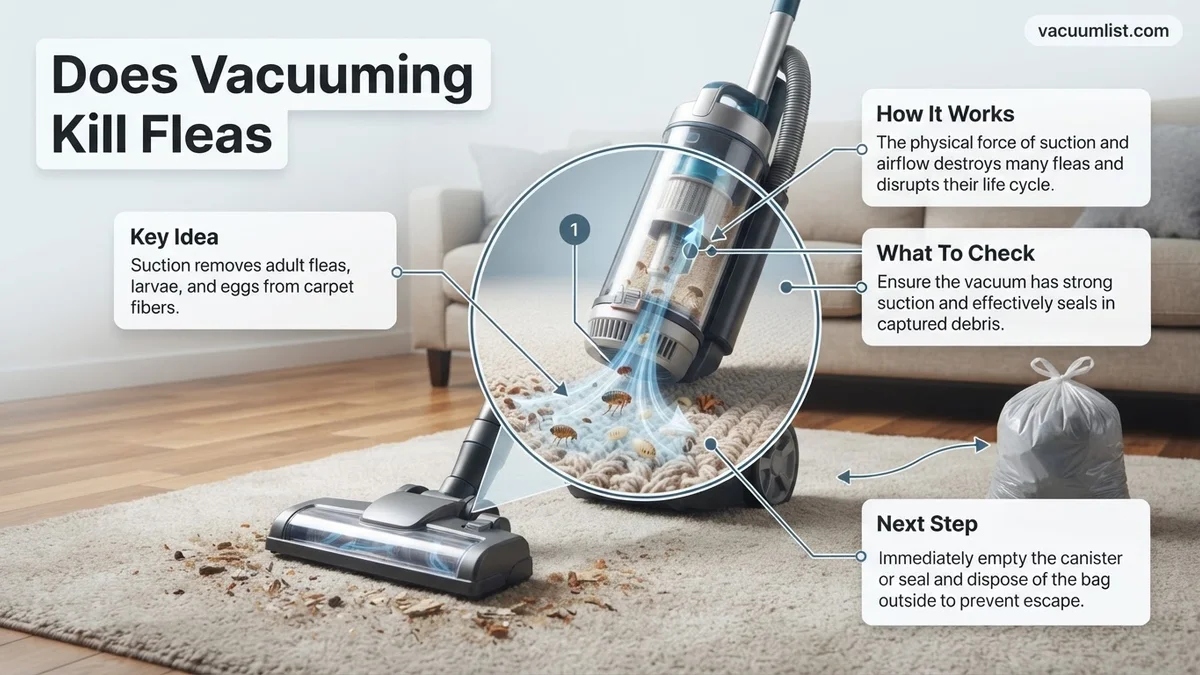
Vacuuming kills some adult fleas through physical trauma, but many survive inside the vacuum bag or canister and can crawl back out. A successful flea removal strategy requires proper post-vacuum disposal and chemical treatments to break the lifecycle.
The short answer is no: simply sucking fleas into your vacuum cleaner does not automatically kill them. While the powerful airflow, rapid tumbling, and sudden impact of being sucked through a hose look fatal on paper, adult fleas are remarkably resilient against physical trauma.
If you rely solely on the vacuum to finish the job, you run a high risk of letting those survivors crawl right back out into your living space, turning a simple cleanup into a worsening 2026 household infestation.
Key Takeaways
- Vacuuming creates physical trauma that kills a percentage of adult fleas.
- Surviving adult fleas, eggs, and larvae can escape standard vacuum bags or canisters.
- Immediately empty bagless canisters into an outdoor trash bin after every use.
- Seal and discard disposable vacuum bags outside the home immediately.
- Vacuuming alone cannot eliminate an infestation without companion chemical treatments and pet medications.
What Happens to Fleas Inside Your Vacuum Cleaner
Do Adult Fleas Survive the Suction?
Most people assume that the microscopic violence of a vacuum cleaner shreds everything it touches. In reality, adult fleas possess a hard, chitinous exoskeleton that acts like body armor. When they get sucked through the nozzle, they typically tumble through the hose and land in the collection bin or bag completely intact.
Studies and pest control experts note that the survival rate for adult fleas inside a standard vacuum can be surprisingly high. They do not drown in dust, nor are they routinely crushed by the friction of dirt particles. Once inside, they can easily wait out the clock and escape.
What About Flea Eggs and Larvae?
The danger inside your vacuum goes beyond just the adult insects. When you vacuum carpets and upholstery, you pull up hundreds of invisible flea eggs and microscopic larvae.
- Flea Eggs: These oval, pearl-white eggs are smooth and tough. They survive the journey into the vacuum bag and will happily hatch in the dark, warm environment of your dustbin.
- Flea Larvae: Blind and worm-like, larvae feed on organic debris—like adult flea feces—already sitting inside your vacuum bag. The interior of a vacuum can actually serve as a makeshift incubator for the next generation.
- Pupae: While cocoons are sticky and harder to dislodge from carpet fibers, any that do get sucked up are exceptionally tough and nearly immune to environmental disruption.
How to Fix and Prevent Flea Re-Infestation Through Proper Disposal
Immediate Bag Disposal and Canister Sanitization
Because fleas can crawl or hatch inside your machine, you must treat your vacuum contents as a biohazard after every single pass. Leaving a full vacuum bag sitting in your closet for a week is an open invitation for an outbreak.
- For Bagged Vacuums: Remove the bag immediately. Seal it tightly inside a heavy-duty plastic trash bag, tie it securely, and take it straight to an outdoor garbage bin.
- For Bagless Vacuums: Empty the plastic canister directly into an outdoor trash bag immediately after finishing. Do not empty it into an indoor kitchen bin where fleas can escape.
- Sanitize the Bin: Wash the plastic canister with hot, soapy water and wipe down the inner seals to eliminate lingering debris and microscopic eggs.
Using Flea Collars and Treatments Inside the Vacuum
To ensure that anything you vacuum up dies before it can crawl back out, you need to introduce a lethal element to the interior of your machine.
- Cut a small piece—about two inches—of an old flea collar or a pet pest prevention strip.
- Drop that piece directly into your empty vacuum bag or toss it into the bagless collection canister.
- As you vacuum up debris, the active ingredients will release inside the enclosed space, effectively killing adult fleas, larvae, and hatching eggs before they escape your containment efforts.
Step-by-Step Guide to Effective Home Flea Vacuuming
Maximizing the lethal impact of your vacuum on fleas requires a systematic approach. Entomology research shows that standard vacuuming removes up to 96 percent of flea larvae and 50 percent of adult fleas, provided technique is optimized. Follow this rigorous protocol for 2026 home sanitation.
1. Prepare the Environment
Before turning on the machine, pick up small objects, toys, and pet items from the floor. Sprinkle a low-toxicity desiccant like food-grade diatomaceous earth into heavily infested carpets twenty minutes prior to vacuuming to dehydrate surviving insects.
2. Execute High-Efficiency Passes
Move the vacuum slowly over all carpeted areas, rugs, and upholstered furniture. Make multiple overlapping passes in a grid pattern. This creates agitation that forces dormant pupae out of deep carpet fibers and into the suction path.
3. Empty and Seal Immediately
Never leave collected debris sitting inside the vacuum canister. Fleas, eggs, and larvae will hatch and crawl back out. Empty bagless canisters directly into an outdoor sealed plastic bag. For bagged vacuums, remove the bag immediately, seal it tightly, and dispose of it in an outdoor trash receptacle.
What If It Still Doesn’t Work?
If persistent flea populations continue to bite household members despite daily vacuuming, the infestation has likely progressed past the mechanical removal stage. Flea pupae are exceptionally resilient to physical suction and chemical treatments. When vacuuming alone fails to break the life cycle, implement these advanced fallback steps:
- Apply Insect Growth Regulators (IGRs): Spray carpets and baseboards with a professional-grade IGR containing pyriproxyfen or methoprene. According to pest control industry standards, IGRs disrupt the hormonal development of flea eggs and larvae, preventing them from maturing into biting adults.
- Treat All Household Pets: Vacuuming removes environmental stages, but pets act as the primary host and breeding ground. Consult a veterinarian for modern oral or topical systemic parasiticides that kill adult fleas within hours of ingestion or contact.
- Wash All Textiles on High Heat: Launder all pet bedding, human bedding, and washable rugs in water exceeding 140°F (60°C). Follow this with a high-heat dry cycle for at least thirty minutes to guarantee the destruction of eggs at every developmental stage.
- Hire a Licensed Exterminator: If DIY remediation fails after three weeks of strict adherence, contact a pest management professional. Professional residential flea eradication services typically range from $250 to $450 depending on home square footage and infestation severity.
Conclusion
Vacuuming remains a vital, scientifically proven weapon in the fight against household flea infestations by physically removing eggs, larvae, and adults from carpets and furniture. However, physical suction must be paired with immediate waste disposal and comprehensive pet treatment to break the life cycle. According to verified research and entomological expert sources, combining daily mechanical vacuuming with targeted insect growth regulators yields the highest success rate. Take action today by inspecting your vacuum filtration system and establishing a rigorous, multi-step eradication routine.
❓ Frequently Asked Questions
Do flea pupae survive the vacuum process?
Flea pupae are wrapped in a sticky, resilient cocoon that is extremely resistant to both vacuum suction and standard insecticides. Vacuuming often stimulates them to hatch sooner, which actually helps expose them to surface treatments.
Will putting a flea collar piece inside the vacuum bag help?
Placing a small piece of a flea collar or a pest strip inside your vacuum bag can help kill surviving adult fleas and larvae trapped inside. However, you should still empty or discard the bag regularly to prevent a buildup.
How often should I empty my vacuum canister during a flea outbreak?
You should empty bagless vacuum canisters into an outside trash bin immediately after every single vacuuming session. Leaving live fleas in the canister indoors allows them to escape.
Does the type of vacuum cleaner matter for flea removal?
Vacuums with strong suction and a high-efficiency particulate air (HEPA) filter perform best. HEPA filters help trap tiny flea eggs and allergen-causing debris securely inside the machine.
Can I vacuum up carpet powders and baking soda?
Yes, using carpet powders or baking soda can help dry out flea eggs and larvae before you vacuum them up. Always check your vacuum manual to ensure fine powders will not clog or damage your specific model’s motor.
Why am I still seeing fleas after vacuuming thoroughly?
Vacuuming only removes a fraction of the total flea population because the majority exist as hidden eggs, larvae, and tough pupae. Total eradication requires treating your pets with a vet-approved preventative and applying premise sprays.