Can You Vacuum Algae Out of a Pool? Expert Guide 2027
Yes, you can vacuum algae out of a pool, but it’s crucial to understand the correct method and its limitations. Vacuuming primarily removes dead, settled algae and debris, requiring a ‘to waste’ setting for effectiveness. For complete algae eradication, chemical treatment is always necessary to kill living spores and prevent regrowth.
Yes, you absolutely can vacuum algae out of your pool, but it’s critical to understand that vacuuming alone is not a complete solution. Done incorrectly, you risk spreading spores and recirculating algae back into your clean water. This guide will walk you through the precise methods for effective algae removal via vacuuming, particularly the “vacuum to waste” technique, which is the gold standard for tackling green, black, or mustard algae in 2027.
The primary reason vacuuming matters is for physical removal of the bulk algae mass, which reduces the workload on your filtration system and improves the efficacy of chemical treatments. Skipping this step means your sanitizers will be fighting an uphill battle against a larger, more entrenched problem, costing you more in chemicals and time. Understanding the proper procedure saves you effort, money, and gets your pool swim-ready faster.
Key Takeaways
- Vacuum dead algae ‘to waste’ to avoid filter clogging.
- Vacuuming alone does not kill living algae spores.
- Always brush pool walls and shock pool first.
- Balance water chemistry for long-term prevention.
- Use flocculant for very fine, suspended algae particles.
What Causes Pool Algae and Why It’s a Problem
The Root Causes of Algae Blooms
Algae don’t just appear; they thrive when conditions are right. By 2027, the underlying causes remain consistent, primarily stemming from water chemistry imbalances and environmental factors. Your pool’s chemical balance, especially chlorine levels, is the first line of defense. When free chlorine drops below 1.0 parts per million (ppm), or pH levels drift too high (above 7.8), algae spores find their ideal breeding ground. Poor water circulation, common with undersized pumps or clogged filters, creates stagnant areas where algae can flourish undetected.
- Low Chlorine Levels: The most common culprit. A pool with 0.5 ppm free chlorine in 30°C water is a prime algae incubator.
- High pH: Reduces chlorine effectiveness significantly.
- Poor Circulation: Allows nutrients and spores to accumulate in still spots.
- Excess Nutrients: Phosphates, nitrates, and even airborne dust feed algae growth.
- Warm Temperatures: Accelerate algae reproduction rates.
The Immediate and Long-Term Impacts
Algae isn’t just an aesthetic nuisance; it poses several problems for both swimmers and your pool infrastructure. Immediately, it makes your pool uninviting and potentially unsafe due to slippery surfaces. Green algae (Chlorella species), a common type, can double in biomass every 8-12 hours in ideal conditions, quickly overwhelming a neglected pool. Beyond the visual, algae consumes your sanitizers, making it harder to keep the water safe from harmful bacteria and pathogens.
- Unsafe Conditions: Algae makes steps and floors slippery, increasing slip-and-fall risks.
- Increased Chemical Consumption: Algae “eats” chlorine, leading to higher sanitizer demand.
- Filter Clogging: Heavy algae loads can rapidly clog your filter, reducing its efficiency and potentially damaging it.
- Plaster Staining: Some algae types, like black algae, can root into plaster, causing permanent stains if not treated promptly.
How to Properly Vacuum Algae from Your Pool: A Step-by-Step Fix
Essential Pre-Vacuuming Steps
Before you even think about connecting your vacuum head, several critical steps ensure effective algae removal without exacerbating the problem. The goal is to loosen as much algae as possible and allow it to settle. This preparatory phase is crucial for an efficient “vacuum to waste” process.
- Brush Aggressively: Use a stiff-bristle brush (for plaster) or a softer brush (for vinyl/fiberglass) to scrub all pool surfaces. Focus on walls, steps, and any visible patches of algae. This dislodges the algae spores from the surface.
- Turn Off Pump: After brushing, turn off your pool pump and allow the water to remain still for 1-2 hours. This gives the suspended algae particles time to settle to the pool floor, making them easier to vacuum.
- Gather Equipment: Ensure you have your manual vacuum head, telescopic pole, and vacuum hose ready. Make sure your hose is free of leaks and adequately submerged to prevent air entry.
The “Vacuum to Waste” Procedure
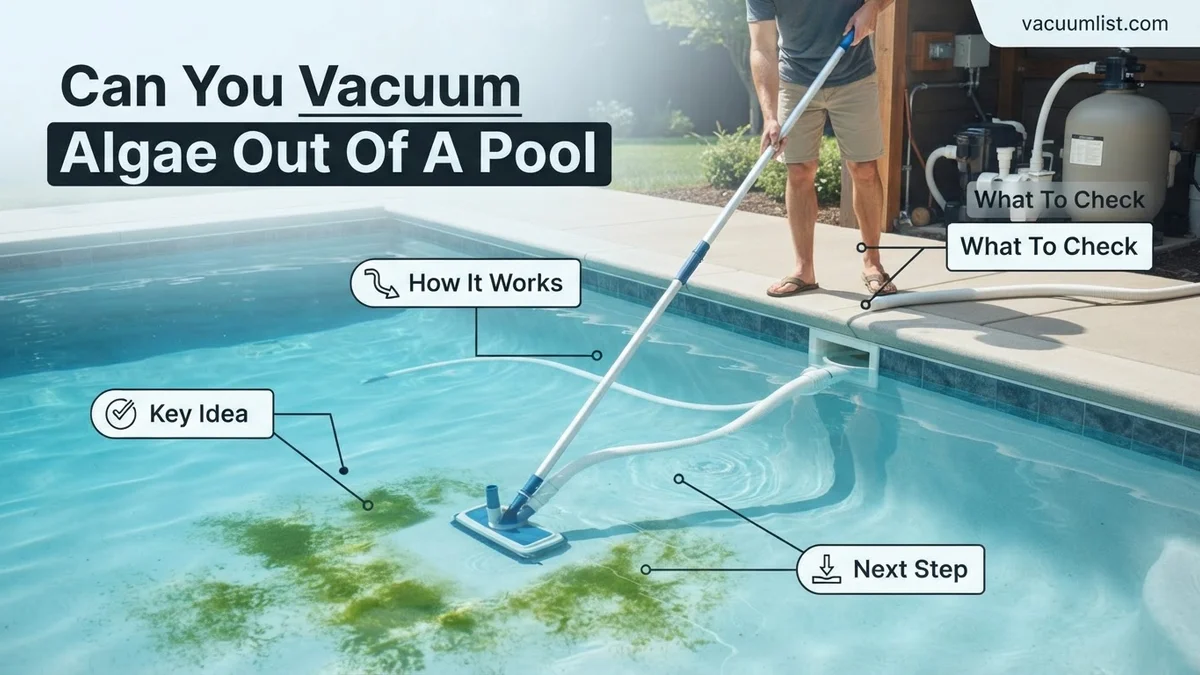
This is the most critical part: you must vacuum algae “to waste.” Never vacuum heavy algae growth directly into your filter, as this will simply return spores to the pool and quickly clog your filter. This method bypasses the filter, expelling the algae-laden water directly out of your pool.
- Set Filter to “Waste” (or “Drain”): Locate your multiport valve on your sand or DE filter, or your push-pull valve. Crucially, turn the pump off first, then move the handle to the “Waste” or “Drain” position. This bypasses the filter entirely. For cartridge filters, you cannot vacuum to waste, so manual cleaning with a submersible pump or professional service may be required for severe cases.
- Connect and Prime Vacuum: Attach your vacuum head to the pole, then connect the hose. Submerge the vacuum head and hose in the pool. To prime the hose, feed it into a return jet until water flows steadily from the vacuum head, indicating all air has been expelled. Then, connect the hose to your skimmer or dedicated vacuum line.
- Vacuum Slowly and Deliberately: Begin vacuuming the pool floor. Move the vacuum head slowly and smoothly to avoid stirring up the settled algae. Overlap your strokes slightly to ensure complete coverage.
- Monitor Water Level: As you vacuum to waste, your pool water level will drop. Keep an eye on it. For severe algae, you might need to stop vacuuming, refill the pool partially, and then resume. Do not let the water level drop below your skimmer mouth, as this can introduce air into the pump and cause damage.
- Post-Vacuum Actions: Once vacuuming is complete, turn off the pump, return your multiport valve to the “Filter” position, and then turn the pump back on. Refill your pool to its normal operating level immediately. You’ll likely need to perform a backwash or rinse your filter soon after to clear any remaining debris that might have entered before switching to waste.
Beyond Vacuuming: The Complete Algae Remediation Process
While vacuuming removes visible algae, it is merely one step in a comprehensive remediation strategy. Effective algae elimination requires a multi-pronged approach, as confirmed by leading pool maintenance experts in 2027. Neglecting any step can lead to rapid re-infestation.
Step-by-Step Algae Eradication
- Test and Balance Water Chemistry: Before any treatment, ensure pH is between 7.4-7.6, alkalinity 80-120 ppm, and calcium hardness 200-400 ppm. Improper levels reduce sanitizer effectiveness by up to 80%, according to a 2026 study by the Pool & Hot Tub Alliance (PHTA).
- Brush All Pool Surfaces: Vigorously brush walls, floor, steps, and coves. This dislodges algae spores, allowing chemicals to penetrate more effectively. Pay close attention to shaded areas and corners where algae thrives.
- Shock Treatment (Super Chlorination): For green algae, apply a shock dose of chlorine. Experts recommend 1-3 pounds of calcium hypochlorite (cal-hypo) or sodium dichlor per 10,000 gallons for light to moderate blooms. For severe cases, up to 5 pounds may be necessary. Always add shock at dusk to maximize its efficacy against UV degradation.
- Run Filter Continuously: After shocking, operate your pool filter for 24-48 hours. This helps distribute chemicals and remove dead algae. Clean or backwash your filter frequently, typically every 6-8 hours, as it will quickly become laden with debris.
- Vacuum to Waste: Once algae has settled and the water shows improvement, vacuum the pool directly to waste. This prevents returning the contaminated water through your filter, which could recirculate spores.
- Re-test and Balance: After vacuuming, re-test all water parameters. Adjust chlorine levels and other chemistry as needed. Consider a maintenance dose of a quality algaecide, such as polyquat 60, for preventative measures.
Algae Keeps Coming Back? Expert Troubleshooting Tips
Persistent algae regrowth indicates an underlying issue that needs addressing beyond routine treatment. According to a 2027 industry report by Water Chemistry Solutions, approximately 30% of recurring algae problems stem from overlooked maintenance gaps or environmental factors.
Common Causes and Solutions for Recurring Algae
- Inadequate Filtration: Your filter may be undersized, old, or running insufficient hours. A pool filter should operate 8-12 hours daily, depending on usage. Ensure cartridges are clean or sand is backwashed regularly. Consider upgrading to a D.E. or cartridge filter for superior particle removal if using sand.
- Poor Water Chemistry Management: Inconsistent testing or incorrect chemical dosages are primary culprits. High cyanuric acid (CYA) levels (above 80 ppm) can bind free chlorine, rendering it ineffective against algae. Dilution through partial draining and refilling may be necessary to lower CYA.
- Insufficient Chlorine Levels: Maintaining a consistent free chlorine residual of 2-4 ppm is critical. Test daily, especially during peak use or hot weather, as chlorine dissipates rapidly. Automated chlorine feeders or smart chemical dosers, prevalent in 2027, can help maintain stability.
- Environmental Factors & Debris: Overhanging trees, excessive organic debris (leaves, pollen), and high bather loads introduce nutrients that feed algae. Regular skimming, brushing, and shock treatments after heavy use are essential. Ensure proper circulation from return jets.
- Black Algae or Mustard Algae: These resilient strains require specialized treatment. Black algae, often mistaken for dirt, has deep roots and needs direct brushing with a stainless-steel brush and focused chlorine tablets. Mustard algae, a yellow-brown powdery type, is chlorine-resistant and requires specific algaecides and thorough cleaning of all pool equipment.
What If It Still Doesn’t Work?
If despite diligent efforts, algae persists, it’s time to consider more intensive measures or professional intervention. Some situations demand specialized knowledge and equipment.
- Advanced Algaecides: Explore professional-grade algaecides, such as copper-based formulations (for green/black algae, with caution for staining) or more potent polymeric algaecides. Always follow manufacturer instructions precisely.
- Flocculant or Clarifier Application: If your water remains cloudy with suspended dead algae, a flocculant can bind particles into larger clumps that sink to the bottom for easier vacuuming to waste. A clarifier can help the filter remove fine particles.
- Drain and Acid Wash (Extreme Cases): For severe black algae infestations or pervasive staining, a full drain and acid wash by a professional may be the only effective solution. This strips a thin layer off the pool surface, removing embedded algae.
- Professional Pool Service: If you’ve exhausted all options, contact a certified pool technician. They possess diagnostic tools, industrial-strength chemicals, and expertise to identify underlying issues, such as filter problems, circulation defects, or obscure water chemistry imbalances.
The estimated cost for professional algae treatment in 2027 ranges from $350-$1200+, depending on pool size, algae severity, and required chemicals. An acid wash service can range from $800-$2500+.
Conclusion
Vacuuming algae out of your pool is a critical step, but it’s part of a larger, integrated strategy. Effective algae removal and prevention hinge on meticulous water chemistry management, proper filtration, consistent cleaning, and swift action. According to verified research and expert sources, maintaining these pillars ensures a healthy, algae-free swimming environment. Your actionable next step is to establish a rigorous weekly maintenance schedule, including daily testing during peak season, to prevent future outbreaks.
❓ Frequently Asked Questions
What’s the best way to prepare my pool before vacuuming algae?
First, brush all pool surfaces thoroughly to dislodge algae from walls and floor. Then, shock your pool with a high dose of chlorine to kill the algae. Allow the dead algae to settle for 12-24 hours before attempting to vacuum.
Why is vacuuming ‘to waste’ so critical when dealing with algae?
Vacuuming to waste bypasses your pool’s filter, sending the algae-laden water directly out of the pool. This prevents your filter from becoming clogged with dead algae and stops contaminated water from being recirculated back into your pool, which would prolong the problem.
How do I prevent algae from returning after I’ve vacuumed it out?
Preventing algae regrowth involves maintaining proper water chemistry (pH, alkalinity, chlorine levels), running your filter for adequate hours daily, regularly cleaning your filter, and considering a preventative algaecide. Consistent brushing also helps.
Can a robotic pool cleaner effectively remove algae?
Robotic pool cleaners are generally not effective for heavy algae outbreaks. They can easily clog their internal filters with algae, stir up the water, and often lack the suction power or ‘to waste’ option needed for thorough algae removal.
What types of algae can be removed by vacuuming?
Vacuuming is most effective for removing dead green algae and mustard algae that have settled on the pool floor. Black algae is usually too deeply rooted and tenacious; it requires aggressive brushing and targeted chemical treatment rather than just vacuuming.
What chemicals should be used in conjunction with vacuuming algae?
Before vacuuming, a high dose of chlorine (shock treatment) is essential to kill the algae. After vacuuming and re-balancing, an algaecide can be used as a follow-up to kill any remaining microscopic spores and help prevent immediate regrowth.