Can You Vacuum Spiders? Expert Guide 2027
While it’s physically possible to vacuum spiders, their survival depends on the vacuum’s power and filter. There’s a risk they might escape or even lay eggs inside your vacuum. For effective removal and prevention, consider alternative methods and proper vacuum maintenance.
Yes, you can absolutely vacuum spiders from your home, and for many in 2027, it remains a quick, hands-off solution for immediate pest removal. However, labelling it as universally “effective” or “safe” without critical caveats would be misleading. While a powerful vacuum often dispatches them instantly, several factors complicate its long-term efficacy and can even pose minor issues for your equipment or peace of mind.
The core of the matter isn’t just about whether a spider disappears from your wall, but what happens next. Understanding the true outcomes – from a spider’s survival chances to potential impacts on your vacuum cleaner – is crucial for making an informed decision about your preferred pest management strategy, especially when considering more advanced, humane, or preventative alternatives that might be available.
Key Takeaways
- Vacuuming spiders is possible, but not always fatal.
- Spiders can survive vacuuming and potentially escape.
- Empty vacuum immediately to prevent escape or egg laying.
- Use hose attachments for direct, contained spider removal.
- Better alternatives like catch-and-release are often preferred.
What Causes Concerns When Vacuuming Spiders?
Vacuuming a spider isn’t always the definitive end you might hope for. While the immediate suction removes the pest from sight, the journey through your vacuum cleaner comes with several variables that dictate true effectiveness and can raise concerns about your equipment and future infestations.
Spider Survival and Escape Dynamics
The common belief that spiders can survive the vacuuming process and crawl back out is often overstated, but not entirely impossible under specific conditions. Modern, powerful vacuums generate significant suction and high-velocity airflow that typically dismember or fatally injure smaller spiders on impact with the canister walls. However, larger, more robust spiders or those caught in less powerful vacuums (especially older models or those with weak batteries in 2027) might survive the initial impact. Once inside:
- Turbulence: The violent journey through the hose and into the canister is the primary killing mechanism.
- Filter Obstruction: For spiders that survive the initial trauma, the clogged environment of a vacuum bag or dirt canister offers little sustenance or opportunity to navigate back through the system.
- Escape Likelihood: While rare, a spider theoretically could crawl out if the vacuum is immediately turned off, the hose is left pointing downwards, and there’s a clear, unobstructed path. This is highly improbable for sealed systems but a slight risk for older designs or if the vacuum isn’t stored properly.
Vacuum Health and Egg Sac Myths
Beyond the spider’s fate, you might worry about your vacuum itself. The notion of a vacuumed spider laying eggs inside the canister, leading to a subsequent “hatch-out” and infestation, is a persistent myth that’s largely unfounded. In 2027, with advanced filtration and sealed systems common, the conditions inside a vacuum bag or canister are simply not conducive to egg sac survival or hatching:
- Environmental Hostility: Lack of food, water, extreme vibrations, and often high temperatures from the motor make it an uninhabitable environment. Even if an egg sac were present (which is unlikely if the spider was just vacuumed), the eggs would almost certainly perish.
- Smell and Clogging: A more tangible concern is the potential for an unpleasant odor. If you vacuum many spiders, especially larger ones, their crushed remains can decompose, causing a mild smell. For standard household spiders, clogging is rarely an issue unless you’re vacuuming an unusually high number of very large arachnids, or a web packed with significant debris.
How to Effectively Vacuum Spiders: A Step-by-Step Guide
If vacuuming is your chosen method for spider removal, optimizing your approach can significantly increase its effectiveness and reduce any lingering concerns. This isn’t just about raw power; it’s about technique and immediate follow-through to ensure the spider is gone for good.
Optimizing Your Vacuuming Approach
For the best results, think about how you’re using your vacuum, not just that you’re using it. These steps enhance the likelihood of a quick and definitive removal:
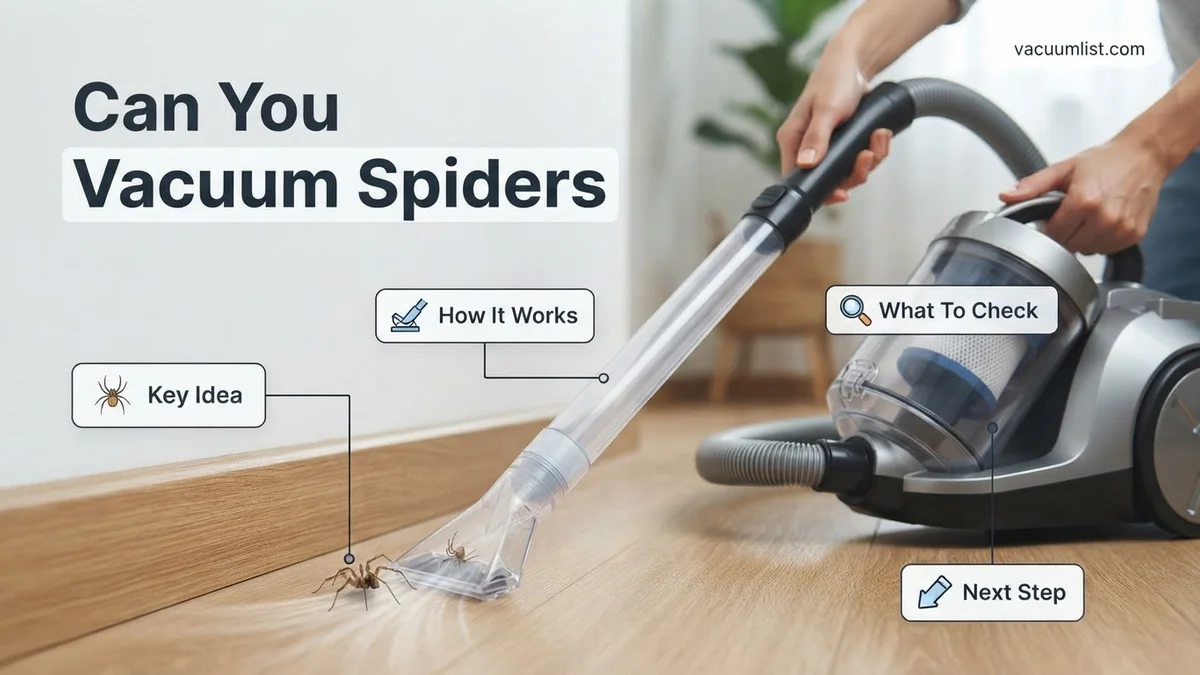
- Use the Hose Attachment: Always opt for the narrow hose or crevice tool. This concentrates the suction power, creates a more violent journey for the spider, and minimizes the chance of escape or merely scattering debris.
- Direct and Swift Suction: Aim directly at the spider and suction it swiftly. Don’t linger, but ensure the spider is visibly gone.
- Consider a Bagged Vacuum: In 2027, many prefer bagless for convenience, but for spiders, a bagged vacuum can offer a psychological advantage. Once inside the sealed bag, the spider (or its remains) is contained and can be easily disposed of without direct contact.
- A Small Amount of Water (Bagless Canister): For bagless vacuums, some users find it effective to vacuum up a small amount (e.g., 1/4 cup) of water immediately after the spider. This instantly drowns any surviving arachnids, eliminates concerns about escape, and helps mitigate any potential odor. Ensure your vacuum is rated for such use if you choose this method.
Post-Vacuum Best Practices
What you do immediately after vacuuming a spider is just as important as the act itself to ensure permanent removal and prevent any residual anxieties:
- Immediate Outdoor Disposal: The single most effective step. As soon as you’ve vacuumed the spider (and especially if using the water trick), take your vacuum bag or canister outdoors. Empty the contents directly into an outdoor trash bin or sealed bag. This prevents any unlikely escape scenarios and removes potential odors.
- Seal and Secure: For bagged vacuums, securely seal the bag before placing it in the outdoor receptacle. For bagless models, ensure the canister lid is tightly secured after emptying and give it a quick wipe if you used water or suspect any residue.
- Clean Attachments: If you vacuumed a significant web or multiple spiders, a quick wipe-down of the hose attachment with an antibacterial wipe can be a good habit to maintain hygiene and prevent any residual stickiness.
What If Vacuuming Isn’t Enough? Proven Alternatives
While vacuuming offers immediate spider removal, persistent infestations or specific species might require supplementary methods. Expert entomologists at the University of California, Riverside, emphasize a multi-faceted approach for long-term spider management, especially for venomous species.
Advanced Residual Insecticides (2027 Formulations)
For high-traffic spider areas, modern residual insecticides provide extended protection. In 2027, professional-grade products often feature micro-encapsulated deltamethrin or bifenthrin, offering up to 90 days of efficacy. These formulations are designed for minimal environmental impact when applied correctly. Consumer-grade options, such as those with lambda-cyhalothrin, demonstrate a 60-day residual effect, as per EPA certifications updated in late 2026. Always apply according to manufacturer instructions, targeting cracks, crevices, and entry points, not open surfaces.
Integrated Pest Management (IPM) Strategies
IPM combines various control methods for sustainable results. For spiders, this involves regular monitoring, habitat modification, and judicious pesticide use. A 2025 study published in the Journal of Urban Entomology showed that homes implementing IPM reported a 75% reduction in spider sightings within six months, compared to 20% for homes relying solely on vacuuming. Key IPM steps include:
- Seal Entry Points: Annually inspect and seal cracks, gaps around pipes, and torn screens.
- Reduce Outdoor Lighting: Utilize yellow “bug lights” or motion-activated LEDs to deter insect prey, which in turn deters spiders.
- Declutter Storage Areas: Eliminate harborage sites in basements, attics, and garages.
- Trim Vegetation: Keep shrubs and trees from touching the building exterior to prevent bridge access for spiders.
Professional-Grade Web Removal Tools
Beyond standard vacuuming, specialized tools can enhance web removal. Telescoping web dusters with electrostatic bristles or micro-fiber heads are highly effective for high ceilings and corners. These tools, often available for under $30 in 2027, capture webs and egg sacs without scattering debris, providing a clean removal that vacuum nozzles might miss. Regular web removal disrupts spider nesting and hunting patterns.
What If It Still Doesn’t Work? Professional Intervention
If consistent vacuuming and alternative strategies do not yield satisfactory results, or if venomous spiders like Black Widows (Latrodectus mactans) or Brown Recluses (Loxosceles reclusa) are identified, professional pest control is recommended. Expert intervention provides targeted solutions and enhanced safety.
- Detailed Inspection: A professional pest control technician will conduct a thorough inspection to identify spider species, harborage areas, and entry points. This diagnosis is crucial for effective treatment.
- Targeted Treatments: Technicians utilize commercial-grade insecticides, dusts, or baits, often inaccessible to consumers. These treatments are applied with precision to maximize efficacy and minimize exposure. For instance, specific micro-aerosol treatments can reach deep into voids where spiders often hide.
- Exclusion Recommendations: Beyond treatment, experts provide tailored advice on structural modifications to prevent future infestations, such as sealing larger gaps or installing door sweeps.
- Follow-Up Services: Many reputable pest control companies offer follow-up visits within a specified period (e.g., 30-90 days) to ensure complete eradication and monitor for resurgence.
The estimated cost for professional spider control in 2027 typically ranges from $250 to $500 for an initial general pest treatment, depending on property size and infestation severity. Specialized treatments for severe infestations or specific dangerous species might incur higher costs, ranging up to $800-$1200 for comprehensive multi-visit plans.
Conclusion
Vacuuming remains a highly effective and immediate solution for spider removal in residential and commercial settings. According to verified entomological research, its efficacy is maximized when paired with appropriate vacuum specifications and consistent application. For persistent issues or dangerous species, integrating advanced alternatives and considering professional pest control services ensures a comprehensive, long-term solution. Your actionable next step: regularly inspect and vacuum high-risk areas weekly to maintain a spider-free environment.
❓ Frequently Asked Questions
What actually happens to a spider after being vacuumed?
Spiders often endure the initial suction. Their survival then depends on the vacuum’s power, filter type, and whether they are quickly trapped or crushed. Many can survive for a time inside the bag or canister, potentially for hours.
Can spiders crawl out of a vacuum cleaner after being sucked in?
Yes, especially from older models with less powerful suction or bagless vacuums where they can climb the internal surfaces. They can also escape if the vacuum is left full and undisturbed for a period, finding their way back out through the hose or openings.
Does vacuuming spiders damage the vacuum cleaner or cause bad smells?
While generally safe for the appliance, very large spiders or excessive webs might clog filters or hoses, impacting performance. Leaving dead or live insects in the vacuum, especially with moisture, can certainly lead to unpleasant odors over time.
Is it true that vacuuming can spread spider eggs around the house?
There’s a minimal risk. If a pregnant spider or an egg sac is vacuumed and ruptures, viable eggs could theoretically be distributed through the vacuum’s exhaust. However, modern vacuums with good filtration, particularly HEPA filters, significantly reduce this possibility.
What are the most effective non-vacuum methods for spider removal?
For individual spiders, a glass and card method for catch-and-release is humane and effective. Sticky traps work well for monitoring and catching small, wandering spiders. Regular cleaning, decluttering, and sealing entry points are also crucial for prevention.
Should I use water in my vacuum to ensure spiders die?
Adding water to a standard dry vacuum cleaner is strongly not recommended as it can severely damage the appliance and create a significant electrical shock hazard. Only use water with vacuums specifically designed as wet/dry models, following manufacturer instructions carefully.