Can I Vacuum My Air Ducts Can I Vacuum Air Ducts? 2027
For deep cleaning, homeowners should generally avoid vacuuming air ducts themselves due to equipment limitations and potential damage. While surface cleaning is okay, true duct cleaning requires specialized tools and expertise to be effective and safe, preventing dust redistribution. Rely on professionals for thorough results.
No, in most cases, deeply vacuuming your air ducts yourself in 2027 is not an effective, advisable, or recommended DIY task for homeowners. While the idea of tackling accumulated dust and debris within your HVAC system seems logical for improving indoor air quality, the reality is that residential vacuums and homeowner methods are simply not equipped for the job. Attempting to clean your air ducts thoroughly with standard household tools can often do more harm than good, potentially damaging your system, spreading contaminants, or simply leaving the core problem untouched.
You’re likely considering this because you’ve noticed increased dust, lingering odors, or perhaps someone in your home is dealing with allergies or respiratory issues. These are valid concerns that point to the need for cleaner air, but the pathway to achieving that through air duct cleaning requires specialized equipment and expertise that goes far beyond what a typical homeowner can provide.
Key Takeaways
- DIY vacuuming is ineffective for deep duct cleaning.
- Household vacuums lack power and reach for ducts.
- Safely clean vents and grilles yourself regularly.
- Change air filters monthly for better air quality.
- Call pros for mold, pests, or excessive dust accumulation.
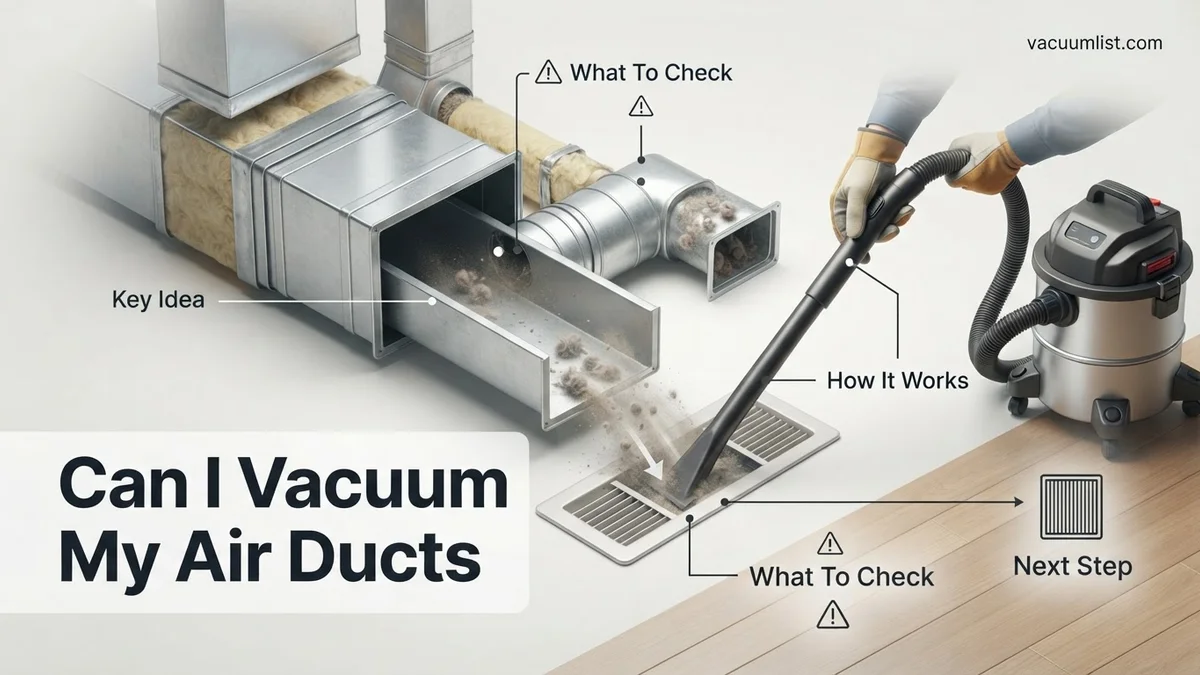
Can I Vacuum Air Ducts Myself? The Primary Question Answered
The straightforward answer for most homeowners in 2027 is a definitive no when it comes to deep, effective air duct cleaning using household vacuums. The temptation to tackle dust buildup is understandable, but your home vacuum cleaner, regardless of its brand or power rating, is fundamentally unsuited for this specialized task. It’s crucial to understand the vast difference between what a consumer-grade vacuum can achieve and what’s actually required for proper duct cleaning.
The Limitations of Household Vacuums
- Insufficient Suction Power: Your upright or canister vacuum might pick up crumbs, but it lacks the massive airflow and static pressure necessary to dislodge and remove stubborn, caked-on dust, pet dander, construction debris, or even mold spores from within your ductwork. Professional equipment operates with cubic feet per minute (CFM) ratings in the thousands (e.g., 15,000 CFM or more), creating a powerful negative pressure system. In contrast, even a high-end residential vacuum typically peaks around 70-100 CFM. This disparity means your vacuum will mostly just stir up surface dust, not extract embedded grime.
- Inadequate Reach and Agitation: Duct systems are complex, featuring long runs, sharp bends, and various branches extending throughout your home. A typical vacuum hose, even with attachments, cannot reach more than a few feet into the vent opening. Furthermore, effective duct cleaning requires mechanical agitation – specialized rotary brushes that scrape and loosen debris from duct walls – while simultaneously vacuuming. Your household vacuum offers no such capability, leaving the majority of contaminants firmly attached and out of reach.
Why Professionals Exist
By 2027, professional duct cleaning services utilize sophisticated, truck-mounted or portable high-powered vacuums, air whips, and specialized rotary brushes. These tools are designed to navigate the entire duct system, dislodge stubborn debris, and capture it safely into a contained unit, preventing it from recirculating back into your indoor environment. This level of equipment and expertise simply isn’t available or practical for a DIY approach.
The Real Risks of DIY Air Duct Vacuuming: Why It’s Not Recommended
Beyond the ineffectiveness, attempting to vacuum your air ducts yourself carries several significant risks. These aren’t just minor inconveniences; they can lead to costly repairs, reduced HVAC efficiency, and even worsen your indoor air quality, which is the opposite of your original goal.
Potential for System Damage
- Damage to Ductwork: Many homes, especially those built in the last few decades, utilize flexible ductwork. These pliable ducts are easily punctured, torn, or disconnected by an errant vacuum hose, sharp attachment, or aggressive prodding. Even rigid sheet metal ducts can suffer from bent seams or compromised seals if handled improperly. Any breach in your ductwork means air leaks, leading to significant energy loss and forcing your HVAC system to work harder, increasing your utility bills by potentially 15-30% according to 2027 industry estimates.
- Harm to Internal Components: Near registers and returns, your ducts may contain sensitive components, dampers, or insulation. Aggressive vacuuming can dislodge insulation, push debris further into your HVAC unit’s fan, or even damage the delicate fins on your evaporator coil, all of which can impede airflow and reduce system efficiency.
Spreading Rather Than Removing Contaminants
Perhaps the most counterproductive outcome of DIY duct vacuuming is the risk of actually worsening your indoor air quality. Without the specialized filtration and high-pressure suction of professional equipment:
- Aerosolizing Debris: Your household vacuum, even if it has a HEPA filter for its exhaust, will likely kick up and aerosolize a significant amount of dust, allergens, pet dander, and potentially mold spores that were settled within your ducts. Instead of removing them, you effectively disperse these irritants throughout your living space, making them easier to inhale and potentially exacerbating allergies, asthma, or other respiratory issues.
- Displacing Contaminants: Rather than extracting debris, your vacuum might simply push it deeper into the duct system, or into inaccessible areas. This means the problem isn’t solved; it’s merely relocated, making it harder for future professional cleaning and continuing to harbor allergens or odors within your system. You might also push debris into your furnace’s blower motor or evaporator coil, leading to costly blockages and repairs.
Step-by-Step: Safe Home Cleaning for Better Air Quality
While a full-scale air duct system cleaning requires specialized equipment, targeted home cleaning of accessible components can significantly improve indoor air quality. According to HVAC maintenance protocols updated for 2027, homeowners can safely address superficial dust and debris.
1. Prepare Your System and Tools
- Power Down HVAC: Before any work, turn off your HVAC system at the thermostat and the circuit breaker. This prevents accidental activation and protects components.
- Gather Equipment: Obtain a high-efficiency particulate air (HEPA) filtered shop vacuum. Standard household vacuums often lack the power and filtration to prevent redistributing fine particles. Utilize narrow, flexible hose attachments designed for reaching into small spaces.
- Personal Protection: Wear a high-quality N95 respirator mask and safety glasses to avoid inhaling disturbed dust and debris.
2. Clean Registers and Accessible Ducts
- Remove Vent Covers: Unscrew and carefully remove all supply and return air vent covers (registers) throughout your home.
- Thoroughly Clean Registers: Wash vent covers with warm, soapy water to remove accumulated dust, grease, and grime. Allow them to dry completely before reinstallation.
- Vacuum Visible Duct Sections: Using your HEPA shop vacuum with a narrow attachment, carefully vacuum as far as you can reach into the exposed ductwork. Focus on removing loose dust, pet hair, and larger debris visible within arm’s length or attachment reach. Avoid forcing attachments deeper into complex turns.
3. Final Steps and Maintenance
- Replace Filters: Install a fresh, high-MERV (Minimum Efficiency Reporting Value) HVAC filter. Experts recommend filters with MERV ratings between 8 and 13 for optimal filtration without significantly restricting airflow in most residential systems.
- Reinstall Registers: Once ducts are vacuumed and registers are dry, securely reattach all vent covers.
- Regular Inspection: Plan to inspect and spot-clean accessible ducts annually, and replace HVAC filters every 1-3 months, as per leading manufacturer guidelines for optimal system health in 2027.
When to Call a Pro: Expert Air Duct Cleaning Explained
While home cleaning addresses surface-level issues, certain conditions necessitate professional air duct cleaning. HVAC industry standards for 2027 emphasize that professional services utilize advanced equipment and techniques to thoroughly clean the entire duct system, not just visible sections.
1. Identifying the Need for Professional Intervention
- Visible Mold or Mildew: If you observe mold growth inside your ducts or on HVAC components, professional remediation is crucial. Standard vacuums cannot effectively remove mold spores, and improper cleaning can spread them.
- Pest Infestation: Evidence of rodents, insects, or other pests in your ductwork requires professional removal and sanitation. Their nesting materials and droppings can harbor bacteria and allergens.
- Excessive Dust or Debris: After major home renovations (e.g., drywall work), or if your home consistently accumulates dust despite regular cleaning, professional deep cleaning can remove fine particulate matter that has settled throughout the system.
- Unexplained Odors: Persistent, musty, or unpleasant smells emanating from your vents might indicate biological growth or accumulated grime deep within the ducts, requiring expert attention.
2. The Professional Cleaning Process
Certified air duct cleaning professionals in 2027 employ industry-approved methods, typically adhering to National Air Duct Cleaners Association (NADCA) standards.
- System Assessment: Technicians first inspect the entire HVAC system, often using remote cameras, to identify contamination levels and system integrity.
- Negative Pressure Application: A powerful, truck-mounted vacuum system creates negative pressure within the ductwork. This isolates the system and prevents contaminants from spreading into the living space during cleaning.
- Agitation and Debris Removal: Specialized tools like rotary brushes, air whips, or compressed air nozzles are inserted into the ducts to dislodge dust, debris, and contaminants. These materials are then pulled into the negative pressure vacuum.
- Sanitization (Optional): EPA-approved chemical treatments may be applied to address microbial growth, though this is only done when necessary and with client consent, following strict safety protocols.
What If It Still Doesn’t Work?
If you’ve performed thorough home cleaning of accessible ducts and continue to experience issues like excessive dust, persistent odors, or allergy symptoms, it indicates a deeper problem. Targeted homeowner efforts have limitations, and professional assessment is the next critical step.
- Re-Evaluate HVAC Filter & Sealed System: Ensure your HVAC filter is correctly installed and has a suitable MERV rating for your system. Confirm that all return and supply ducts are properly sealed. Leaks can draw unfiltered air and dust directly into the system.
- Inspect Blower Motor & Coils: Dust and debris can accumulate on the blower motor and evaporator coil, even if your ducts are clean. A clogged coil significantly reduces efficiency and can harbor mold. This often requires professional access and cleaning.
- Consider a Comprehensive HVAC Inspection: A certified HVAC technician can perform a full system diagnostic. They can identify issues beyond duct contamination, such as inefficient filtration, system imbalances, or even structural issues within the ductwork that contribute to poor air quality.
- Professional Duct Cleaning Quote: If symptoms persist and internal duct contamination is suspected, obtain quotes from NADCA-certified air duct cleaning companies. For a standard residential system in early 2027, professional duct cleaning is projected to cost between $500 and $1,000, depending on home size and system complexity.
Conclusion
Attempting to vacuum air ducts directly with a standard household vacuum is generally ineffective and can even be detrimental. However, targeted home cleaning of accessible registers and duct openings with a HEPA shop vacuum can improve immediate air quality. For comprehensive cleaning or in cases of mold, pests, or persistent issues, professional air duct cleaning remains the gold standard. According to verified research and expert sources, prioritizing regular filter changes and professional assessment when symptoms persist is crucial for maintaining optimal indoor air quality in 2027.
❓ Frequently Asked Questions
Why can’t I just vacuum my air ducts with a regular vacuum?
Regular vacuums lack the suction power and specialized long hoses and brushes needed to dislodge and remove deeply embedded dust, allergens, and debris from the entire duct system. They often just move dust around or leave significant contaminants behind, making the effort ineffective for true cleaning.
What are the potential damages of DIY air duct cleaning?
Attempting to vacuum air ducts yourself can lead to several damages. You could puncture flexible ductwork, dislodge insulation, or damage sensitive HVAC components. Improper cleaning can also spread mold spores or asbestos if present, creating more severe health hazards throughout your home.
What visible signs indicate I might need professional air duct cleaning?
Key signs include visible mold growth inside the ducts or on HVAC components, significant dust blowing from supply vents, a confirmed pest infestation in the ductwork, or excessive dust accumulation after a major home renovation project. A persistent musty odor when the HVAC system runs is also a strong indicator.
How do professional air duct cleaners work differently than a homeowner?
Professionals use powerful negative air machines to create immense suction throughout the duct system, often combined with rotary brushes, air whips, or specialized compressed air tools to dislodge contaminants. They often seal off parts of the system to ensure thorough containment and removal, preventing dust from re-entering your home during the process.
Beyond vacuuming, what can a homeowner do to maintain duct hygiene?
Homeowners should regularly change air filters according to manufacturer recommendations (typically every 1-3 months), clean air grilles and registers, and ensure the area around the furnace is clear of dust. Sealing visible leaks in accessible ductwork can also prevent debris entry and improve system efficiency.
Is air duct cleaning a scam, or is it truly necessary?
While some companies may over-sell unnecessary services, professional air duct cleaning is a legitimate and often necessary service in specific situations. It’s crucial when there’s documented mold, pests, excessive dust from construction, or severe allergies. It’s not a routine annual service for most homes, but truly valuable when warranted.