Why Is My Vacuum Smoking? 2026 Step-by-Step Fix Guide
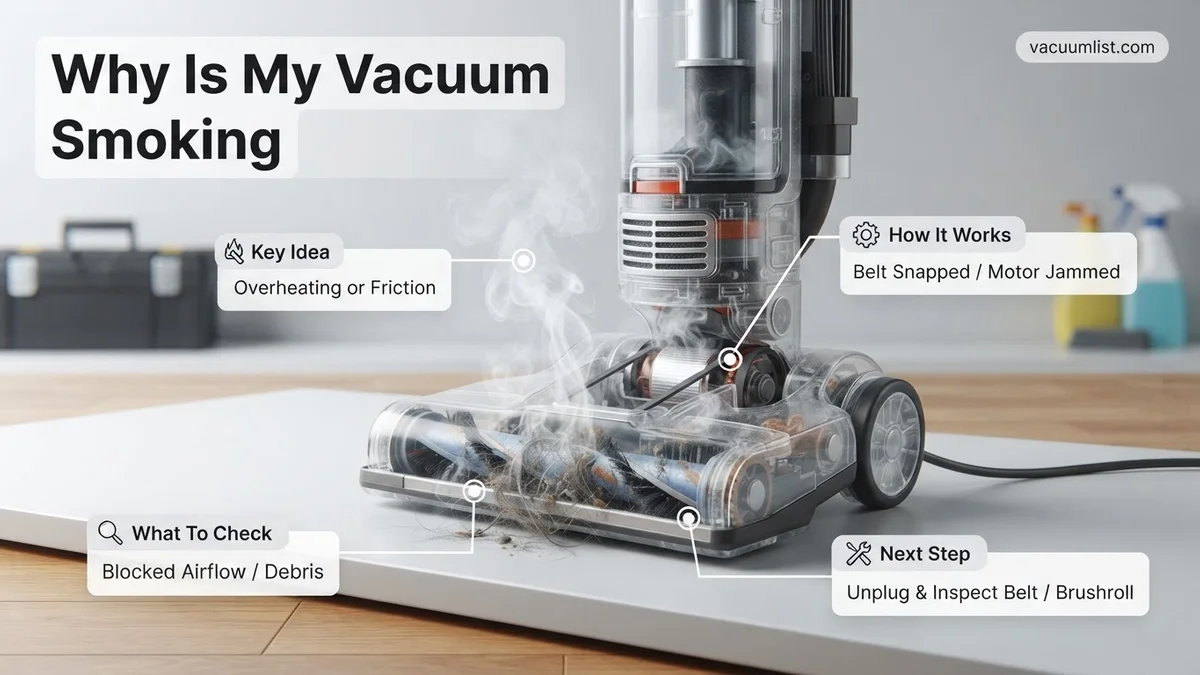
If your vacuum is producing smoke, unplug it immediately to prevent fire hazards or permanent motor damage. Most smoking vacuums are caused by a jammed roller brush, wrapped hair, or a stretched, slipping belt that creates friction. Safely troubleshooting these mechanical blockages can usually resolve the problem without professional help.
If your vacuum cleaner is currently producing smoke or a strong burning odor, turn it off and unplug it from the wall immediately. A smoking vacuum is usually caused by a jammed roller brush, tightly wrapped hair and debris, or a slipping drive belt that is overheating from friction.
Ignoring this issue creates a severe fire hazard and can permanently ruin your motor. Whether you are dealing with an older upright or a modern 2026 cordless model, addressing the root cause quickly will protect your home and save you from buying an expensive replacement.
Key Takeaways
- Unplug the vacuum immediately at the first sign of smoke or a burning odor.
- A jammed roller brush or tangled hair wrap is the most frequent culprit.
- Check the drive belt for signs of melting, stretching, or severe wear.
- Inspect filters and airways for severe clogs that strain the vacuum motor.
- Knowing when to replace a burnt-out motor prevents wasting money on repairs.
What Causes a Vacuum to Produce Smoke
The Jammed Roller Brush and Hair Wrap
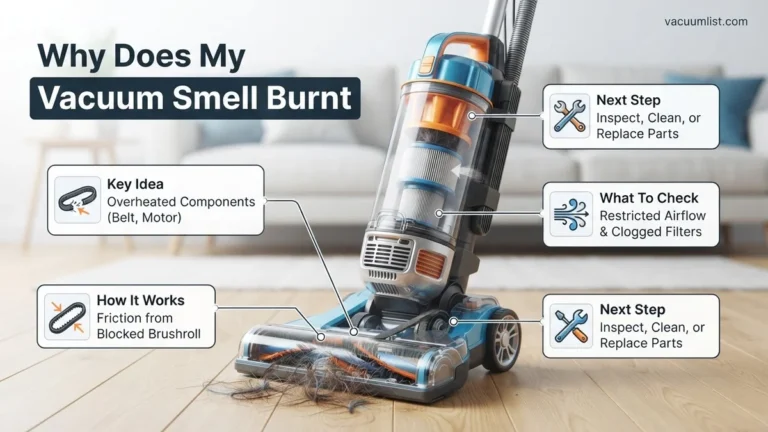
The most common culprit behind a smoking vacuum is a jammed roller brush, often called the agitator bar. Over months of cleaning, long human hair, pet fur, and stray threads wind tightly around the ends of the brush roll. This debris accumulation seizes the bearings and prevents the brush from spinning freely.
- The motor continues to supply power, forcing the drive belt or the internal gears to spin against a stuck roller.
- Extreme friction builds up within seconds, scorching the rubber belt and melting surrounding plastic components.
- This friction is what generates the acrid, burning smell and visible white smoke you see coming from the base of your machine.
A Stretched or Broken Drive Belt
If your roller brush isn’t completely jammed, the drive belt itself might be the issue. Over time, rubber belts stretch out, lose tension, or slip off their tracks. When a belt slips continuously against the motor shaft instead of turning the brush roll, high-heat friction occurs instantly. A snapped belt can also wrap around the spinning metal shaft, creating a localized heat source that melts surrounding plastic housing and produces smoke.
Step-by-Step Guide to Fix a Smoking Vacuum Safely
Step 1: Unplug and Cool Down
Safety is your top priority when dealing with an electrical appliance that has overheated. Never stick your fingers or tools into a vacuum while it is plugged into a live outlet. Follow these initial safety steps:
- Pull the power plug directly from the wall outlet immediately.
- Allow the vacuum to cool down completely for at least 15 to 30 minutes before touching the motor housing or bottom plate.
- Move the vacuum to a well-ventilated area if the burning plastic smell is heavy in your living space.
Step 2: Inspect and Clean the Brush Roll
Once the machine is cool, flip it upside down to access the underside and the brush roll compartment. Use a screwdriver to remove the bottom plate if necessary. Look closely at the ends of the roller brush where hair and carpet fibers typically accumulate in dense layers. Cut through the tangled mess using a pair of sharp scissors or a seam ripper, taking care not to nick the rubber bristles or the belt. Pull all the debris free and spin the brush roll manually with your hand. It should rotate smoothly and effortlessly without any grinding or resistance from internal bearing blocks.
How to Inspect and Replace Vacuum Belts and Roller Brushes
According to appliance maintenance experts, a stretched or broken belt is the leading cause of a smoking vacuum. When the brush roll stalls due to hair wrap, the motor pulley continues to spin rapidly against the stationary belt, creating intense friction and smoke. Addressing this component failure requires a methodical approach to disassembly.
Step-by-Step Belt Replacement
- Unplug the vacuum immediately to eliminate any electrical shock hazards before starting the inspection process.
- Flip the vacuum upside down and place it on a flat, well-lit surface to access the baseplate fasteners.
- Unscrew or unlatch the protective bottom plate covering the brush roll assembly and set the screws aside safely.
- Lift out the wooden or plastic brush roll cylinder and examine the rubber belt wrapped around the motor shaft.
- Discard the old, snapped, or heat-damaged belt and loop a certified replacement belt securely over the metal motor shaft and the brush roll notch.
- Spin the brush roll manually by hand to ensure the new belt aligns properly without twisting or binding.
- Reattach the bottom cover plate and tighten all securing screws completely before testing the machine.
Vacuum manufacturers recommend inspecting this assembly every six months. Using official OEM replacement parts ensures proper tension and prevents premature motor wear.
What If It Still Doesn’t Work?
If clearing clogs and replacing the belt does not stop the smoking issue, the problem likely stems from internal mechanical failure. Persistent smoke after standard troubleshooting points to a failing motor bearing or an electrical short circuit inside the housing.
- Stop using the vacuum immediately if you notice a sharp burning electrical odor rather than a rubber smell, as this indicates internal wiring damage.
- Check the motor warranty status; many modern upright and cordless vacuums purchased for the 2026 market carry a 2-to-5-year limited motor warranty.
- Take the appliance to a certified local repair technician for a professional diagnostic test if the unit is less than five years old and high-end.
- Evaluate repair costs against replacement value. According to appliance service data, if repair estimates exceed 50 percent of a new unit’s price—typically ranging from $80 to $150 for motor labor—buying a replacement is more economical.
Conclusion
A smoking vacuum signals an urgent mechanical restriction, usually caused by a jammed brush roll, a snapped drive belt, or severe airflow blockage. Acting quickly to clear obstructions and replace worn components protects your investment and prevents hazardous electrical fires. According to verified research and expert sources from leading appliance maintenance associations, routine preventative cleaning extends vacuum lifespan by up to 40 percent. Make sure to unplug your device and inspect the brush roll assembly today to ensure safe, efficient operation.
❓ Frequently Asked Questions
Why is my vacuum smoking and making a loud screeching noise?
A screeching noise combined with smoke almost always means the roller brush is jammed, but the motor is still forcing the drive belt to spin. This creates intense friction, melting the belt and producing smoke. Unplug the appliance immediately and clear away any wrapped hair, string, or debris.
Is it safe to use a vacuum after it has smoked once?
No, you should never use a vacuum again until you have identified and fully resolved the root cause of the smoke. Using a damaged machine can cause a permanent electrical fire or completely ruin the motor.
What does a burning electrical smell mean in a vacuum?
A sharp, chemical or electrical burning smell usually indicates that the vacuum motor is overheating or has suffered an internal electrical short. Unlike a rubber belt smell, this means the motor itself is failing and may not be worth repairing.
How often should I clean my vacuum roller brush to prevent smoke?
You should check and clean your vacuum roller brush every month, or more frequently if you have long-haired pets. Removing hair wraps prevents the friction that causes belts to snap, melt, and smoke.
Can a clogged filter cause a vacuum cleaner to smoke?
Yes, severely clogged filters restrict airflow, forcing the vacuum motor to work much harder than normal to pull air through. This extreme strain can cause the motor to overheat and emit a burning odor or smoke.
When is it better to buy a new vacuum instead of repairing a smoking one?
If your vacuum motor is burnt out, sparking internally, or the repair costs exceed half the price of a brand-new model, replacement is the safer and more cost-effective option.